
Weight Loss for Men Over 40: A Practical UK Guide

If you're a man in England approaching or past 40, excess weight is common rather than exceptional. NHS England recorded overweight including obesity in 67% of adult men in 2022, rising to 80% among men aged 55 to 64, while obesity alone affected 28% of men overall (NHS England's Health Survey for England). That changes the question. Effective weight loss for men over 40 isn't about making the scales move down, it's about reducing fat while protecting muscle, strength and long-term function.
You'll find a practical way to understand the problem through three connected lenses: physiology, including changes in body composition and appetite; habits, including sleep, stress, alcohol and daily movement; and clinical care, including when a GP review or specialist weight-management service makes sense. Midlife weight gain isn't a moral failure. It usually reflects several biological and behavioural changes arriving together.
Table of Contents
- Why Midlife Weight Gain Is So Common in UK Men
- What Actually Changes in Your Body After 40
- Eating for Fat Loss Without Losing Muscle
- A Strength-First Training Plan That Fits Real Schedules
- Sleep, Stress and Alcohol The Quiet Levers
- Clinically Supervised Medication Options in the UK
- Your 12-Week Plan and When to Seek Medical Review
- Common Questions Men Over 40 Ask First
Why Midlife Weight Gain Is So Common in UK Men
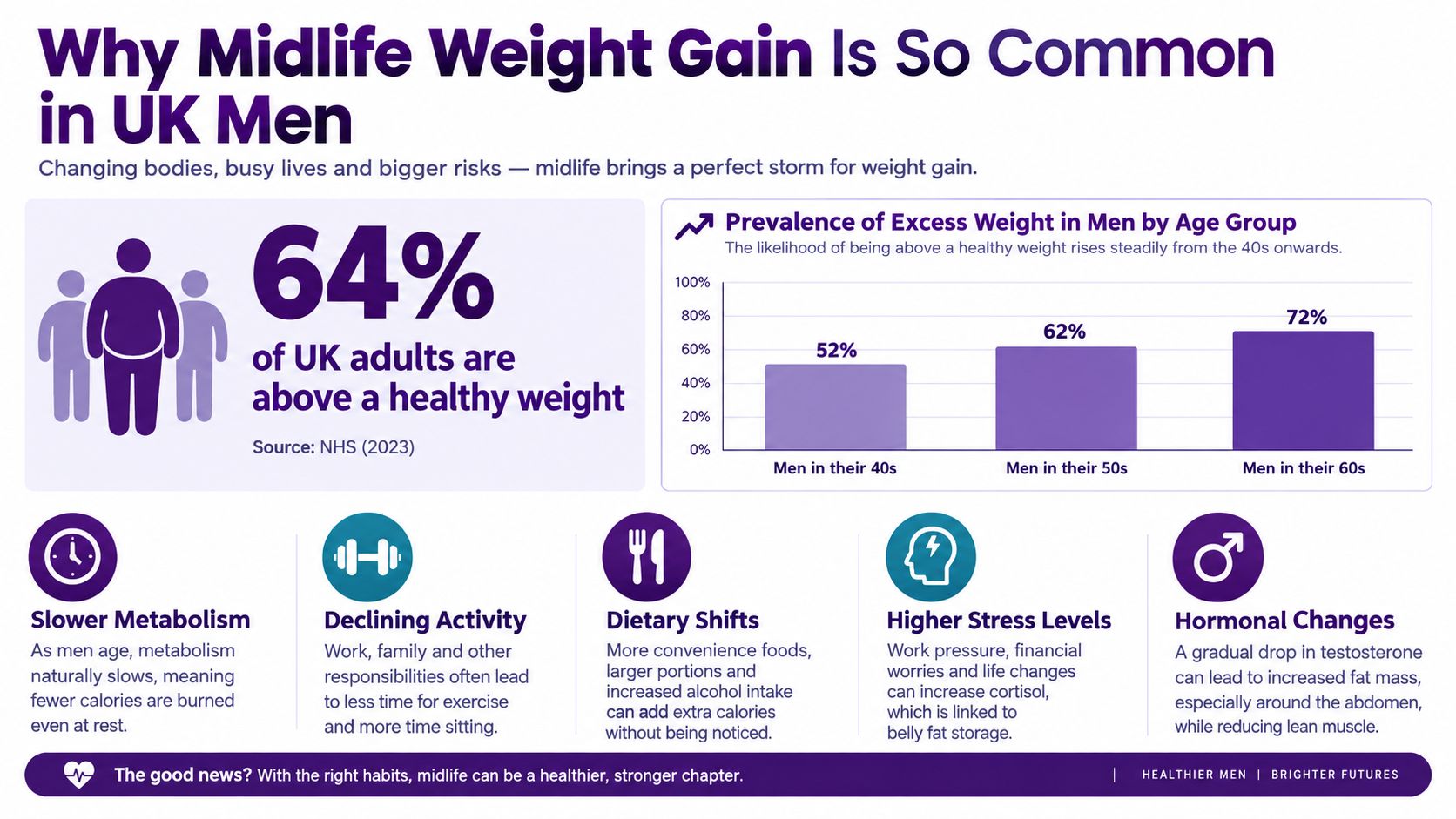
In 2023 to 2024, 69.7% of adult men in England were overweight, including obesity. Among men aged 55 to 64, the figure reached 73.5%, with 32.5% living with obesity, according to UK government obesity data. These figures show why weight loss for men over 40 needs more than a generic calorie-counting plan.
The pattern starts before retirement. Earlier England data recorded obesity peaking at 36% among men aged 45 to 54 (NHS England's adult overweight and obesity data). Historical UK evidence also found that obesity among men aged 50 to 69 rose from 18% to 33% over roughly 20 years. That comparison points to a lasting midlife trend rather than a short-term problem.
Three reasons the usual advice feels inadequate
Physiology changes the starting point. Muscle mass, hormones, appetite regulation and fat distribution can shift, so the routine that maintained your weight at 30 may no longer produce the same result.
Habits shape the daily energy balance around those changes. Desk-based work, commuting, family responsibilities, poor sleep, stress and alcohol can each reduce movement or increase food intake. Together, they can make gradual gain easy to miss.
Clinical assessment checks for issues lifestyle advice cannot identify reliably, including sleep apnoea, high blood pressure, impaired glucose regulation or symptoms that warrant blood tests.
The practical target is fat loss while preserving muscle, strength and metabolic rate. Muscle works like an active engine, supporting movement and helping maintain daily energy use, so treating it as disposable tissue can make later weight management harder. For wider background, how to boost metabolic function explains related systems, but supplements cannot replace nutrition, resistance training, recovery or appropriate medical support.
What Actually Changes in Your Body After 40
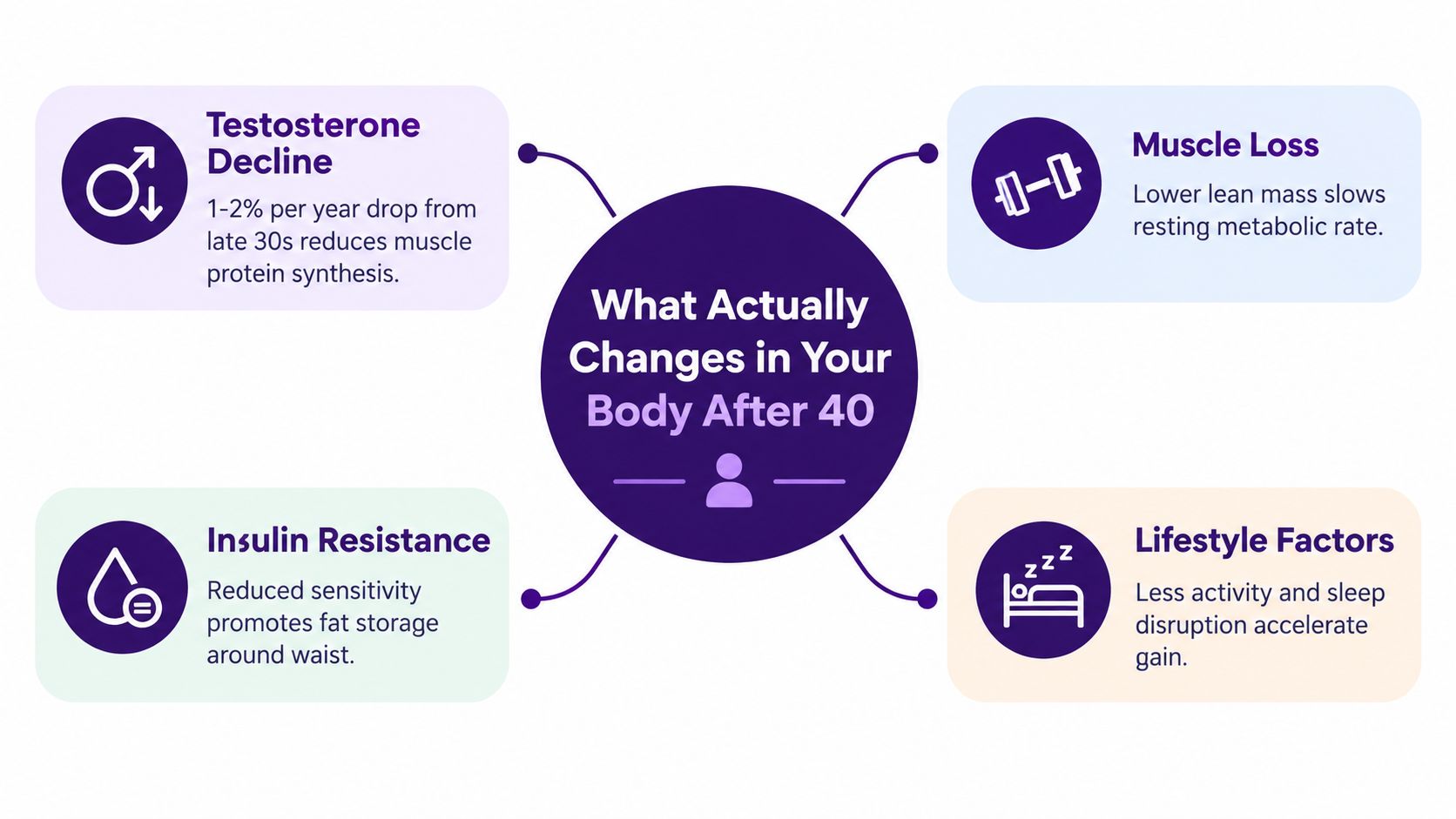
Weight gain after 40 rarely has one cause. The body may gradually carry less muscle, respond differently to food and store more fat around the waist, while work and family life reduce opportunities for movement. These changes interact, so a plan designed only around eating less often produces a disappointing result.
Testosterone is one part of the picture. Background evidence commonly describes a gradual decline from midlife, which can make maintaining muscle and training recovery more difficult for some men. That doesn't mean every man with abdominal fat has low testosterone, or that testosterone treatment is an automatic answer. Symptoms, examination and properly interpreted blood tests matter more than an assumption based on age.
Muscle is the central protection
University Hospital Southampton reports that obesity in later life may cause muscles to age faster, which is particularly relevant when weight loss is aggressive or unsupported by resistance exercise (University Hospital Southampton research). If you lose lean tissue during a diet, your strength and physical capacity can fall even when the scale looks encouraging.
English Longitudinal Study of Ageing data make the reason for caution clear. Over four years, weight loss was associated with higher all-cause mortality risk, with HR 2.21; reduced hand-grip strength was associated with HR 1.53, and the combination of weight loss and low strength produced the highest reported risk, HR 3.77 (longitudinal UK evidence). These findings don't mean intentional weight loss is unsafe. They support monitoring strength and function alongside body weight.
Fat distribution changes the health conversation
Many men notice the waist before they notice changes elsewhere. Central and visceral fat are clinically important because they're associated with cardiometabolic problems, including disturbed glucose regulation, blood pressure issues and fatty liver risk. A waist measurement, blood pressure check and blood tests can therefore tell you more about health risk than appearance alone.
Daily activity also tends to fall when work becomes more sedentary and exercise gets squeezed into an already full week. The result is that “eat less and run more” may create a short-term deficit but fail to preserve the tissue that helps you stay capable. The strategic priority is a manageable calorie deficit supported by protein and strength training.
Eating for Fat Loss Without Losing Muscle
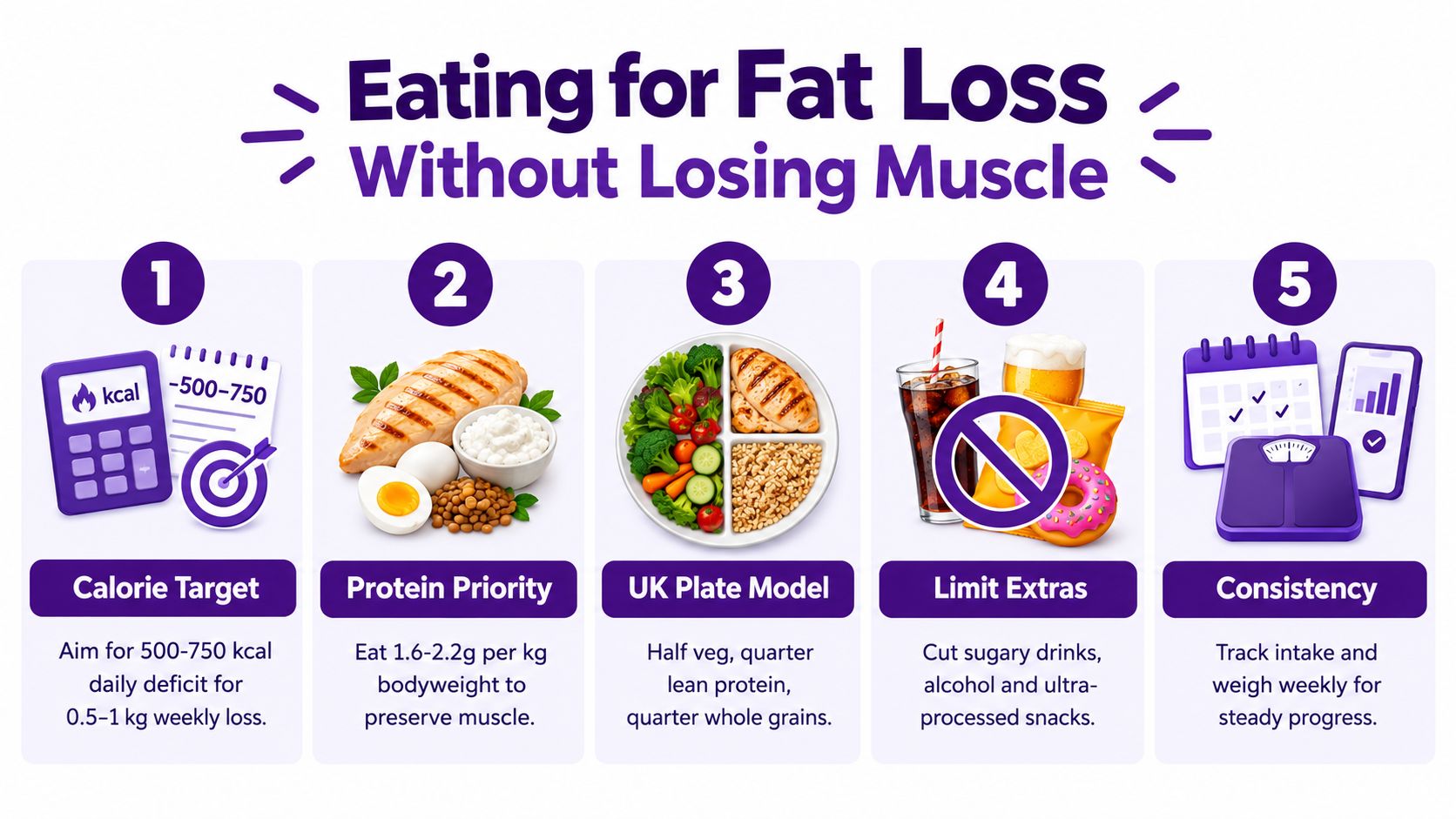
The NHS describes the basic mechanism plainly: weight loss requires eating and drinking fewer calories than your body uses, while physical activity increases energy use (NHS guidance on overweight and obesity). NICE materials refer to a maximum weekly target of 0.5 to 1 kg. Treat that as a sensible ceiling, not a promise or a compulsory score.
Body weight can shift because of water, bowel contents, sodium, training and illness. Use the scales as one signal among several. A weekly trend, waist measurement, gym performance and your ability to follow the plan give a clearer picture of whether fat loss is occurring without excessive loss of muscle.
Build meals around protein and plants
The supplied brief identifies 1.6 to 2.2 g per kg of body weight daily, divided across 3 to 4 meals, for men aiming to protect lean mass during a calorie deficit. Individual requirements differ with kidney health, body composition and training. If you have a relevant medical condition, discuss a high-protein approach with a clinician or dietitian before making a large change.
A straightforward UK plate might look like this:
- Breakfast: Greek yoghurt or eggs, fruit and porridge oats.
- Lunch: chicken, tuna, tofu, beans or lentils with wholegrain bread, rice or potatoes, plus salad or cooked vegetables.
- Dinner: fish, lean meat, eggs, pulses or a plant-based protein with vegetables and a wholegrain or starchy carbohydrate.
- Snacks: fruit with yoghurt, cottage cheese, hummus with vegetables or a measured portion of nuts.
The Eatwell Guide framework includes vegetables, fruit, starchy carbohydrates, beans and pulses, protein foods and unsaturated fats. Reduce extras that add calories without much fullness, particularly sugary drinks, alcohol, takeaway sides, large sauces and late-night snacks. This keeps the deficit manageable while supplying the nutrients and protein needed for training.
Make adherence easier than willpower
Batch-cook a protein source, a carbohydrate base and several portions of vegetables. Weekday meals then need assembly rather than motivation. Front-of-pack traffic-light labels help you compare products, while short-term food tracking can show what your usual portions contain. Tracking should teach you, not become a permanent source of anxiety.
For focused guidance on protecting lean mass during a deficit, read how to lose fat without losing muscle. The practical test is simple: your eating pattern should leave you able to train, sleep and repeat it next week.
A Strength-First Training Plan That Fits Real Schedules
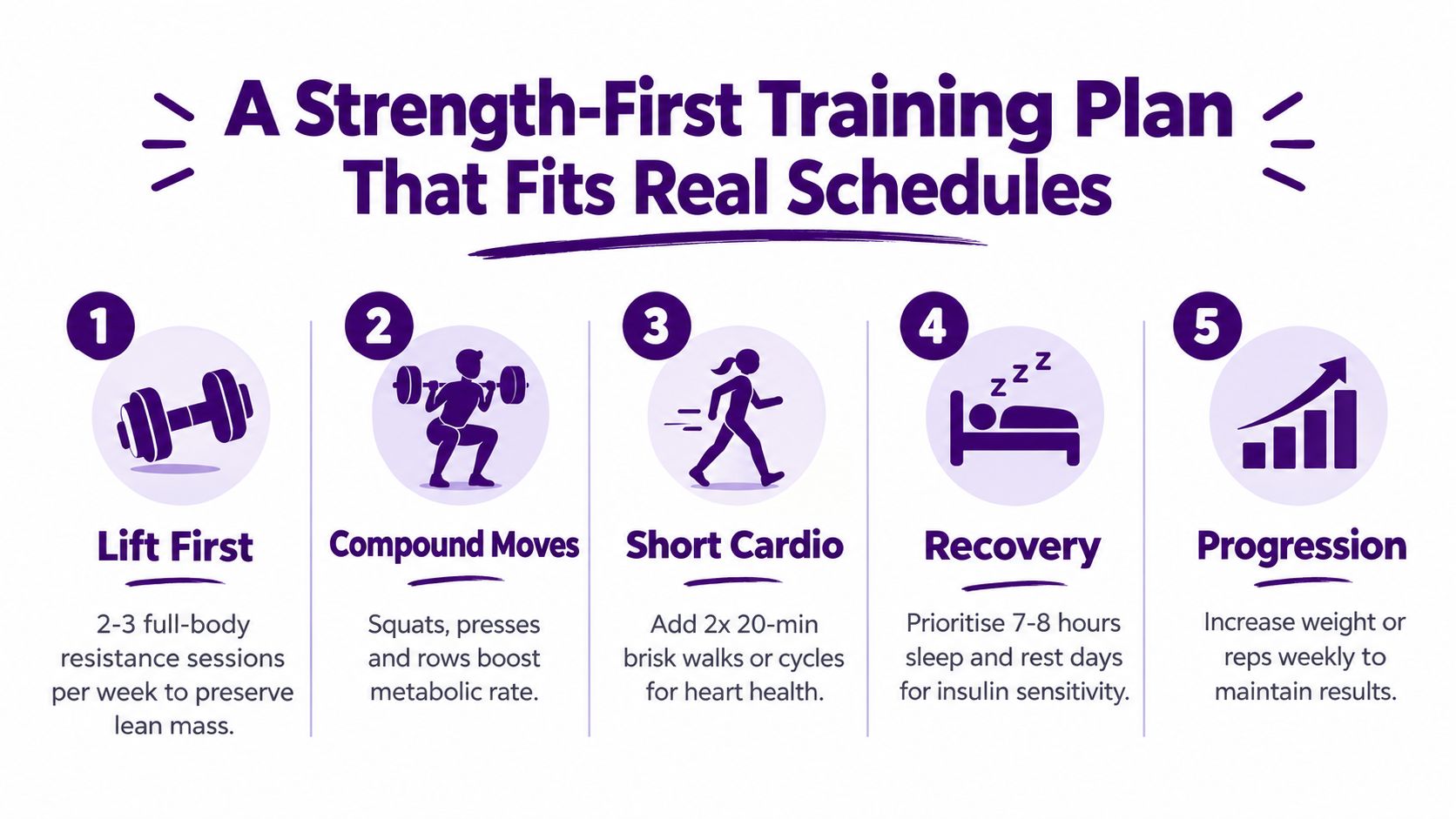
Resistance training deserves priority because it gives your body a reason to retain muscle while you lose fat. Cardio supports heart health and energy expenditure, but long sessions can become difficult to recover from if food intake is already reduced. A strength-first programme also gives you a clear performance measure, such as completing more repetitions with the same load.
Use three full-body sessions
Start with three sessions per week, each lasting around 45 to 60 minutes. Leave recovery time between sessions and begin conservatively if you haven't trained recently.
A session can include:
- Squat pattern: squat or leg press.
- Hinge pattern: Romanian deadlift or another appropriately coached hinge.
- Horizontal press: bench press, dumbbell press or press-up.
- Vertical pull: lat pull-down or assisted pull-up.
- Accessories: a row, shoulder exercise, calf movement or trunk exercise.
Use 2 to 3 sets of 6 to 12 repetitions for main lifts and 2 sets of 10 to 15 repetitions for accessory work. Rest for 90 to 120 seconds between demanding sets. Stop with good technique still available, rather than taking every set to failure.
Progress without punishing your joints
When you complete all sets comfortably, add 2.5 kg or one repetition the next time. If technique deteriorates, keep the load steady. Include a 10-minute warm-up, brief mobility for the hips, thoracic spine and shoulders, and a short cool-down.
Add two low-intensity aerobic sessions of 20 to 30 minutes, such as brisk walking or cycling. Keep them easy enough not to undermine the next strength session. Skipping legs, doing excessive cardio, training to failure every time and ignoring mobility are common ways to make a sensible plan unsustainable.
If you want an additional explanation of the role of resistance work, this resource on strength training for fat loss covers the same muscle-preservation principle. Men following a vegetarian or vegan pattern can also adapt the plan with pulses, tofu, tempeh and fortified foods. Guidance on going vegan without stress can help with the transition, provided total protein and energy intake remain adequate.
Sleep, Stress and Alcohol The Quiet Levers
A man can follow his meal plan and still struggle if poor sleep, sustained stress and drinking repeatedly disrupt the rest of the week. Short sleep can increase hunger and make high-calorie choices feel harder to resist. Stress can also reduce training quality, while alcohol adds calories and commonly interferes with sleep and recovery.
Treat recovery as part of the weight-loss plan, not as a reward for completing it. Anchor your waking and bedtime, keep the bedroom cool and dark, and dim screens during the hour before bed. Aim for 7 to 9 hours where possible, adjusting expectations for shift work, young children or medical conditions.
Create repeatable daily anchors
Use two small interventions rather than promising yourself a completely calm lifestyle:
- After work: take a 10-minute walk before starting the evening routine.
- Before bed: practise five minutes of slow breathing, with a longer exhale than inhale.
- During the day: place short movement breaks around calls, meals or commuting.
- On training days: eat a proper meal and avoid using alcohol as the recovery ritual.
The UK Chief Medical Officers' low-risk drinking guidance sets a ceiling of 14 units per week, spread across at least three days, with two or more alcohol-free days. Keeping alcohol away from training evenings can make it easier to protect sleep and recovery. If you enjoy the social ritual, non-alcoholic wine can provide an alternative, but check labels because alcohol-free products vary in energy content.
Practical rule: Improve the routine you can repeat on a stressful Tuesday, not the routine that only works during a perfect week.
Clinically Supervised Medication Options in the UK
Weight-management medicines should sit inside a clinical pathway, not replace one. NICE links prescribing to a thorough assessment and specialist, multidisciplinary obesity-management service (NICE obesity management guidance). Age over 40 alone doesn't create eligibility.
Current NICE prescribing guidance recommends semaglutide 2.4 mg for adults with an initial BMI of at least 35 kg/m² plus at least one weight-related comorbidity, or with a BMI of 30.0 to 34.9 kg/m² when specialist referral criteria are met (NICE medicine options for adults). Local NHS access can depend on service capacity and pathway arrangements.
GLP-1 medicines can reduce appetite, slow gastric emptying and improve glycaemic control. Orlistat works differently by reducing absorption of dietary fat, and gastrointestinal effects can be troublesome, particularly when meals contain more fat. Liraglutide and other options also require an individual suitability assessment, rather than a general recommendation for everyone with excess weight.
| Medication | Typical NICE eligibility | How it works | Key monitoring |
|---|---|---|---|
| Semaglutide | BMI at least 35 kg/m² with a weight-related comorbidity, or BMI 30.0 to 34.9 kg/m² with specialist criteria | Reduces appetite and slows gastric emptying | Clinical suitability, response, adverse effects and ongoing support |
| Liraglutide | Considered within an appropriate specialist weight-management pathway | Acts on appetite regulation and gastric emptying | Dose tolerance, symptoms, weight response and clinical review |
| Orlistat | Often considered from BMI 28 kg/m² when weight-related comorbidities are present | Blocks some dietary fat absorption | Gastrointestinal effects, diet quality, adherence and response |
Medication normally accompanies nutrition and activity support, with baseline assessment and ongoing monitoring. Use a regulated UK prescriber and check the pharmacy and clinician credentials before treatment. A practical overview of weight-loss medication in the UK can help you prepare questions, but it shouldn't substitute for a consultation.
Your 12-Week Plan and When to Seek Medical Review
A 12-week plan should measure more than body weight. Waist size, strength, energy and recovery show whether fat is reducing while muscle and metabolic rate are being protected.
Weeks 1 to 4 establish the baseline
Keep meals consistent, note usual portions and include protein at each meal. Complete three full-body resistance sessions weekly. Record exercises, starting waist measurement, body-weight trend and key lifts. The first month is for reliable information, not daily perfection.
Weeks 5 to 8 build capacity
Increase load or repetitions only while technique remains controlled. Add a second low-intensity aerobic session if recovery is good. Review sleep and alcohol before cutting food further. If waist and weight remain unchanged after eight weeks despite genuine adherence, ask a professional to review portions, drinks, weekend eating, medicines and activity.
Weeks 9 to 12 reassess intelligently
Compare strength, waist circumference, energy, hunger and weight trend with your starting point. Some people may benefit from a planned diet break or controlled refeed. Set it in advance, rather than allowing it to become an unstructured weekend. Keep habits that are working and change one major variable at a time.
Seek GP advice for rapid unintentional weight loss, persistent fatigue, new blood-pressure concerns, worsening joint pain, marked erectile-function changes or possible sleep apnoea. Ask whether blood tests or referral to a specialist, including a locally available Tier 3 weight-management service, is appropriate. Medical review matters when symptoms suggest an underlying problem, not a slower response to the plan.
Common Questions Men Over 40 Ask First
Why can rapid weight loss backfire? A large deficit can reduce training quality and increase the chance of losing lean tissue. The NHS and NICE-aligned benchmark is a controlled approach, commonly 0.5 to 1 kg per week (NHS weight-management guidance).
Do fat burners or testosterone boosters solve the problem? Most products don't have the same clinical evidence or monitoring as prescribed treatment. Don't use symptoms such as low energy or poor body composition to self-diagnose low testosterone.
Does a plateau mean your metabolism is broken? Usually, check adherence drift, liquid calories, sleep, weekend portions and whether training has stalled before assuming a rare metabolic disorder.
Which tests might be useful? Depending on symptoms and history, ask your GP whether HbA1c, a lipid profile, testosterone, thyroid tests, ferritin or vitamin D are appropriate. Chest pain, breathlessness, severe night sweats, sudden weight loss or a significant change in erectile function warrants medical review.
Private clinics and supplements can sit alongside NHS care, but neither should replace a proper assessment. Trim provides medically supervised weight management through UK-registered clinicians, with treatment options considered alongside nutrition, activity and ongoing support. If you're ready to move from general advice to an assessed plan, visit Trim and complete the consultation so your suitability can be reviewed safely.