
Strength Training for Fat Loss: Build Muscle, Burn Fat Efficiently

It's a common belief that losing fat means spending endless hours on the treadmill. While cardiovascular exercise has its place, if you’re looking for long-term, sustainable fat loss, strength training is a powerful tool supported by extensive research. It works by fundamentally changing your body's composition and metabolic rate.
The Science Behind Strength Training for Fat Loss
To understand why lifting weights is so effective for shedding fat, we need to look past the calories burned in a single session. The primary benefits occur after the workout is done, through key physiological adaptations that make the body more efficient at utilising fat for energy. This is vital for any weight loss journey, particularly for individuals using medical treatments where preserving muscle mass is a top priority.
One of the most significant benefits is its ability to help you maintain muscle while cutting, which is fundamental to achieving a leaner, more metabolically active physique.
Boosting Your Metabolic Engine
Lifting weights builds lean muscle. This is crucial because muscle tissue is more metabolically active than fat tissue—it burns more calories at rest. The more muscle you carry, the higher your basal metabolic rate (BMR) will be. Your BMR is the number of calories your body burns completely at rest to perform basic life-sustaining functions.
By increasing your muscle mass, you effectively raise your body's baseline calorie expenditure. This makes it easier to create and maintain the calorie deficit required for fat loss.
The Afterburn Effect Explained
Strength training also initiates a process called Excess Post-exercise Oxygen Consumption (EPOC), often referred to as the 'afterburn effect'. Following an intensive resistance workout, your body must work to repair muscle fibres, replenish energy stores, and return to its resting state.
This recovery process requires additional oxygen and burns a significant number of calories for up to 48 hours post-exercise. While a cardio session might burn more calories minute-for-minute during the activity, the extended metabolic elevation from EPOC means a structured strength workout contributes to calorie expenditure long after it's over. For more ideas on effective fat loss, you might be interested in our guide on ways to lose body fat fast.
Preserving Muscle During Weight Loss
A common pitfall of weight loss through dietary restriction alone is the loss of both fat and muscle tissue. This can slow down metabolism and sometimes lead to a less toned appearance. Strength training provides a stimulus that signals the body to preserve muscle tissue and preferentially use fat stores for energy.
This is key to mitigating the metabolic slowdown that often causes weight loss plateaus. By preserving muscle, you ensure the weight you’re losing is primarily fat, which leads to a leaner, stronger, and healthier body composition.
Across the UK, strength training is now widely recognised as a cornerstone of effective fat loss strategies. Research consistently shows that resistance training programmes lead to significant reductions in body fat percentage. This is particularly relevant for groups like perimenopausal women who often face a natural metabolic slowdown, as strength training directly counteracts age-related muscle loss (sarcopenia).
Building Your Foundational Training Plan
Moving from the science to practical application is where a fat loss journey takes shape. An effective strength training programme is not based on guesswork but on a structured, evidence-based blueprint designed to achieve specific outcomes. A well-designed plan ensures every session contributes to your overall goal.
The process can be summarised as a cycle: you lift weights to build muscle, that new muscle helps burn more calories, and this in turn boosts your overall metabolism for lasting fat loss.
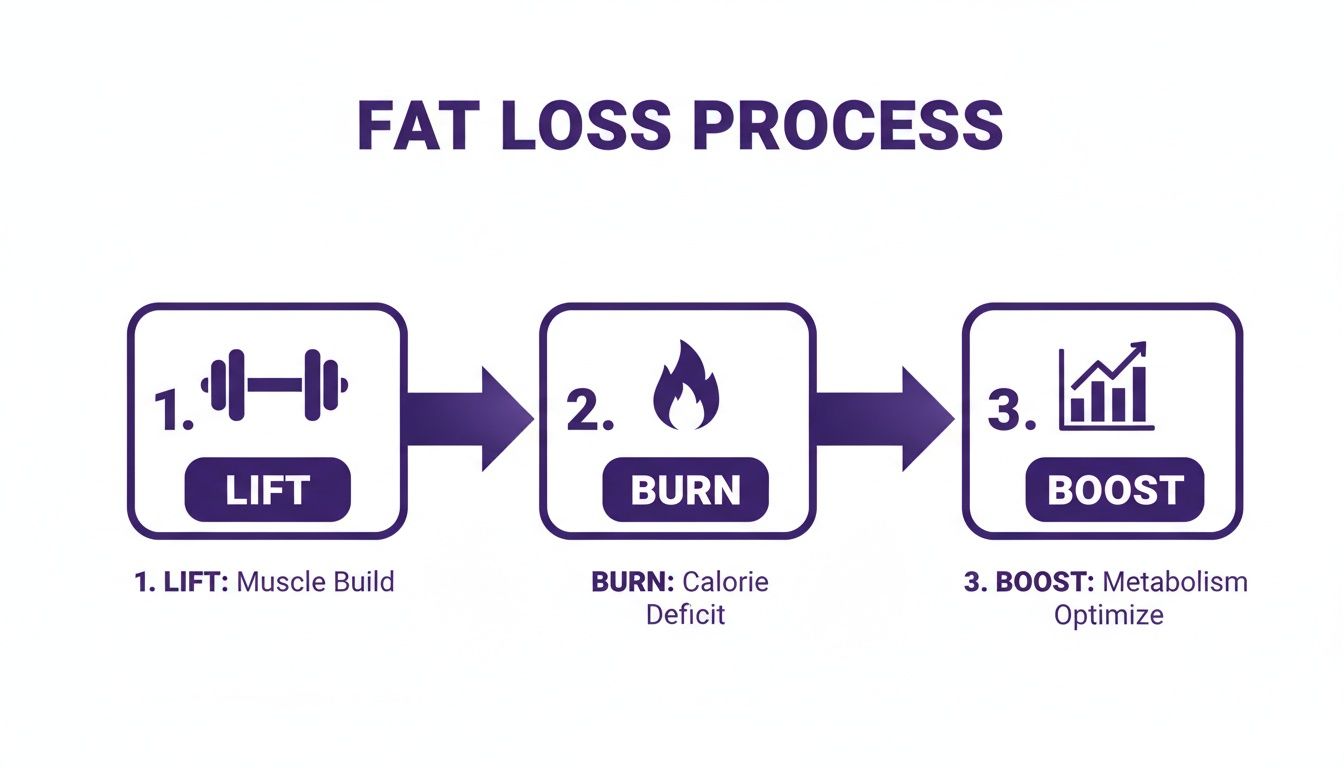
Each step feeds into the next, creating a positive feedback loop that fundamentally changes your body composition.
Choosing Your Training Frequency
Consistency is the most important variable. The optimal training frequency is one that can be sustained long-term. For most individuals aiming for fat loss and muscle preservation, two to four strength training sessions per week is an evidence-based recommendation.
- Two Days Per Week: This is an excellent starting point for beginners or those with significant time constraints. Full-body workouts are most efficient, targeting all major muscle groups in each session.
- Three Days Per Week: This frequency offers a good balance between training stimulus and recovery. It is suitable for both full-body routines and simple split routines (e.g., upper body/lower body days).
- Four Days Per Week: This is generally recommended for individuals with more training experience. It typically involves an "upper/lower" split, allowing for greater volume and intensity on specific muscle groups.
Prioritising Compound Exercises
For metabolic impact, not all exercises are created equal. An effective plan should be built around compound exercises. These are multi-joint movements that engage several large muscle groups simultaneously.
Consider the squat. It recruits the quadriceps, glutes, hamstrings, and core muscles. This requires more energy (burning more calories) and stimulates more muscle fibres than an isolated exercise like a leg extension.
Other foundational compound movements include:
- Deadlifts
- Bench Presses (or push-ups for beginners)
- Overhead Presses
- Rows (such as bent-over or seated rows)
Making these movements the cornerstone of your workouts creates a greater metabolic disturbance, which is necessary to trigger the post-workout "afterburn" effect. You don't always need extensive equipment; using tools like resistance bands for a full body workout can be an effective way to challenge your muscles.
Structuring Sets, Reps, and Rest
The structure of sets, reps, and rest periods determines the physiological response to training. For fat loss, the goal is a combination of muscular stress and metabolic demand.
Here is a general framework based on experience level.
Workout Structure for Optimal Fat Loss
| Experience Level | Frequency Per Week | Reps Per Exercise | Sets Per Exercise | Rest Between Sets |
|---|---|---|---|---|
| Beginner | 2-3 Days | 10-15 Reps | 2-3 Sets | 90-120 seconds |
| Intermediate | 3-4 Days | 8-12 Reps | 3-4 Sets | 60-90 seconds |
| Advanced | 4+ Days | 6-10 Reps | 4-5 Sets | 45-75 seconds |
For most people, a repetition range of 8-12 reps for three to four sets is a well-established starting point. This range is effective for hypertrophy (muscle growth) and is also demanding enough to elevate heart rate and burn a significant number of calories.
Rest periods are a strategic tool. Resting for 60 to 90 seconds between sets allows for partial recovery while maintaining high workout intensity and boosting the overall metabolic effect.
The Principle of Progressive Overload
The human body is highly adaptive. If you perform the same workout with the same variables for an extended period, it will cease to adapt.
This is where the principle of progressive overload is critical. It is the key to avoiding plateaus and ensuring continuous improvements in strength and body composition.
Progressive overload means gradually increasing the demands placed on your muscles over time. This can be applied in several ways:
- Increase the Weight: The most common method. Once you can comfortably complete your target reps and sets with proper form, add a small amount of weight.
- Increase the Reps: If increasing weight isn't possible, aim to complete one or two more repetitions per set with the same weight.
- Increase the Sets: Add an extra set to one of your primary exercises.
- Decrease Rest Time: Shortening rest periods between sets increases workout density and metabolic challenge.
By systematically applying one of these techniques, you provide a continuous stimulus for adaptation, which is how you build muscle and burn fat long-term.
Workout Templates for Different Life Stages

A one-size-fits-all training plan is rarely optimal because our physiological needs change throughout life. A new mother’s priorities differ from those of a man focused on building muscle or a woman navigating menopause.
The following are practical, evidence-based 4-week starter plans designed for these unique life stages. These routines address specific challenges and goals, ensuring your efforts are both effective and safe.
Postpartum Recovery and Foundational Strength
After childbirth, the body requires a gentle yet effective strategy to rebuild strength. The primary goals are to re-engage the core, stabilise the pelvic floor, and gradually reintroduce resistance training to aid fat loss without imposing excessive stress.
This 4-week plan focuses on re-establishing the mind-muscle connection, particularly with the core and glutes, which are often affected during pregnancy. We'll use controlled, deliberate movements to build a solid foundation.
- Weeks 1-2 Focus: Core activation and foundational movements. Aim for two full-body workouts per week on non-consecutive days.
- Weeks 3-4 Focus: Gently increasing volume and introducing slightly more complex movements. Continue with two to three sessions per week.
Here’s a sample full-body workout:
| Exercise | Sets | Reps | Notes |
|---|---|---|---|
| Glute Bridges | 3 | 15 | Focus on contracting the glutes at the top of the movement. |
| Bodyweight Squats | 3 | 12 | Maintain an upright chest and neutral spine. |
| Bird-Dog | 3 | 10 per side | Move slowly and with control to engage the core. |
| Incline Push-Ups | 3 | As many as possible | Use a wall or sturdy table to adjust the difficulty. |
| Dumbbell Rows | 3 | 12 per side | Strengthens the upper back to improve posture. |
As you feel stronger, you can add more reps or another set. It is essential to listen to your body and obtain clearance from your doctor before beginning any new exercise programme postpartum.
Perimenopause and Menopausal Metabolic Support
During perimenopause and menopause, hormonal shifts can accelerate muscle loss (sarcopenia) and slow metabolism, often leading to increased central adiposity. Strength training is a powerful countermeasure. It helps preserve muscle, boosts metabolic rate, and improves bone density.
This plan prioritises compound movements to maximise calorie expenditure and muscle stimulation. It is designed to be challenging, signaling the body to maintain and build lean mass.
- Frequency: Aim for three full-body workouts per week.
- Key Principle: The focus is on progressive overload. The goal is to incrementally lift heavier or perform more repetitions over time.
Building muscle is a primary defence against the metabolic slowdown associated with menopause. Strength training is an essential tool for managing body composition and long-term health during this life stage.
A sample workout might include:
- Goblet Squats: 3 sets of 10-12 reps.
- Dumbbell Bench Press: 3 sets of 10-12 reps.
- Bent-Over Dumbbell Rows: 3 sets of 10-12 reps per arm.
- Romanian Deadlifts (RDLs): 3 sets of 12 reps.
- Overhead Press: 3 sets of 10 reps.
- Farmer's Walks: 3 sets, walking for 30-45 seconds.
Consistency is key to counteracting hormonal changes and improving body composition.
Fat Loss and Muscle Building for Men
For men aiming to reduce body fat while building muscle, the strategy involves heavy compound lifts within a structured routine. This approach increases calorie expenditure, creates a significant metabolic demand, and can support an anabolic hormonal environment.
This 4-week plan utilises an upper/lower body split, which allows for greater intensity and volume per muscle group—a proven method for achieving noticeable changes in body composition.
- Schedule: Four days per week is ideal. For example, Monday: Upper Body, Tuesday: Lower Body, Thursday: Upper Body, Friday: Lower Body.
- Progression: The goal is to consistently increase the weight lifted in the 6-10 rep range over the four weeks.
Upper Body Workout Example:
- Bench Press: 4 sets of 6-8 reps
- Pull-Ups (or Lat Pulldowns): 4 sets of 6-8 reps
- Overhead Press: 3 sets of 8-10 reps
- Bent-Over Rows: 3 sets of 8-10 reps
- Bicep Curls & Tricep Pushdowns: 3 sets of 10-12 reps each
Lower Body Workout Example:
- Barbell Squats: 4 sets of 6-8 reps
- Deadlifts: 3 sets of 5-6 reps
- Leg Press: 3 sets of 10-12 reps
- Hamstring Curls: 3 sets of 10-12 reps
- Calf Raises: 4 sets of 15 reps
This type of structured plan not only aids fat loss but also provides the powerful stimulus needed to build a stronger, more muscular frame. For a deeper dive, see our guide on how to lose weight and build muscle.
Recent UK fitness trends show a surge in people turning to strength training for fat loss, particularly with free weights. Compound movements like deadlifts and squats are proven to be highly effective for calorie expenditure. For individuals on a weight loss plan, this focus is vital for protecting lean mass.
Unfortunately, national data from PureGym's UK fitness report reveals that one in three Brits does not engage in any strength exercise. This can lead to significant muscle loss, particularly when combined with medical weight-loss treatments. Incorporating a strength-focused pillar into a weight management plan helps counter this, promoting more sustainable results.
How Strength Training Complements Medical Weight Loss
Medical weight loss journeys involving treatments like GLP-1 receptor agonists or orlistat are a significant step towards better health. These treatments can be highly effective at reducing appetite and improving energy regulation.
When paired with a structured strength training programme, a synergy is created that can dramatically improve outcomes by ensuring weight loss is primarily from fat, not muscle.
Medical treatments facilitate a calorie deficit, which is the fundamental requirement for weight loss. However, without an adequate physical stimulus, the body may catabolise muscle tissue for energy in addition to fat. Strength training serves as an indispensable partner to medical treatment by mitigating this risk.
Lifting weights sends a powerful anabolic signal to the body to preserve muscle. This protects lean mass and helps maintain a healthy metabolic rate. This can help prevent the metabolic slowdown often associated with weight loss, making it easier to maintain results long-term.
Maximising Treatment Efficacy Through Exercise
Beyond muscle preservation, clinical evidence shows that strength training significantly improves insulin sensitivity—the body's ability to effectively use insulin to clear glucose from the bloodstream.
This physiological benefit works in concert with certain medications like GLP-1s, which also improve glycaemic control.
This combination can lead to better overall metabolic health outcomes. As the body becomes more efficient at managing blood sugar, individuals may experience fewer energy fluctuations and improved appetite regulation, making adherence to a nutrition plan easier. You can learn more about how weight loss injections in the UK fit into a complete wellness plan.
Practical Advice for Training on Medication
When following a medically supervised plan, it is important to listen to your body, as energy levels can fluctuate.
- Timing Your Workouts: Many people find they have the most energy in the morning or mid-afternoon. Scheduling strength sessions during these periods can improve performance and focus.
- Managing Energy Levels: Some medications can reduce appetite, so strategic fuelling is important. A small, easily digestible snack containing carbohydrates and protein about an hour before a workout can improve performance.
- Listening to Your Body: Pay close attention to signs of fatigue or dizziness. It is acceptable to reduce intensity or shorten a workout if you are not feeling well. The goal is consistency over perfection.
A medically supervised approach means every component works together. Exercise should support your treatment, not conflict with it. The aim is to build a sustainable routine that improves long-term health.
The benefits of this combined approach are increasingly recognised. The UK weight training market is growing, largely driven by individuals seeking effective, sustainable fat loss. This is especially important for women experiencing menopause, a time when declining oestrogen can accelerate muscle loss and slow metabolism.
By combining medical treatments with tailored nutrition and a structured strength programme, clinicians can help patients avoid this common pitfall. You can discover more insights about these market trends on futuremarketinsights.com and see why this evidence-based approach can lead to significant transformations. When a holistic plan is created, every element works in harmony for safer and more lasting results.
Staying Safe and Navigating Common Hurdles

Starting a strength training programme is a positive commitment, but the path isn't always linear. It is normal to encounter hurdles such as muscle soreness, training plateaus, and fluctuations in motivation.
The key to turning a short-term effort into a lasting habit is managing these challenges safely and intelligently. This involves listening to your body and training with a clear strategy. That is how a strength training for fat loss journey becomes both effective and sustainable.
Nailing the Fundamentals: Form and Safety First
Before increasing the weight, the primary focus must be on safety and proper technique. Good form is not just about injury prevention; it ensures the target muscles are performing the work, which is essential for achieving results.
- Warm-Ups Are Essential: Dedicate 5-10 minutes before every session to light cardio and dynamic stretches like leg swings or arm circles. This increases blood flow to the muscles and prepares joints for the workout.
- Cool-Downs Aid Recovery: After your final set, spend another 5-10 minutes on static stretches, holding each for 20-30 seconds. This can help improve flexibility and may reduce delayed onset muscle soreness.
- Form Over Weight, Always: Never sacrifice proper technique to lift a heavier weight. If you are unsure about your form, consult reliable video tutorials or consider a session with a qualified trainer to learn the basics.
Ignoring these fundamentals increases the risk of injury and burnout. They should be a non-negotiable part of your routine.
Troubleshooting the Dreaded Workout Plateau
It happens to nearly everyone. After a period of consistent progress, you may find yourself stuck. This is not a sign of failure but an indication that your body has adapted to your current routine and requires a new stimulus.
A plateau is a signal to change a training variable. It is an opportunity to work smarter by strategically adjusting your plan to break through the stall and reignite progress.
Try one of these evidence-based strategies:
- Change Your Rep Scheme: If you have been training in the 8-12 rep range, try switching to a lower range (5-8 reps) with heavier weights for a few weeks, or a higher range (15-20 reps) with lighter weights.
- Vary Your Exercises: Substitute a barbell squat with a goblet squat or a dumbbell bench press with an incline press. Small changes can stimulate muscles in novel ways.
- Manipulate Rest Times: Shortening the rest period between sets increases the metabolic demand of your workout, providing a different kind of stimulus.
How to Handle Muscle Soreness and Low Motivation
The stiffness felt a day or two after a workout is called Delayed Onset Muscle Soreness (DOMS). It is a normal response, particularly when starting a new programme or exercise, and indicates that your muscles are adapting and growing stronger. Sharp pain, however, is not normal and is a signal to stop.
For DOMS, light activity such as a gentle walk can often help ease stiffness. Ensure adequate protein intake to support muscle repair and prioritise sleep, as most recovery occurs during rest.
Remember that progress is not always linear. There will be days when motivation is low. On these days, focus on the habit of showing up, even for a shorter or less intense workout. Consistency, not perfection, is what leads to long-term goals.
Frequently Asked Questions About Strength Training
Starting strength training can feel daunting, and it's natural to have questions. Here are answers to some of the most common queries.
How Much Weight Should I Lift to Lose Fat?
There is no single weight that equates to fat loss. The critical factor is the effort exerted during each set.
The key is to select a weight that makes the last few repetitions of a set challenging to complete with proper form.
A useful tool for measuring this is the Rate of Perceived Exertion (RPE) scale, which runs from 1 to 10. For training that effectively builds muscle and supports fat loss, an RPE of 7 or 8 by the end of a set is a good target. This means the set felt "very hard," and you perceived you only had two or three more repetitions possible.
The most important principle is progressive overload. Whether you lift 5 kg or 50 kg, the aim is to gradually increase the challenge over time. This continuous signal to adapt is what builds muscle and drives fat loss, not a specific number on the weight rack.
Progress can also be achieved by performing one more rep than the previous session or by taking slightly shorter rests between sets.
Will Strength Training Make Me Look Bulky?
This is a persistent myth, particularly among women. The answer is no; strength training is highly unlikely to make you look "bulky" by accident.
Building a large amount of muscle mass is a slow and physiologically demanding process that requires a specific set of conditions:
- A large calorie surplus: Consistently consuming significantly more calories than your body burns.
- Extremely high-volume training: Specialised, heavy lifting protocols designed specifically for maximum muscle growth (hypertrophy).
- Hormonal support: Men have much higher levels of testosterone, a key hormone in muscle hypertrophy, which facilitates mass gain more readily.
For most people, especially those in a calorie deficit for fat loss, strength training creates a leaner, more toned, and defined physique. It builds functional strength and muscle that boosts metabolism, leading to a more compact and athletic appearance. You are effectively reshaping your body by replacing fat with denser, more metabolically active muscle tissue.
Can I Do Strength Training at Home With Minimal Equipment?
Yes. An effective strength workout does not require a gym membership. A powerful routine can be built using bodyweight and a few affordable pieces of equipment.
Bodyweight exercises form a strong foundation:
- Push-ups (on knees, toes, or inclined)
- Squats and lunges (various forms)
- Glute bridges
- Planks and other core stability exercises
To ensure continued progress, you can invest in versatile items. Adjustable dumbbells are a space-saving option that allows for progressive overload. Resistance bands are another excellent tool—they are inexpensive, portable, and ideal for adding resistance to exercises like squats, rows, and shoulder presses. Effective strength training is accessible to everyone.
At Trim, our four-pillar programme combines evidence-based medicines with expert clinical guidance, tailored nutrition advice, and strength-focused training to support your journey. We believe in a complete approach to help you achieve sustainable fat loss while preserving essential muscle. Start your 5-minute consultation today.