
The Evidence for Weight Loss Injections in the UK: A Clinical Guide

Weight loss injections available in the UK, such as those containing semaglutide (Wegovy) and tirzepatide (Mounjaro), are prescription-only medicines. They are licensed for use within a medically supervised programme to help individuals manage chronic weight issues. Based on extensive clinical evidence, they are considered a medical tool for improving long-term health, not a cosmetic solution.
The Rise of Medically Supervised Weight Loss Injections
The clinical approach to weight management has shifted significantly in recent years. The conversation has moved beyond simplistic advice towards a more nuanced, scientific understanding of obesity as a chronic, complex medical condition. A major part of this shift has been the development of clinically-proven weight loss injections, which have generated considerable public interest.
It is important, however, to approach this topic with an understanding of their intended use. These treatments are not available over the counter because they are potent prescription medicines, intended for individuals who meet specific clinical criteria. Their use must always be part of a structured, medically supervised health programme.
A New Class of Medical Treatment
At the heart of this development are GLP-1 receptor agonists. This is the class of medicine that includes treatments such as:
- Wegovy (semaglutide)
- Mounjaro (tirzepatide)
These medicines were initially developed for the management of type 2 diabetes. During large-scale clinical trials, their significant impact on appetite regulation and weight loss became evident. They function by mimicking a natural gut hormone that signals satiety to the brain, slows gastric emptying, and helps regulate blood glucose.
This guide aims to explain the science behind the weight loss injections UK citizens are hearing about. The goal is to provide a clear, evidence-based overview, separate from marketing hype.
These medications represent a significant medical advancement for managing complex health conditions. They work with the body's endogenous hormonal pathways to reduce hunger and improve metabolic health, offering a tool that supports, rather than replaces, sustainable lifestyle changes.
Setting a Factual, Educational Tone
Throughout this guide, the focus will remain strictly educational and evidence-based. We will review the clinical data from key studies, explain the UK regulatory pathways overseen by bodies like the MHRA and NICE, and outline the safety protocols essential for any treatment plan.
Understanding how to access these treatments responsibly through CQC-regulated providers is paramount. This ensures a thorough clinical assessment, ongoing support from a medical team, and a comprehensive plan that also addresses nutrition and physical activity. By presenting balanced, factual information, this guide seeks to provide the knowledge needed to understand this modern approach to long-term health and weight management.
How GLP-1 Injections Work with Your Body
To understand how modern weight loss injections function, it is useful to first consider the body’s endogenous system for regulating hunger and energy. The gut produces a hormone called glucagon-like peptide-1, or GLP-1. This hormone acts as a natural satiety signal.
When a meal is consumed, GLP-1 is released into the bloodstream. It travels to different parts of the body, communicating key messages. It informs the brain's appetite control centre of fullness, slows the rate at which the stomach empties, and supports the pancreas in releasing an appropriate amount of insulin to maintain stable blood sugar levels. This natural process contributes to the feeling of satiety after eating.
However, the body's natural GLP-1 has a very short half-life, remaining active for only a few minutes before it is broken down. This is where pharmacological intervention has made a difference.
Mimicking Your Body's Natural Signals
Prescription weight loss injections are designed to replicate the effects of this natural hormone but with a significantly longer duration of action. Instead of being active for just a couple of minutes, they can remain effective for up to a week.
This long-lasting action means the satiety signal is both amplified and sustained. As a result, the medication helps to:
- Reduce Appetite: By consistently signalling satiety to the brain, it helps lower overall hunger levels.
- Decrease Intrusive Thoughts About Food: Many individuals report a reduction in persistent thoughts about food, sometimes referred to as 'food noise'.
- Increase Satiety: Because the stomach empties more slowly, a feeling of fullness is maintained for longer, even after smaller meals. This can make managing portion sizes more achievable.
This biological mechanism can translate into a real-world feeling of having more control over eating habits. The struggle against cravings often subsides, providing an opportunity to build healthier routines.
Single vs Dual Action: How Medicines Differ
Not all GLP-1 based medicines function in exactly the same way. The two most prominent licensed for weight management in the UK, Wegovy and Mounjaro, have a key scientific difference that can influence their effects and clinical outcomes.
Wegovy (semaglutide) is a single-agonist. This means it is engineered to target and activate only the GLP-1 receptors in the body. Its primary function is to mimic that single satiety hormone to achieve its effects on appetite and blood glucose.
Mounjaro (tirzepatide), in contrast, is a dual-agonist. It is designed to target not only the GLP-1 receptor but also another gut hormone receptor called GIP (glucose-dependent insulinotropic polypeptide). GIP also plays a role in insulin secretion and may have additional effects on how the body processes fat and energy.
By acting on two different hormonal pathways, dual-agonist medications like tirzepatide have demonstrated more significant weight loss outcomes in some clinical trials compared to single-agonist options. This approach represents a further refinement in how these medicines interact with the body's complex metabolic systems.
Understanding this distinction helps to appreciate the scientific progress in this field. Both types of medication are based on the same core principle: using the body's own hormonal signals to help manage weight. However, the dual-action mechanism of tirzepatide offers an additional layer of metabolic influence. You can find out more by reading our complete introduction to GLP-1 medicines and how they support weight loss.
Ultimately, the choice between them is a clinical decision, made by a healthcare professional based on an individual's health profile and goals. The key takeaway is that these treatments are not foreign substances overriding the body's systems; they are sophisticated tools designed to work in harmony with natural biology to help restore balance to appetite regulation.
What Clinical Trials Reveal About Weight Loss Outcomes
When considering any new treatment, a primary question is whether it is effective. For licensed weight loss injections available in the UK, the answer is found in large-scale clinical trials. These studies form the basis of medical approval and provide a clear picture of what can be realistically expected.
The results are based on rigorous scientific data gathered over many months from thousands of participants. Let's examine the headline results from the landmark trial programmes for the two main treatments available in the UK: Wegovy (semaglutide) and Mounjaro (tirzepatide).
Wegovy and the STEP Trials
The approval of Wegovy was based on a series of major global studies known as the STEP programme (Semaglutide Treatment Effect in People with Obesity). These trials consistently showed that when Wegovy was used as an adjunct to diet and exercise advice, participants experienced significant weight loss.
In one of the key studies, participants lost an average of 14.9% of their baseline body weight over 68 weeks. This represents a clinically significant reduction that often leads to major improvements in overall health.
Mounjaro and the SURMOUNT Trials
Mounjaro’s path to approval was equally rigorous, supported by its own set of large-scale clinical trials, the SURMOUNT programme. Due to Mounjaro's dual-action mechanism, which targets two gut hormone receptors (GLP-1 and GIP), its performance was closely watched.
The results were notable. In a pivotal SURMOUNT trial, participants on the highest dose of tirzepatide lost an average of 22.5% of their body weight in 72 weeks. This level of weight loss set a new benchmark in medical weight management.
Efficacy of Licensed UK Weight Loss Injections in Clinical Trials
A side-by-side comparison of these headline figures is helpful. Here is a summary of the results from the pivotal clinical trials that led to these medications being approved for use in the UK.
| Medication (Active Ingredient) | Pivotal Clinical Trial | Average Body Weight Loss | Study Duration |
|---|---|---|---|
| Wegovy (semaglutide) | STEP 1 | 14.9% | 68 weeks |
| Mounjaro (tirzepatide) | SURMOUNT-1 | 22.5% (at highest dose) | 72 weeks |
These robust and consistent results provided UK regulators like the MHRA and NICE with the confidence needed to approve these medicines for public use, confirming that they can deliver significant outcomes for appropriate individuals.
You can explore more weight loss statistics and user experiences to understand the wider impact reported by real-world users.
It’s Not Just About the Scales
Crucially, the clinical trials for weight loss injections UK assessed more than just changes in body weight. They also tracked the impact on other vital health markers, revealing numerous secondary benefits.
Many participants in both the STEP and SURMOUNT trials experienced meaningful improvements in:
- Waist Circumference: A key indicator of visceral fat, which is associated with health risks.
- Blood Pressure: Reductions in both systolic and diastolic readings.
- Cholesterol Levels: Improved lipid profiles, including lower levels of "bad" cholesterol.
- Blood Sugar Control: A vital outcome for individuals with, or at risk of, type 2 diabetes.
This is because these medications work with the body’s natural systems to help restore metabolic balance.
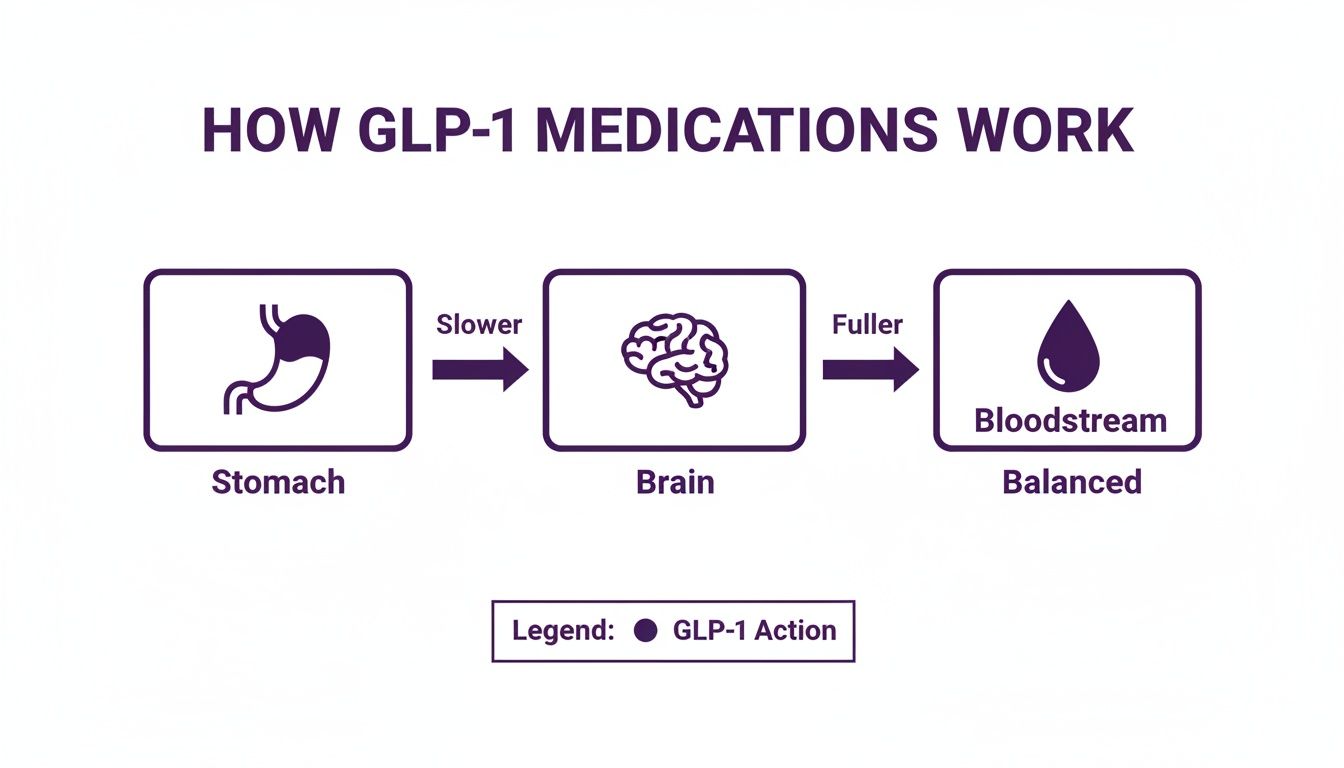
As the diagram illustrates, GLP-1 agonists help balance blood sugar, signal satiety to the brain, and slow gastric emptying to prolong the feeling of fullness.
These wider health benefits are why these treatments are considered a medical intervention rather than a cosmetic solution. They not only assist with weight loss but also help improve overall metabolic health and reduce the risk of serious weight-related conditions.
Navigating Your Treatment Pathway in the UK Safely
Accessing weight loss injections in the UK is not as simple as an online checkout. The process is strictly regulated to prioritise patient safety. It is a structured pathway, guided by official medical bodies, that ensures anyone receiving this treatment gets the appropriate clinical oversight and care.
At the heart of this system are two key organisations: the MHRA (Medicines and Healthcare products Regulatory Agency) and NICE (National Institute for Health and Care Excellence). The MHRA licenses medicines, ensuring they are both safe and effective for use. Once a medicine is approved, NICE provides evidence-based guidance on its use, including eligibility criteria for treatment.
Who Is Eligible for Treatment?
NICE guidelines are very specific, drawing directly from clinical trial data to determine who is most likely to benefit. To be considered for prescription weight loss injections, you generally need to meet certain criteria related to your Body Mass Index (BMI) and any co-existing health conditions.
Typically, the eligibility requirements are as follows:
- A BMI of 30 kg/m² or higher (clinical definition of obesity).
- A BMI between 27 and 29.9 kg/m² (overweight) plus at least one weight-related health condition, such as high blood pressure or pre-diabetes.
Before any prescription can be issued, a qualified clinician must conduct a full medical assessment. This is a mandatory step to confirm suitability and rule out any potential risks, such as a personal or family history of specific thyroid conditions or pancreatitis. As part of this, your healthcare provider will perform initial tests and monitor you throughout treatment. This often includes an HbA1c test to check long-term blood sugar control, which is particularly relevant given the mechanism of action of GLP-1 medicines.
NHS vs Private Care Pathways
In the UK, there are two main routes to access these treatments: through the NHS or via a private, regulated clinic. Each pathway operates differently.
The NHS Route: On the NHS, access is typically managed by specialist tier-3 weight management services. While the prescription cost is minimal, waiting lists can be extensive, often lasting for years. Patients must meet the strict NICE criteria, and this route is usually reserved for individuals with the most pressing clinical needs. We cover this in more detail in our guide to how GLP-1s are prescribed on the NHS.
The Private Clinic Route: For those who meet the criteria but wish to avoid a long wait, private clinics offer a regulated alternative. The key is to look for CQC registration. The Care Quality Commission (CQC) is the independent regulator for health and social care in England, so CQC regulation is a crucial indicator of a legitimate provider. Any reputable clinic will always require a thorough medical consultation with a UK-registered clinician before considering a prescription.
Choosing a provider is a critical decision. Look for CQC registration, verify the clinician’s credentials on the GMC (General Medical Council) or GPhC (General Pharmaceutical Council) register, and ensure they provide continuous clinical support. This ongoing care is fundamental to a safe and effective treatment journey.
It is vital to be aware of red flags. Be cautious of any website that offers to sell prescription medication without a proper consultation. Safe and effective treatment involves much more than just the medicine; it is a partnership with a clinical team that monitors your progress, helps manage side effects, and provides the comprehensive support needed for lasting success.
Understanding Side Effects and Long-Term Considerations
While the clinical results are positive, any responsible discussion about weight loss injections must include a transparent look at potential side effects and long-term outcomes. Like any effective medicine, GLP-1 agonists have possible adverse effects. Understanding these is crucial for anyone in the UK considering this treatment path.
For most people, side effects from medications like Wegovy and Mounjaro are manageable and tend to decrease over time. They are most common at the start of treatment or after a dose increase, as the body adjusts to the medication.
Common Side Effects and How They Are Managed
The most frequently reported issues are gastrointestinal, which is consistent with the medication's mechanism of action on the digestive system.
Common side effects can include:
- Nausea: A feeling of sickness is the most common side effect, but it is typically mild.
- Constipation or Diarrhoea: Changes in bowel habits may occur as the digestive system adapts.
- Fatigue: Some people report feeling more tired than usual, especially in the early stages.
Clinicians are experienced in managing these effects. The standard approach is a gradual dose titration, where treatment begins with a very low dose that is increased slowly over several months. This strategy allows the body to adapt, which can significantly reduce the intensity of any side effects. For a more detailed look at what to expect and how to manage it, our guide on the side effects of Mounjaro provides further information.
The Reality of Stopping Treatment
A significant consideration is what happens when the injection is discontinued. The evidence is clear: these medications are an effective treatment, not a permanent cure. Obesity is recognised as a chronic condition, and when medical support is withdrawn, the body's underlying biology often reasserts itself.
Clinical studies consistently show that without ongoing management, most people will regain a significant portion of the weight they lost after stopping GLP-1 medication. This is not a personal failure; it is a biological reality that underscores the need for a long-term strategy.
This highlights the core principle of medical weight management. The injection is a powerful tool to initiate weight loss and improve metabolic health, but it cannot work in isolation. Its true value lies in providing the opportunity to build new, sustainable habits that can last a lifetime.
Weight Regain: A Sobering Reality
Recent research has provided more insight into this challenge. A significant consideration for weight loss injection UK users is the risk of regain. A study analysing 37 trials with 9,341 adults found that after stopping medications like semaglutide or tirzepatide, weight increased by an average of 0.4kg (0.9 pounds) per month. This rate can even exceed the regain observed after traditional dieting. You can discover more insights about these findings on post-treatment weight regain.
This is precisely why a comprehensive programme is essential. Relying solely on the medication without addressing nutrition, physical activity, and behaviour change is like building a structure without a foundation. It may seem effective for a time, but it is unlikely to be sustainable. An integrated approach—one that combines medical treatment with expert clinical guidance and lifestyle coaching—is the only proven method for achieving lasting success and maintaining health gains after the medication has been discontinued.
Why an Integrated Support Programme Is Essential

While the clinical data for weight loss injections UK are compelling, it is a mistake to view them as a standalone solution. This perspective overlooks the broader context of sustainable, long-term health. The most successful and lasting outcomes are consistently achieved when the medicine is combined with a comprehensive, medically supervised programme.
This integrated approach is designed to address the complexities of weight management. It extends beyond appetite suppression to build a solid foundation of healthy habits that will provide support for life, long after the treatment course is complete. Without this support, the risk of weight regain is high, as the medication does not permanently alter the body's underlying biology.
An effective programme is built on several key pillars, each playing a crucial role in ensuring a safe and successful journey. This framework creates a supportive structure for meaningful, long-term change.
The Four Pillars of Sustainable Success
A truly effective programme provides more than just a prescription; it combines evidence-based medicine with expert guidance on nutrition, exercise, and ongoing clinical care. Each component is vital for building a healthier future and navigating treatment with confidence.
This approach includes:
- Evidence-Based Medicine: This is the foundation. A clinically proven medication like Wegovy or Mounjaro is prescribed at the correct dosage by a UK-registered clinician who has carefully reviewed a full medical history.
- Expert Clinical Guidance: The journey is overseen by a dedicated medical team. This includes regular check-ins to monitor progress, help manage any side effects, and ensure the treatment remains appropriate and safe.
- Tailored Nutrition Advice: The medication makes it easier to consume fewer calories, but it doesn't inherently improve dietary quality. Personalised nutrition advice is crucial to ensure adequate intake of protein, vitamins, and minerals to maintain health while losing fat.
- Strength-Focused Exercise: During rapid weight loss, there is a risk of losing muscle mass along with fat. A focus on strength training is vital to preserve muscle, which helps maintain metabolic rate and prevent weakness.
This four-pillar approach redefines the objective. The goal is not just a number on the scales, but improving body composition, building strength, and fundamentally resetting one's relationship with food and fitness for long-term health.
Building Habits That Last a Lifetime
Ultimately, the aim of an integrated programme is empowerment. The medication provides a critical window of opportunity by reducing the constant "food noise," creating the mental space to build new routines without a sense of constant struggle. This is where real, lasting change occurs.
To achieve lasting success, pairing weight loss injections with the development of sustainable weight loss habits is essential. It involves learning about balanced nutrition, finding enjoyable forms of physical activity, and developing better strategies for managing stress and sleep—all of which have a significant impact on weight.
This supportive ecosystem is designed to ensure one thing: upon completion of treatment, individuals are equipped with the skills, knowledge, and confidence to maintain their health independently.
Your Questions About Weight Loss Injections, Answered
Embarking on a medical weight management journey can raise many practical questions. It is normal to want to understand the details before starting. Here, we provide clear, evidence-based answers to the most common queries about weight loss injections in the UK to help you make an informed decision.
Are These Injections Safe for Long-Term Use?
Weight loss injections like Wegovy and Mounjaro have been approved by UK regulators (the MHRA) for long-term weight management, an approval supported by extensive clinical trial data. Official guidance often supports their use for up to two years under continuous medical supervision.
The key to safe long-term use is not just the medicine itself, but the surrounding support system. A registered clinician who regularly monitors health, adjusts the plan as needed, and provides ongoing guidance is essential. It is also important to know that discontinuing the medication without a proper support plan often leads to weight regain, which highlights the importance of a comprehensive programme for lasting success.
How Much Do Weight Loss Injections Cost in the UK?
The cost of treatment can vary significantly depending on the access route. On the NHS, patients would only pay the standard prescription fee. However, access via this route is challenging due to very strict NICE criteria and often extremely long waiting lists for specialist weight management services.
In the private sector, the monthly cost can range from £150 to over £300. When considering these prices, it is vital to understand what is included. The fee should not just cover the medication. A high-quality, reputable programme will always include the initial consultation, ongoing check-ins and support from a clinician, and other related services. The clinical guidance and safety monitoring are as valuable as the prescription itself.
When comparing providers, always ask for a full breakdown of what is included in the monthly fee. Comprehensive care, particularly regular contact with a medical team, is a key indicator of a safe and trustworthy service.
Who Is Eligible for This Treatment?
Eligibility is guided by the standards set by NICE. Generally, an individual must have:
- A BMI of 30 or higher (clinical definition of obesity).
- A BMI of 27 or higher (defined as overweight) plus at least one weight-related health condition, such as high blood pressure or high cholesterol.
Before any treatment can commence, a UK-registered clinician must conduct a thorough medical assessment. This is a non-negotiable step to confirm suitability and, crucially, to rule out any health reasons why the medication might not be safe, such as a personal or family history of specific thyroid cancers. It is important to remember these medications are powerful tools, but they are not suitable for everyone.
Ready to start your journey with a safe, medically supervised programme? At Trim, our CQC-regulated service combines evidence-based medicine with expert clinical support. Take our free 5-minute consultation to find out if you're eligible.