
How to Lose Weight and Build Muscle The Definitive UK Guide

Achieving simultaneous weight loss and muscle gain, often called body recomposition, is a common fitness goal. The foundational approach involves a carefully managed calorie deficit, adequate protein intake to support muscle tissue, and consistent resistance training to stimulate growth. This combination encourages the body to utilize fat stores for energy while preserving, and even building, lean muscle mass.
A Modern Framework for Losing Fat and Gaining Muscle

Many individuals find themselves in a challenging cycle. Aggressive dieting and excessive cardio often lead to the loss of valuable muscle mass alongside fat. This outcome can result in reduced metabolic rate and an increased likelihood of rebound weight gain.
An evidence-based approach to body recomposition is more effective. This process is achievable with a structured plan that prioritizes metabolic health. Muscle tissue is metabolically active, meaning it burns calories even at rest. Preserving muscle is therefore crucial for maintaining a healthy metabolism and achieving long-term weight management, especially as age-related muscle loss (sarcopenia) can occur without intervention.
This is not only an individual goal but also a significant public health consideration. In the UK, it was estimated that around 26.5% of adults were living with obesity in 2023-2024. Data shows a disparity, with rates increasing from 19.8% in the least deprived areas to 33.8% in the most deprived communities.
The Four Pillars of Successful Body Recomposition
A successful strategy is built upon four interconnected pillars. A weakness in one area can compromise the entire structure. A holistic approach that integrates these components is most likely to produce sustainable, evidence-based results.
| Pillar | Role in Fat Loss | Role in Muscle Preservation/Growth | Why It Matters |
|---|---|---|---|
| Strategic Nutrition | Creates a sustainable calorie deficit to encourage the body to use stored fat for energy. | Provides essential protein and nutrients to repair and build new muscle tissue. | Prevents muscle loss and metabolic slowdown often seen with crash diets. |
| Effective Strength Training | Burns calories during and after workouts (the "afterburn effect"). | Sends the critical signal to the body to preserve and build muscle, even in a deficit. | Ensures weight loss comes from fat, not muscle, leading to a leaner, stronger physique. |
| Clinical Guidance | Ensures your plan is safe, medically sound, and tailored to your unique health profile. | Helps manage health conditions that could impact training and recovery. | Provides professional oversight to adjust the plan as your body changes, ensuring safety and efficacy. |
| Modern Medicine | Clinically-proven medicines can help manage hunger and cravings, making it easier to stick to your nutrition plan. | By supporting adherence to a high-protein diet, it indirectly helps preserve muscle mass. | For eligible individuals, it can be a valuable tool to address biological barriers to weight loss. |
Viewing body recomposition through the lens of health improvement, rather than just weight on a scale, is a critical mindset shift. This integrated framework prioritizes metabolic health, strength, and sustainable habits over temporary solutions.
To fully leverage this framework, understanding the principles of muscle hypertrophy is beneficial. For those new to resistance training, this practical guide to building muscle for beginners offers a solid foundation. With these fundamentals, you can follow a clear, evidence-based path.
Crafting Your Nutrition Plan for Body Recomposition
Effective nutrition is the cornerstone of any successful body recomposition strategy. The focus is on nutrient-dense eating, not severe restriction. To effectively reduce body fat while maintaining or building muscle, the body requires specific fuel.
The process begins with a small, sustainable calorie deficit. This encourages the body to metabolize stored fat for energy, rather than breaking down muscle tissue you're working to build. A moderate approach is key for sustainability.
Prioritise Protein Above All Else
During a calorie deficit, protein intake becomes a primary line of defence against muscle loss. It provides the essential amino acids necessary for muscle protein synthesis—the process of repairing and building muscle tissue—which is critical when combined with strength training.
A higher protein intake also increases satiety, which can help in managing appetite and reducing cravings, thereby improving adherence to a nutrition plan. A significant body of clinical evidence supports the role of high-protein diets in preserving lean mass during weight loss periods.
What is the optimal target? For active individuals aiming for body recomposition, a daily intake of 1.6 to 2.2 grams of protein per kilogram of body weight is a well-supported range.
For an 80kg individual, this equates to a daily target of 128 to 176 grams of protein. Distributing this intake across three or four meals can help maintain elevated rates of muscle protein synthesis throughout the day.
Finding Your Protein Sources
Achieving your protein goal is more manageable when you build each meal around a primary protein source. Consider these options:
- Lean Meats: Chicken breast, turkey, and lean cuts of beef are excellent sources of high-quality protein.
- Fish and Seafood: Salmon, tuna, cod, and prawns are rich in protein and also provide beneficial omega-3 fatty acids.
- Eggs and Dairy: Whole eggs, Greek yoghurt, and cottage cheese offer versatile and convenient protein.
- Plant-Based Options: Lentils, chickpeas, tofu, tempeh, and edamame are nutrient-dense choices for vegetarian or vegan diets.
- Protein Supplements: Whey or plant-based protein powders can be a practical way to supplement protein intake, especially post-workout.
Balancing Carbs and Fats for Energy and Health
While protein is critical for muscle preservation, carbohydrates and fats are essential for energy, hormone regulation, and overall health.
Carbohydrates are the body’s preferred energy source, particularly for high-intensity exercise. Consuming carbohydrates around training sessions can improve performance and aid recovery. Focus on complex, nutrient-rich sources.
- Wholegrains: Oats, quinoa, and brown rice provide sustained energy release.
- Starchy Vegetables: Sweet potatoes, butternut squash, and peas are rich in vitamins and fibre.
- Fruits: Berries, bananas, and apples offer natural sugars for energy, along with vital micronutrients.
Healthy fats are essential for the production of hormones, including those that regulate muscle growth and metabolism, and for the absorption of fat-soluble vitamins.
- Nuts and Seeds: Almonds, walnuts, chia seeds, and flaxseeds are excellent choices.
- Avocado: A source of heart-healthy monounsaturated fats.
- Olive Oil: Ideal for dressings and low-heat cooking.
A structured nutrition plan is particularly important when utilizing medical weight loss treatments. For individuals using a GLP-1 medication, understanding what to eat while on Mounjaro is key for optimal outcomes. This ensures protein and nutrient targets are met, even with a reduced appetite, aligning nutrition with overall health objectives.
The Science of Medically Supervised Weight Loss
While nutrition and strength training form the bedrock of body transformation, physiological factors can present significant challenges. For some, powerful biological signals make adherence to a plan difficult. In these cases, modern medicine, applied under clinical supervision, can provide valuable support. This is not a shortcut, but a means of using evidence-based tools to achieve lasting health improvements.
Medically supervised weight loss is a clinical strategy for individuals who have not achieved desired results with lifestyle interventions alone. It addresses the complex hormonal and neurological signals that regulate appetite, satiety, and metabolism. It can help create a more manageable internal environment, making diet and exercise more effective.
How GLP-1 Medications Support Your Goals
A significant development in this field is the class of medications known as GLP-1 receptor agonists. Initially developed for managing type 2 diabetes, their efficacy in weight regulation has made them a key component of modern obesity care. They function by mimicking glucagon-like peptide-1, a naturally occurring gut hormone.
This hormone has several physiological effects that support fat loss while preserving muscle:
- Appetite Regulation: GLP-1s act on receptors in the brain to reduce hunger signals and what is often termed "food noise," making adherence to a calorie deficit more achievable.
- Increased Satiety: These medications slow gastric emptying, the rate at which the stomach empties after a meal. This promotes a prolonged feeling of fullness, which can help reduce overall calorie intake.
- Blood Sugar Control: By improving insulin sensitivity, GLP-1s help stabilize blood glucose levels, preventing sharp fluctuations that can trigger cravings for high-calorie foods.
By addressing the biological drivers of hunger and satiety, these medications can facilitate the adoption of healthier, sustainable eating patterns. This makes it more feasible to adhere to the high-protein diet essential for losing weight and building muscle.
A Tool, Not a Panacea
It is critical to understand that these medications are tools to be used within a comprehensive lifestyle modification program. Clinical trial data consistently shows that the most significant and sustainable results are achieved when patients combine medication with dedicated dietary changes and regular physical activity.
Without the stimulus of strength training and adequate dietary protein, there is a risk of losing lean muscle mass along with fat, an outcome that should be actively avoided.
The decision tree below provides a framework for setting protein intake based on the primary goal—either prioritizing fat loss or muscle growth.
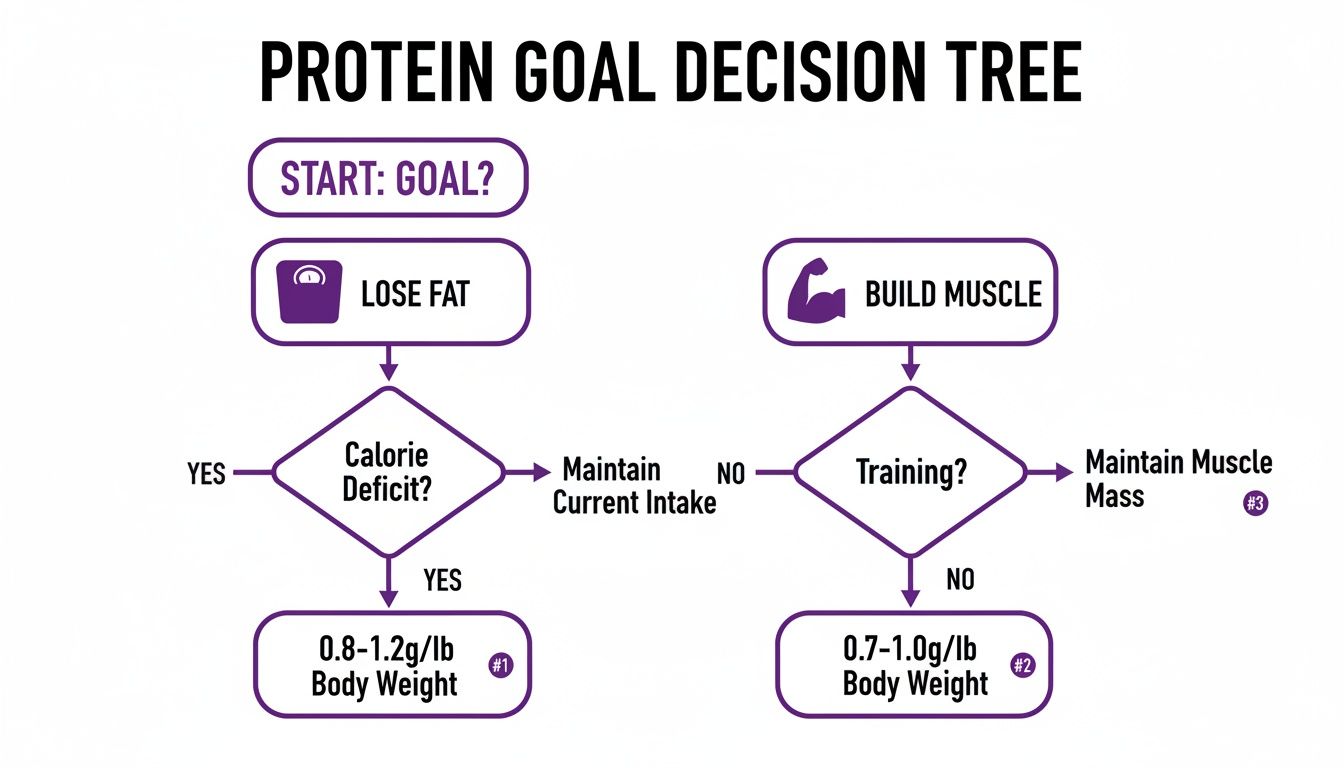
As illustrated, both objectives require a high-protein diet. The primary variable is the caloric intake, which dictates whether fat loss or muscle gain is the primary outcome.
Public interest in these treatments is growing. In the UK, it’s estimated that around 1.6 million adults used weight loss drugs between early 2024 and early 2025. With another 3.3 million people expressing interest, nearly one in ten UK adults are now using or considering these medications. Further details are available in the research from University College London.
As these are prescription-only medicines, eligibility must be determined by a registered clinician. This involves a thorough assessment of an individual's Body Mass Index (BMI), medical history, and existing health conditions. If treatment is initiated, ongoing medical supervision is essential to ensure safety, manage potential side effects, and monitor progress. You can learn more about this process and the role of a specialist UK weight loss clinic.
Building Your Strength Training Foundation

While nutrition creates the necessary energy deficit for fat loss, strength training provides the stimulus for muscle preservation and growth. While cardiovascular exercise contributes to calorie expenditure, resistance training is the primary signal for the body to maintain—and even build—muscle, particularly during a calorie deficit.
Muscle acts as the body's metabolic engine. A greater amount of lean muscle mass corresponds to a higher resting metabolic rate. Preserving it is therefore essential for achieving a leaner physique and preventing the metabolic adaptation that can accompany weight loss.
The Core Principle: Progressive Overload
Muscles adapt to stress. To promote continuous growth, they must be consistently challenged beyond their current capacity. This principle is known as progressive overload.
In simple terms, it involves gradually increasing the demands placed on the musculoskeletal system. Performing the same workout with the same weight and repetitions weekly allows the body to adapt, halting further progress. Progressive overload is the stimulus that compels muscles to become stronger and larger.
There are several methods for applying this principle:
- Increase the Weight: Incrementally add weight to an exercise.
- Increase the Reps: Perform more repetitions with the same weight.
- Increase the Sets: Add an additional set to a given exercise.
- Improve Your Form: Executing an exercise with better technique increases muscle activation and effectiveness.
The objective is not to set a new personal record in every session but to make small, consistent improvements. For example, if you lift 20kg for 8 reps one week, aim for 9 the next. Once you achieve 10, you can increase the weight and return to 8 reps, starting the cycle anew.
A Sample 3-Day Beginner Strength Training Plan
For beginners, a full-body routine performed three times per week on non-consecutive days is a highly effective approach. This frequency ensures each major muscle group is stimulated sufficiently for growth while allowing adequate recovery time. The plan should focus on compound exercises—multi-joint movements that engage multiple muscle groups for maximum efficiency.
Here is a sample schedule.
| Day | Exercise | Sets x Reps | Rest Period |
|---|---|---|---|
| Day 1 (e.g., Monday) | Barbell Squats | 3 x 8-10 | 60-90 seconds |
| Dumbbell Bench Press | 3 x 8-10 | 60-90 seconds | |
| Bent-Over Barbell Rows | 3 x 8-10 | 60-90 seconds | |
| Overhead Press | 3 x 10-12 | 60 seconds | |
| Plank | 3 x 30-60 sec holds | 60 seconds | |
| Day 2 (e.g., Wednesday) | Deadlifts | 3 x 5-8 | 90-120 seconds |
| Lat Pulldowns | 3 x 10-12 | 60-90 seconds | |
| Dumbbell Lunges | 3 x 10-12 per leg | 60 seconds | |
| Push-Ups (on knees if needed) | 3 x To Failure | 60-90 seconds | |
| Leg Raises | 3 x 15-20 | 60 seconds | |
| Day 3 (e.g., Friday) | Leg Press | 3 x 10-12 | 60-90 seconds |
| Seated Cable Rows | 3 x 10-12 | 60-90 seconds | |
| Incline Dumbbell Press | 3 x 10-12 | 60-90 seconds | |
| Dumbbell Lateral Raises | 3 x 12-15 | 60 seconds | |
| Russian Twists | 3 x 15-20 per side | 60 seconds |
Prioritize mastering proper form before increasing weight. A well-executed repetition is always superior to a poorly performed, heavier one.
Structuring Your Week for Success
Rest days are as critical as training days. Muscle growth and repair occur during recovery periods, not during exercise. It is essential to allow at least one full day of recovery between full-body workouts.
A typical weekly structure might look like this:
- Monday: Workout Day 1
- Tuesday: Rest or Active Recovery (e.g., light walking)
- Wednesday: Workout Day 2
- Thursday: Rest or Active Recovery
- Friday: Workout Day 3
- Saturday: Rest or Active Recovery
- Sunday: Rest
Listen to your body. If you experience excessive soreness or fatigue, an additional rest day may be beneficial. Long-term consistency is more important than short-term intensity that could lead to injury.
While resistance training is the primary tool for muscle preservation, it is useful to understand how certain medical treatments can impact body composition. For further reading, an analysis of unlocking the truth about muscle mass loss in patients using GLP-1 medications provides valuable context on the importance of integrating resistance training into a comprehensive plan.
Tracking Progress and Prioritizing Recovery

How can you accurately measure progress when the goal is both fat loss and muscle gain? The scale alone is an unreliable metric. It is possible for total body weight to remain stable—or even increase—while losing body fat and gaining denser muscle tissue.
Therefore, moving beyond scale weight is essential. To get a true picture of body recomposition, it is necessary to use a range of metrics that provide a more complete story.
Moving Beyond the Scale
Effective progress tracking involves collecting multiple data points. This gives a clearer view of physiological changes and helps maintain motivation when scale weight plateaus.
Key metrics to monitor include:
- Body Measurements: Once a month, use a flexible tape measure to record the circumference of your waist, hips, chest, and arms. A reduction in waist circumference while other measurements remain stable or increase is a strong indicator of successful recomposition.
- Progress Photos: Every four weeks, take photos from the front, side, and back under consistent conditions (clothing, lighting, posture). Visual changes are often more revealing and encouraging than numerical data.
- Non-Scale Victories: Monitor subjective and performance-based indicators. Are clothes fitting better? Do you have more energy? Are you lifting heavier weights in the gym? These are all valid signs of progress.
The Science of Recovery
Muscle tissue is not built during a workout; it is built during rest. Recovery is an active and essential component of the adaptation process, allowing the body to repair muscle tissue and adapt to training stress. Neglecting it is a common cause of performance plateaus.
Sleep is the primary recovery tool. During deep sleep stages, the body releases human growth hormone, which is vital for muscle repair and fat metabolism. Consistently achieving 7-9 hours of quality sleep per night is one of the most effective strategies for optimizing progress.
Stress management is another critical factor. Chronic stress elevates levels of the hormone cortisol. Persistently high cortisol can promote fat storage, particularly in the abdominal region, and can also be catabolic, meaning it may break down muscle tissue—the opposite of the desired outcome.
The body's physiological stress response does not differentiate between physical stress from a workout and psychological stress from work. Adequate recovery from all stressors is necessary for optimal results.
Proactive recovery modalities can also be beneficial. For individuals focused on muscle building, using a sauna for muscle recovery may help reduce delayed onset muscle soreness (DOMS) and improve circulation.
Even as new methods emerge, UK residents continue to rely on foundational habits for weight management. Recent survey data indicates that 46% plan to increase exercise, while 42% aim to improve their diet. Combining these core behaviours with diligent tracking and dedicated recovery creates a robust strategy for lasting success. More details can be found in this breakdown of UK weight loss statistics.
Bringing It All Together for Lasting Change
Losing weight and building muscle is a long-term investment in health, not a short-term fix. It is more akin to a marathon than a sprint. The key to success lies in long-term consistency rather than short-term perfection. The combination of a protein-focused diet, progressive strength training, and adequate recovery creates a powerful system for physiological change.
Each component of this system is synergistic. Nutrition provides the energy for training and the building blocks for muscle repair. Training provides the stimulus for muscle preservation and growth during a calorie deficit. Recovery is when the adaptive processes occur, leading to a stronger, leaner physique.
How Medicines Fit Into the Picture
For eligible individuals, medically supervised treatments can be a valuable component of a comprehensive plan. Clinical evidence demonstrates their efficacy in managing appetite and hunger, which can significantly improve adherence to a nutrition plan.
However, it is crucial to view them as a tool within a broader lifestyle modification framework, not as a standalone solution. They produce the best outcomes when integrated with a foundation of healthful eating and consistent exercise.
The ultimate goal is to build sustainable habits. Small, consistent steps forward will always yield better long-term results than short bursts of extreme, unsustainable effort.
This process is about more than just physical transformation. It's about building confidence and understanding the principles that work for your body. By integrating nutrition, training, recovery, and where appropriate, medical support, you are equipped to achieve permanent results.
Common Questions Answered
When pursuing fat loss and muscle gain simultaneously, several common questions arise. Addressing these with clear, evidence-based answers can help you stay on the right path.
Can I Really Build Muscle While in a Calorie Deficit?
Yes, it is possible, particularly for individuals new to resistance training, as their muscles are highly responsive to the novel stimulus. This is often referred to as "newbie gains."
For more experienced lifters, the process is more challenging but still achievable. Success depends on a modest calorie deficit—to avoid excessive catabolism—and a very high protein intake. The training provides the anabolic signal (to build muscle), while the protein provides the necessary substrates. Without both, the body is more likely to catabolize muscle tissue for energy in a calorie-restricted state.
How Much Cardio is Too Much?
While cardiovascular exercise offers significant health benefits, it should be a secondary component in a body recomposition plan. Excessive cardio can interfere with recovery from strength training and may compromise muscle growth. In some instances, high volumes of cardio can increase cortisol levels, potentially hindering progress.
A balanced approach is recommended. Aim for two to three sessions of low-to-moderate intensity cardio per week, such as brisk walking, cycling, or using an elliptical machine. This volume is sufficient to support cardiovascular health and fat loss without negatively impacting strength and muscle gains.
What if the Scale Has Stopped Moving?
A weight-loss plateau is a common and often frustrating experience during body recomposition. It can occur when an individual loses a kilogram of fat while simultaneously gaining a kilogram of muscle. The number on the scale remains unchanged, yet body composition is improving significantly.
Do not let the scale be the sole determinant of your success. It is only one data point. Focus on other indicators, such as progress photos, how your clothes fit, and improvements in strength performance. A decreasing waist measurement is one of the most reliable indicators of successful fat loss.
This is precisely why tracking multiple metrics is essential. It is the only way to gain a comprehensive and accurate understanding of your transformation.
At Trim, we understand that each individual's journey is unique. Our medically supervised programmes are designed to support your specific goals, combining clinically proven medicines with expert guidance on nutrition and exercise. We focus on helping you achieve sustainable fat loss while preserving vital muscle mass. Start your free consultation today to discover how we can support you.