
How do appetite suppressants work: A clinical, evidence-based overview

At their core, appetite suppressants work by interacting with the body's natural signalling pathways to create a feeling of fullness, which helps to reduce hunger cravings. The process involves complex communication between the gut and the brain, and these medications enhance the ‘I’m full’ message, making it more pronounced and longer-lasting.
This is not about eliminating hunger entirely, but rather about restoring a sense of control over appetite. The goal is to make adherence to a calorie-controlled diet more manageable, helping individuals feel satisfied with smaller, appropriate portions of food—a cornerstone of sustainable weight management.
How Medications Help Reduce Hunger
To understand how these treatments function, it's essential to look at the communication network between the gut and the brain, known as the gut-brain axis. Following a meal, the digestive system releases hormones that travel to the brain to signal satiety. Medically supervised appetite suppressants intervene in this natural process to help manage hunger signals more effectively.
These treatments generally operate through two primary mechanisms under clinical supervision in the UK.
The Two Core Mechanisms
Most prescription appetite suppressants prescribed in the UK today can be categorized based on how they influence the body's natural hunger cues:
-
Hormonal Mimicry: Many current medications function by mimicking natural hormones produced after a meal. A key example is the class of drugs known as GLP-1 receptor agonists. These replicate the effects of a gut hormone called glucagon-like peptide-1 (GLP-1), which is a powerful natural signal to the brain that satiety has been reached.
-
Neurotransmitter Influence: Other medications work directly on the central nervous system. They influence brain chemicals (neurotransmitters) such as serotonin and norepinephrine, which play a significant role in regulating both mood and appetite, thereby helping to decrease the desire to eat.
Beyond prescribed medications, it's worth noting that certain dietary components can also significantly promote feelings of fullness. There is strong clinical evidence supporting the use of whey protein for satiety, for instance, which can be a useful adjunctive tool in managing hunger.
The hormonal mimicry approach, in particular, has become a central focus of recent clinical research. In the UK, medications such as semaglutide and tirzepatide use this mechanism to reduce hunger signals and slow gastric emptying. This means food remains in the stomach for longer, which contributes to a prolonged feeling of fullness from smaller meals.
The clinical impact has been significant. A UCL study estimated that approximately 1.6 million adults across England, Wales, and Scotland used these types of weight-loss drugs between early 2024 and early 2025. This figure highlights their growing role within UK healthcare frameworks.
To clarify the different approaches, here is a summary of how various treatments work.
A Quick Look at How Appetite Suppressants Function
This table outlines the primary mechanisms of different types of appetite suppressant medications used under clinical supervision in the UK.
| Mechanism | How It Reduces Hunger | Example Medications |
|---|---|---|
| Hormonal Mimicry (GLP-1) | Mimics gut hormones that signal satiety to the brain. Also slows stomach emptying. | Wegovy (Semaglutide), Mounjaro (Tirzepatide) |
| Neurotransmitter Influence | Acts on brain chemicals like norepinephrine to decrease appetite. | Phentermine (prescription is limited in the UK) |
| Fat Absorption Inhibition | Prevents some dietary fat from being absorbed in the gut. | Orlistat (Xenical, Alli) |
| Fibre/Bulk-Forming | Absorbs water in the stomach to create a physical feeling of fullness. | Meal replacements, high-fibre supplements |
As the table illustrates, there is no single method for managing hunger. Each mechanism targets a different aspect of the complex physiological process that governs appetite, providing various evidence-based options for individuals seeking support with weight management.
The Role of GLP-1 Agonists in Satiety
In modern weight management, GLP-1 receptor agonists are a prominent area of discussion. These medications represent a significant clinical advancement because they leverage the body’s own system for managing hunger—the gut-brain axis. Understanding this biological process is key to appreciating their efficacy.
The gut and brain are in constant communication. After food is consumed, the intestines naturally release the hormone glucagon-like peptide-1 (GLP-1). This hormone functions as a messenger, travelling to the brain to signal that nutritional needs are being met and hunger can subside.
GLP-1 agonists are synthetic analogues of this natural hormone, engineered with a key modification: they are designed to remain active in the system for a much longer duration than the body's naturally produced GLP-1.
This extended action results in a stronger and more sustained satiety signal, leading to a demonstrable reduction in appetite. Clinical trial data supports this: participants consistently report feeling satisfied with smaller portions and experiencing relief from persistent cravings and distracting "food noise," which can be major barriers to successful weight loss.
This diagram illustrates how these medications enhance the natural communication between the gut and the brain.
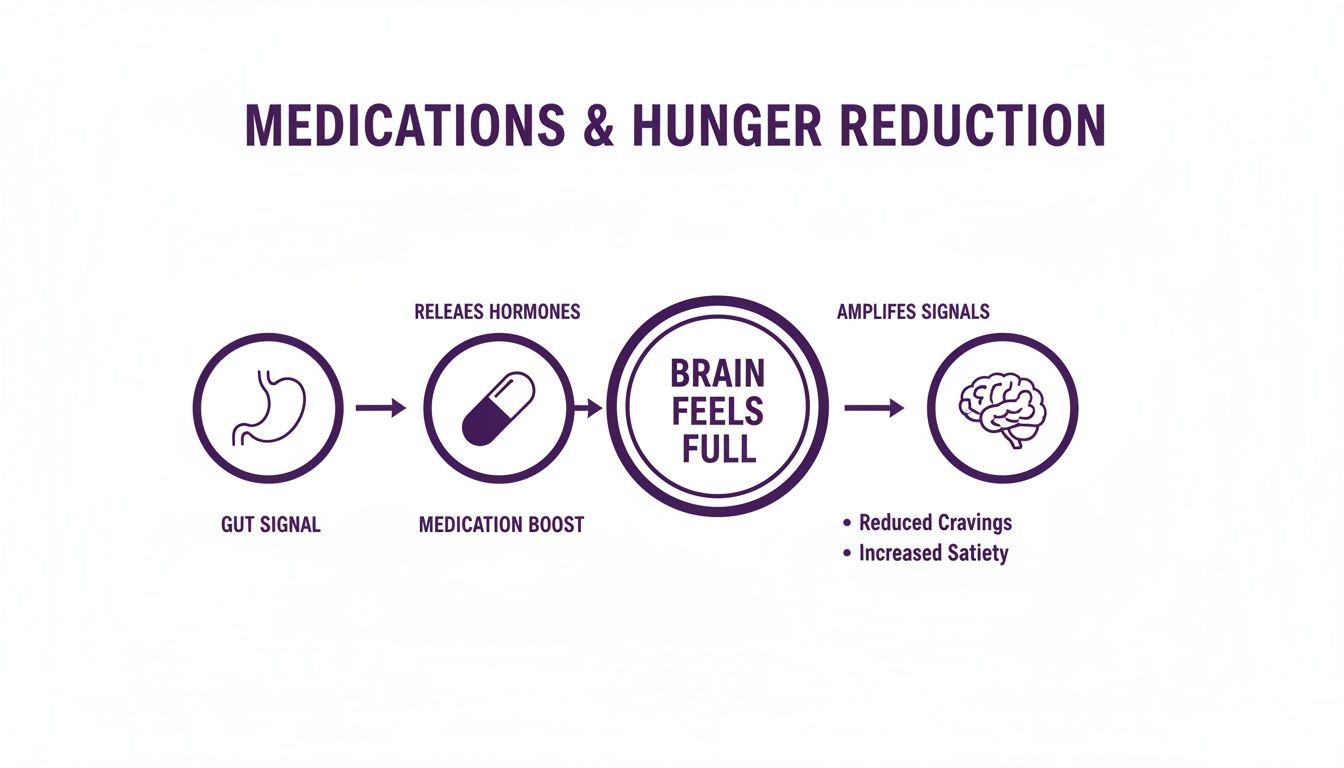
As shown, the medication does not create a new biological process; it amplifies the body's existing satiety signalling system.
Slowing Down Digestion for Lasting Fullness
In addition to signalling the brain, GLP-1 agonists have a second important physiological effect: they slow gastric emptying, the rate at which food exits the stomach.
By delaying this process, food remains in the stomach for a longer period. This physically contributes to the sensation of being full and satisfied, helping to keep hunger at bay for longer post-meal. This dual action—acting on both the brain's perception of hunger and the physical state of the stomach—is what underpins the clinical efficacy of these medications.
Medications like semaglutide are based on this GLP-1 pathway. Pivotal clinical studies have shown that when combined with lifestyle modifications, participants achieved an average weight loss of approximately 15% of their starting body weight. To learn more about the science, see our introduction to GLP-1 medicines.
The Enhanced Effect of Dual-Action Agonists
Scientific research continues to build on these findings. A newer medication, tirzepatide, functions as a dual-action agonist, mimicking two distinct gut hormones involved in satiety.
In addition to the GLP-1 receptor, tirzepatide also targets the GIP (glucose-dependent insulinotropic polypeptide) receptor. GIP is another key hormone released by the gut post-meal, and it also contributes to energy regulation and feelings of fullness.
By activating both of these hormonal pathways simultaneously, tirzepatide can produce a more pronounced effect on appetite and weight loss. The clinical trials for tirzepatide have demonstrated this, with participants achieving an average weight loss that, in some cohorts, exceeded 20% of their body weight.
This multi-targeted strategy represents a significant development in how appetite suppressants work. It marks a shift towards designing sophisticated medications that function in concert with the body’s complex network of hunger signals, offering a potent, evidence-based option for medically supervised weight management.
Other Clinically Proven Appetite Suppressants
While GLP-1 receptor agonists are a focus of current research, they are part of a broader spectrum of clinically proven medications used in weight management. A thorough clinical evaluation is necessary to determine the most appropriate treatment, which may not always be a GLP-1 agonist.
Other established treatments often operate via different mechanisms. Some target brain chemistry to reduce hunger signals, while others focus on the digestive process. This variety allows for a more personalized approach, enabling clinicians to match the treatment to an individual's specific health profile and needs.

Influencing Brain Neurotransmitters
One of the long-standing approaches involves medications that influence the brain's chemical messengers, or neurotransmitters. Sympathomimetic amines, a class that includes phentermine, work by increasing levels of the neurotransmitter norepinephrine.
Norepinephrine is a key component of the body's "fight or flight" response system. Elevated levels send signals to the brain that effectively suppress the sensation of hunger. This provides a direct method of addressing appetite at its neurological source, facilitating adherence to a reduced-calorie diet.
These types of appetite suppressants have been a part of obesity treatment in the UK, a market valued at USD 372.6 million in 2024 and projected to grow to USD 879.3 million by 2030.
Targeting the Brain's Reward Pathways
Food cravings often involve more than simple hunger; they are frequently linked to the brain's reward system. For many, consuming certain foods triggers a dopamine release, creating a powerful feedback loop of craving and reward that can be difficult to interrupt. A combination medication containing naltrexone and bupropion is designed to address this cycle.
This treatment has two components:
- Bupropion: An antidepressant that can also reduce appetite and slightly increase metabolic rate.
- Naltrexone: A medication originally developed to block the effects of opioids. In this context, it helps to dampen the rewarding sensations that certain foods can produce.
By targeting these reward pathways, the medication can reduce the intensity and frequency of cravings. This makes it a suitable option for individuals whose weight management challenges are closely linked to emotional eating or powerful, difficult-to-resist cravings.
This dual-mechanism approach underscores a key principle in modern weight management: success often requires addressing not only the physical sensation of hunger but also the psychological drivers of eating habits.
A Non-Systemic Approach to Fat Absorption
Not all weight loss medications act on the brain. Orlistat operates via a different mechanism, working exclusively within the digestive system without systemic absorption into the body.
Orlistat is classified as a lipase inhibitor. Lipase is a digestive enzyme essential for breaking down dietary fat for absorption. Orlistat inhibits the action of this enzyme.
As a result, a portion of the fat from a meal is not digested. Instead, it passes through the digestive tract and is excreted. By reducing the amount of fat the body absorbs, orlistat helps lower overall calorie intake. It is a practical tool for individuals who require additional support in managing a lower-fat diet. Understanding the proper clinical use of any medication is vital; for instance, learning the right way to use GLP-1 Ozempic provides valuable context for any medically supervised weight loss plan.
What Do the Clinical Trials Actually Show?
When evaluating any medical treatment, the primary question is: "What are the evidence-based outcomes?" For appetite suppressants, large-scale, high-quality clinical trials provide a clear and objective picture of their efficacy.
Data from these major studies are remarkably consistent, demonstrating that medications like semaglutide and tirzepatide can lead to statistically significant weight loss for many users. This robust clinical evidence is the basis for their approval by regulatory bodies in the UK and their integration into medical weight loss programmes.
Examining the quantitative data from these trials helps establish realistic expectations. While not a universal solution, the results confirm these medications are a powerful tool for achieving clinically meaningful, health-improving weight loss when used as part of a comprehensive treatment plan.
Measuring Success with GLP-1 Medications
The clinical trials for modern GLP-1 medications provide clear and compelling data.
The landmark studies for semaglutide (Wegovy), for instance, consistently showed participants achieving an average weight loss of around 15% of their initial body weight over a 68-week period. In practical terms, an individual with a starting weight of 100 kg (approx. 15 stone 10 lbs) would lose an average of 15 kg (approx. 2 stone 5 lbs).
The trials for tirzepatide (Mounjaro), which has a dual-action mechanism, reported even greater average weight loss, with some cohorts achieving up to 20% of their starting body weight. This level of efficacy approaches that seen with some types of bariatric surgery, representing a major advancement in non-surgical weight management.
It is crucial to note that these figures are averages. Individual results will vary based on factors such as starting weight, adherence to the programme, and individual biological response. However, the data provides a strong, evidence-based benchmark of what is achievable.
The Make-or-Break Role of Lifestyle Changes
One of the most critical findings from every major clinical trial is that these medications were never studied in isolation. The significant results observed with both semaglutide and tirzepatide were achieved only when the medication was administered in conjunction with comprehensive lifestyle support.
This is a non-negotiable component of any successful, medically supervised weight loss plan. Every participant in these trials also received guidance on dietary improvements and increased physical activity.
This integrated approach is key to understanding how these treatments function in a real-world clinical setting. The medication acts as a tool that makes healthy lifestyle changes more attainable and sustainable. It reduces the intensity of hunger and "food noise," providing the capacity to build better habits, such as:
- Making Mindful Food Choices: With reduced cravings, selecting nutritious, balanced meals becomes more manageable.
- Controlling Portion Sizes: The medication promotes satiety with smaller amounts of food, which can help individuals adhere to portion guidelines without feeling deprived.
- Engaging in Regular Activity: Reduced body weight and increased energy can make exercise feel less burdensome and more enjoyable, creating a positive feedback loop.
Without these crucial lifestyle adjustments, the medication's effect would be significantly limited, and long-term weight maintenance would be far more challenging. The clinical data is unequivocal: the most powerful outcomes occur when evidence-based medicine and healthy habits are combined. This combination is the foundation of any reputable medical weight loss programme.
Safety, Side Effects, And Medical Supervision
For any medical treatment for weight loss, patient safety is the paramount concern. Modern appetite suppressants have undergone rigorous clinical testing and have a well-documented safety profile, but it is vital to discuss potential side effects. Understanding what to expect—and why medical supervision is essential—is a core part of a safe and successful treatment course.
Many of the common side effects are directly related to the medication's mechanism of action. With GLP-1 agonists like semaglutide, for example, the most frequently reported issues are gastrointestinal, such as nausea, constipation, or diarrhoea.
This often occurs because the medication is slowing digestion to promote a feeling of fullness. While this is a sign the treatment is working as intended, it can require an adjustment period for the body.

Why Medical Supervision Is Not Negotiable
This initial adjustment phase is precisely why these treatments must be initiated and monitored by a qualified clinician. A UK-registered medical professional can manage side effects proactively, helping to ensure the weight loss journey is as smooth as possible.
The standard clinical protocol involves a careful process called dose titration. Treatment begins with a very low starting dose, which is then gradually increased over several weeks or months. This "start low, go slow" method allows the body time to adapt, which significantly reduces the likelihood and severity of side effects like nausea.
A clinical team will closely monitor progress, adjusting the plan based on the patient's response and tolerability. This personalized supervision ensures the therapeutic benefits of the medication are maximized with minimal discomfort.
The purpose of a medically supervised programme is not merely to provide a prescription. It is to offer a comprehensive support system that includes managing side effects, providing nutritional guidance, and ensuring the treatment remains safe and appropriate at every stage.
The Role Of Your UK Clinician
A qualified clinician's role extends far beyond writing a prescription. Their responsibility is to ensure the entire weight management plan is built on a foundation of safety and clinical evidence.
Here is what to expect from a properly regulated medical weight loss service:
- Initial Health Assessment: A clinician will conduct a thorough review of your medical history, including pre-existing conditions and current medications. This is crucial for determining if an appetite suppressant is a safe and appropriate option.
- Ongoing Monitoring: Regular follow-ups allow the clinical team to track progress, monitor for any adverse effects, and make necessary adjustments to the treatment plan.
- Holistic Support: They provide evidence-based guidance on diet, exercise, and lifestyle changes that complement the medication, helping to achieve sustainable results.
This continuous professional oversight is what distinguishes a safe, effective medical programme from the significant risks associated with unregulated online vendors. You can learn more by taking a closer look at weight suppressant drugs and long-term health. Ultimately, working with a clinician ensures you are supported, monitored, and guided toward your health goals in the safest possible manner.
The Future of Weight Management Medication
The field of pharmacotherapy for weight management is advancing rapidly, with ongoing research opening pathways to more effective and convenient treatments. Scientists are exploring new biological targets and refining existing medications to improve patient outcomes. This evolution is not just about increasing efficacy; it's also about enhancing convenience, broadening accessibility, and personalizing treatment.
One of the most anticipated developments is the availability of oral GLP-1 medications. While injectable formulations have demonstrated significant success, a pill-based alternative would represent a major step forward in convenience and accessibility for many individuals. These next-generation treatments are in the final stages of clinical trials and are showing promising results.
The Shift Towards Oral Formulations
A major focus of current research is the development of these oral GLP-1 agonists. The science involves formulating these non-injectable pills to deliver compounds like semaglutide in a way that protects them from degradation in the digestive system. This allows the active ingredient to be absorbed into the bloodstream, bind to GLP-1 receptors, and elicit the intended satiety signals. The objective is to provide the same therapeutic benefits as the injections in a simpler format.
These oral formulations, expected in the UK around 2026, work by prolonging feelings of satiety and slowing digestion, which can lead to reduced caloric intake. One such investigational drug, Orforglipron, may offer easier administration for patients. This innovation builds on the 1.6 million UK adults already using injectable treatments like Wegovy or Mounjaro in 2024-2025—a figure that has significantly surpassed the NHS's initial three-year target of 220,000.
This shift towards oral delivery reflects a commitment to patient-centred care, aimed at removing barriers and improving adherence to effective, medically supervised weight management plans.
Expanding Access and Evolving Guidelines
As new treatments become available, the pathways for patient access in the UK will also evolve. Typically, novel medications are first made available through regulated private clinics, which can provide safe, clinician-led access upon regulatory approval. Over time, as more real-world data and evidence accumulate, NHS guidelines are often updated to incorporate these therapies, making them accessible to a wider population.
This carefully regulated process ensures patient safety remains the top priority. It means that as the science of weight management advances, UK patients can have confidence that they are receiving the latest evidence-based treatments under the supervision of qualified medical professionals. You can dive deeper into this topic by exploring our article on the future of GLP-1 therapies and innovations.
Your Questions Answered
When considering medical weight loss, it is natural to have questions. Below are answers to some of the most common queries from patients in the UK, provided to offer clear, evidence-based information.
How Quickly Will I See Results?
The timeframe for observing results depends on the specific medication prescribed.
With GLP-1 agonists like semaglutide and tirzepatide, most individuals begin to notice a change in their appetite within the first few weeks of treatment. The sensation of increased fullness tends to build as the dose is gradually increased under clinical supervision. Other types of medication may have a different onset of action. Your clinician will provide a clear timeline of what to expect based on your specific treatment plan.
Are These Medications a Permanent Fix for Weight Loss?
It is more accurate to view appetite suppressants as a powerful tool for managing a chronic condition, rather than a standalone cure. They provide significant support, but their efficacy is maximized within a broader treatment strategy.
The body of clinical evidence indicates that these medications are most effective when combined with sustained changes to diet and physical activity. Obesity is now understood to be a chronic medical condition, much like hypertension, which may require ongoing management to maintain the results achieved. A clinical team can help develop a sustainable, long-term plan tailored to your individual needs.
Who Can Get Prescription Appetite Suppressants in the UK?
Eligibility is determined by a UK-registered clinician following a comprehensive medical consultation, not by a simple set of criteria.
As a general guideline, individuals may be candidates if their Body Mass Index (BMI) is 30 or higher, or 27 or higher with a co-existing weight-related health condition such as high blood pressure. However, these numbers are only one part of the assessment. A clinician must review a patient's full medical history and current medications to ensure the treatment is both safe and appropriate. A full clinical evaluation is a mandatory prerequisite for any prescription.
This in-depth assessment is a crucial safety measure. It ensures that the potential benefits of the treatment significantly outweigh any potential risks for you as an individual.
What’s the Difference Between a Regulated Clinic and Buying Online?
The distinction between using a regulated UK clinic and purchasing from an unregulated website centres on three critical factors: safety, regulation, and ongoing clinical support.
A regulated clinic, such as Trim, is registered with official UK healthcare bodies (like the GPhC), employs only UK-registered clinicians, and sources genuine, approved medications from a licensed pharmacy. This framework guarantees that you will receive:
- A thorough medical assessment to determine suitability.
- A safe, legitimate prescription for your treatment.
- Essential ongoing monitoring and support from a dedicated clinical team.
Unregulated online sellers operate outside of these legal and ethical safeguards. They may supply counterfeit, unsafe, or substandard products with no medical oversight, posing a significant risk to your health.
At Trim, we offer a safe, regulated, and supportive path to managing your weight. Our UK-registered clinicians are ready to guide you with a personalised plan that combines clinically proven medication with expert advice on nutrition and lifestyle. To find out if our programme is the right fit for you, start your free 5-minute consultation today. Visit us at https://gettrim.co.uk to learn more.