
Weight Loss Clinic UK: A Guide to Medically Supervised Programmes

Searching for a "weight loss clinic UK" can present a wide array of options, many of which can be confusing. The modern standard for weight management is a regulated medical service offering a comprehensive, evidence-based programme. This approach combines clinically evaluated treatments with essential support, such as nutrition coaching and expert guidance, to help individuals achieve sustainable health goals. The focus is on applying medical science to make long-term health management both achievable and safe.
Understanding the Modern Weight Loss Clinic

The concept of a "weight loss clinic" has evolved significantly. The era of quick fixes and methods lacking scientific backing has been replaced by a focus on medical science. Today's leading clinics are built on a solid foundation of clinical evidence, offering programmes that address the biological factors influencing weight. This is not about promoting specific products, but about ensuring patient safety and providing effective, long-term health management.
A useful analogy is seeking a specialist for a heart condition. In the same vein, individuals can now consult with medical professionals for weight management. These experts develop structured plans grounded in clinical data, ensuring every component of the programme is designed for both safety and efficacy.
A Partnership in Your Health Journey
A defining feature of a reputable UK weight loss clinic is the partnership it fosters between the patient and a team of medical professionals. The process typically begins with a detailed assessment by a UK-registered clinician, who evaluates your medical history and health objectives. This is the antithesis of a one-size-fits-all approach; it is a personalised plan, constructed around individual needs.
This collaborative method ensures continuous support. The focus extends beyond medication to encompass building sustainable lifestyle habits. The core components of a robust programme usually include:
- Medical Supervision: Ongoing guidance from clinicians who monitor progress and adjust the plan as necessary.
- Lifestyle Coaching: Practical, expert advice on nutrition and physical activity to support the treatment plan.
- Evidence-Based Treatments: Access to clinically evaluated medications, prescribed responsibly by a qualified professional.
A high-quality programme moves beyond outdated ideas to focus on safe, effective, and medically sound solutions. It empowers individuals by combining medical science with the personal support necessary to make lasting changes.
Ultimately, the goal is to provide the tools and knowledge needed not only to lose weight but also to maintain a healthier lifestyle long-term. This represents a shift from focusing solely on a number on the scales to building a solid foundation for overall well-being under the guidance of trusted experts. Trim is a trading name of XO Medical (GPhC: 9012710)
The Science Behind Medically Supervised Treatments
Engaging with a regulated weight loss clinic means accessing evidence-based medicine grounded in a scientific understanding of human physiology. These treatments address the root causes of weight gain by targeting the biological signals that control appetite, satiety, and metabolism.
At the forefront of this field are GLP-1 receptor agonists. This class of medications includes treatments such as Wegovy (semaglutide) and Mounjaro (tirzepatide). Their mechanism of action is sophisticated; they are not simply appetite suppressants.
GLP-1s work by mimicking a hormone the gut naturally releases after eating, which signals to the brain that one is full. This process also slows gastric emptying, prolonging the feeling of satisfaction. Consequently, the persistent thoughts about food, often referred to as 'food noise', can diminish, making it easier to manage food intake.
Understanding Different Medical Approaches
While GLP-1s have received significant attention, they are not the only licensed treatment option. Other established medications available in the UK address weight management through different mechanisms. A notable example is orlistat, which acts directly within the gastrointestinal tract rather than on hormonal signals in the brain.
Orlistat is classified as a lipase inhibitor. It functions by blocking some of the enzymes responsible for breaking down dietary fat. This action prevents approximately a quarter of the fat consumed from being absorbed, allowing it to pass through the digestive system. It is a distinct mechanism that provides another clinically proven method for reducing overall calorie intake.
The key point is that there is no single universal solution. Different medications have different mechanisms of action, and a clinician's role is to determine which approach, if any, is appropriate and safe for an individual's specific health profile.
The decision to use any prescription medication is a clinical one, made after a thorough assessment by a UK-registered prescriber. This ensures the treatment aligns with your specific health needs and is part of a comprehensive, supervised programme.
This medical approach to weight management is becoming more widespread. A UCL study indicated that approximately 1.6 million adults in England, Wales, and Scotland used weight loss medications like semaglutide and tirzepatide between early 2024 and early 2025. This reflects a significant shift in public and medical perspectives on weight management. Further details on this trend can be found in the full study from Weight Matters.
The following table provides a comparison of the main medications that may be considered in a clinical setting.
Comparing Common UK Weight Loss Medications
This table summarises the key differences between the primary medications available through UK weight loss clinics, focusing on their mechanisms and clinical trial outcomes.
| Medication (Active Ingredient) | Mechanism of Action | Administration | Primary Clinical Outcome |
|---|---|---|---|
| Wegovy (Semaglutide) | GLP-1 Receptor Agonist: Mimics a gut hormone to signal fullness to the brain, slow stomach emptying, and reduce appetite. | Once-weekly self-administered injection | Significant weight loss; clinical trials report an average loss of around 15% of body weight. |
| Mounjaro (Tirzepatide) | Dual GIP and GLP-1 Receptor Agonist: Targets two separate gut hormones to enhance appetite suppression and improve blood sugar control. | Once-weekly self-administered injection | High average weight loss; clinical trials show averages exceeding 20% of body weight. |
| Orlistat (Orlistat) | Lipase Inhibitor: Works in the gut to block the absorption of about 25% of dietary fat, reducing overall calorie intake. | Oral capsule taken with meals containing fat | Modest weight loss, typically around 5-10% of body weight over a year in clinical studies. |
Each medication offers a distinct, scientifically validated pathway for weight management.
Evidence and Clinical Outcomes
The efficacy of these treatments is substantiated by large-scale clinical trials, not just anecdotal reports. This is the data that UK regulatory bodies, such as the MHRA, review before approving a medicine for use. For example, the clinical trials for semaglutide consistently demonstrated that participants achieved significant and sustainable weight loss, far exceeding results from diet and exercise alone.
Similarly, trials for tirzepatide have yielded robust results, often showing a greater average weight loss. This foundation in solid evidence is what distinguishes a medically supervised programme from unproven alternatives. These are medical treatments, not quick fixes. For more information on the practical aspects, our guide on weight loss injections in the UK offers further details.
Ultimately, this commitment to science defines the modern, responsible approach to weight management. Every prescription is based on a careful medical evaluation, ensuring the chosen treatment is effective and, most importantly, appropriate for the individual.
How a UK Online Weight Loss Clinic Works
The process of engaging with a digital weight loss clinic is designed to be straightforward, safe, and supportive. It leverages technology to remove traditional barriers to care, such as in-person appointments, making comprehensive medical support more accessible. This modern approach simplifies participation in a medically supervised weight management programme.
The patient journey is typically structured around four key stages, ensuring proper clinical oversight from the initial contact through to the achievement of health goals. Here is what to expect from a leading online weight loss clinic UK.
The Initial Online Consultation
The process begins with a detailed online consultation. This is a critical first step where a clinician determines if a medical weight management programme is suitable for you. You will be required to complete a secure health questionnaire covering your medical history, current health status, lifestyle, and personal objectives.
This is more than a simple form-filling exercise. A UK-registered clinician, such as a doctor or prescribing pharmacist, personally reviews the information provided. They assess factors like BMI and pre-existing health conditions to ensure a medical approach is both safe and appropriate. This rigorous vetting process is a hallmark of any reputable clinic and is essential for patient safety.
Secure Prescription and Dispensing
If the clinician determines that a prescription treatment is a suitable option, a private prescription is issued. This is handled securely and professionally, following the same standards as a physical clinic or GP surgery. The prescription is then sent directly to a registered UK pharmacy for dispensing.
This part of the process is strictly regulated. The pharmacy must be registered with the General Pharmaceutical Council (GPhC), the independent regulator for pharmacies in the UK. This registration guarantees that all medications are genuine, correctly sourced, and dispensed by qualified pharmacy professionals. The clinical and pharmacy teams work in close coordination to ensure all procedures are handled safely and correctly.
The infographic below provides a visual explanation of how some modern medications work within the body, targeting key biological signals that control appetite and satiety.
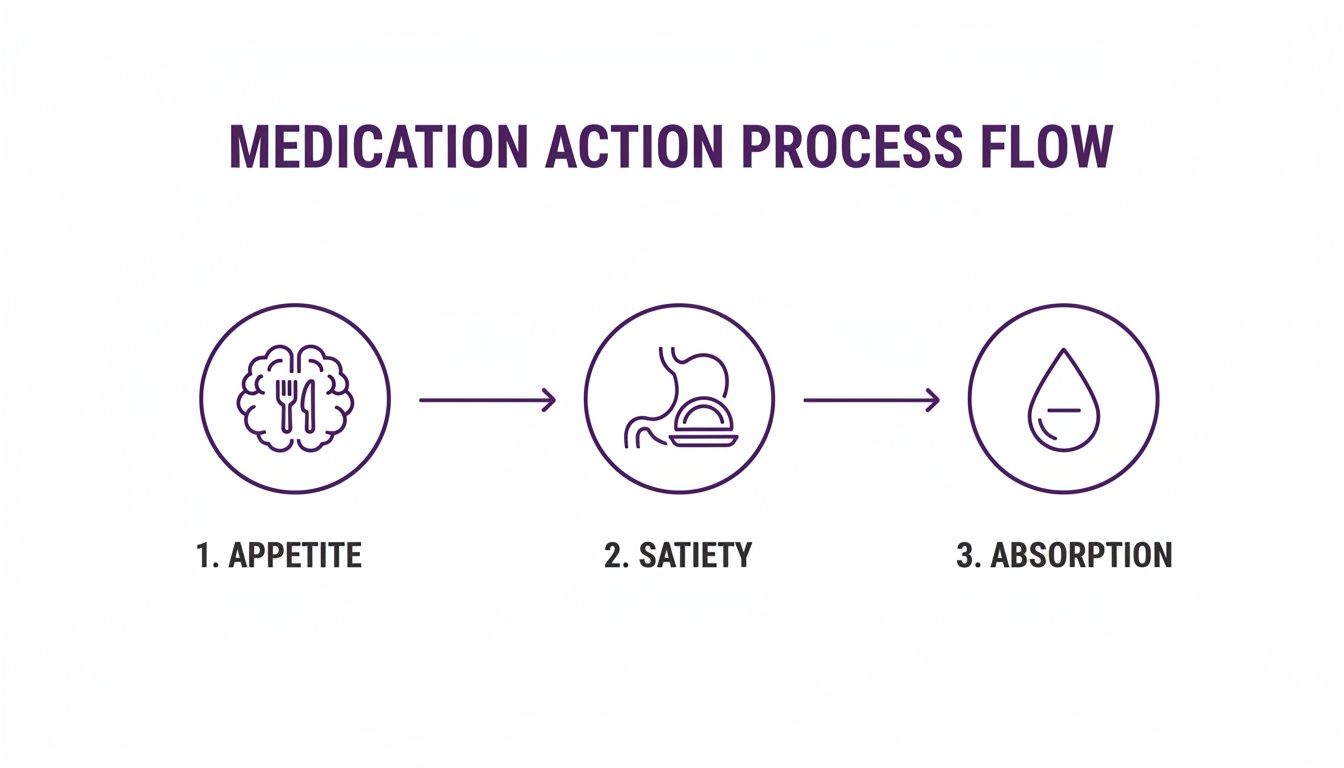
As illustrated, it's a multi-faceted approach. These treatments can influence appetite signals in the brain, promote a longer feeling of fullness, and sometimes affect nutrient absorption.
Discreet Delivery and Ongoing Support
Once dispensed, the medication is delivered to your home in discreet packaging. Most reputable clinics provide prompt delivery services. However, receiving the medication is just the beginning of the journey.
A high-quality online clinic provides vital ongoing clinical support, which is crucial for achieving sustainable results safely. This support system typically includes:
- Regular Check-ins: Scheduled follow-ups with the clinical team to monitor progress and manage potential side effects.
- Dose Adjustments: Guidance from your prescriber on how to titrate the medication dosage according to a safe and effective schedule.
- Expert Guidance: Access to nutritionists and lifestyle coaches to help build healthier, long-lasting habits.
- Progress Tracking: Often, a dedicated app is provided to log weight, activity, and meals, giving both you and your clinicians a clear view of your progress.
The growth in private online care highlights both high demand and, in some cases, limited availability of these treatments through the NHS. Since tirzepatide's approval for weight management in the UK, an estimated 500,000 people have accessed it privately. Currently, private providers serve approximately 95% of all GLP-1 users.
To see a detailed example of this patient-focused approach, you can learn more about how the Trim programme works.
Choosing a Safe and Regulated Clinic
With the increasing popularity of medical weight management, selecting the right provider is more critical than ever. Patient health must be the top priority, which means finding a clinic that adheres to the highest standards of safety and care.
A trustworthy weight loss clinic in the UK is defined not by its marketing, but by its commitment to strict medical protocols and long-term patient well-being. While navigating the options can seem daunting, there are clear indicators that distinguish legitimate, safe services. The key is to look for providers who are transparent about their regulatory status and the qualifications of their clinical team.
The Importance of UK Regulation
In the UK, all legitimate medical services are overseen by professional governing bodies. For any clinic that dispenses medication, the most important one to verify is the General Pharmaceutical Council (GPhC). The GPhC is the independent regulator for pharmacists, pharmacy technicians, and pharmacy premises in Great Britain.
When a clinic works with a GPhC-registered pharmacy, it ensures that all medications are genuine, stored correctly, and dispensed only by qualified professionals. You can and should verify a pharmacy’s registration on the official GPhC website. This simple check provides significant peace of mind.
The qualifications of the prescribing clinician are equally important. Any clinician prescribing medication must be registered with a UK professional body—for example, the General Medical Council (GMC) for doctors or the GPhC for prescribing pharmacists. These organisations ensure clinicians meet the required standards for training, skill, and professional conduct.
The landscape is evolving rapidly. A recent report indicated that specialist weight loss clinics now account for 15.2% of users obtaining these prescriptions, a figure comparable to GPs (15.7%) and surpassing high-street pharmacies (13.3%).
Critical Questions to Ask Any Clinic
To feel confident in your choice, it is wise to prepare a few questions for any potential provider. Their responses will reveal much about their standards of care.
- Are your prescribers UK-registered? Always confirm that clinicians are registered with a UK body like the GMC or GPhC. A legitimate clinic will readily provide this information.
- What does your ongoing care and support include? A prescription is only one component. Inquire about follow-up care, such as regular check-ins, direct access to clinicians, and support for managing side effects.
- How do you monitor patient progress and safety? A proper clinic will have structured processes for monitoring your health, which may include a dedicated app, scheduled consultations, or direct messaging with your clinical team.
A safe clinic’s primary goal is your long-term health, not just issuing a prescription. They should focus on providing a comprehensive programme that includes medical supervision, lifestyle guidance, and continuous support.
Red Flags to Watch Out For
Just as there are signs of a good clinic, there are also clear warning signs that a provider may not be operating safely or ethically. Be extremely cautious if you encounter any of the following:
- No consultation required: A clinic offering to sell prescription medication without a thorough health assessment by a qualified prescriber is a major red flag.
- Lack of follow-up care: A "prescribe and forget" model is unsafe. Proper medical care requires ongoing monitoring to manage treatment effectively and safely.
- Unrealistic promises: Be wary of providers promising "miracle" results or guaranteeing substantial weight loss in a short period. Responsible clinics set realistic, healthy expectations based on clinical evidence.
By asking the right questions and knowing what to look for, you can make an informed decision and find a true partner in your health journey. For those interested in specific treatments, our guide on how to get Wegovy safely in the UK offers further insights into correct procedures.
Who Can Benefit from a Medically Guided Programme?
A medically guided weight management programme is not suitable for everyone. However, for individuals facing specific biological and lifestyle challenges, it can be a highly effective intervention. This is not about generic diet tips; it is a structured, evidence-based approach that addresses the unique challenges different people face.
Considering these situations makes it clear why a supervised programme from a UK weight loss clinic can be so beneficial, especially when weight management difficulties are linked to distinct physiological changes. A generic plan often fails because it cannot account for underlying hormonal or metabolic shifts.
Postpartum Health and Recovery
After childbirth, the body undergoes immense hormonal and physical changes. Many new mothers find it challenging to return to their pre-pregnancy weight while managing hormonal fluctuations, sleep deprivation, and the demands of a newborn. A medically guided programme can offer a safe, controlled way to navigate these challenges.
Clinicians can design a plan that complements postpartum recovery, ensuring any treatments are appropriate and that nutritional advice supports both weight management goals and the body's healing process. It provides a structured path forward during a potentially overwhelming time.
Navigating Menopause and Perimenopause
The transition into perimenopause and menopause brings a cascade of hormonal changes, most notably a decrease in oestrogen. This directly impacts body composition, often leading to increased abdominal fat and a slower metabolism. Consequently, previously effective weight management methods may no longer yield the same results.
A clinical programme can address these hormonal challenges directly. By combining medical treatments that target the biological drivers of weight gain with tailored lifestyle advice, it helps women regain a sense of control over their health during this life stage.
A supervised plan acknowledges that this is not a matter of willpower but of adapting to a new biological reality. The support from a medical team is often crucial for understanding the body's new needs and developing a sustainable, effective strategy.
A Clinical Approach for Better Body Composition
For some individuals, the primary goal is not just weight loss, but specifically fat loss while preserving muscle mass. Unstructured dieting often results in the loss of both fat and muscle, which can negatively impact metabolism and long-term strength. A clinical programme excels in this area.
A well-designed medical plan will typically integrate:
- Evidence-Based Medication: Treatments can help regulate appetite, making it easier to adhere to a nutrition plan that supports muscle preservation.
- Targeted Nutrition Advice: Guidance often focuses on adequate protein intake to support muscle while in a calorie deficit.
- Strength-Focused Exercise: Recommendations are usually geared towards resistance training to signal the body to retain muscle tissue while burning fat.
This methodical approach helps ensure that the weight lost is primarily from fat stores, shifting the focus from the number on the scales to achieving a healthier, stronger body composition.
The Four Pillars of Sustainable Success

Medication can be a significant component of a weight management plan, but it is just one part of a larger strategy. True, lasting success is not built on a single solution. The most effective programmes from a weight loss clinic in the UK are structured around four interdependent pillars.
This comprehensive approach ensures support from every angle, addressing biology, habits, and physical health simultaneously.
1. Evidence-Based Medicine
This is the foundation. It begins with using clinically proven, regulated treatments to address the biological challenges of weight loss. Modern medications like GLP-1s help regulate appetite and reduce 'food noise', providing a crucial advantage for making meaningful lifestyle changes. This pillar ensures the journey is grounded in science.
2. Expert Clinical Guidance
A prescription alone does not constitute a complete plan. Ongoing supervision from UK-registered clinicians is essential for safety and success. This pillar provides a safety net, ensuring treatment is closely monitored, dosages are adjusted appropriately, and any side effects are managed promptly and professionally.
A high-quality programme ensures you are never on your own. You have a dedicated medical team guiding you, offering personalised advice and making sure your plan evolves with your progress for safe, optimal results.
This continuous support transforms a simple prescription into a properly managed medical treatment, providing expert care throughout the process.
3. Tailored Nutrition Coaching
While medication can influence appetite, nutrition coaching provides education on what to eat to fuel the body effectively for the long term. This is not about restrictive diets but about building sustainable, healthy habits that persist beyond the course of medical treatment.
Effective coaching focuses on practical skills for daily life, such as:
- Understanding Macronutrients: Learning the optimal balance of protein, fats, and carbohydrates to support muscle and energy levels.
- Building Balanced Meals: Creating satisfying and nourishing meals without complex calculations.
- Mindful Eating Practices: Improving one's relationship with food beyond simple calorie counting.
This is also where one can learn how additions like protein powder for weight loss can be integrated into a healthy eating plan.
4. Strength-Focused Training
During weight loss, there is a risk of losing muscle mass along with fat. Since muscle is metabolically active tissue, preserving it is crucial. The fourth pillar, strength training, is designed to mitigate this risk.
By prioritising resistance exercise, a signal is sent to the body to preserve muscle while metabolising fat. This ensures that the weight lost is primarily from fat stores, leading to a healthier body composition and making it easier to maintain weight long-term. It is the final component that contributes to becoming stronger and more resilient.
Common Questions About Weight Loss Clinics
Beginning a medical weight management programme often raises practical questions. Here are answers to some of the most common inquiries people have when considering a UK weight loss clinic.
How Much Do Private Weight Loss Clinics Cost?
The cost of a private weight loss clinic in the UK varies, but most reputable programmes structure their pricing around several key components. It is best viewed as an ongoing medical service rather than a one-time purchase.
Typically, the price includes:
- Your Initial Consultation: Some clinics may charge a fee for the initial assessment by a UK-registered clinician.
- A Monthly Plan: This is the most common model, usually bundling the cost of medication, continuous clinical check-ins, access to health coaching, and any progress-tracking apps.
- The Medication Itself: A significant portion of the cost is for the medication. Prices can vary depending on the specific drug (e.g., Mounjaro, Wegovy, orlistat) and the prescribed dosage.
Monthly plans generally range from approximately £150 to £300 or more, particularly at higher doses. It is important to choose a provider that is fully transparent about all potential costs from the outset.
What Are the Usual Side Effects of GLP-1 Medications?
Like any effective medication, GLP-1 treatments can have side effects. Clinical trial data shows that for most people, these are typically mild, transient, and manageable, especially when the dose is increased gradually under clinical supervision.
The most common side effects are gastrointestinal and may include:
- Nausea
- Diarrhoea or constipation
- Mild abdominal discomfort
A good clinic will proactively help manage these. They will provide dietary advice (such as eating smaller, simpler meals initially) and ensure the prescriber is available for support or to adjust the plan if needed. While serious side effects are rare, the clinical team will always inform you of what to monitor.
How Long Until I See Results?
It is natural to be eager for results, but it is important to have realistic expectations. Medically supervised weight loss is a gradual process, not a quick fix.
While individual responses vary, clinical trials provide a good indication of expected outcomes. Many people using GLP-1 medications report a reduction in appetite within the first few weeks, with noticeable weight loss typically occurring within the first one to two months.
The significant results observed in studies—such as an average loss of 15-20% of body weight—are usually achieved over a period of 6 to 12 months. Individual progress will depend on factors like starting weight, adherence to the programme, and the body’s unique response to the medication.
Ready to take the next step with a trusted, medically supervised programme? At Trim, our team of UK-registered clinicians is here to provide the expert guidance and support you need for sustainable results. Start your free consultation today.