
What to Eat on Mounjaro: A Practical Guide

When considering what to eat while taking Mounjaro (tirzepatide), a sensible approach is to build meals around three core components: lean protein, fibre-rich vegetables, and healthy fats. This protein-first strategy is important for preserving muscle mass when the medication reduces appetite, helping to ensure that weight lost is primarily fat.
Your Foundational Mounjaro Nutrition Strategy
Starting treatment with Mounjaro is a significant step, but it’s important to remember that the medication is most effective when paired with lifestyle modifications. Nutrition is a key component of a comprehensive treatment plan for lasting weight management.
Mounjaro has a powerful effect on appetite and the way the body handles food. You can get a deeper understanding of this in our guide on how does Mounjaro work. It promotes satiety, meaning you feel full quicker and for longer, which is a major benefit for weight management. However, this reduced appetite can also create a nutritional challenge. With a suppressed appetite, it can be easy to consume insufficient calories and, more importantly, inadequate protein.
The Risk of Muscle Loss
Without a conscious effort to focus on nutrition, significant weight loss can involve losing both fat and lean muscle mass. Losing muscle is undesirable because it is metabolically active—it burns calories even at rest. Preserving muscle is essential for maintaining a healthy metabolic rate and for long-term weight management success. This is where a protein-focused diet becomes a critical consideration.
By making protein the centrepiece of your meals, you provide your body with the essential building blocks—amino acids—it needs to repair and maintain muscle tissue, even in a calorie deficit. This helps ensure that weight loss reflects a reduction in fat mass, not muscle.
Building Your Plate for Success
The core principle is simple: structure every meal around a primary source of protein. Pair it with non-starchy vegetables for fibre and micronutrients, and add a small portion of healthy fats for satiety and hormone health. This approach creates meals that are both nutrient-dense and satisfying, working in harmony with the medication's effects.
As a quick-reference guide, here’s a breakdown of the key food groups to focus on.
Core Food Groups for Your Mounjaro Journey
| Food Group | Why It's Essential | Examples |
|---|---|---|
| Lean Protein | Helps preserve muscle mass, supports metabolism, and promotes satiety. | Chicken breast, turkey, fish (salmon, cod), eggs, Greek yoghurt, tofu, lentils, beans. |
| Fibre-Rich Veggies | Provides essential vitamins and minerals, aids digestion, and adds volume to meals for very few calories. | Broccoli, spinach, kale, peppers, courgettes, cauliflower, Brussels sprouts, asparagus. |
| Healthy Fats | Supports hormone function, aids absorption of fat-soluble vitamins, and contributes to satiety. | Avocado, nuts (almonds, walnuts), seeds (chia, flax), olive oil. |
Sticking to these food groups will help you feel your best while ensuring your body gets the right fuel.
Observational data from clinical settings suggests that patients who prioritise adequate protein intake—for example, through lean chicken, Greek yoghurt, or lentils—tend to achieve more favourable body composition changes compared to those on low-protein diets. This initial focus on protein is a cornerstone of effective eating habits during treatment.
Prioritising Protein to Preserve Muscle Mass
When undergoing weight loss, the primary goal is to reduce fat mass, not the valuable muscle that helps maintain metabolism. When weight loss is rapid—as it can be with medications like Mounjaro—the body may break down muscle for energy if not given the right nutritional support.
Think of your muscle as your body's metabolic engine, burning calories continuously. Losing muscle can lower your resting metabolic rate, making long-term weight maintenance more challenging. Because Mounjaro is effective at suppressing appetite, it can be easy to under-eat, putting that metabolic engine at risk.
Why Protein is Your Top Priority
Among macronutrients, protein should be a primary focus when aiming for fat loss. It plays two vital roles. First, it contributes to satiety, helping you feel full and satisfied for longer, even with smaller meals. A high-protein meal sends strong signals to the brain that you’ve had enough, which can help manage cravings.
Second, and most importantly, protein provides the essential building blocks—called amino acids—needed to repair and maintain muscle tissue. By supplying your body with a steady stream of protein, you signal it to preserve lean mass while using fat stores for energy.
How Much Protein Do You Need?
A practical, evidence-based target for individuals on GLP-1 medications is to aim for 1.2 to 1.6 grams of protein per kilogram of your ideal body weight. For some, this figure may need to be higher, but this range is an excellent starting point for muscle preservation.
To calculate this, take your goal weight in kilograms and multiply it by 1.2 and then by 1.6. This gives you your daily protein range in grams. For example, if your goal weight is 70 kg (around 154 lbs), you'd aim for between 84–112 grams of protein each day.
The infographic below illustrates the difference a high-protein diet can make. Research indicates that higher protein intake during weight loss can significantly improve the ratio of fat lost to muscle retained.
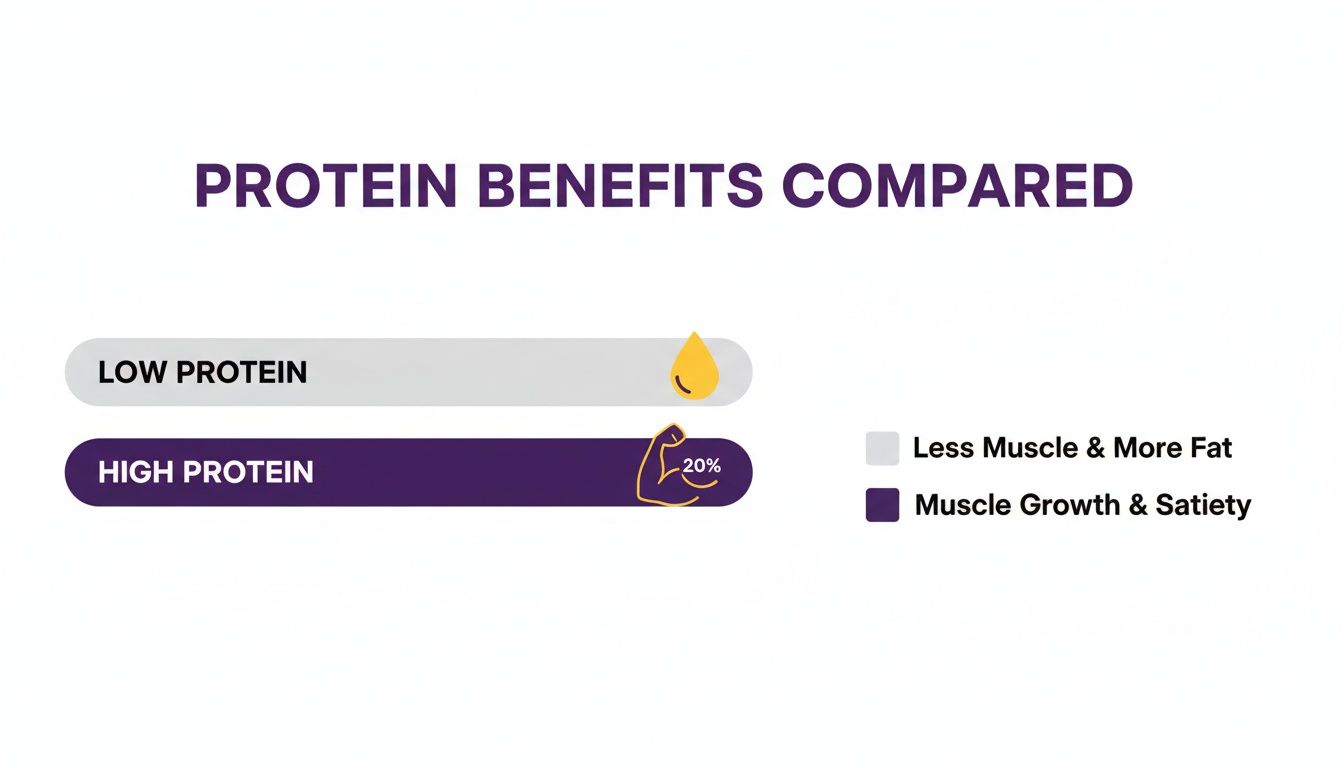
This visual highlights how a protein-rich diet signals the body to hold onto lean muscle, ensuring the weight you lose comes primarily from fat stores.
If you want to go deeper on this, you can learn more about the complexities of muscle mass loss in patients using GLP-1 medications and see why a proactive nutrition strategy is so crucial.
Excellent Sources of Lean Protein
Hitting your daily protein goal is more manageable when you know which foods are most effective. The key is to focus on lean sources that are low in saturated fat. Here are some high-quality options to build your meals around.
- Poultry: Skinless chicken and turkey breast are incredibly lean and versatile.
- Fish: Salmon, cod, tuna, and prawns are not only packed with protein but also provide healthy omega-3 fatty acids.
- Eggs: An affordable and excellent source of complete protein, suitable for any meal.
- Dairy: Low-fat Greek yoghurt and cottage cheese are protein powerhouses, great for breakfast or a snack.
- Lean Red Meat: Sirloin steak or lean mince can be included in moderation.
The goal is to include a source of protein with every meal and snack. This steady intake helps maintain stable energy levels and ensures muscle-building amino acids are always available to your body.
For individuals following a plant-based diet, there are many excellent choices. To ensure you're hitting your targets consistently, it’s worth consulting a complete high protein vegan foods list for more ideas. Some of the top options include:
- Tofu and Tempeh: Made from soybeans, these are complete proteins that absorb flavour well.
- Lentils and Beans: Chickpeas, black beans, and lentils are fantastic sources of both protein and fibre.
- Quinoa: This grain is a complete protein source and works well as a base for salads or bowls.
- Nuts and Seeds: Almonds, chia seeds, and hemp seeds are perfect for snacking or adding to meals.
By consciously making these foods a priority, you create a strong nutritional foundation that works in synergy with Mounjaro, helping you achieve lasting fat loss while keeping your body strong and healthy.
Managing Common Side effects with Smart Food Choices
While Mounjaro is an effective medication, it's not uncommon to experience some gastrointestinal side effects, particularly when first starting treatment or after a dose increase. Nausea, constipation, or general discomfort can occur as your body adjusts.
The good news is that your food choices can be a powerful tool in managing these feelings and maintaining a smooth treatment journey.

Think of your diet as a way to work with Mounjaro. By being intentional about what you eat, you can proactively soothe your digestive system and minimise potential disruptions.
Soothing Nausea with Simple Foods
Nausea is one of the most common side effects reported with GLP-1 medications. When feeling queasy, a large, complex meal is often unappealing. The key is to simplify your approach and stick to foods that are gentle on your stomach.
Instead of three large meals, try shifting to five or six smaller 'mini-meals' spaced throughout the day. This can prevent the stomach from becoming overly full, a common trigger for nausea. Focus on bland, easy-to-digest foods that don't require your system to work hard.
Here are a few go-to options for when you're feeling nauseous:
- Plain crackers or toast: Simple carbohydrates can help settle the stomach.
- Clear broths or soups: These are excellent for hydration and provide nutrients without feeling heavy.
- Steamed white fish or plain chicken: Lean, simply cooked proteins are easier for your body to process.
- White rice or potatoes: Low-fat, low-fibre starches are known to be easy on the gut.
A crucial tip is to eat slowly and listen to your body. Mounjaro significantly enhances fullness signals, so pay close attention and stop eating when you feel satisfied, not stuffed.
Tackling Constipation with Fibre and Fluids
Because Mounjaro slows gastric emptying, constipation can sometimes become an issue. To help keep things moving, your two best allies are soluble fibre and ample fluids.
Soluble fibre dissolves in water to form a gel-like substance, which helps soften stool and make it easier to pass. It’s vital to increase your fibre intake gradually to allow your system to adapt. A rapid increase can lead to bloating and gas.
Excellent sources of soluble fibre include:
- Oats and barley: A warm bowl of porridge is a perfect, soothing start to the day.
- Beans and lentils: Add them to soups or salads for a combination of fibre and protein.
- Fruits like apples and pears (with the skin on): These offer a gentle, natural source of fibre.
- Root vegetables like carrots and sweet potatoes: Roasting or steaming makes them soft and easy to digest.
Hydration is the other part of the solution. Aim for at least 2-3 litres of water and other unsweetened fluids daily. Without enough water, fibre can worsen constipation, so they must work together.
Foods That Can Worsen Side Effects
Just as certain foods can provide relief, others are known to trigger or aggravate digestive issues. Knowing the common culprits can help you make smart swaps and avoid unnecessary discomfort, especially as you adjust to the medication.
As a general rule, you may want to limit or avoid:
- Greasy or fried foods: High-fat meals are harder to digest and are a frequent cause of nausea.
- Very spicy foods: These can irritate the stomach lining for some people.
- Highly processed and sugary foods: Items like cakes, sweets, and fizzy drinks offer little nutritional value and can sometimes contribute to digestive upset.
Observational data from clinical settings suggests that patients who increase their soluble fibre intake towards 30g daily may experience a reduction in nausea. This also helps stabilise blood sugar, which is central to how Mounjaro works. You can discover more about these findings and the impact of weight loss medications in the UK on the UCL news site. By making these simple, strategic food choices, you can effectively manage side effects and continue your journey with comfort.
How to Build a Balanced Mounjaro Meal Plan
Understanding nutritional principles is a great start, but consistent application is where results are achieved. Let’s translate theory into action. This is what a balanced, satisfying, and effective day of eating on Mounjaro can look like. It's not about harsh restrictions; it’s about making smart, nutrient-dense choices that support your body.
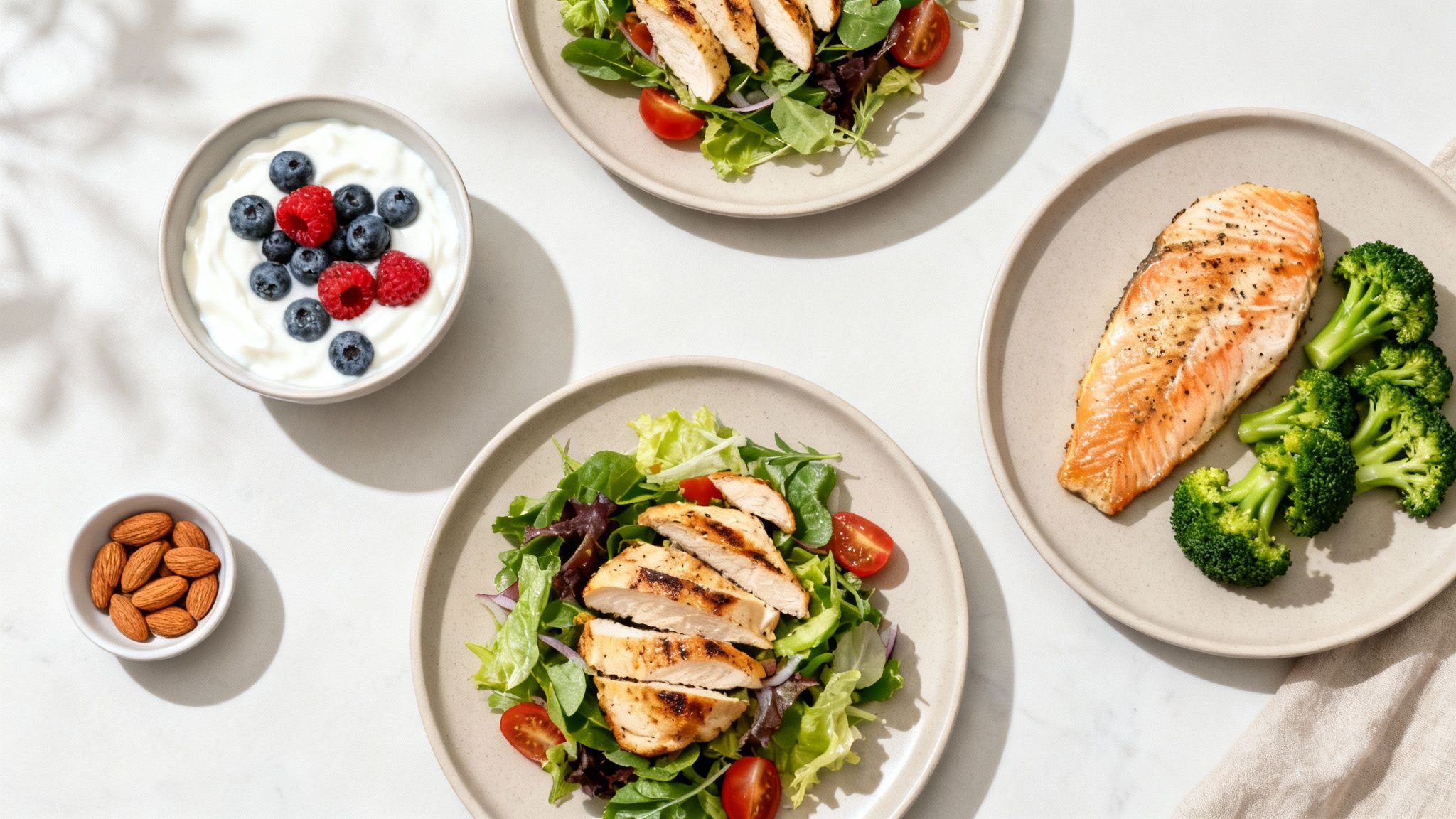
The goal is to build meals high in protein to preserve muscle, rich in fibre to aid digestion and promote fullness, and packed with vitamins and minerals to nourish your body. Let's walk through a sample day to see how achievable this is.
A Sample Day of Eating on Mounjaro
This one-day plan serves as a template—it's designed to be delicious, filling, and aligned with health goals. Remember, portion sizes will vary based on individual needs. One of the biggest changes on Mounjaro is that your body's fullness cues become clearer, so it's vital to listen to them.
Breakfast (approx. 350 calories, 30g protein)
- What to Eat: A simple bowl of plain, low-fat Greek yoghurt topped with a handful of mixed berries and a sprinkle of chia seeds.
- Why It Works: This is a protein-rich meal that sets a stable foundation for the day. It helps manage blood sugar and promotes satiety until lunchtime, while the berries add fibre and antioxidants without a significant sugar spike.
Lunch (approx. 450 calories, 40g protein)
- What to Eat: A large mixed green salad with 150g of grilled chicken breast, cucumber, tomatoes, bell peppers, and a light vinaigrette made with olive oil.
- Why It Works: This provides a large serving of lean protein to meet muscle-sparing goals, plus a high volume of non-starchy vegetables for key micronutrients. The healthy fats from the olive oil are important for absorbing vitamins and promoting satiety.
Dinner (approx. 500 calories, 40g protein)
- What to Eat: A baked salmon fillet alongside a generous helping of steamed broccoli and a small portion of quinoa.
- Why It Works: Salmon delivers not just high-quality protein but also heart-healthy omega-3 fatty acids. Broccoli is an excellent source of fibre, and quinoa provides a complete protein for sustained energy release.
Snacks (approx. 200 calories, 15g protein)
- What to Eat: A hard-boiled egg or a small handful of almonds.
- Why It Works: These are ideal grab-and-go options. They provide a solid dose of protein and healthy fats to manage hunger between meals without resorting to processed snacks. If you're curious about what to avoid, you can learn more about the hidden dangers of processed foods in our detailed guide.
Total for the day: Approximately 1,500 calories and 125g of protein. This demonstrates how one can achieve a high protein target within a moderate calorie budget, creating an ideal environment for losing fat while preserving muscle mass.
Making Smart and Sustainable Swaps
Variety is key to maintaining any healthy eating plan long-term. The most effective diet is one you can adhere to without feeling deprived. This involves learning how to make simple, healthy substitutions that keep meals interesting and nutritious.
As you build your Mounjaro meal plan, it's also a good idea to incorporate foods that support cardiovascular health. A great starting point is this list of recommended cholesterol-lowering foods, many of which can be seamlessly integrated into your diet.
To make things even easier, the table below provides simple swaps to upgrade your meals, turning less-than-ideal choices into goal-focused fuel.
Simple and Effective Food Swaps
These easy substitutions can elevate the nutritional quality of your meals without sacrificing taste or satisfaction.
| Instead Of This | Try This Healthier Swap | The Nutritional Benefit |
|---|---|---|
| Sugary Breakfast Cereal | Plain Greek Yoghurt with Berries | Swaps empty calories and sugar for high-quality protein and fibre, promoting satiety and stable energy. |
| Processed Deli Meat Sandwich | Grilled Chicken Salad with Vinaigrette | Replaces high-sodium, processed meat and refined bread with lean protein and nutrient-dense vegetables. |
| Creamy, Heavy Pasta Dish | Zucchini Noodles with Lean Turkey Mince | Drastically reduces refined carbohydrates and saturated fat while boosting your intake of lean protein and vegetables. |
| Crisps or Biscuits for a Snack | A Handful of Almonds or a Hard-Boiled Egg | Switches empty carbs for a satisfying snack rich in protein, healthy fats, and essential nutrients. |
| Sugary Fizzy Drinks or Juice | Water with a Slice of Lemon or Herbal Tea | Eliminates liquid sugar calories, helping to manage overall calorie intake and improve hydration. |
By using these swaps and the sample plan as a guide, you can take the guesswork out of healthy eating. It becomes a straightforward, repeatable process of building balanced plates that support your body, work in harmony with your medication, and make your health journey both successful and enjoyable.
Don’t Forget Hydration and Micronutrients
While focusing on protein and fibre is a significant step, two other elements are equally vital for feeling your best on Mounjaro: proper hydration and a sufficient intake of micronutrients. These components work in the background to maintain energy levels, support digestion, and ensure your system functions efficiently during weight loss.
One of Mounjaro’s main effects is reduced hunger, but this can have an unintended consequence. When you don't feel as hungry or thirsty, it's easy to forget to drink enough. This can lead to dehydration, causing fatigue and potentially worsening side effects like constipation.
Why Staying Hydrated is Non-Negotiable
Maintaining fluid intake is essential. Water is involved in nearly every bodily function, from nutrient transport to temperature regulation. When you’re properly hydrated, your metabolism functions more efficiently and your digestive system works better.
Aim for around 2-3 litres of fluid a day. Plain water is the best choice, but you can vary your sources to meet your target:
- Herbal Teas: Unsweetened peppermint or chamomile tea can be both hydrating and calming.
- Clear Broths: Bone or vegetable broth is a great option, providing fluids and electrolytes.
- Infused Water: Adding slices of lemon, cucumber, or berries to your water can make it more appealing.
Think of hydration as a steady, all-day practice rather than drinking large amounts only when you feel thirsty. By the time you feel parched, you may already be dehydrated. Consistent sipping is the most effective approach.
Making Every Calorie Count with Micronutrients
When your overall food intake is reduced, the quality of the food you eat becomes paramount. This is where micronutrients—the essential vitamins and minerals your body needs—come in. They are crucial for energy production, immune function, and hundreds of other metabolic processes.
Because you have fewer calories to consume, each one should be packed with nutritional value. Choosing nutrient-dense foods is key. An easy way to approach this is to "eat the rainbow." By filling your plate with a wide variety of colourful fruits and vegetables, you naturally cover your bases and get a broad spectrum of nutrients.
A few micronutrients are especially important for supporting metabolic health while on Mounjaro:
- B Vitamins: Found in lean meats, eggs, and leafy greens, they are crucial for converting food into usable energy.
- Magnesium: Present in nuts, seeds, and dark leafy vegetables, magnesium helps with blood sugar control and muscle function.
- Potassium: Foods like avocados, spinach, and bananas are rich in potassium, which helps maintain fluid balance and supports nerve function.
By paying attention to both hydration and the nutritional density of your meals, you provide your body with comprehensive support. This ensures that while Mounjaro assists with weight loss, your body remains nourished, energised, and strong from the inside out.
Getting Guidance from Your Clinician or Dietitian
Your journey with Mounjaro is a medically supervised one—a partnership between you and your healthcare provider. While this guide offers practical nutritional advice, it is intended to complement professional medical counsel, not replace it. Maintaining open communication with your healthcare team is essential for a safe and successful experience.
Your clinician manages your prescription, monitors your overall health, and ensures you're on the right course. A registered dietitian can translate your clinical needs into a practical, personalised nutrition plan that fits your lifestyle, preferences, and goals.
When to Seek Professional Advice
While many initial challenges can be navigated with smart food choices, some situations require professional input. Being an active participant in your care means knowing when to consult your healthcare team.
You should always contact your clinician or dietitian if you experience:
- Persistent Side Effects: If dietary adjustments are insufficient to manage ongoing nausea, severe constipation, or diarrhoea.
- Difficulty Eating Enough: When significant appetite suppression makes it a constant struggle to consume adequate protein and essential nutrients.
- General Health Concerns: Any new or worrying symptoms, or if you feel that something isn't right.
- Stalled Progress: If you’re adhering to recommendations but have hit a plateau and are no longer moving towards your goals.
This collaborative approach provides a safety net. Your clinician handles the medical aspects of your treatment, while a dietitian offers specialised nutritional expertise to help you get the most out of Mounjaro and protect your long-term health.
Working with a registered dietitian can be a game-changer. They have the expertise to assess your current eating habits and help you build a sustainable plan that not only supports weight management but also addresses any nutritional gaps. This partnership provides the support and confidence to navigate challenges and achieve lasting success.
Frequently Asked Questions About Diet and Mounjaro
It’s normal to have questions as you navigate your diet on Mounjaro. This section provides clear, practical answers to some of the most common queries to help you feel more confident and in control of your treatment.
Can I Drink Alcohol While Taking Mounjaro?
It is generally advisable to significantly reduce or avoid alcohol while taking Mounjaro. Alcohol can affect blood sugar control, which could lead to potentially risky fluctuations.
Furthermore, it can worsen common side effects like nausea. Alcohol also provides "empty" calories with no nutritional value, which can hinder weight loss progress. If you plan to drink, it is vital to discuss it with your clinician first to understand the specific risks for you.
Should I Take Vitamin Supplements on Mounjaro?
Because Mounjaro reduces appetite, you will naturally be eating less. This makes the nutritional quality of every bite you take extremely important. While the primary goal is always a well-planned, nutrient-rich diet, it can be challenging to meet all your micronutrient needs with a lower food intake.
A daily multivitamin can serve as a useful safety net to help fill potential nutritional gaps. However, you should not start taking new supplements without first speaking to your clinician or a registered dietitian. They can assess your individual diet and health status to provide personalised advice.
What Should I Eat if I Have No Appetite at All?
A significant loss of appetite can be a common experience with this medication, but it's still crucial to nourish your body to prevent muscle loss and maintain energy levels. When you feel this way, the strategy is to switch your focus to small, frequent, and protein-packed "mini-meals."
The emphasis here is on quality over quantity. Some good options include:
- A protein shake or a simple smoothie
- A small pot of Greek yoghurt or cottage cheese
- One or two hard-boiled eggs
- A slice of lean turkey or chicken
Your top priorities should be meeting your daily protein and hydration goals, even if that means spreading them across smaller, more manageable portions throughout the day. This approach ensures your body gets the essential fuel it needs.
How Does My Diet Need to Change as My Dose Increases?
As your clinician gradually increases your Mounjaro dose, you may notice the medication's effects, such as appetite suppression, becoming more pronounced. It is also common for gastrointestinal side effects like nausea to temporarily reappear as your body adjusts.
This is a key time to adhere to the nutritional strategies that have been working. Continue prioritising high-protein foods, stay hydrated, and ensure you’re getting enough fibre. If side effects resurface, return to the basics that helped initially, such as eating smaller, blander meals and avoiding greasy or spicy foods.
The most important thing is to maintain open communication with your clinical team. They need to know how you're feeling on the new dose so they can offer the right support and guidance to keep you on a successful path.
At Trim, we believe in a holistic approach that combines clinically proven medicines with expert guidance. Our programme is designed to help you lose fat sustainably while preserving muscle, supported by unlimited 1:1 clinical advice and a state-of-the-art app to track your progress. Start your free consultation today.