
How Does Mounjaro Work? A Guide to Its Dual-Action Mechanism

Mounjaro (tirzepatide) is a treatment developed for type 2 diabetes and weight management. It functions by interacting with the body's natural systems that regulate appetite and blood sugar. It activates pathways for two key gut hormones, GLP-1 and GIP, which signal satiety to the brain, slow digestion, and can lead to significant weight loss.
This dual-action approach is what distinguishes it from other medications in its class, as supported by clinical trial data for both weight management and type 2 diabetes.
So, How Does Mounjaro Actually Work?

Mounjaro can be understood as an agent that enhances the body's existing communication system. Its active ingredient, tirzepatide, is the first medication of its kind that targets two distinct hormone receptors. These hormones are known as incretins.
The body naturally releases these incretins during digestion, initiating a chain reaction that helps manage metabolism and signal fullness. Mounjaro essentially mimics these natural signals, making them more potent and longer-lasting than the body's endogenous hormones.
The Power of Gut Hormones in Appetite and Blood Sugar
Feelings of hunger and the body's management of glucose are orchestrated by a complex network of hormones. Two of the most important are GLP-1 (glucagon-like peptide-1) and GIP (glucose-dependent insulinotropic polypeptide). After a meal, the intestines release them to signal to the rest of the body that nutrients are being absorbed.
Mounjaro interacts with this process in three key ways:
- It influences the pancreas. It helps the pancreas release insulin when blood sugar is rising and reduces the secretion of glucagon, a hormone that raises blood sugar. The result is more stable glucose levels.
- It slows gastric emptying. The medicine significantly slows the rate at which food leaves the stomach. This delay contributes to a prolonged feeling of fullness, which may naturally reduce overall food intake.
- It communicates with the brain. Mounjaro sends signals to the appetite control centres in the brain. This can help reduce cravings and lessen the constant thoughts about food that some individuals experience.
This combined strategy addresses weight management from multiple biological angles. If you are interested in learning more, you can read this introduction to GLP-1 medicines.
Mounjaro's dual action is what makes it distinct. While other treatments focus only on the GLP-1 pathway, the addition of GIP creates a synergistic effect. Clinical trials have shown this can lead to greater weight loss and improved blood sugar control.
A Shift in Medical Weight Management
The development of a dual GIP and GLP-1 medication like Mounjaro marks a significant step forward in endocrinology. Instead of focusing solely on caloric restriction, it helps to modulate the body’s own hormonal systems responsible for hunger, satiety, and energy storage.
This is why many individuals report a change in their relationship with food. The persistent urge to eat often subsides, making it easier to make different food choices without feeling deprived. This foundational biological shift underpins the results observed in clinical studies.
The Science: Mounjaro's Dual-Action Mechanism
To understand Mounjaro's efficacy, it's necessary to examine the two gut hormones it mimics: GLP-1 and GIP. By activating the receptors for both of these hormones, Mounjaro achieves results that are more pronounced than targeting just one.
This dual-action approach makes tirzepatide—the active compound in Mounjaro—a first-in-class treatment. It does not introduce a foreign process into the body. Instead, it amplifies the natural signals the body already uses to manage hunger and balance energy.
The Role of GLP-1 in Appetite and Digestion
Let's start with GLP-1, or glucagon-like peptide-1. This hormone is a major factor in the feeling of fullness and satisfaction after a meal. Medications that target the GLP-1 receptor are effective because they influence the body in several crucial ways.
When Mounjaro activates GLP-1 receptors, it sends signals to the brain's appetite control centre, which can reduce hunger cues. This is one of the primary reasons many people report a significant reduction in intrusive thoughts about eating.
At the same time, GLP-1 activation slows gastric emptying, the technical term for how quickly food leaves the stomach. By keeping food in the stomach for longer, it promotes a feeling of fullness for an extended period, which may naturally lead to eating smaller portions.
The GIP Pathway and Metabolic Regulation
The second component of Mounjaro’s mechanism involves GIP, or glucose-dependent insulinotropic polypeptide. For a long time, the full impact of this hormone was not completely understood, but it is now known to play a critical part in how our bodies manage energy, particularly from fats and sugars.
GIP works in tandem with GLP-1 to enhance the release of insulin from the pancreas when blood sugar levels are high. This is particularly important for managing glucose after meals, helping to prevent sharp spikes and subsequent crashes that can drive cravings and hunger.
By combining the appetite-suppressing effects of GLP-1 agonism with the metabolic and insulin-regulating benefits of GIP agonism, Mounjaro achieves a more comprehensive effect. This synergy helps modulate the body’s metabolic patterns, addressing weight management from multiple biological angles.
Mounjaro's influence on the body's metabolic response can lead to improved insulin sensitivity. For a deeper look into this, you can learn more about how to reverse insulin resistance.
A Coordinated Approach for Superior Results
The efficacy of Mounjaro lies in how these two actions work together. GLP-1 agonism primarily influences appetite and satiety, while GIP agonism provides powerful support for insulin and energy regulation. When they work in concert, the result is more significant than either could produce alone.
This coordinated effect is supported by clinical evidence, which consistently shows that dual-agonist medications can lead to more substantial weight loss and better glycaemic control than treatments that only target the GLP-1 pathway. This scientific foundation is why Mounjaro is considered a significant advancement in medical weight management.
What the Clinical Trials Say About Mounjaro
The scientific mechanism of Mounjaro is one aspect, but its performance in rigorous clinical trials provides the evidence of its impact. Large-scale studies, such as the landmark SURMOUNT programme, supply the data needed to understand its true effect on weight management. This is where theory is translated into real-world results.
Clinical trials are the gold standard for evaluating a new treatment. They are meticulously designed to measure a medication's effectiveness against a placebo—an inactive substance—to prove that the results are genuinely attributable to the drug itself. For Mounjaro, researchers tracked key metrics like the average percentage of body weight lost and the proportion of participants who reached significant weight loss milestones.
Measuring Success in the SURMOUNT Trials
The SURMOUNT clinical trial programme consisted of a series of studies investigating tirzepatide (the active ingredient in Mounjaro) for adults with obesity or who are overweight and have related health conditions. The results were clear, showing a direct, dose-dependent relationship between Mounjaro and weight loss.
In the trials, participants received a weekly injection of either a placebo or one of three Mounjaro doses: 5mg, 10mg, or 15mg. The findings were significant. Individuals taking Mounjaro lost substantially more weight than those on the placebo, demonstrating how its dual-action effect on GIP and GLP-1 receptors translates into measurable outcomes.
The diagram below breaks down how Mounjaro targets these two key incretin hormone pathways.
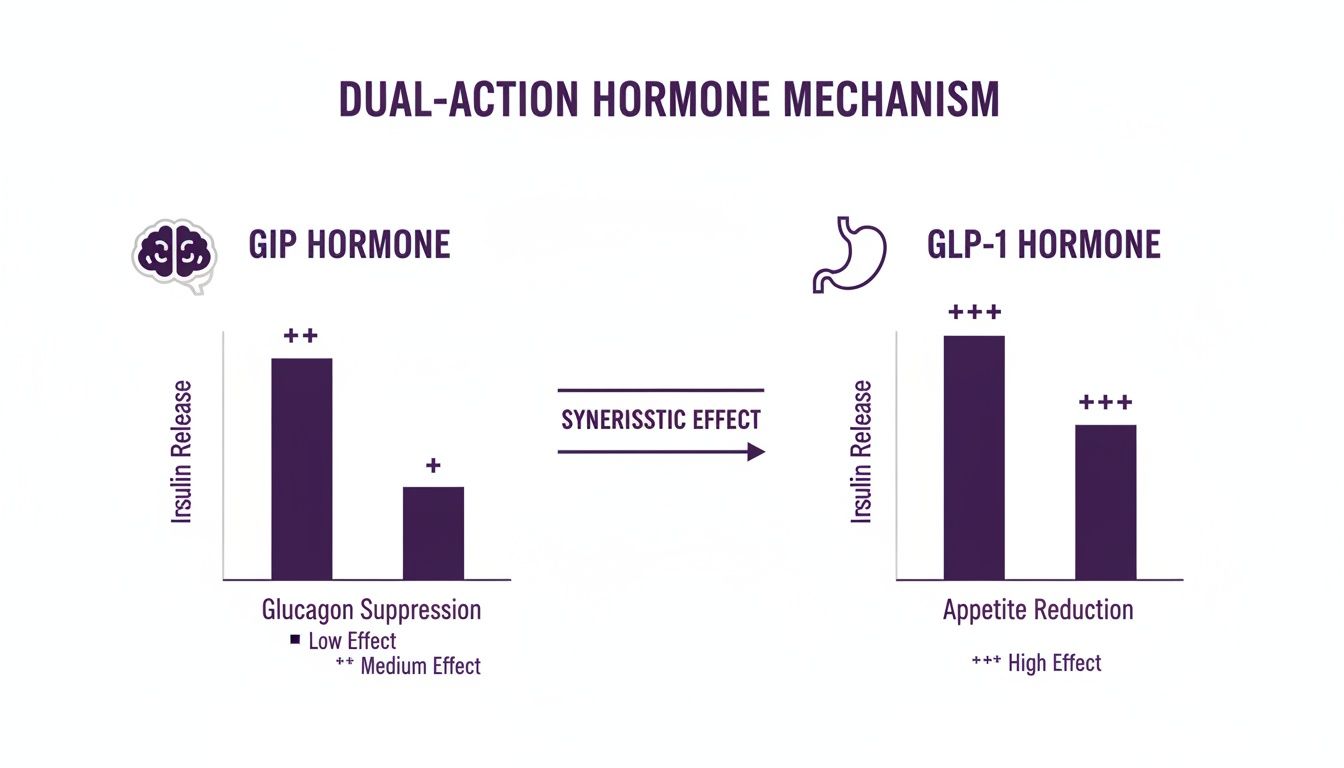
As shown, activating both GIP (which influences the brain and energy balance) and GLP-1 (acting on the stomach and pancreas) creates a combined effect on both appetite and metabolism.
Significant Weight Loss Across Different Doses
An analysis of the data reveals consistent results. A key benchmark for clinical success in weight management is losing at least 5% of starting body weight, as this is the point where meaningful health benefits are often observed. The SURMOUNT trials showed that the vast majority of participants on Mounjaro surpassed this goal.
After 72 weeks, the average body weight reduction for participants on the highest dose (15mg) was over 20%. This level of weight loss is substantial and is often compared to the outcomes of bariatric surgery. The lower doses were also highly effective, with the 10mg and 5mg groups achieving average weight loss of approximately 19.5% and 15%, respectively.
These figures stand in stark contrast to the placebo group, where participants lost an average of only 3% of their body weight in the same timeframe. This significant difference highlights the powerful biological effects of the medication.
The data is even more compelling when looking at the percentage of people who reached the 5% weight loss threshold. In trials like SURMOUNT, an overwhelming majority of participants on tirzepatide saw significant results: 89.4% on the 5mg dose, 96.2% on the 10mg dose, and 96.3% on the 15mg dose lost at least 5% of their body weight. This compares to just 27.9% in the placebo group. You can explore more detailed weight loss statistics on Chemist-4-U.com.
These statistics provide solid, evidence-based proof of how Mounjaro works at a clinical level. By amplifying the body's natural satiety and metabolic signals, it helps people achieve and maintain a level of weight loss that was previously difficult to attain through diet and exercise alone. The consistency across thousands of trial participants builds a strong case for its reliability as a weight management tool.
Comparing Mounjaro With Other GLP-1 Medications
When investigating how Mounjaro works, it is useful to compare it with other well-known weight management drugs, especially those in the GLP-1 class. While they may seem similar, Mounjaro’s mechanism of action is fundamentally different, which can lead to different clinical outcomes.
The most frequent comparison is with semaglutide, the active ingredient in Wegovy and Ozempic. Semaglutide is a potent GLP-1 receptor agonist; it effectively mimics the GLP-1 hormone to curb appetite and improve glycaemic control. Mounjaro (tirzepatide), however, functions differently.
It is the first and only approved treatment of its kind to be a dual-agonist. This means it targets not one, but two different hormone receptors: GLP-1 and GIP. This dual-action mechanism is what sets it apart and is the primary reason why clinical trials often show it has a greater impact on weight and blood sugar.
The Impact of Dual-Agonist Action
By activating both pathways, Mounjaro orchestrates a more coordinated and powerful effect on the body's metabolic controls. While the GLP-1 action works to reduce appetite and slow digestion, the added GIP action helps improve how the body responds to insulin and also appears to influence fat metabolism.
This synergy helps explain why many individuals see more significant weight loss with Mounjaro. Understanding how it fits in among other GLP-1 medications helps in appreciating this unique scientific development.
This does not mean one is universally "better" than the other for every individual. The appropriate treatment depends on a person's health profile, medical history, and clinical goals. A thorough consultation with a clinician is the only way to determine the most suitable path. For a detailed analysis of the differences, this guide comparing tirzepatide vs semaglutide may be helpful.
Head-to-Head Clinical and Real-World Data
The concept that Mounjaro’s dual action leads to greater weight loss is supported by direct, head-to-head clinical trials and real-world observations. Studies that have directly compared tirzepatide against semaglutide have consistently found that people taking tirzepatide lose a higher percentage of their body weight over the same period.
For instance, a major clinical trial programme reported that at the highest dose, participants taking tirzepatide lost an average of 22.5% of their starting body weight. In comparison, the key trial for semaglutide showed an average loss of around 16% at its highest dose.
This difference highlights how adding the GIP pathway can amplify the effects of GLP-1 agonism, leading to more substantial results for many patients.
This trend is not limited to clinical trials. Real-world data from the UK supports these findings. An analysis of nearly 9,200 electronic health records confirmed Mounjaro’s comparative efficacy, showing a clear and growing gap in weight loss over time.
- After three months, Mounjaro patients had lost 2.3% more weight than those on Ozempic.
- By six months, that gap had widened to 4.3%.
- After 12 months, the difference was 7.2%.
Knowing these evidence-based differences can facilitate more informed discussions with a healthcare provider. It allows for a nuanced conversation about how Mounjaro works compared to other options, so that a decision can be made that best aligns with an individual's health and goals.
What to Expect When Starting Mounjaro
Starting any new treatment can be a significant step, and having questions is natural. Understanding the process from the beginning can help individuals feel prepared. Here’s a rundown of what UK patients can generally expect when they begin treatment with Mounjaro, from the first dose to the changes one might notice.
The process begins with a carefully managed approach called titration. This is a standard and crucial step where a clinician starts the patient on the lowest possible dose, then gradually increases it over several weeks or months. This "start low, go slow" method gives the body time to adjust to the medication, which is key to minimising potential side effects.
The Dosing and Titration Process
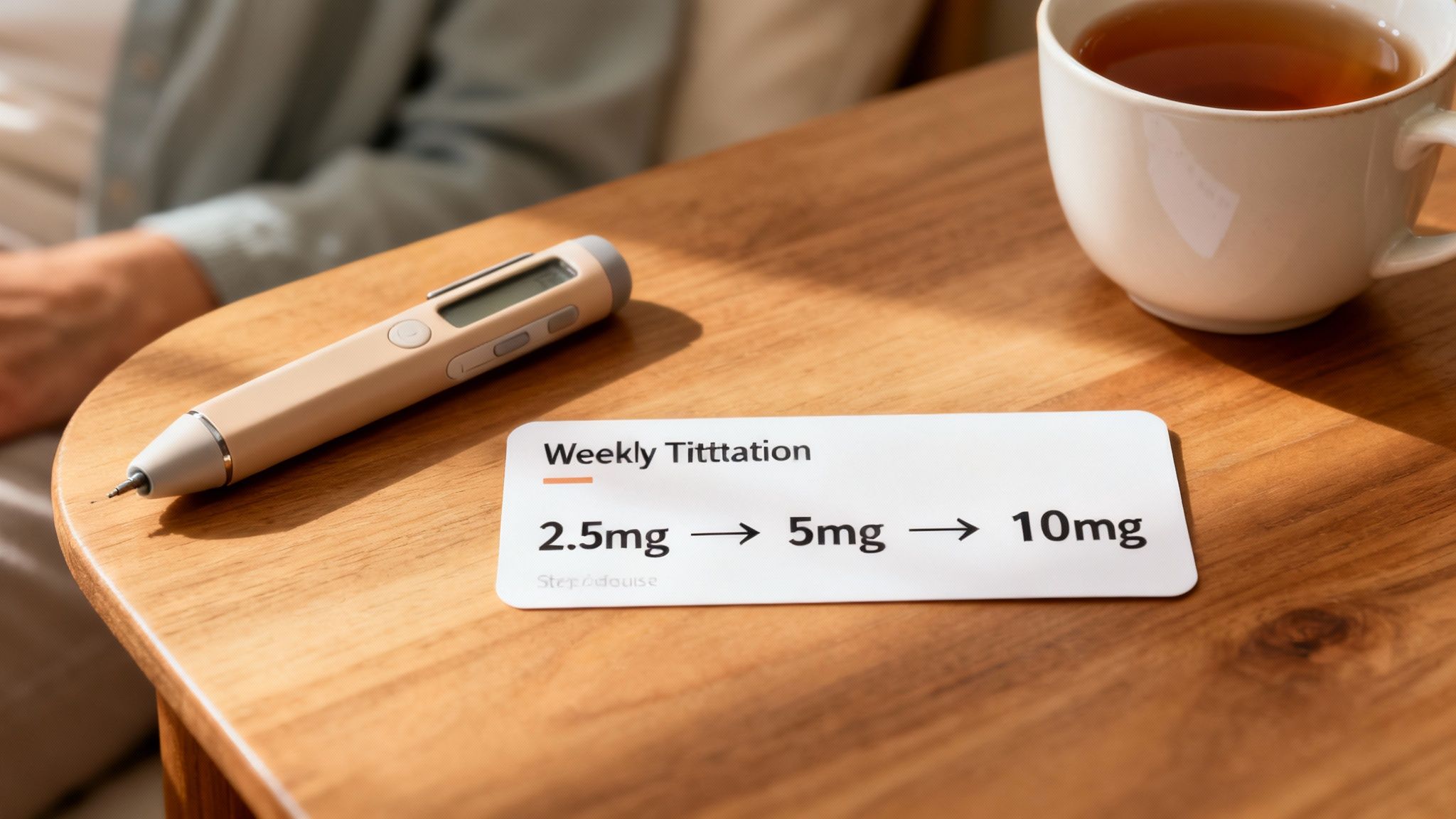
Treatment will almost always begin with the 2.5mg starting dose of Mounjaro, taken once a week via a simple injection pen. This initial dose is typically maintained for at least the first four weeks. The primary goal during this period is not dramatic weight loss, but to allow the system to acclimate to the medication gently.
After the first month, a clinician will review the patient's progress. If the medication is well-tolerated, the weekly dose will likely be increased to 5mg. This step-by-step increase continues in increments of 2.5mg (to 7.5mg, 10mg, 12.5mg, and finally 15mg), with each new dose level maintained for at least four weeks. The objective is to find the most effective dose for the individual that is also well-tolerated.
Navigating Common Side Effects
As the body gets used to how Mounjaro works, it is not unusual to experience some side effects. For most people, these are mild and tend to resolve on their own as their system adapts. The gradual titration process is specifically designed to make this adjustment period as smooth as possible.
Some of the most commonly reported side effects include:
- Nausea: This is often most noticeable after the first few injections or when the dose is increased.
- Constipation or Diarrhoea: Changes in digestion are quite common as the medication slows gastric emptying.
- Fatigue: Some people report feeling more tired than usual, especially in the early stages of treatment.
It is important to maintain close contact with a clinical team. They can offer practical advice for managing these symptoms, such as making small dietary changes or staying hydrated, to ensure the patient feels supported throughout the process.
The Patient Experience: A Change in Food-Related Thoughts
Beyond the physical effects, one of the most profound changes many people report is a shift in their relationship with food. This often relates to the concept of "food noise"—a constant internal monologue about eating, cravings, and the next meal.
For many, Mounjaro significantly reduces this internal chatter. The relentless urge to eat may fade, replaced by a feeling of calm and control. This can make it possible to make food choices based on physiological hunger rather than persistent cravings.
This mental shift is a direct result of Mounjaro’s dual-action mechanism. Since its MHRA approval on 8 November 2023, its ability to target both GLP-1 and GIP receptors has reshaped weight management in the UK. This powerful combination helps reset the biological signals that drive hunger and overeating. You can find out more about the comparison between Mounjaro and other GLP-1s on bhf.org.uk.
Ultimately, starting Mounjaro is a gradual process of both physical and mental adjustment. By knowing what to expect, individuals can navigate the initial phase with confidence.
The Importance of a Medically Supervised Program
While the science behind Mounjaro is impressive, achieving safe and lasting results involves more than a weekly injection. Sustainable success is often built on a foundation of expert clinical oversight. A medically supervised programme provides this essential framework, making a powerful medication one component of a larger health strategy.
This structured approach ensures the treatment journey is managed safely from the start. A qualified clinician will assess if Mounjaro is appropriate, manage the crucial dose titration process to minimise side effects, and monitor health and progress. This regular oversight is vital for making necessary adjustments and ensuring the treatment remains both effective and suitable.
Integrating Medication with Lifestyle Changes
A comprehensive programme recognises that medication alone is not a complete solution. It must integrate Mounjaro with personalised guidance on nutrition and physical activity. This is not just about weight loss, but about changing body composition in a healthy, sustainable way.
Expert advice helps focus on areas that matter for long-term health:
- Prioritising Protein: Adequate protein intake is critical for satiety and, more importantly, for preserving muscle mass during fat loss.
- Building Strength: Incorporating resistance training helps maintain metabolic rate, as muscle is more metabolically active than fat.
- Creating Sustainable Habits: A clinical team can provide the coaching and support needed to build healthy eating patterns and activity routines that can be maintained long-term.
This holistic method ensures individuals are not just losing weight, but fundamentally improving their overall health.
A medically supervised programme provides an essential support system for a weight management journey. It combines the biological effects of Mounjaro with practical tools and expert guidance needed to build lasting health, ensuring results are both safe and sustainable.
A Framework for Long-Term Success
Ultimately, the goal of a supervised programme is to empower individuals with the knowledge and habits for lifelong health. The medication is an effective tool to initiate the journey, resetting the body's metabolic signals and reducing persistent thoughts about food.
However, it is the structured support built around the medication that provides the skills to maintain progress long after the initial weight loss phase. This combination of advanced medicine and expert guidance offers a reliable path to achieving lasting results. To see how this works in practice, one can explore options like a Mounjaro maintenance programme, which is designed to support the transition to long-term weight management.
Common Questions About Mounjaro
Here are answers to some of the most common questions from patients regarding treatment with Mounjaro.
How Quickly Will I See Results?
Every individual's experience is different, but clinical trials provide a good indication of typical outcomes. Many people begin to feel a change in their appetite within the first few weeks, even on the lowest starting dose.
However, significant weight loss is a gradual process. The most substantial results tend to build over several months as the dose is carefully increased to an effective and well-tolerated level. Patience and consistency are key.
Who Is Mounjaro For?
Mounjaro is prescribed based on specific clinical criteria to ensure its safe and effective use. In the UK, it was officially authorised by the MHRA for weight management on 8 November 2023.
It is intended for adults with a BMI of 30kg/m² or more (clinically defined as obesity). It can also be prescribed for those with a BMI between 27-30kg/m² who are also managing a weight-related health issue, such as prediabetes or high blood pressure. You can find more details on the latest UK weight loss information on Chemist-4-U.com.
What Happens If I Stop Taking Mounjaro?
Mounjaro is an effective tool, but it is not a cure. It works by actively regulating the hormones that control hunger. When the medication is discontinued, the body’s natural hormonal signals will eventually return to their previous state.
This is why treatment is often paired with dedicated support for building sustainable lifestyle habits. The positive changes made to diet and activity levels while on Mounjaro are what empower individuals to maintain their results long-term.
At Trim, we provide a fully supported, clinically supervised programme that combines proven medicines like Mounjaro with the expert guidance you need to achieve lasting success. Start your 5-minute consultation today to find out if our programme is right for you.
Article created using Outrank