
How to Inject Mounjaro Safely: A UK Patient Guide

Mounjaro (tirzepatide) is administered via a simple, once-weekly subcutaneous injection using a pre-filled pen. The medication is injected into the tissue layer under the skin of the abdomen, thigh, or upper arm. Within a clinician-led programme, understanding the correct injection technique is fundamental to the safe and effective administration of the treatment. This ensures the full dose of the prescribed medication is delivered correctly.
Understanding Your Mounjaro Treatment
This is a practical guide for using Mounjaro, written for UK patients undergoing a medically supervised weight management programme. It contains straightforward instructions for self-administering the medication safely and with confidence. This guide will cover preparation, administration, and post-injection care.
The use of Mounjaro is most effective when part of a structured programme with professional supervision. This framework is essential for ensuring regulated medication is used correctly, which is vital for patient safety and for achieving optimal outcomes. Through this framework, patients learn proper techniques that minimise risk and maximise the medication's therapeutic benefits.
The need for clear guidance is evident. It’s estimated that as many as 1.6 million adults in the UK may have used weight-loss injections like Mounjaro between early 2024 and early 2025. This rapid adoption highlights the importance of professional oversight to prevent issues such as infections or reduced efficacy resulting from improper injection techniques.
The Mechanism and Support Behind Your Treatment
Mounjaro's mechanism of action involves targeting two key gut hormone receptors, GLP-1 and GIP, which help regulate appetite and blood glucose levels. When this pharmacological approach is combined with professional guidance on nutrition and lifestyle changes, it becomes an effective tool for achieving sustainable weight loss. For a more detailed look at its mechanism, you can learn more about how Mounjaro works in our dedicated article.
This guide is designed to provide the clinical knowledge needed to manage your treatment effectively. The goal is to empower you to administer your medication correctly and understand what to expect. For wider context, you can also explore general information about Mounjaro.
Mastering the self-injection process within a supportive clinical programme is a proactive step towards achieving health goals. This guide serves as a resource for each injection, ensuring you feel prepared and informed.
Preparing for a Safe Mounjaro Injection
Before the injection itself, establishing a consistent preparation routine is a key step. This is not just about hygiene; it is about creating a calm, organised process that ensures every dose is administered safely and effectively. This preparation phase is an essential part of the treatment, as it minimises the chance of error and helps ensure the medication's intended effect.
First, take the Mounjaro KwikPen out of the refrigerator. While it can be injected cold, many people find that allowing it to warm to room temperature for about 20-30 minutes makes the injection more comfortable and can reduce any stinging sensation. This waiting time can be used to gather all other necessary supplies.
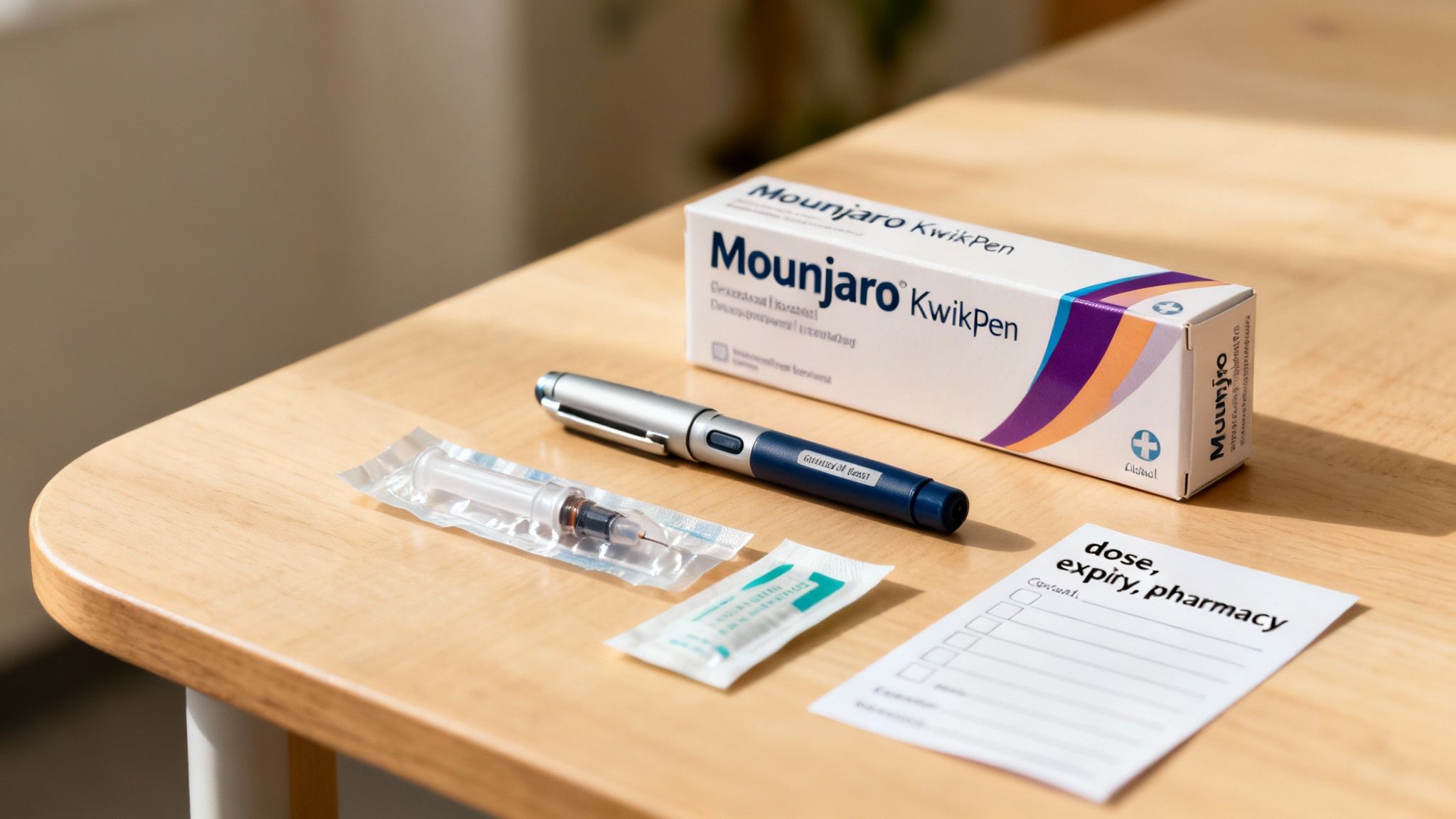
Your Pre-Injection Checklist
Having everything needed laid out on a clean, flat surface in a well-lit room helps prevent last-minute issues and allows you to focus.
Your setup should always include:
- Your Mounjaro KwikPen: The medication delivery device.
- A new pen needle: It is critical to use a fresh, sterile needle for every single injection. This prevents infection and ensures the needle is sharp.
- An alcohol swab: For properly cleaning the injection site.
- A sharps container: For the safe disposal of the used needle immediately after use.
Once everything is organised, wash your hands thoroughly with soap and warm water. This simple step is one of the most effective ways to prevent bacteria from contaminating the injection site.
Inspecting Your Mounjaro Pen and Dose
With clean hands, it is time to perform a quick inspection of the pen. This check ensures you are using the correct medication safely and effectively.
Start with the label on the pen. Confirm it says Mounjaro (tirzepatide) and that the dose matches what your clinician has prescribed. For example, individuals beginning treatment will typically use a pen with the initial 2.5 mg dose.
Next, find the expiry date. Never use a pen that is out of date, as its efficacy cannot be guaranteed.
Finally, look at the liquid in the pen through the clear window. The Mounjaro solution should be colourless to slightly yellow and completely clear. If you observe any cloudiness, discolouration, or particles, do not use it. Contact your pharmacy or clinical team for a replacement.
This visual check is a final safety measure before injection. It confirms the medicine is in the correct condition and that your prescription, dispensed from a GPhC-registered pharmacy, is accurate.
Following this systematic approach can build confidence and ensure every dose is delivered correctly. While Mounjaro is a single medication, it can be useful to understand its context. For more information, you can read our introduction to GLP-1 medicines to see how these treatments fit into modern weight management. Taking these preparation steps seriously turns the injection from a task into a mindful part of your health regimen.
Choosing and Rotating Mounjaro Injection Sites
Selecting the correct location for your weekly Mounjaro injection is a critical step in ensuring proper medication absorption and maintaining skin health. Mounjaro is a subcutaneous injection, meaning it is designed to be delivered into the adipose (fatty) tissue layer just under the skin. Correct site selection helps the medication work as intended while promoting comfort.
There are three approved areas on the body for the injection, each chosen because they generally have sufficient subcutaneous fat. Understanding how to use these sites, and just as importantly, how to rotate between them, is fundamental to the treatment.
Your Approved Injection Areas
Each of the three recommended sites offers a suitable location for administering your Mounjaro KwikPen. It is normal to find one area more comfortable than another. The key is to use them all in rotation.
- The Abdomen (Stomach): This is a frequently used site due to its accessibility and ample fatty tissue. The injection can be administered almost anywhere on the abdomen, but it is important to stay at least two inches away from the navel (belly button). The tissue directly around the navel is denser and may interfere with medication absorption.
- The Thigh: The target area is the front and outer part of the thigh. Avoid the inner thigh, which tends to be more sensitive and has more superficial blood vessels. The goal is to find a fleshy area, away from bone or major muscle.
- The Back of the Upper Arm: The fleshy area on the back of the upper arm is another suitable location. This site can be difficult to reach independently, so some individuals may require assistance to use this spot.
Regardless of which site you choose for the week, always inspect the skin to ensure it is clean and healthy. Avoid any areas that are bruised, scarred, tender, or show signs of irritation.
The Clinical Importance of Site Rotation
It can be tempting to use the same spot every week. However, consistently injecting into the same small area can lead to a condition called lipohypertrophy.
Lipohypertrophy is a build-up of fatty tissue under the skin, which can create a small lump or firm patch. It occurs when one area is overused for injections. While not typically harmful, it can significantly interfere with the absorption of Mounjaro, potentially reducing the medication's effectiveness.
Rotating injection sites each week is an essential part of the process. It allows the skin and underlying tissue time to heal, maintains good absorption, and prevents the development of lipohypertrophy, ensuring you receive the full, consistent benefit from every dose.
Your clinical team will emphasise creating a simple rotation plan. This is a proactive measure to protect your skin and ensure the long-term success of your treatment.
Creating a Simple Rotation Schedule
Keeping track of your injection sites does not need to be complicated. A straightforward system can help you stay organised and give each spot a proper rest. A note on a calendar or in a smartphone app works well.
For example, you could mentally divide your abdomen into four quadrants (upper left, upper right, lower left, lower right) and rotate through them weekly, then move to your thighs, and then your arms. This ensures one specific spot is not used again for several weeks. The Trim app can also be a useful tool for logging your injection location each week, helping you maintain a consistent pattern.
Here is a sample schedule showing how you could structure your rotation over a month.
Sample Mounjaro Injection Site Rotation Schedule
Use this four-week schedule as an example to help you rotate injection sites effectively and avoid skin complications.
| Week | Recommended Site | Specific Location Tip |
|---|---|---|
| Week 1 | Abdomen | Left side, at least two inches away from your navel. |
| Week 2 | Thigh | Right thigh, in the fatty area on the front. |
| Week 3 | Abdomen | Right side, again keeping clear of the navel area. |
| Week 4 | Thigh | Left thigh, switching sides from your previous thigh injection. |
By following a structured rotation like this, the process of how to inject Mounjaro becomes safer and more effective. It can quickly turn what might seem daunting into a predictable and stress-free part of your weekly routine.
Using Your Mounjaro KwikPen for the First Time
After inspecting the pen, preparing your supplies, and cleaning the chosen injection site, you are ready for the injection itself. The Mounjaro KwikPen is designed for ease of use to ensure a consistent, accurate dose every time.
Following these steps carefully is key to ensuring the medication is delivered safely into the subcutaneous fatty tissue, where it can be properly absorbed by the body.
Attaching the Needle and Priming the Pen
Before every injection, you must attach a fresh, sterile needle. Needles should never be reused. Reusing a needle is not only an infection risk; a needle becomes dull after a single use, which can make subsequent injections more painful.
First, pull the paper tab off the outer needle shield. Push the capped needle straight onto the pen and twist it clockwise until it feels secure—do not overtighten.
If this is the very first time you are using a new KwikPen, it must be primed. This is a crucial one-time step for each new pen. It removes any air bubbles from the cartridge and verifies that the pen is functioning correctly before you administer your first dose.
To prime the pen:
- Turn the dose knob to select 2 clicks.
- Hold the pen with the needle pointing straight up.
- Gently tap the side of the pen to encourage any air bubbles to rise to the top.
- Press the dose knob all the way in until the dose window shows '0'. A small stream or a drop of Mounjaro should appear at the needle tip.
If no liquid appears, repeat these steps. This can be done up to four times. If you have tried four times and still do not see any liquid, do not use the pen. Set it aside and contact your clinical team for advice.
Dialling and Checking Your Dose
Ensuring the correct dose is selected is critical. The KwikPen simplifies this, but it is still important to focus and double-check.
Turn the dose knob to select the exact dose your clinician has prescribed. For instance, if you are on the starting dose, you will dial it to 2.5 mg. The dose window on the side of the pen clearly shows the selected number.
Always check the window a final time before you inject. If you accidentally turn the knob too far, you can simply turn it back to correct the dose. The pen is also designed to prevent you from dialling a dose larger than the amount of medication remaining inside.
This diagram is a reminder of the best places to inject, as covered earlier.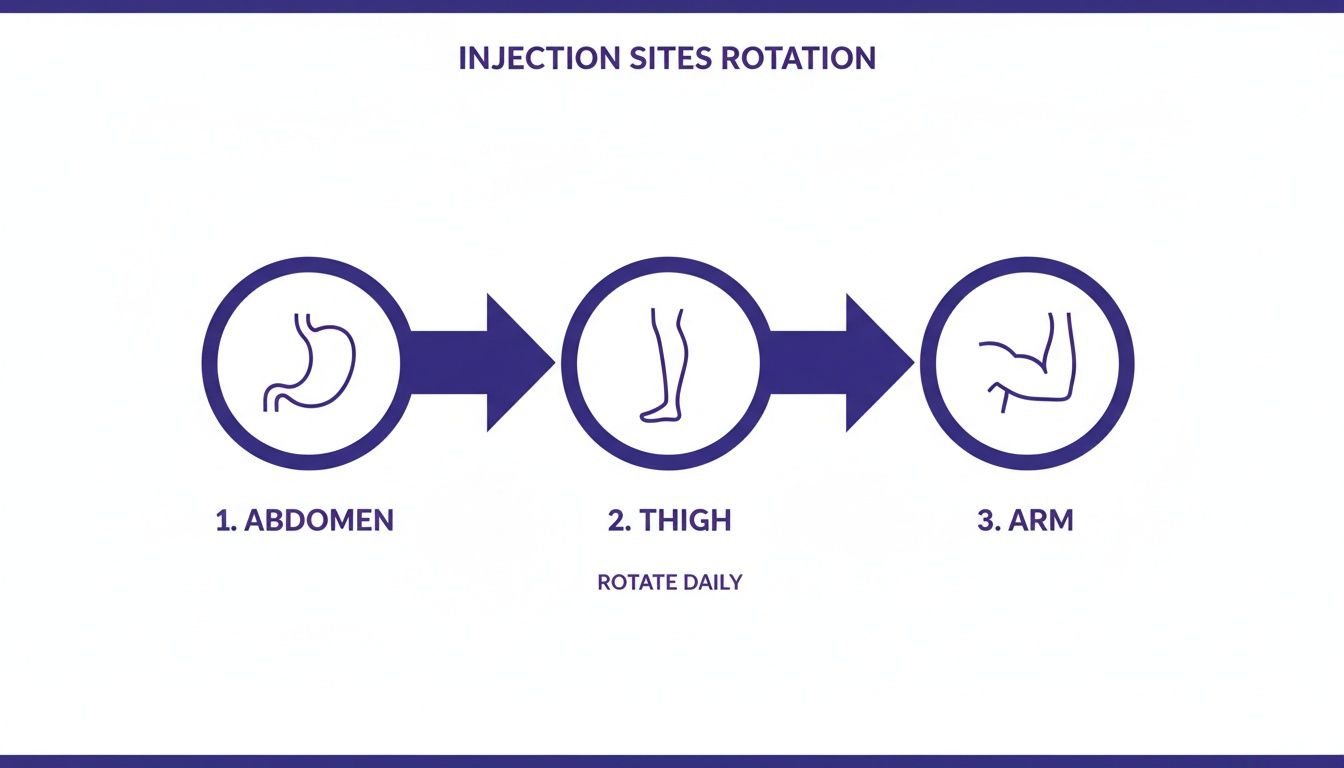
Using your abdomen, thigh, and upper arm in rotation is very important for maintaining long-term skin health.
The Injection Technique
You are now ready to perform the injection. Locate the clean spot you’ve chosen on your abdomen, thigh, or upper arm.
Hold the pen comfortably. With your other hand, you can gently pinch a fold of skin. This helps lift the adipose tissue away from the underlying muscle, ensuring the medication goes exactly where intended.
Insert the needle straight into your skin at a 90-degree angle. Ensure it is all the way in, then place your thumb on the dose knob.
Press the dose knob all the way down and hold it there. You will hear a click, signalling the injection has begun. Keep holding the knob down and count slowly to 10 before you pull the needle out. This pause is essential—it guarantees the full dose is delivered before withdrawal.
After the ten-second count, pull the needle straight out. It is normal to see a tiny drop of blood or liquid at the site. You can press the area lightly with a cotton ball, but avoid rubbing it.
Immediately after the injection, carefully replace the outer needle cap, unscrew the needle from the pen, and dispose of it in your sharps container. Finally, replace the cap on your Mounjaro KwikPen and store it properly.
For more information on the medication itself, you can find details on the Mounjaro KwikPen 2.5mg solution. By learning these steps, you can feel confident that every injection is a safe and effective part of your treatment plan.
Post-Injection Care, Storage, and Disposal
The injection is complete, but the process isn't finished. Correct post-injection care, storage, and disposal are just as important as the injection itself for ensuring treatment is safe and effective from start to finish.
First, address the used needle. Immediately after injection, carefully replace the outer cap on the needle. Unscrew it from the pen and place it directly into your sharps container. Making this an immediate habit is the best way to prevent accidental needlestick injuries.
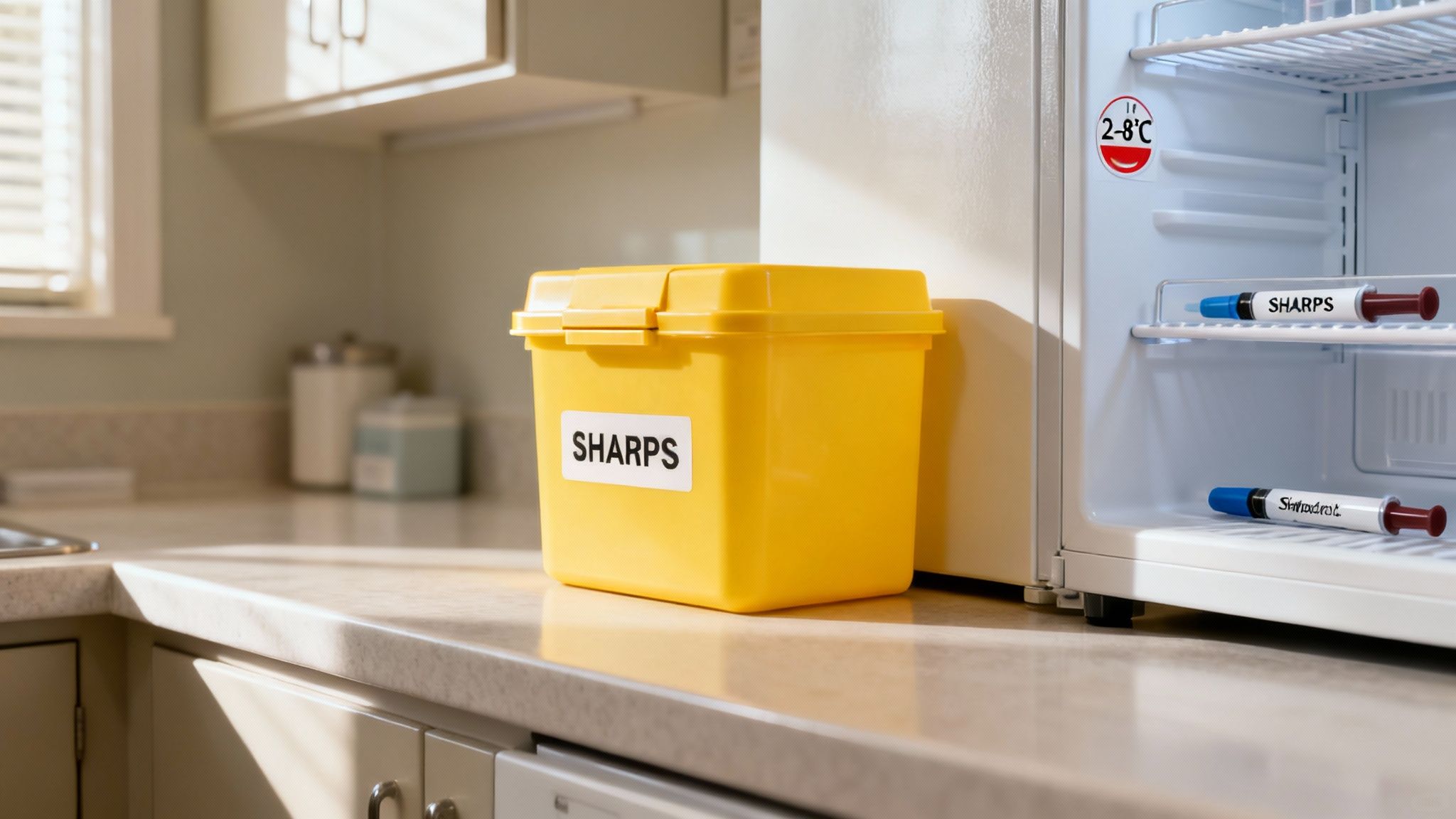
Storing Your Mounjaro KwikPen Correctly
How you store your Mounjaro pen directly impacts its efficacy. Before its first use, every pen must be kept refrigerated at a temperature between 2°C and 8°C. It is crucial that it never freezes; if a pen is suspected to have frozen, it must not be used and should be disposed of.
Once a pen is in use, there is more flexibility. It can be kept at room temperature (below 30°C) for up to 30 days. Keep it away from direct sunlight or heat sources. Many people find it convenient to keep the in-use pen out of the fridge, ready for the next dose, while the rest of their supply remains chilled.
Proper storage is fundamental to Mounjaro’s efficacy. As NHS access remains limited, private clinics can provide structured programmes that include essential training on safe handling and storage. With national support capacity not expected to be fully available until March 2026, supervised private care ensures patients receive evidence-based guidance on everything from injection technique to refrigeration. You can find more detail on current prescribing in the Cheshire & Merseyside NHS statements.
Understanding Common Side Effects
It is normal to experience some mild side effects as your body adjusts to Mounjaro. Knowing what to expect can help you manage them.
The most commonly reported adverse events in clinical trials include:
- Nausea: This is often most noticeable after the first few doses or following a dose escalation.
- Diarrhoea: Changes in digestive function are to be expected as the system adapts.
- Decreased appetite: This is a primary mechanism by which the medication aids in weight management.
- Mild injection site reactions: Some redness or slight discomfort at the injection site may occur.
For most people, these effects are transient and tend to subside as their body adapts. Staying well-hydrated and consuming smaller, more frequent meals can help manage gastrointestinal side effects.
When to Contact Your Clinical Team
While mild side effects are often part of the adaptation process, certain signs warrant contacting your clinical team. Patient safety is the priority, and professional advice is available when needed.
You should contact your clinician if you experience severe or persistent abdominal pain, ongoing vomiting, or any signs of a potential allergic reaction. These may include a rash, difficulty breathing, or swelling of the face, lips, or tongue.
Access to clinical support is a core component of a supervised programme. By following these final steps for care, storage, and disposal, you can be confident that you’re handling every aspect of your Mounjaro treatment correctly, allowing you to focus on your health goals.
Common Questions About Mounjaro Injections
It is normal to have questions when starting a new treatment. We've gathered some of the most frequent queries our clinical team receives from individuals beginning their Mounjaro treatment. These clear, practical answers aim to build confidence.
What Should I Do If I Miss a Dose of Mounjaro?
Missing a dose can happen. If you realise you've missed a dose, you can inject it as soon as you remember, provided it is still within four days (96 hours) of your scheduled time.
However, if it has been more than four days since the intended dose, skip the missed dose entirely. Take your next dose on your regular day. It is crucial that you do not take two doses close together to compensate for a missed one. If in doubt, your clinical team is available for guidance.
Is the Mounjaro Injection Painful?
Most people report minimal discomfort. The sensation is often described as a slight pinch. The KwikPen uses an extremely fine needle, designed to make the process as comfortable as possible.
A useful clinical tip is to let a refrigerated pen sit at room temperature for about 30 minutes before injection. This can reduce any stinging sensation. Ensuring your skin is clean and that you are rotating injection sites will also help prevent soreness.
The majority of individuals find the weekly injection to be a quick and straightforward part of their routine. Any discomfort is typically minimal and brief.
How Should I Travel with My Mounjaro Pen?
You can travel with your Mounjaro pen. Once a pen is in use, it can be kept at room temperature (up to 30°C) for up to 30 days, which covers most trips.
If flying, always pack your pen in your hand luggage. The cargo hold can experience temperature extremes that could damage the medication. It is also advisable to keep the pen in its original box and carry a copy of your prescription. This can be helpful for airport security, especially on international flights.
What If I See a Drop of Liquid After Injecting?
Seeing a small drop of liquid on your skin or the needle tip after an injection is common and normal. It does not mean you have missed any of your dose.
As long as you have followed the correct procedure—inserting the needle, pressing the button fully, and holding it for ten seconds before removing it—you can be confident the full dose was delivered. There is no need to administer a second dose.
At Trim, we support patients at every stage of their weight management journey. Our clinician-led programme is designed to provide medical guidance, tools, and encouragement to help individuals reach their goals safely and successfully. If you are interested in a programme that combines evidence-based medication with expert care, begin your free digital consultation today. Learn more at https://gettrim.co.uk.