
Losing Weight After Pregnancy While Breastfeeding

You're feeding your baby, recovering from birth, and trying to recognise yourself in the mirror again. Perhaps you're hungry all the time, your sleep is broken, and the scale seems to change without offering a clear explanation. Losing weight after pregnancy while breastfeeding can feel like a clash between personal goals and your body's immediate need for recovery.
A safer approach doesn't treat breastfeeding as a shortcut to fat loss. It protects milk production, energy, pelvic and abdominal recovery, and mental wellbeing first. UK guidance supports a gradual process, with a realistic aim of returning to pre-birth weight over 6 to 12 months, rather than expecting your body to “bounce back” straight away. UK NHS postnatal wellbeing guidance specifically advises against pressure to lose weight immediately because the body needs time to recover after delivery.
Table of Contents
- Introduction to Safe Weight Loss While Breastfeeding
- When to Start and What Safe Progress Looks Like
- Eating Well for Milk Supply and Steady Fat Loss
- Safe Exercise Progression After Birth
- Sleep Stress and Support That Make Weight Loss Sustainable
- What to Avoid During Lactation and When to Get Clinical Advice
Introduction to Safe Weight Loss While Breastfeeding
Consider a parent who has just settled into a feeding routine. She wants to make healthier choices, but every feed brings intense hunger, the baby wakes repeatedly overnight, and there's barely time to prepare lunch. A strict diet might promise quick results, yet it could leave her more tired, less able to care for herself, and worried about her milk supply.
Breastfeeding changes the energy equation. The UK government's Scientific Advisory Committee on Nutrition summary says that women who are exclusively breastfeeding need around an extra 330 kcal a day above their usual requirements during the first 6 months after birth. The same guidance assumes a gradual reduction of about 0.8 kg per month from pregnancy weight gained during that period. You can read the benchmark in the SACN summary on nutrition and maternal weight outcomes.
Those figures don't represent a target that everyone must force themselves to reach. They show why breastfeeding-compatible weight management should favour adequate nourishment and slow change, not aggressive calorie cutting. The same UK evidence review notes that breastfeeding, particularly exclusive breastfeeding, is associated with greater postpartum weight loss and lower maternal BMI over the longer term, but individual experiences still vary.
A useful reframe: success might mean eating regular meals, walking comfortably, recovering pelvic-floor strength, and feeling more energetic, even before the scale changes.
The practical plan is straightforward. Start with recovery and feeding stability, build balanced meals around hunger rather than restriction, add movement in stages, and protect sleep and support wherever possible. Medical safety matters too, particularly if you're considering medicines or supplements. During lactation, a clinician should assess any treatment rather than relying on online claims or appetite-focused products.
Slow progress isn't failure. It's often the pace that best respects the work your body is doing.
When to Start and What Safe Progress Looks Like
The right time to focus on weight management depends less on a calendar date and more on how your recovery is going. Birth method, bleeding, pain, pelvic-floor symptoms, wound healing, feeding demands, and your general energy all matter. Gentle movement may be appropriate early for some people, but structured exercise and intentional dietary changes should be discussed with your midwife, health visitor or GP when recovery is complicated.
Begin with a nutrition foundation rather than a calorie target:
- Eat consistently. Avoid skipping meals to compensate for snacks or a larger dinner. A predictable pattern makes it easier to respond to breastfeeding hunger without reaching a state of exhaustion.
- Include complete meals. Combine protein, carbohydrate, fats and fruit or vegetables. This supports recovery and gives meals staying power.
- Use your body as feedback. Persistent dizziness, worsening fatigue, intense irritability or concerns about milk supply suggest that you need more support and nourishment, not a harsher deficit.
- Track trends, not single weigh-ins. Water retention, constipation, milk changes, sleep and salt can all affect short-term scale readings. Notice clothing comfort, waist measurements, energy, strength and mood as well.
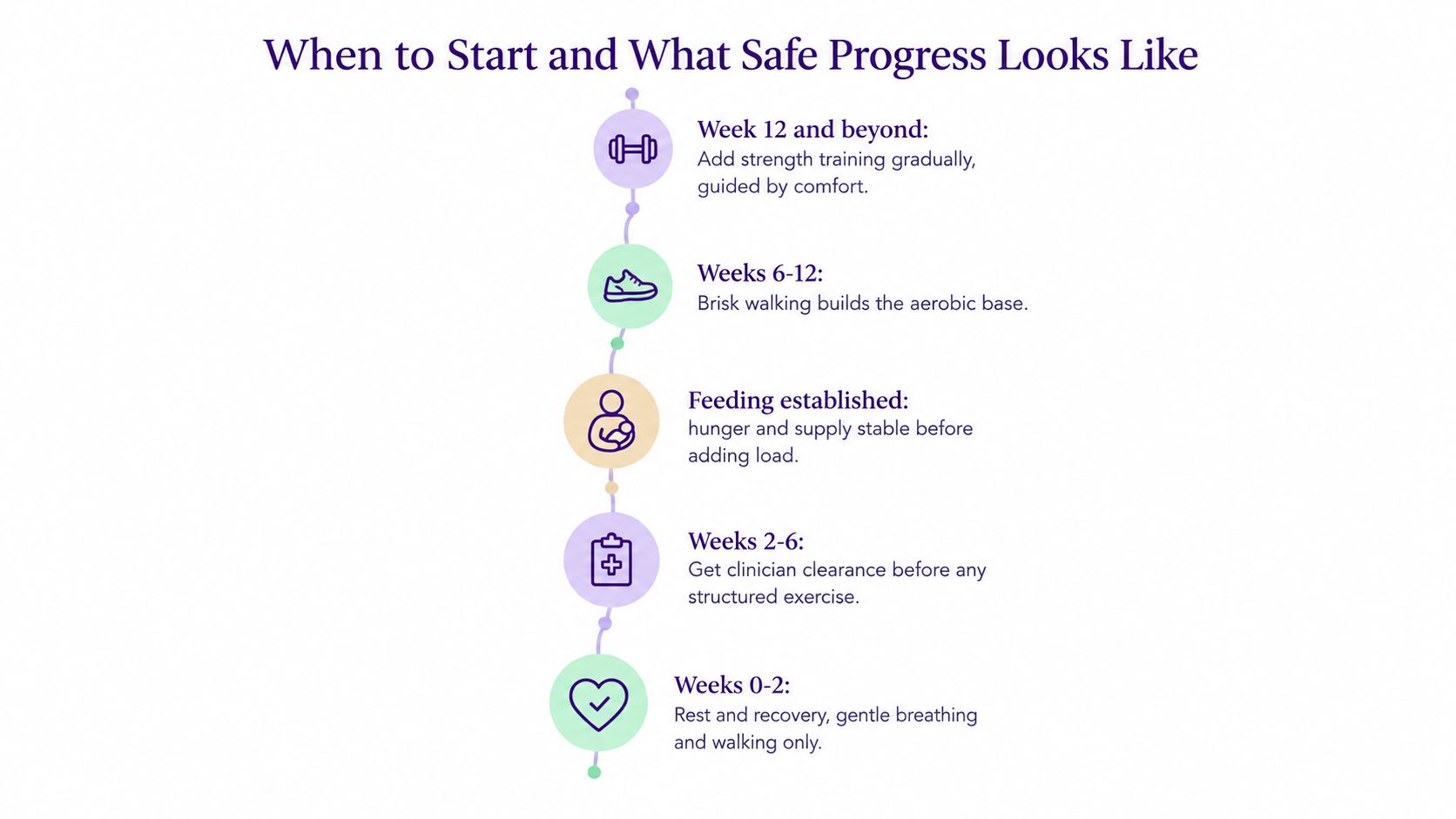
The UK NHS-linked guidance commonly summarises about 0.5 kg per week as a safe upper limit for overweight breastfeeding women, provided overall calorie intake remains adequate. That's an upper boundary, not a demand. A slower rate, a plateau, or no intentional loss during early recovery can all be reasonable.
Breastfeeding can influence longer-term weight patterns, but it doesn't guarantee short-term loss. A major Royal College of Physicians report on maternal health and obesity reports that 81% of postpartum women begin breastfeeding, yet by 6 weeks this falls to 24% in England, 17% in Wales and 13% in Northern Ireland. By 6 months, only 1% are exclusively breastfeeding. These figures matter because the period when lactation may affect energy use is often shorter in practice than new parents expect.
For a helpful overview of safe exercise after giving birth, look for guidance that distinguishes gentle mobility from higher-load training and encourages professional clearance when symptoms persist.
Eating Well for Milk Supply and Steady Fat Loss
Breastfeeding-compatible nutrition isn't about finding the smallest amount of food you can tolerate. It's about making meals filling, practical and nutrient-dense enough to support both recovery and feeding.
Build meals that work on tired days
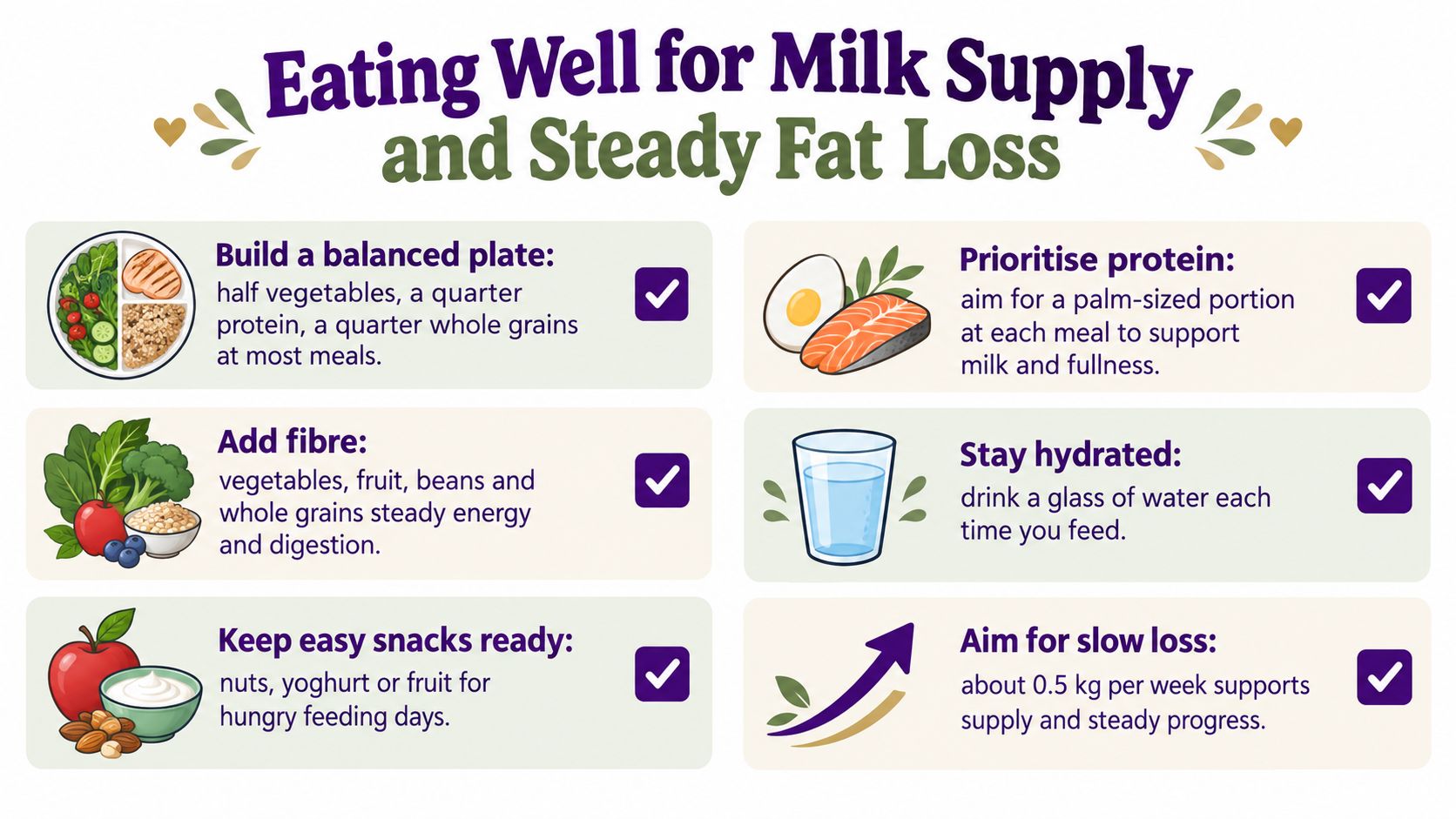
Use a simple plate structure: vegetables or fruit, a protein source, a carbohydrate such as potatoes, rice, oats or bread, and a source of fat. You don't need to make every plate perfect. A jacket potato with beans and cheese, scrambled eggs on toast with fruit, or leftover chicken with microwave rice and frozen vegetables can all form a useful meal.
Protein can include eggs, yoghurt, fish, poultry, tofu, lentils, beans or lean meat. It helps make meals satisfying and supports tissue repair. If you'd like a more detailed explanation of protein and weight management, see this guide to how much protein may support weight loss.
Fibre from vegetables, fruit, beans and whole grains supports digestion and can make energy feel steadier. Carbohydrates aren't a problem to eliminate. They provide accessible fuel during long feeding days and shouldn't be removed because you want to lose weight.
Hydration is equally practical. Keep a bottle beside your usual feeding chair and drink to thirst. A glass of water whenever you feed can be a useful reminder, but you don't need to force excessive fluids.
Make the plan easy to follow
The best meal plan is one you can use while holding a baby. Keep one-handed options nearby, such as yoghurt and fruit, nuts, cheese and crackers, hummus with pitta, or a sandwich. Prepare components rather than complicated recipes. Cook a protein, carbohydrate and vegetable base when you have help, then combine them differently across the next few meals.
A sample day might look like this:
- Breakfast: Porridge with milk, fruit and nut butter, or eggs with toast and tomatoes.
- Lunch: A jacket potato with tuna or beans, salad and yoghurt.
- Snack: Fruit with yoghurt, or crackers with cheese.
- Dinner: Salmon, tofu or chicken with rice or potatoes and vegetables.
- Evening option: A satisfying snack if you're hungry after feeds, rather than trying to ignore the signal.
Cravings aren't a sign that you've failed. Sleep loss, stress and the energy demands of feeding can make quick-energy foods particularly appealing. Pairing a preferred food with something filling often works better than banning it, for example chocolate alongside yoghurt or biscuits with a glass of milk.
For practical ideas around breastfeeding support from Feed Mom & Me, choose resources that avoid promising instant supply changes and encourage appropriate lactation advice when feeding concerns arise.
UK NHS breastfeeding guidance warns against restrictive dieting during lactation and recommends gradual weight loss. A separate UK NHS-linked source summarises roughly 0.5 kg per week as a safe upper limit for overweight breastfeeding women, as long as calorie intake remains adequate. Read the postnatal nutrition guidance for the source context.
Practical rule: if your plan leaves you constantly hungry, dizzy, unusually weak or concerned about feeding, it's too restrictive for your current needs.
Safe Exercise Progression After Birth
Movement should restore function before it tries to increase calorie expenditure. Walking is a strong starting point because it can fit around feeds, doesn't require a gym, and can be stopped easily if your body objects.
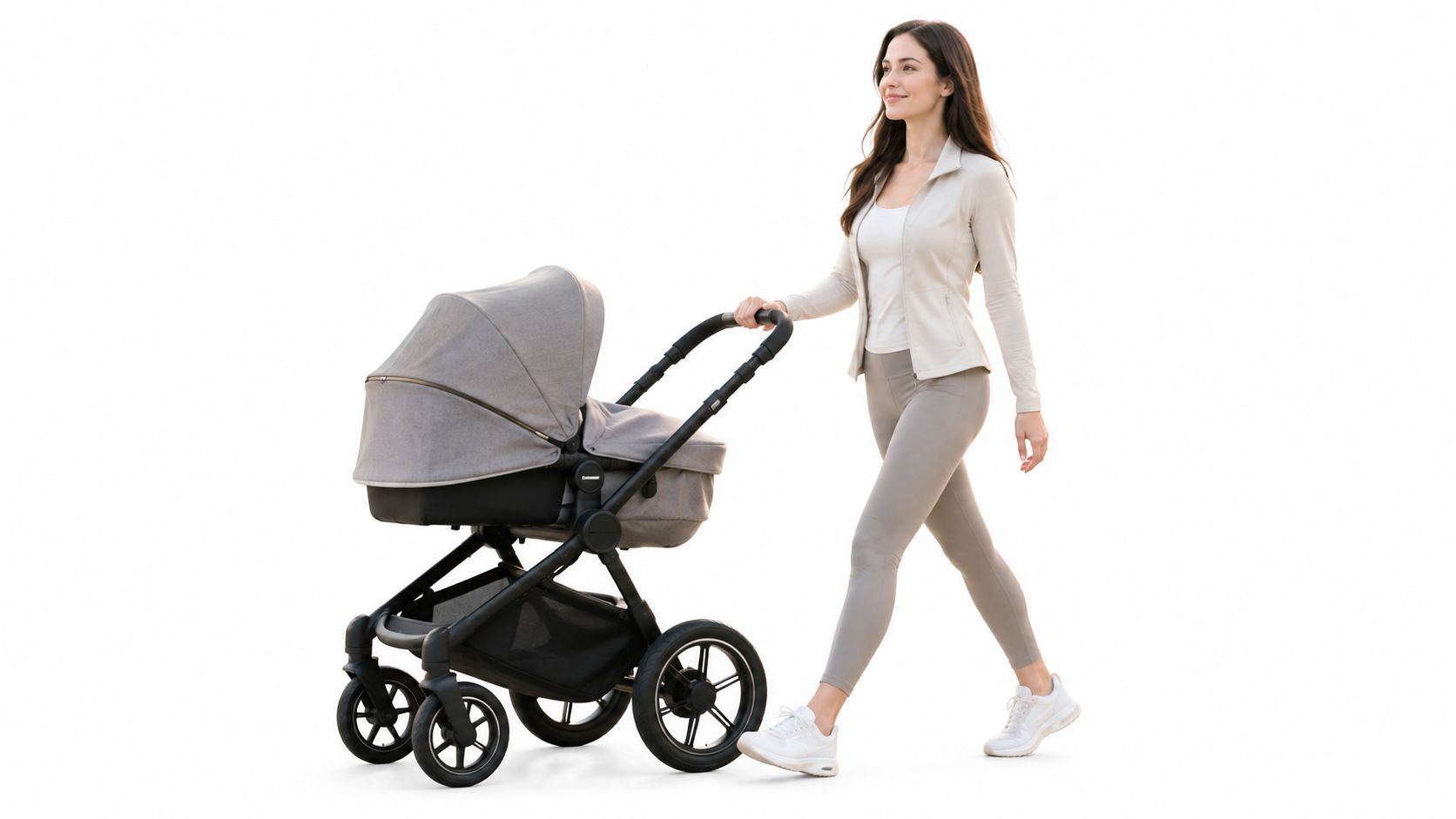
The UK NHS recommends a healthy, balanced diet and regular moderate exercise for breastfeeding people who are overweight, including a brisk 30-minute walk each day. It states that this approach won't affect the quality or quantity of breast milk. Read the NHS advice on keeping fit and healthy with a baby.
Progress in phases
Early activity should feel comfortable and leave you able to recover. Gentle breathing, relaxed walking and mobility can help you reconnect with your body. If bleeding increases, pain worsens, or your pelvic floor feels heavy or pressured, reduce the load and seek advice.
Once your clinician is satisfied with your recovery, build duration before intensity. Stroller walks, short walks after meals, or several brief laps around the house can all count. You don't need one uninterrupted workout.
Next, add controlled strength work. Sit-to-stand movements, supported squats, wall press-ups, light rows and gentle glute activation may be appropriate when your recovery allows. Exhale during effort and avoid breath-holding. Strength training should support carrying, lifting and daily movement, not leave you depleted.
Later, you can introduce more challenging cardio or resistance gradually. Increase one variable at a time, such as duration, resistance or frequency. Pain, urinary leakage, pelvic heaviness, wound discomfort or a noticeable increase in bleeding are reasons to pause and speak with a healthcare professional.
This postpartum fitness guidance may help you compare low-impact options, but it shouldn't replace individual assessment after birth. You can also use this postpartum fitness plan as a planning reference, adapting it to your recovery and feeding schedule.
The following video can offer another visual prompt for gentle postnatal movement. Stop if any exercise causes pain or pressure.
Sleep and support affect whether movement remains sustainable. A ten-minute walk that you can repeat comfortably is more useful than an ambitious session that leaves you exhausted for the rest of the day.
Sleep Stress and Support That Make Weight Loss Sustainable
A breastfeeding parent can understand nutrition perfectly and still struggle to follow a plan when sleep is fragmented and every household task falls to them. Appetite becomes harder to interpret when you're tired. Convenience food becomes the practical choice, not a moral failure.
Sleep also changes your capacity for movement and meal preparation. You may intend to cook, but after a difficult night, a sandwich, cereal or a ready meal may be the only realistic option. Those foods can fit into a balanced pattern. The priority is to avoid long stretches without eating, then compensate later when hunger becomes urgent.
Protect recovery with practical support
Ask for specific help rather than general reassurance. A partner might take responsibility for washing-up after dinner, prepare a feeding snack station, or protect a block of uninterrupted rest while you sleep. Family members may be more useful when given a concrete task, such as preparing freezer meals or taking the baby for a stroller walk.
Stress can also make body-image pressure feel louder. Social media often presents rapid postpartum change as a measure of discipline, but that isn't a clinical standard. You're allowed to choose comfortable clothes, mute appearance-focused accounts and focus on energy, strength and mood.

A short pause can prevent automatic grazing. Before reaching for food, ask whether you're hungry, thirsty, overwhelmed or unable to stop. If you are hungry, eat. If you need rest or reassurance, food alone can't solve that need, although it still shouldn't be treated as something you must earn.
The NHS postnatal wellbeing guide describes returning to pre-birth weight within 6 to 12 months as realistic and warns against feeling pressured to lose weight immediately. That timeline allows room for recovery, feeding changes, interrupted sleep and the gradual rebuilding of strength.
Mood deserves a direct check-in. Persistent sadness, anxiety, intrusive thoughts, numbness or a sense that coping is becoming impossible should be discussed with a GP, health visitor or perinatal mental health service. Weight loss can wait while urgent wellbeing needs receive attention.
What to Avoid During Lactation and When to Get Clinical Advice
The central safety principle is simple: don't create a large energy deficit while your body is recovering and producing milk. Restrictive diets, detoxes, appetite suppressants, unregulated “fat burners” and very low-calorie plans can make it harder to meet nutritional needs. Fasting and highly restrictive carbohydrate plans may also worsen fatigue and hunger, particularly when feeds interrupt sleep.
Medicines require a separate level of caution. Weight-loss treatments can affect appetite, digestion, hydration and nutrient intake, while safety information during breastfeeding may be limited or unsuitable. Don't start, stop or restart a prescription medicine, injectable treatment or supplement for weight loss without speaking with your GP, pharmacist or another appropriately registered clinician. Treatment choices after weaning still need to account for your medical history, blood pressure, medicines, mental health and feeding transition.
For background on one commonly discussed medicine, read this guide to Mounjaro and postpartum weight management. Educational information can help you prepare questions, but it cannot determine whether a treatment is appropriate for you.
What the evidence can and cannot prove
Breastfeeding and weight retention have a complicated relationship. A UK systematic review found that 63% of studies reported little or no association between breastfeeding and short-term postpartum weight retention, while 4 of 5 higher-quality studies found a positive association. This mixed evidence means breastfeeding shouldn't be treated as a guaranteed weight-loss method.
The same review supports the practical NHS approach: balanced nutrition, regular moderate activity and patience. NHS guidance states that brisk walking for 30 minutes daily won't affect milk quality or quantity, while returning to pre-birth weight over 6 to 12 months is a realistic aim. See the systematic review on breastfeeding and postpartum weight retention for the evidence base.
Use a weekly safety check
Once a week, consider whether you're eating regularly, recovering from movement, staying hydrated, and feeling emotionally steady. Check whether feeding seems normal for your baby and whether your own energy is stable enough for daily life.
Seek clinical advice if you notice rapid or unintentional weight loss, persistent dizziness, severe fatigue, worsening weakness, a concerning change in milk supply, or significant mood changes. A GP, health visitor, lactation professional or pharmacist can help identify issues such as anaemia, thyroid problems, pelvic-floor dysfunction or mental health difficulties rather than assuming you need to diet harder.
The most protective plan is one that leaves room to pause. If your body is signalling strain, increase nourishment, reduce exercise intensity and ask for assessment.
Trim offers medically supervised weight-management assessments through UK-registered clinicians, with nutrition and activity guidance included alongside treatment decisions where appropriate. If you're breastfeeding, use the consultation to discuss feeding, recovery and whether any option should wait until after weaning, then visit Trim to explore clinically guided next steps.