
A Guide to Weight Loss Medication UK Options and Safety

For many years, the primary approach to weight management in the UK has focused on diet and exercise. While these remain cornerstones of a healthy lifestyle, clinical understanding has evolved to recognise that for many individuals with obesity, lifestyle changes alone may be insufficient.
This evolving evidence base has led to the integration of medically supervised weight loss, where licensed medications are used as an adjunct to lifestyle modifications to achieve clinically significant and sustainable health outcomes. This represents a substantial shift in the therapeutic approach to weight management.
The Rise of Medically Supervised Weight Loss in the UK
Modern treatments, particularly a class of medicines called GLP-1 receptor agonists, differ significantly from older generations of weight loss drugs. Rather than simply blocking fat absorption, they interact with the body's endogenous hormonal systems that regulate appetite and glycaemic control.
The mechanism of action results in increased satiety and delayed gastric emptying, which can support adherence to a calorie-controlled diet. The approach is designed to work in synergy with the body's physiological processes.
A New Chapter in UK Healthcare
This marks a new chapter for healthcare in the UK. The clinical focus is shifting from simple weight reduction to achieving measurable improvements in overall health, such as managing hypertension or reducing the risk of type 2 diabetes.
This is not a niche trend, but an increasingly mainstream clinical intervention. A study from University College London (UCL) estimated that 1.6 million adults across England, Wales, and Scotland used GLP-1 medications like Wegovy and Mounjaro in the last year alone. This figure significantly exceeded initial NHS projections, demonstrating a shift in clinical practice and patient acceptance. More details about this UK weight loss trend can be found in the full study.
The Role of UK Regulatory Bodies
Patient safety is the primary consideration for any medical treatment. In the UK, several key organisations ensure that all medications are safe, effective, and properly regulated.
- MHRA (Medicines and Healthcare products Regulatory Agency): The MHRA is the UK's regulatory body for medicines. It is responsible for ensuring that any treatment meets stringent standards for safety, quality, and efficacy before it can be prescribed by a clinician.
- NICE (National Institute for Health and Care Excellence): NICE provides national guidance and advice to improve health and social care. It evaluates clinical evidence and cost-effectiveness to determine which treatments should be recommended for use within the NHS.
Together, these two bodies create a robust regulatory framework. This means that whether a treatment is accessed via the NHS or a regulated private clinic, the standard of care is based on evidence and safety. Their oversight maintains high clinical standards as these treatments become more widely available.
How Different Weight Loss Medications Actually Work
To understand the weight loss medications available in the UK, it is essential to understand their mechanisms of action. These modern treatments are not a one-size-fits-all solution; each employs a distinct biological pathway to aid in weight management. Understanding these differences is key to appreciating the options a clinician might discuss.
The most recently developed and clinically effective group of medications are the GLP-1 receptor agonists. These represent a significant advance in medical weight management.
When a person eats, the gut naturally releases hormones. One of these, Glucagon-Like Peptide-1 (GLP-1), plays a crucial role in signalling satiety to the brain, slowing gastric emptying, and promoting glycaemic stability. GLP-1 receptor agonists are synthetic analogues of this hormone.
By activating the same receptors as endogenous GLP-1, medications like semaglutide (Wegovy) and tirzepatide (Mounjaro) help to enhance the body's natural satiety signals. This can lead to a reduction in overall calorie intake and a decrease in the persistent thoughts about food often referred to as "food noise."
GLP-1 Agonists: A Modern Approach
The mechanism of action of GLP-1 agonists provides a multi-faceted approach to the challenges of weight loss:
- Appetite Regulation: They directly influence the hypothalamus—the brain's appetite control centre—to reduce hunger and cravings.
- Slower Digestion: By delaying gastric emptying, they promote a prolonged feeling of fullness following a meal.
- Blood Sugar Control: They improve the body's glycaemic response, which helps prevent the sharp fluctuations in blood sugar that can trigger hunger.
This infographic illustrates how this new wave of medical weight loss is driven by clinical need and shaped by robust UK regulation.
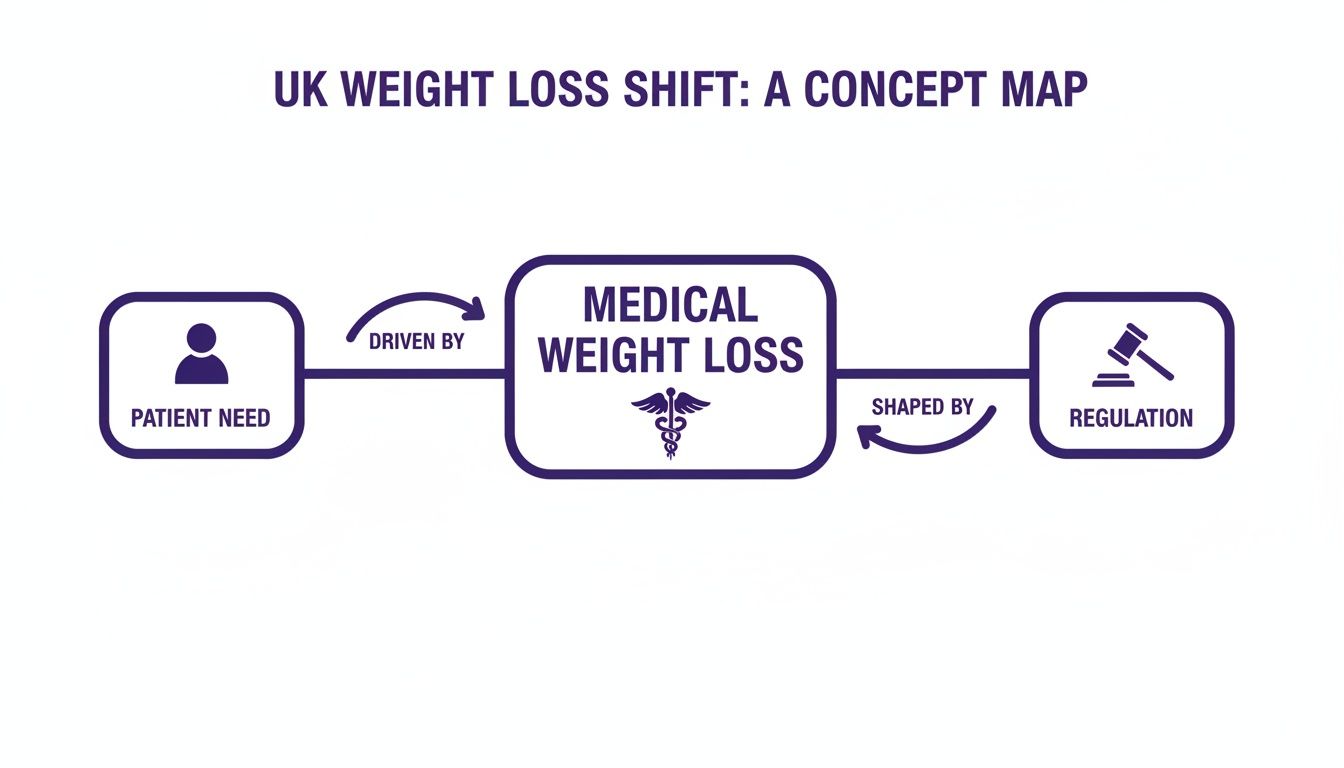
The growth in these treatments is a response to a genuine health need, managed under the strict safety and efficacy standards required in the UK.
Notably, Mounjaro (tirzepatide) is a dual agonist, mimicking both GLP-1 and another gut hormone called GIP (glucose-dependent insulinotropic polypeptide). This dual action has been associated with greater average weight loss in some clinical trials. For more specifics, we break down how Mounjaro works in our detailed guide.
Orlistat: A Different Mechanism Entirely
While GLP-1s act on hormonal and neural pathways, other licensed UK medications address weight management from a different physiological angle. The most well-known of these is Orlistat, available under brand names such as Xenical or alli.
Orlistat does not interact with hormones or brain signals. It functions directly within the gastrointestinal tract.
As a lipase inhibitor, its sole function is to prevent enzymes in the digestive system from breaking down dietary fat. By blocking these enzymes, it prevents the absorption of approximately one-third of the fat from ingested food. This unabsorbed fat is then excreted from the body.
Key takeaway: Different medications target distinct aspects of the weight management process. GLP-1s focus on regulating energy intake by managing hunger, while Orlistat focuses on reducing the absorption of certain dietary components.
UK Weight Loss Medications at a Glance
This table provides a comparison of the main types of licensed weight loss medications available in the UK, highlighting the differences in their mechanisms of action.
| Medication Class | Example Brands (Active Ingredient) | How It Works | Administration |
|---|---|---|---|
| GLP-1 Receptor Agonists | Wegovy (Semaglutide), Mounjaro (Tirzepatide) | Mimics gut hormones to reduce appetite, slow stomach emptying, and regulate blood sugar. | Self-administered weekly injection |
| Lipase Inhibitors | Xenical, alli (Orlistat) | Works in the gut to block the absorption of dietary fat, which is then passed from the body. | Oral capsule taken with meals |
Understanding these fundamental differences is important. It helps explain why a clinician might recommend one treatment over another based on a patient's individual health profile, lifestyle, and clinical goals. A qualified healthcare professional is the only person who can determine which medication, if any, is a safe and suitable choice for an individual.
Understanding the Clinical Evidence for Effectiveness
When evaluating any medical treatment, the primary question is regarding its efficacy. For modern weight loss medications in the UK, clinical trial data provides a clear affirmative answer, but this comes with important context.
It is crucial to understand that these medications are not a passive cure. The significant results observed in clinical studies are consistently achieved when the treatment is combined with lifestyle interventions, such as a reduced-calorie diet and increased physical activity.
This combination is key. The medication facilitates adherence to new habits by managing hunger and cravings, creating a powerful synergy that leads to meaningful, sustainable results.
Translating Trial Data into Real-World Results
Clinical trials for medications like Wegovy and Mounjaro are comprehensive, often involving thousands of participants over extended periods. The data from these studies provides a realistic picture of expected outcomes.
For instance, the landmark STEP (Semaglutide Treatment Effect in People with Obesity) trial series for Wegovy (semaglutide) demonstrated that participants achieved an average weight loss of 14.9% of their initial body weight over 68 weeks. To put that in perspective, an individual weighing 100kg could expect to lose nearly 15kg.
This level of efficacy represents a significant advancement over older treatments. Studies on orlistat, for example, typically show an average weight loss of around 5-10% of body weight over one year. While still clinically useful, this comparison highlights the progress made with newer GLP-1 medications.
The Rise of Incretin-Based Therapies
The superior efficacy demonstrated by GLP-1 medications has reshaped medical weight management. By 2025, these incretin-based therapies commanded a dominant 85.54% market share. Clinical trials of these injectable therapies show potential for 15-20% body weight reduction when used alongside lifestyle support. Tirzepatide (Mounjaro) has shown even greater efficacy in some key trials, demonstrating up to a 22.5% loss, which has established its role in both NHS and private UK clinics. You can find out more about the market trends for UK prescription weight loss medications.
It's crucial to interpret these figures as evidence-based benchmarks. Individual results will always vary based on factors such as starting weight, genetics, and adherence to the lifestyle programme. Clinical data provides the average outcome, setting a clear and evidence-based expectation.
More Than Just Weight Loss
While the percentage of body weight lost is a primary endpoint in trials, the clinical benefits of these medications extend further. The health improvements observed are often as significant as the reduction in weight.
Successful weight management with these treatments has been shown to lead to marked improvements in several obesity-related health conditions.
- Cardiovascular Health: Many participants in clinical trials experienced significant reductions in blood pressure and cholesterol levels, both major risk factors for cardiovascular disease.
- Blood Sugar Control: For individuals with pre-diabetes or type 2 diabetes, these medications can dramatically improve glycaemic control, sometimes leading to remission of the condition.
- Improved Mobility: Significant weight loss can reduce the mechanical strain on joints, leading to decreased pain and improved physical function.
This evidence reinforces that the use of weight loss medication in the UK is a clinical intervention designed to improve overall health, reduce the risk of serious disease, and enhance long-term quality of life.
Navigating NHS And Private Access Pathways In The UK
In the UK, there are two primary routes for accessing prescribed weight loss medication: through the National Health Service (NHS) or via a private healthcare provider. Understanding the differences is important, as each has distinct eligibility criteria, costs, and processes.

The appropriate pathway often depends on an individual's clinical situation, geographical location, and personal preference. While both systems adhere to the same stringent UK regulatory standards, the access and service models can differ significantly.
The NHS Pathway: Strict Criteria And Specialist Referrals
Access to the newer generation of weight loss drugs on the NHS is governed by strict guidelines from the National Institute for Health and Care Excellence (NICE). These rules ensure that treatments are prioritised for individuals with the most significant clinical need.
To be eligible for treatment on the NHS, a referral to a specialist weight management service is typically required, along with meeting specific criteria.
- BMI Threshold: A Body Mass Index (BMI) of 35 kg/m² or higher is generally required.
- Weight-Related Comorbidities: The patient must also have at least one obesity-related comorbidity, such as type 2 diabetes or hypertension.
- Specialist Services: These prescriptions are typically managed within a Tier 3 or Tier 4 specialist weight management service, not in a standard GP appointment.
Due to this structured approach, patients may face long waiting lists even if they meet the eligibility criteria. Research has highlighted a "postcode lottery," where availability and referral times can vary significantly depending on the local Integrated Care Board (ICB). If you would like to understand this better, you can read our guide on accessing GLP-1 medications on the NHS.
The Private Pathway: Regulated And Accessible
For individuals who do not meet the strict NHS criteria or wish to avoid long waiting times, the private sector offers an alternative. This route provides access to the same licensed and regulated weight loss medication UK prescribers use, but with a different service model.
It is critical to ensure any private provider is legitimate and operates safely. Always look for clinics that are regulated by UK healthcare bodies.
A key indicator of a trustworthy service is registration with the General Pharmaceutical Council (GPhC). This registration ensures that the pharmacy meets the highest UK standards for safety, quality, and dispensing practices.
The process for private access typically involves:
- Online Consultation: A detailed health assessment is completed and reviewed by a UK-registered clinician, such as a doctor or pharmacist prescriber.
- Clinical Assessment: The clinician reviews the patient's medical history to determine if medication is a safe and suitable option.
- Prescription and Delivery: If deemed appropriate, a prescription is issued. The medication is then dispensed by a GPhC-registered pharmacy and delivered to the patient.
- Ongoing Support: Reputable providers include ongoing clinical support, progress tracking, and access to health coaching as part of their programme.
While the private route involves out-of-pocket costs, it offers a more direct pathway to commencing a medically supervised weight management programme. This accessibility is often why it is considered a viable option for many who cannot access the treatment they need on the NHS.
A Realistic Look at Safety and Long-Term Use
When considering any medical treatment, understanding the safety profile is as important as understanding its efficacy. For weight loss medication in the UK, patient safety is the highest priority. This requires a transparent, evidence-based discussion about potential side effects, contraindications, and the long-term management strategy.
These medications are potent clinical tools and must be used under the guidance of a qualified healthcare professional who can monitor progress and ensure the treatment remains safe and appropriate.
Common and Manageable Side Effects
Like any effective medicine, GLP-1 receptor agonists are associated with potential side effects. For most individuals, these are mild, transient, and manageable. The most common are gastrointestinal, which is expected given the medications' mechanism of action.
These often include:
- Nausea: This is the most frequently reported side effect, particularly during treatment initiation or dose escalation. It typically subsides as the body adapts.
- Diarrhoea or Constipation: Changes in bowel habits are common but can usually be managed with dietary adjustments and adequate hydration.
- Fatigue or Headaches: Some individuals may experience fatigue or headaches, especially in the early stages of treatment.
These effects are most pronounced during the initial titration phase, where the dose is increased slowly and gradually. This "start low, go slow" approach is designed to minimise side effects and allow the body to acclimatise. For more specific information, a guide to Ozempic side effects in females can offer targeted insights.
Serious Risks and The Importance of Supervision
While less common, more serious risks exist, which is why ongoing medical supervision is non-negotiable. These medications are not suitable for everyone. For example, individuals with a personal or family history of certain types of thyroid cancer or pancreatitis are generally not prescribed GLP-1 medications.
This underscores why a thorough initial consultation with a UK-registered clinician is essential. A prescriber will conduct a comprehensive review of a patient's medical history to identify any contraindications and confirm the treatment is a safe choice. Regular follow-up allows them to monitor for adverse reactions and adjust the treatment plan as needed. For a deeper dive into this topic, you can learn more about weight suppressant drugs and long-term health.
These are not "fit and forget" treatments. Safe and successful use depends on a clinical partnership, with continuous monitoring and support forming the bedrock of the treatment plan.
The Reality of Weight Regain After Treatment
A critical long-term consideration is what occurs after cessation of the medication. The clinical evidence is clear: these treatments are highly effective for weight loss but do not represent a standalone cure for obesity.
Weight regain is a significant risk if the medication is stopped without establishing sustainable lifestyle habits. A comprehensive meta-analysis linked to Oxford University, which reviewed 37 studies involving over 9,300 adults, found that participants regained an average of 0.4 kg (0.9 pounds) per month after stopping their medication. This rate of regain was faster than that typically observed after diet-only interventions.
This highlights a fundamental principle: medication is a tool to facilitate change, not a substitute for it. The best long-term outcomes are observed in individuals who use the treatment period to build new, healthy habits around nutrition and physical activity. An integrated programme combining medication with professional support offers the best chance of maintaining weight loss long-term.
Why You Need More Than Just a Prescription
Taking a modern weight loss medication is not solely about administering the drug. For lasting, clinically meaningful results, the medication must be one component of a comprehensive support system.
While the medication effectively addresses the biological drivers of weight gain (such as cravings and hunger), its efficacy is maximised when combined with expert guidance on nutrition, exercise, and the behavioural changes required for a healthier lifestyle.

The medication can be viewed as a tool that creates the physiological and psychological space for a patient to learn and implement new habits—habits that will persist long after the treatment course is complete.
What Does a Good Support Programme Look Like?
Whether accessed through the NHS or a private clinic, a high-quality service should offer more than just a prescription. The best programmes provide a complete clinical framework designed to support the patient from initiation and beyond.
A robust framework should always include:
- Expert Clinical Guidance: Regular follow-ups with UK-registered clinicians are essential for monitoring progress, managing potential side effects, and adjusting the treatment plan.
- Personalised Nutrition Advice: Instead of generic diet plans, a good programme provides tailored, evidence-based advice to help patients make sustainable dietary changes.
- Physical Activity Support: The goal is to encourage enjoyable and sustainable forms of physical activity to improve metabolic health and build strength for the long term.
An effective weight loss medication UK programme understands that the objective is not just weight loss, but health gain. It uses the medication as a catalyst to help build a healthier, more active lifestyle that can be maintained.
This combination of pharmacotherapy and lifestyle coaching is what leads to the most successful outcomes. While the medication can be a powerful agent for change, its full potential is realised when paired with these fundamental modifications. For those beginning their journey, understanding safe, sustainable weight loss strategies provides a foundation that works in concert with the treatment.
Ultimately, the medication provides an opportunity, but the support system helps ensure that the changes become permanent, equipping individuals with the skills and knowledge to manage their health long-term.
Your Questions About Weight Loss Medication Answered
Considering medical weight management often raises many questions. Here are clear, evidence-based answers to some of the most common queries about weight loss medication in the UK.
Who Can Actually Get Weight Loss Medication in the UK?
Eligibility for a prescription is based on strict clinical criteria to ensure the treatment is both safe and appropriate for the individual.
Within the NHS, prescribing decisions follow NICE guidelines. This generally requires a Body Mass Index (BMI) of 30 kg/m² or higher. This threshold may be lowered to 27 kg/m² or higher in the presence of a significant weight-related health condition, such as type 2 diabetes or hypertension.
Reputable private clinics adhere to very similar clinical standards. In all cases, a UK-registered prescriber must conduct a thorough review of a patient's medical history before determining if medication is a safe and appropriate choice.
Are Weight Loss Injections Like Wegovy and Mounjaro Safe?
Yes, when prescribed correctly and monitored by a qualified UK clinician. Licensed medications like Wegovy and Mounjaro have undergone extensive clinical trials demonstrating their safety and efficacy.
As with any medication, there is a risk of side effects. For most people, these are mild and transient, such as nausea or digestive changes, particularly during the initial phase of treatment. This is why ongoing medical supervision is a critical component of a safe treatment plan, allowing a clinical team to manage side effects and monitor progress.
The safety of any weight loss medication UK programme is contingent on professional medical oversight. This ensures the treatment is appropriate from the outset and remains so throughout the patient's journey, with adjustments made by the clinician as needed.
What Happens When I Stop Taking the Medication?
This is a critical question, and the clinical evidence is unambiguous. If weight loss medication is discontinued without the implementation of sustainable lifestyle changes, weight regain is highly likely.
These medications should be viewed as powerful tools, not as a permanent, standalone solution. They provide a crucial window of opportunity to establish healthier eating and activity habits that can be maintained for life.
The most successful long-term outcomes are seen in individuals who use medication as one component of a comprehensive programme. This integrated approach—combining treatment with nutritional guidance, support for physical activity, and professional oversight—is what helps maintain results long after the prescription ends.
At Trim, we provide a comprehensive, medically supervised programme that combines proven medications with the ongoing support required for sustainable results. Start your free consultation today to see if our clinically-led approach is right for you. Learn more at gettrim.co.uk