
Can You Drink on Wegovy? Safe Limits Explained

You can drink alcohol while taking Wegovy, because UK guidance doesn't impose an absolute alcohol ban, but 14 units a week is the key low-risk benchmark and it should be spread over three or more days. The period when you need the most caution is the first 16 weeks of dose escalation, when nausea, vomiting, reflux, and dehydration are more likely.
Friday night often brings the same question. You've started Wegovy, your friends are meeting at the pub, and you're wondering whether one glass of wine is fine or whether alcohol is now off limits. No one asking for a lecture. They want a practical answer they can use in real life.
The honest answer is more nuanced than a simple yes or no. Wegovy doesn't come with a UK rule that says alcohol is forbidden. But it does change the context in which alcohol affects you. A drink that once felt routine may now worsen nausea, trigger reflux, or leave you feeling rougher than expected the next day.
That's why the better question isn't only can you drink on Wegovy. It's whether drinking still makes sense at your current dose, with your current symptoms, this week.
A person on their first 0.25 mg dose who's already queasy after meals needs different advice from someone on a stable maintenance dose who feels well. In clinic, that's how these conversations usually work. We don't treat alcohol as a fixed permission slip. We reassess it dose by dose, symptom by symptom.
This guide takes that same approach. It explains how Wegovy works, why alcohol can hit differently while you're on it, how to think about units and calories in a UK context, why some people notice lower alcohol desire, and when drinking is sensible to skip altogether. The aim is education rooted in clinical trial data and evidence based information, not a sales pitch for prescription medicines.
Table of Contents
- Introduction to Drinking on Wegovy
- How Wegovy Works in Your Body
- How Alcohol Can Worsen Wegovy Side Effects
- Alcohol Blood Sugar and Calories While Taking Wegovy
- Why Alcohol Tolerance and Cravings May Change on Wegovy
- Practical Guidance for Drinking Safely and When to Seek Help
- Making Informed Choices About Alcohol on Wegovy
Introduction to Drinking on Wegovy
Friday evening is often when the question becomes real. You have taken Wegovy, you are due to meet friends, and the decision is no longer theoretical. Is one drink likely to be fine, or is this one of those weeks when alcohol will tip your stomach over the edge?
A simple yes or no rarely helps. Wegovy does not come with a blanket UK rule that alcohol is forbidden. What it changes is the setting. The same drink can feel very different depending on your dose, how recently you increased it, whether you are already nauseated, and whether you are managing normal meals and fluids.
That is why clinicians usually assess alcohol dose by dose, week by week. The useful question is not only can you drink on Wegovy. It is whether drinking makes sense at your current stage of treatment, with your current symptoms, on this particular occasion.
The UK 14-Unit Benchmark Clinicians Use
In UK practice, the starting point is the Chief Medical Officers' low-risk drinking guidance, which says adults should not regularly drink more than 14 units a week, spread across the week rather than saved for one or two heavier sessions, as summarised in this UK guide to drinking on Wegovy. Wegovy does not have its own separate alcohol allowance, so this is the benchmark many clinicians start from.
That benchmark is only a starting line.
A national limit does not tell you how your body will respond this week. Someone newly titrating and already dealing with nausea may tolerate far less. Someone on a stable dose with no stomach symptoms may find a small amount manageable. The rule on paper stays the same, but the practical answer can shift during treatment.
Clinical bottom line: If alcohol is making nausea, reflux, vomiting, poor intake, or dehydration worse, the sensible limit for that week may be lower than 14 units, or zero.
Why the answer changes during treatment
People often hear two ideas that seem to clash. There is no formal prohibition. Caution still matters. Both are true because they refer to different parts of the decision.
The legal and prescribing question is straightforward. Wegovy is not automatically incompatible with alcohol. The practical question is more personal. Wegovy can change appetite, fullness, and stomach comfort, so alcohol may feel stronger, less appealing, or less worth it than before.
A useful way to picture it is as a volume dial rather than an on-off switch. Early in titration, the dial is often more sensitive. After dose increases, some people notice they want less alcohol or feel rough after less than usual. Later, once the dose is stable, that sensitivity may settle, but it does not always return to what it was before treatment.
So the safest approach is a reassessment each time. What dose are you on? Have you just stepped up? Are you eating and drinking normally? Is your stomach already unsettled? Those answers matter more than any blanket online rule.
How Wegovy Works in Your Body
Wegovy contains semaglutide, a medicine that acts on GLP-1 receptors. If that sounds abstract, think of it as helping reset an appetite thermostat. It doesn't remove hunger forever, and it doesn't “burn off” food or alcohol. It changes the signals that shape when you feel hungry, how quickly you feel full, and how long that fullness lasts.
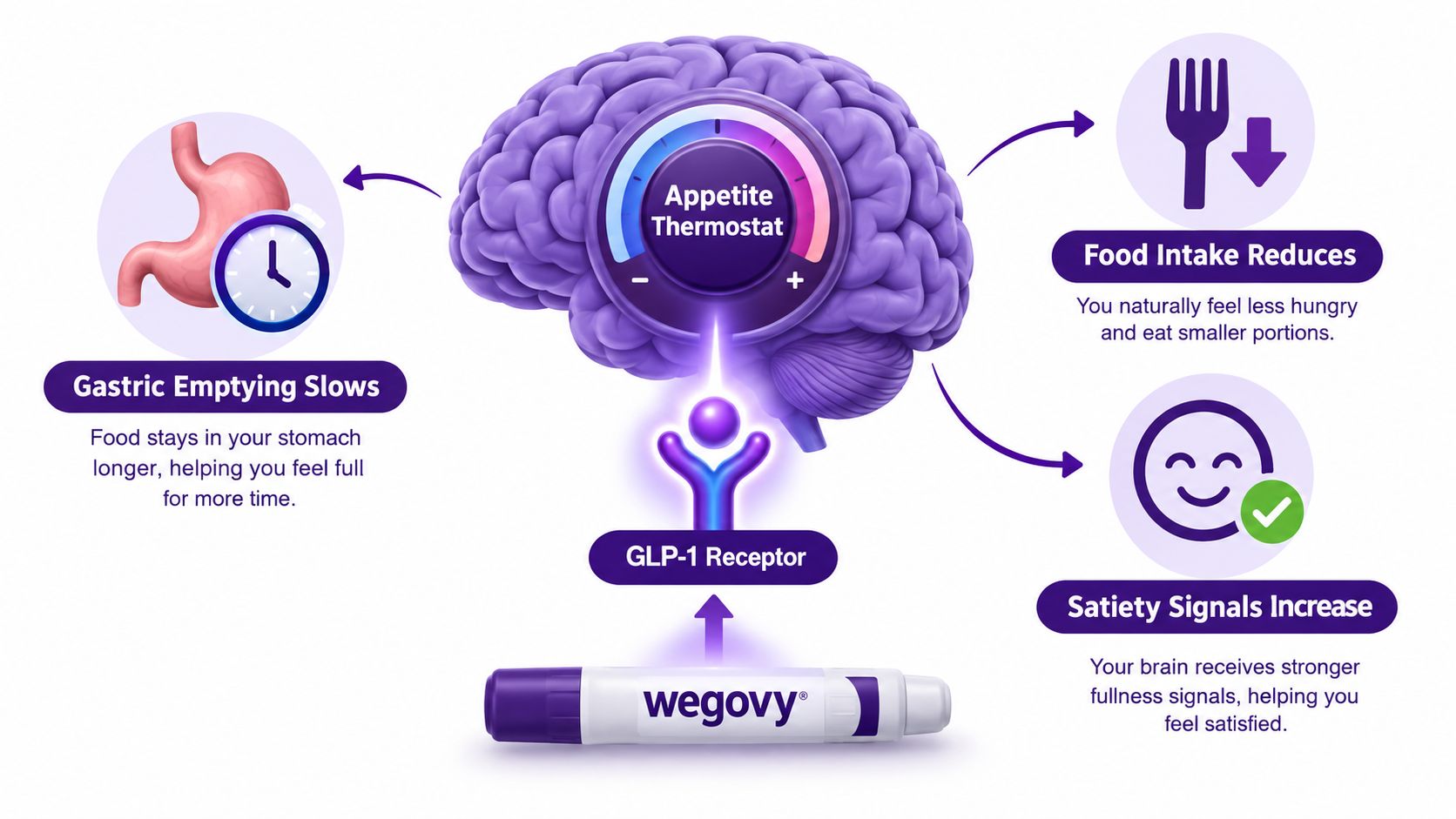
Think of it as an appetite thermostat
The way weight is often framed has centered on willpower. GLP-1 medicines are more physiological than that. They influence the gut-brain conversation that helps regulate appetite.
Three effects matter most in everyday life:
- You feel full sooner. Meals that once seemed normal may suddenly feel too large.
- Hunger may become quieter. Some people describe less “food noise”.
- The stomach empties more slowly. Food sits in the stomach longer, which can support fullness but can also contribute to nausea in some people.
That slower stomach emptying is one reason alcohol can feel less predictable. The issue isn't that Wegovy and alcohol have a labelled dangerous interaction in the way some medicines do. The issue is that Wegovy changes the body environment in which drinking happens.
Why that matters before you even think about wine or beer
Alcohol doesn't just go to the liver and disappear. It affects the stomach, hydration, appetite, and the brain systems linked to reward and cravings. If Wegovy is already turning down hunger signals and altering how your stomach handles intake, alcohol may not land the way it used to.
A simple analogy helps. If your body normally runs on a familiar meal-and-drink rhythm, Wegovy changes the timing on that system. Alcohol enters a body that may already be eating less, feeling full earlier, and tolerating rich food less well. That can make a previously ordinary pub night feel unexpectedly uncomfortable.
Wegovy changes the terrain, not just the appetite. That's why alcohol decisions often need to be revisited after each dose increase.
This also explains why people can have very different experiences. One person can have a single drink with dinner and feel no obvious difference. Another can find the same drink brings on reflux or nausea. The medicine is the same, but the body response isn't identical.
How Alcohol Can Worsen Wegovy Side Effects
The most practical risk with alcohol on Wegovy isn't a hidden toxic interaction. It's overlap. Alcohol and Wegovy can both contribute to nausea, vomiting, reflux, stomach discomfort, and dehydration. When those effects stack up, the same drink can feel harder on the body than it did before treatment.
UK-facing guidance also links this caution to Wegovy's titration schedule. Wegovy is usually started at 0.25 mg once weekly and increased every 4 weeks to 0.5 mg, 1.0 mg, 1.7 mg, and then the maintenance dose of 2.4 mg weekly, so the first 16 weeks are the period when clinicians most often advise extra caution with alcohol, as outlined in this UK review of Wegovy and alcohol during dose escalation.
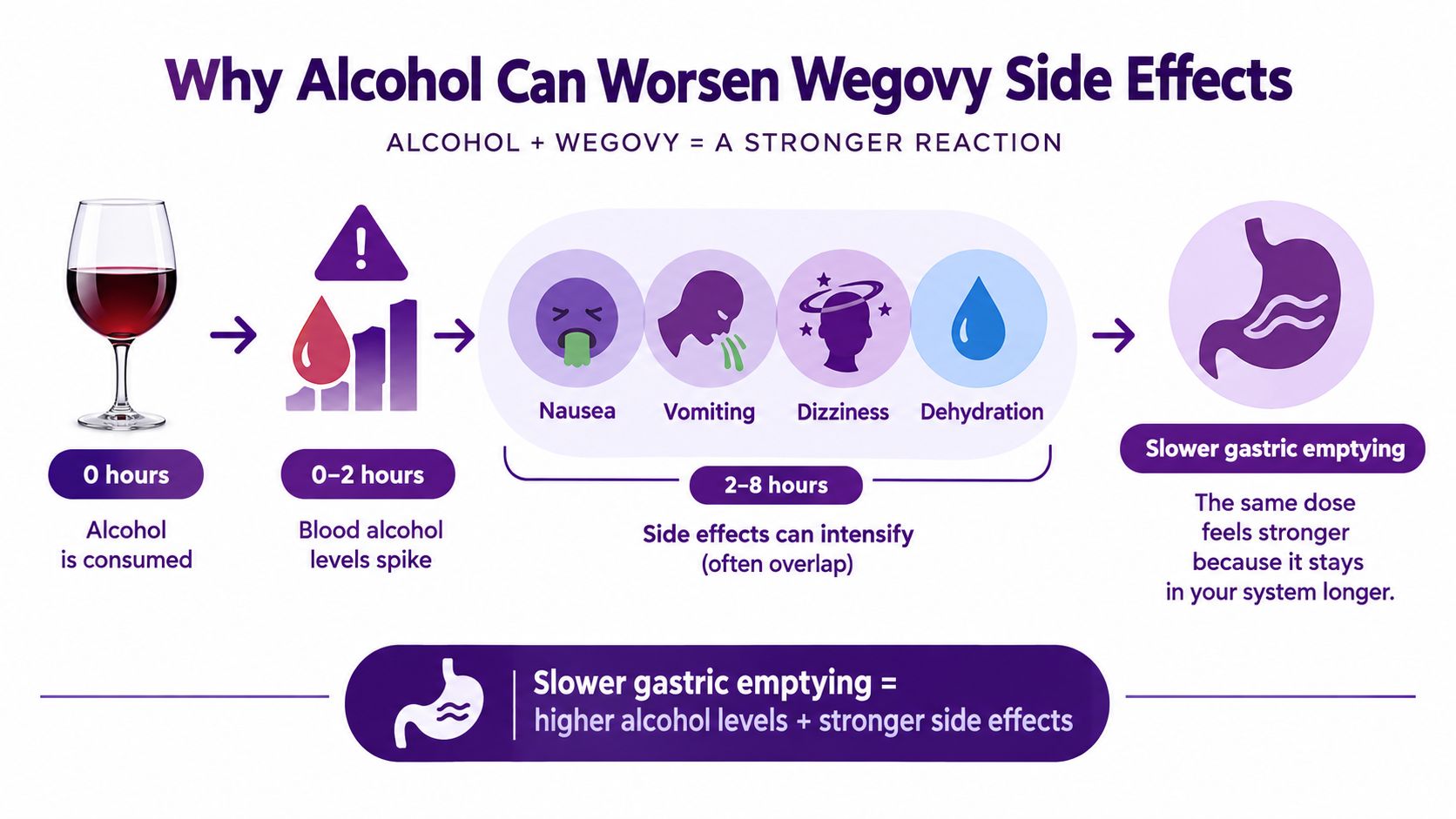
Why the same drink can feel different
The change isn't always dramatic, but it can be noticeable. If you're eating less because Wegovy has reduced your appetite, there may be less food in your system when you drink. If your stomach is already sensitive, alcohol can irritate it further.
Typical patterns people notice include:
- Earlier nausea after a drink, especially on an empty stomach.
- More reflux or heartburn later in the evening.
- A rougher next morning because dehydration adds to reduced fluid intake.
- Less desire to continue drinking once the first drink hits.
If you're already dealing with side effects, it helps to review them properly. This guide to common Wegovy side effects gives a useful overview of what's expected and what needs more attention.
The weeks when caution matters most
The escalation period is where trouble usually shows up. Not because everyone becomes unwell, but because your body is still adapting. A drink that was fine before starting treatment may suddenly become the thing that tips mild nausea into actual vomiting.
That's why many clinicians advise a simple dose-by-dose check-in:
- Ask how your stomach has been this week. If meals are already making you queasy, alcohol is more likely to make that worse.
- Check your hydration. If you've had poor oral intake, dry mouth, dizziness, or dark urine, drinking alcohol is a poor bet.
- Notice timing. The few days after an injection can feel different from the end of the week for some people.
Safer rule for symptom weeks: If you're vomiting, have abdominal pain, or can't keep fluids down, skip alcohol and contact your clinical team.
There's another practical issue people underestimate. Alcohol can also disrupt sleep, and poor sleep often makes the next day's appetite control and symptom management harder. If that's a recurring problem for you, this natural sleep solution for drinkers is a useful non-promotional read on the alcohol-sleep link.
Alcohol Blood Sugar and Calories While Taking Wegovy
You might have a quiet dinner, order the same drink you always have, and assume the only question is whether it will upset your stomach. There is another layer. Alcohol also changes blood sugar, adds calories without much nutrition, and can make it harder to read what your body is telling you that evening and the next morning.
Key concept: On Wegovy, alcohol is rarely a fixed yes or no. It is a dose by dose decision, because the same drink can feel different at different stages of titration.
Why alcohol can confuse hunger and blood sugar
Alcohol can blur two signals at once. The first is appetite. The second is energy balance, including blood sugar.
Some people eat less while drinking because they feel full earlier or lose interest in food. Others do the opposite and eat past fullness once alcohol lowers restraint. Wegovy is meant to make eating cues steadier and easier to follow. Alcohol can interfere with that by making fullness less clear, delaying meals, or replacing food with drinks.
The blood sugar part often causes confusion. Alcohol does not usually act like a sugary dessert in a simple, predictable way. A sweet drink may raise blood sugar at first, while alcohol itself can later make blood sugar drop, especially if you have not eaten much. For someone whose intake is already smaller on Wegovy, that can mean feeling shaky, light-headed, tired, or “off” the next day.
If you are trying to keep meals regular while your appetite changes, this practical guide on what to eat on Wegovy can help you match food choices to your symptoms and intake.
UK low risk drinking benchmark on Wegovy
A useful way to stay grounded is to track units, not just glasses or “a couple of drinks”. In the UK, the low risk guideline is no more than 14 units a week, spread over several days, according to the NHS alcohol guidance.
| Drink Example | Units per Serving | How Many Reach 14 Units |
|---|---|---|
| 175 ml glass of wine at 12% ABV | 2.1 units | About 6 glasses |
| Single 25 ml spirit at 40% ABV | 1 unit | 14 single measures |
Units help because tolerance on Wegovy can shift during treatment. A serving that sat comfortably before may now feel stronger, worsen dehydration, or replace food too easily. Tracking units gives you a clearer reference point than relying on habit.
Calories still count, even if you want less alcohol
Wegovy may reduce interest in food or drink for some people, but it does not remove the calorie content of alcohol. Liquid calories are easy to miss because they do not always create much fullness, and they often come at the same time as poorer food choices, missed meals, or late snacking.
That is why the safest approach is practical rather than moral. Reassess each occasion. Ask yourself how much you have eaten, where you are in your injection week, whether you have had side effects recently, and whether this amount still feels manageable on your current dose.
For a broader perspective beyond weight alone, this holistic overview of alcohol and brain health adds context on how drinking decisions can affect long term health as well as calories.
Why Alcohol Tolerance and Cravings May Change on Wegovy
This is the part many articles miss. For some people, the biggest change on Wegovy isn't that alcohol causes more nausea. It's that the desire to drink may shift.
UK-facing reporting on emerging evidence has highlighted that semaglutide cut alcohol intake by about 40% in the first clinical trial of its kind, and Drinkaware's 2026 coverage of UK users reported average drinking frequency fell from 3.1 to 2.2 days per week and alcohol intake fell from 4.3 to 3.6 units per week after starting GLP-1 medication, according to this Drinkaware report on GLP-1 medicines and alcohol consumption.
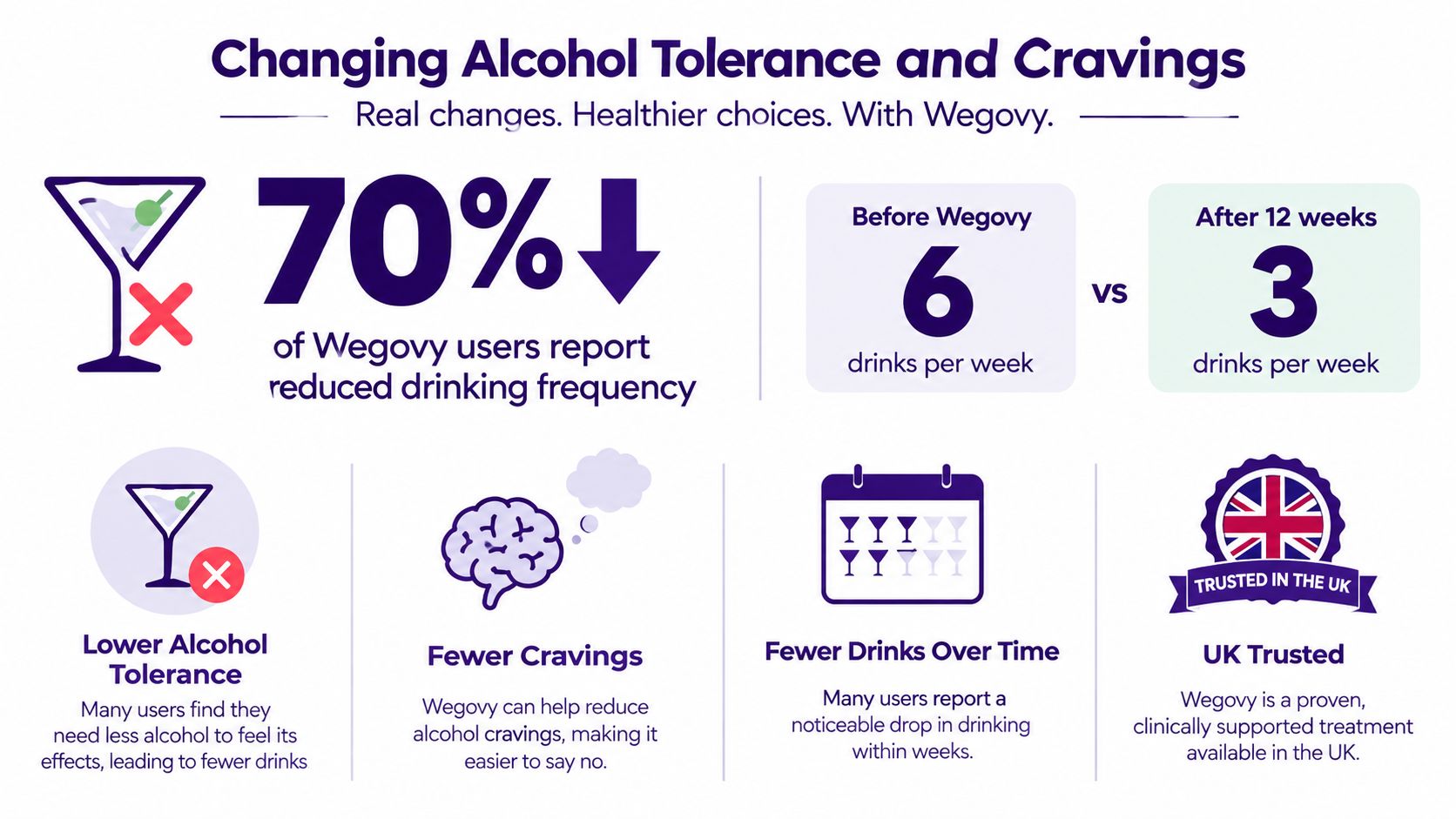
Why this change can happen
Semaglutide acts in systems involved in appetite and reward, so it isn't surprising that some people report changes beyond food alone. They may find the first drink less appealing, the urge to keep drinking weaker, or the whole idea of drinking less rewarding than before.
That doesn't mean everyone will experience the same thing. Some people notice a clear drop in cravings. Others feel no major behavioural change and mainly notice side effects if they overdo it.
A useful way to interpret this is not “Wegovy treats alcohol problems” but “Wegovy may change alcohol motivation for some people, so old drinking habits may no longer fit.”
Later-stage evidence is still being developed, and UK research is actively exploring this. The CURB trial is scheduled to recruit 268 people in England, Wales, and Scotland with alcohol dependence, obesity, and chronic liver disease. Participants will receive semaglutide or placebo for 36 weeks to examine whether semaglutide can reduce alcohol use while also improving weight, liver health, and quality of life, as reported in this BBC summary of the CURB semaglutide trial.
Why dose-by-dose reassessment makes more sense than a fixed rule
A one-time answer at the start of treatment often becomes outdated. Your experience at 0.25 mg may not match your experience after several dose increases. Tolerance, appetite, and cravings can all move.
This short discussion offers another perspective on changing alcohol urges and related treatments:
If you're curious how clinicians think about craving reduction more broadly, this article comparing alcohol craving treatments gives useful context. It isn't about Wegovy specifically, but it helps frame why a shift in urges matters.
Questions worth asking yourself after each dose increase include:
- Do I still want alcohol in the same way, or am I drinking from habit?
- Does one drink now feel enough when it didn't before?
- Am I planning around a social routine that no longer matches my body?
Those are more useful than forcing your current experience into a permanent yes-or-no rule.
Practical Guidance for Drinking Safely and When to Seek Help
The safest approach is simple. If you choose to drink, keep it moderate, keep it deliberate, and reassess it based on symptoms rather than habit. UK guidance gives you a national benchmark, but your own tolerance on Wegovy may sit well below it.
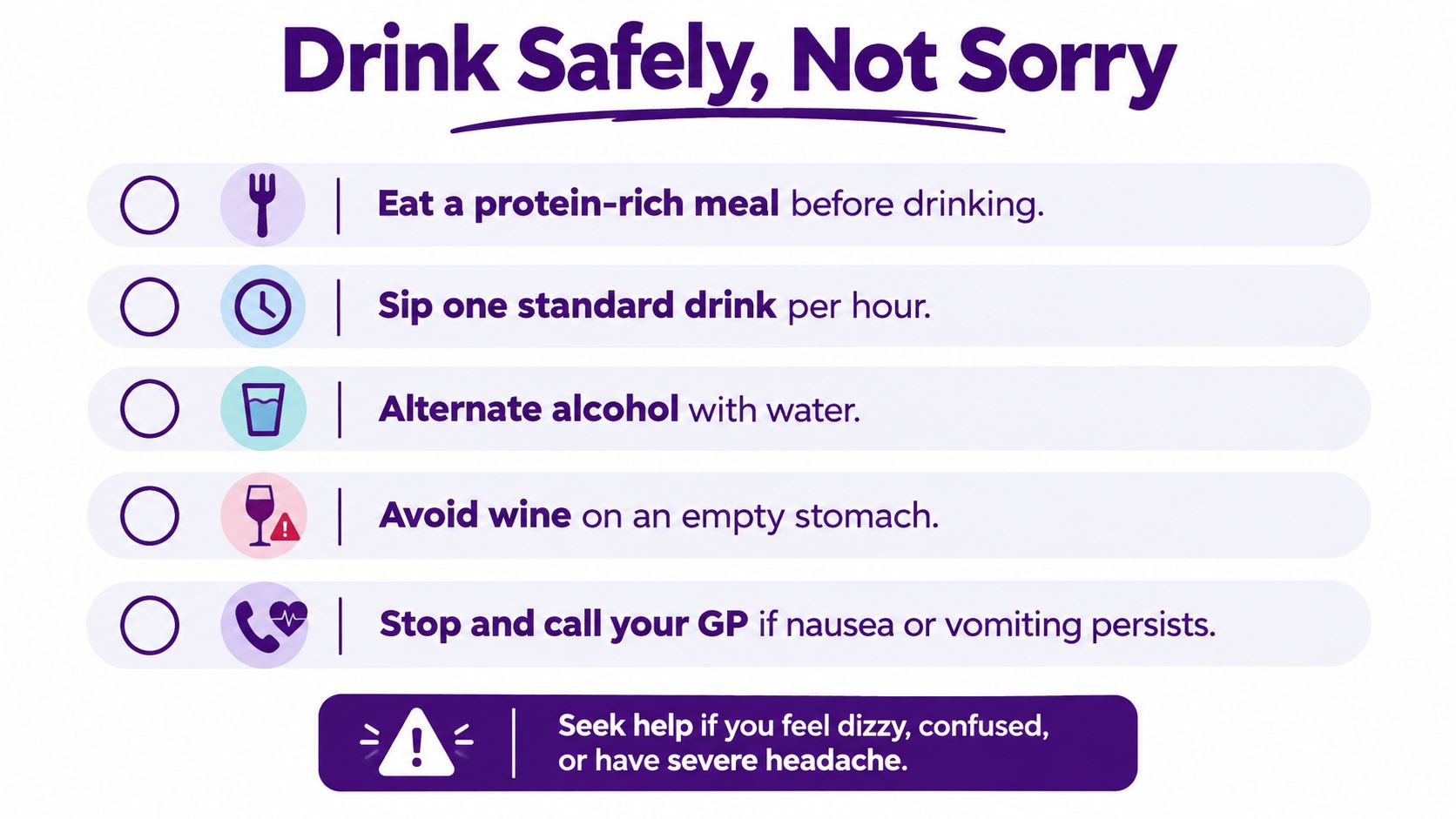
A practical checklist for real life
Use this before a night out or dinner where alcohol is likely:
- Eat first. Drinking on an empty stomach is more likely to trigger nausea and make you feel unsteady.
- Alternate with water. This reduces the dehydration burden and slows the pace.
- Start smaller than usual. Your old tolerance may not be a reliable guide now.
- Avoid trying to “catch up”. Saving your weekly units for one heavy session is exactly the pattern low-risk guidance aims to avoid.
- Pause after dose increases. If the new dose has unsettled your stomach, give it a week or two before deciding alcohol is still manageable.
For readers comparing different GLP-1 medicines, this guide to Mounjaro and alcohol helps show how similar principles often apply across treatments.
When to skip alcohol entirely
Some situations make alcohol a poor choice, even if you'd usually tolerate it.
- If you're already nauseous, alcohol often adds fuel to the fire.
- If you've been vomiting, your priority is fluids and recovery, not testing tolerance.
- If you've got abdominal pain, especially if it's persistent or significant, don't drink and seek clinical advice.
- If you're barely eating or drinking, alcohol can push dehydration and dizziness further.
If your body is already struggling with Wegovy that week, alcohol isn't a neutral extra. It adds work to the same systems that are already under strain.
When to contact a clinician
Don't wait for a dramatic emergency to ask for help. Clinical teams would usually rather hear from you early than after things have escalated.
Contact your prescriber, pharmacist, GP, or out-of-hours service if you have:
- Persistent vomiting
- Inability to keep fluids down
- Ongoing abdominal pain
- Signs of dehydration, such as dizziness, marked thirst, or very low urine output
- Symptoms that keep recurring after drinking, even at small amounts
If you want support that combines prescribing review with tracking of symptoms, food, and progress, Trim is one UK option that offers clinician oversight and app-based monitoring for people using GLP-1 treatment. The point isn't that everyone needs a platform. It's that if alcohol repeatedly throws off your hydration, eating, or tolerability, structured monitoring can make decision-making clearer.
Making Informed Choices About Alcohol on Wegovy
A common real-life pattern is this: a drink that felt fine before Wegovy now feels different, and the amount that suits you can change again after the next dose increase. That is why the safest question is rarely “Can I drink or not?” It is “Is alcohol a good fit for me this week, at this dose, with these symptoms?”
Wegovy tends to make alcohol less predictable, not automatically off-limits. For some people, one glass starts to feel like two. For others, the interest in drinking drops before tolerance changes at all. It helps to treat alcohol like spicy food during a sensitive stomach phase. What was ordinary before treatment may need a smaller trial, more caution, or a pause.
Your social routine may need updating too. If your appetite is lower, your fluid intake is patchy, or the appeal of alcohol has faded, old habits can stop matching what your body is asking for. That is not failure or overreaction. It is a normal adjustment to a medicine that changes hunger, fullness, and sometimes reward signals around food and drink.
The practical goal is flexibility. Use the symptom check from section 6 before deciding to drink this week.
If you're using Wegovy and want more support around side effects, hydration, food choices, and questions like alcohol tolerance, Trim offers UK-based clinical assessment and ongoing monitoring for people on medically supervised weight-loss treatment. If you're unsure whether your current symptoms mean “drink less” or “skip it completely”, getting personalised advice is often the safest next step.