
Mounjaro Nausea at Night: Why It Happens and What Helps

You've eaten a modest dinner, brushed your teeth and settled into bed. Then the queasiness starts. Your stomach feels unsettled, perhaps with reflux or a heavy, “food is still there” sensation, and you're left wondering why Mounjaro nausea at night feels worse than it did during the day.
This pattern is usually linked to how tirzepatide affects digestion, particularly after starting treatment or increasing the dose. UK patient guidance describes nausea, vomiting, diarrhoea and constipation as common gastrointestinal reactions. They're generally mild or moderate, tend to be most noticeable during dose escalation and often ease over time, as explained in the NHS Lothian Mounjaro patient booklet.
Night-time symptoms can still be miserable. The useful question isn't whether Mounjaro causes nausea, but why your symptoms gather after bedtime and which practical levers can change that pattern.
Table of Contents
- Why Mounjaro Seems to Make You Feel Sick at Night
- How Tirzepatide Causes Nausea in the First Place
- The Three Things That Make Night-Time Symptoms Worse
- Practical Evening Habits That Calm Symptoms Down
- Dosing, Injection Timing and When to Speak to a Clinician
- When Night-Time Nausea Is a Red Flag and Not Just a Side Effect
- A Realistic Timeline, Reassurance and Your Next Step
Why Mounjaro Seems to Make You Feel Sick at Night
By late evening, dinner may still feel present even though you have not overeaten. Once you lie down, nausea can rise, settle briefly and return. Belching, reflux, heaviness or an unsettled upper stomach may be more noticeable than the sudden vomiting often associated with a stomach bug.
Nausea is one of the most frequently reported gastrointestinal effects of tirzepatide. UK prescribing information shows that it becomes more common as the dose increases, particularly while treatment is being stepped up. The detailed dose figures are covered in the next section, so the practical point here is that a recent increase can make night-time symptoms more likely.
Why evenings can expose the problem
Daytime habits often mask the sensation. You are usually upright, moving around and eating meals with more time between them. At night, your evening meal may still be moving through the digestive system, your body is horizontal, and you may be within a dose-escalation window.
Sleeping position can therefore change how nausea feels. A meal that seemed comfortable while you were sitting upright may cause more pressure, reflux or heaviness when you lie flat, especially if it was rich, large or eaten close to bedtime. Keeping the upper body raised and allowing more time between dinner and sleep may reduce that mechanical aggravation, although it cannot remove the medicine's digestive effects.
Injection timing causes confusion. Mounjaro may be injected at any time of day, with or without food, according to NHS hospital guidance. Taking it in the morning does not guarantee a nausea-free night, and moving the injection without clinical advice is unlikely to solve every symptom. The more useful questions are whether the injection coincided with a dose increase, whether dinner was late or heavy, and whether lying flat makes the discomfort worse.
Mild or moderate nausea often improves as the body adjusts. Worsening abdominal pain, repeated vomiting or signs of dehydration need medical attention rather than home measures.
How Tirzepatide Causes Nausea in the First Place
If you feel reasonably well during the day but become queasy after getting into bed, the timing can seem mysterious. The explanation often starts with what tirzepatide is doing to appetite, blood sugar regulation and digestion.
Tirzepatide activates both GIP and GLP-1 receptors. One effect is delayed gastric emptying, meaning food leaves the stomach more slowly and fullness lasts longer. The medicine does not create nausea directly. It changes the pace of digestion, so meal size, timing and body position can affect when symptoms become noticeable.
Your stomach works like a supermarket checkout. Food normally moves through the queue at a familiar pace. Tirzepatide slows the checkout, which can help you feel satisfied with less food. If another meal arrives before the earlier one has moved on, however, the queue becomes crowded. Pressure, heaviness, belching and nausea may follow, sometimes becoming more obvious at night when you are resting rather than moving around.
The clinical explanation of how Mounjaro works gives a broader account of these appetite and digestion effects.
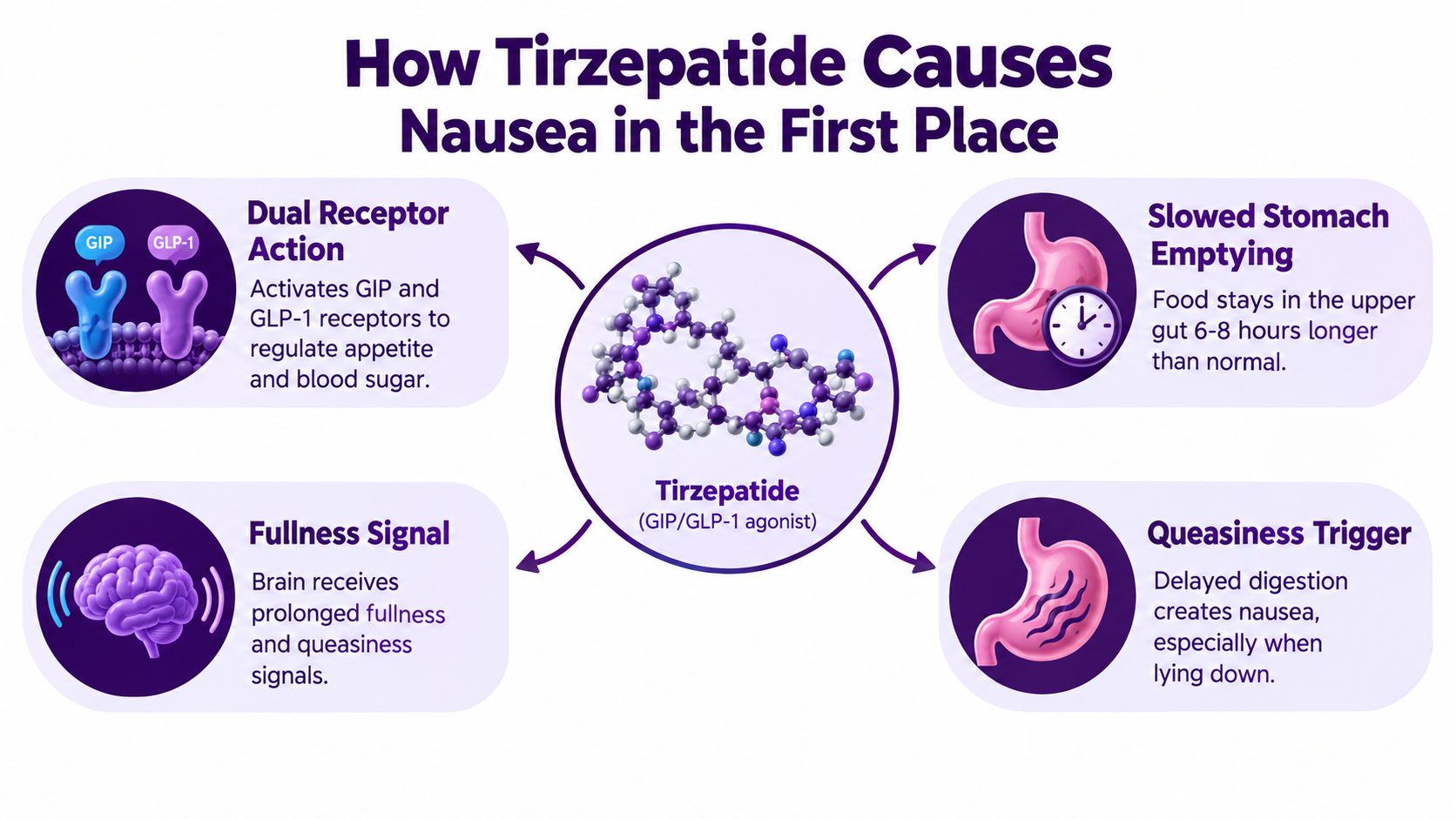
Why dose changes matter
The same digestive effect can produce a “food-still-there” sensation while your body adjusts. The UK SmPC lists delayed gastric emptying as an adverse reaction and records nausea more often at higher doses (UK Mounjaro SmPC).
UK clinical guidance describes gastrointestinal symptoms as most frequent during dose escalation, then becoming less common over time. The South Yorkshire NHS tirzepatide guideline describes nausea, constipation, diarrhoea and vomiting as generally mild or moderate, with symptoms occurring more often during escalation.
A recent dose increase can therefore make night-time nausea appear even after comfortable earlier weeks. It does not automatically mean the treatment is unsuitable. It may show that the current dose, evening meal load and digestive adjustment are temporarily out of step.
The Three Things That Make Night-Time Symptoms Worse
Night-time nausea often builds from several factors acting together. Dinner adds work for a stomach that is emptying more slowly. Lying down removes gravity's help, while a recent injection or dose increase may leave your digestive system more sensitive.
A late or heavy meal increases the load
Tirzepatide can make an ordinary dinner feel unexpectedly filling. Rich, high-fat food may remain uncomfortable for longer, and a substantial meal eaten late leaves little time for digestion before bed.
The total load matters more than one specific ingredient. A portion that once felt normal may now be too much when appetite is lower and stomach emptying is slower. Symptoms can appear after dinner has finished, particularly once you stop moving and settle down to sleep.
Meal timing therefore matters. Eating close to bedtime gives the stomach less time to process food before you lie flat, so fullness, belching or queasiness may become more noticeable at night.
Lying flat changes pressure and reflux
Upright posture allows gravity to keep stomach contents lower. Lying down changes that pressure, allowing contents and acid to irritate the area near the lower oesophagus. Reflux, burping and nausea can then feel stronger, even if the meal itself seemed manageable.
The Cambridge University Hospitals tirzepatide guidance advises avoiding lying down after eating because tirzepatide slows stomach emptying and may upset the stomach while your body adjusts.
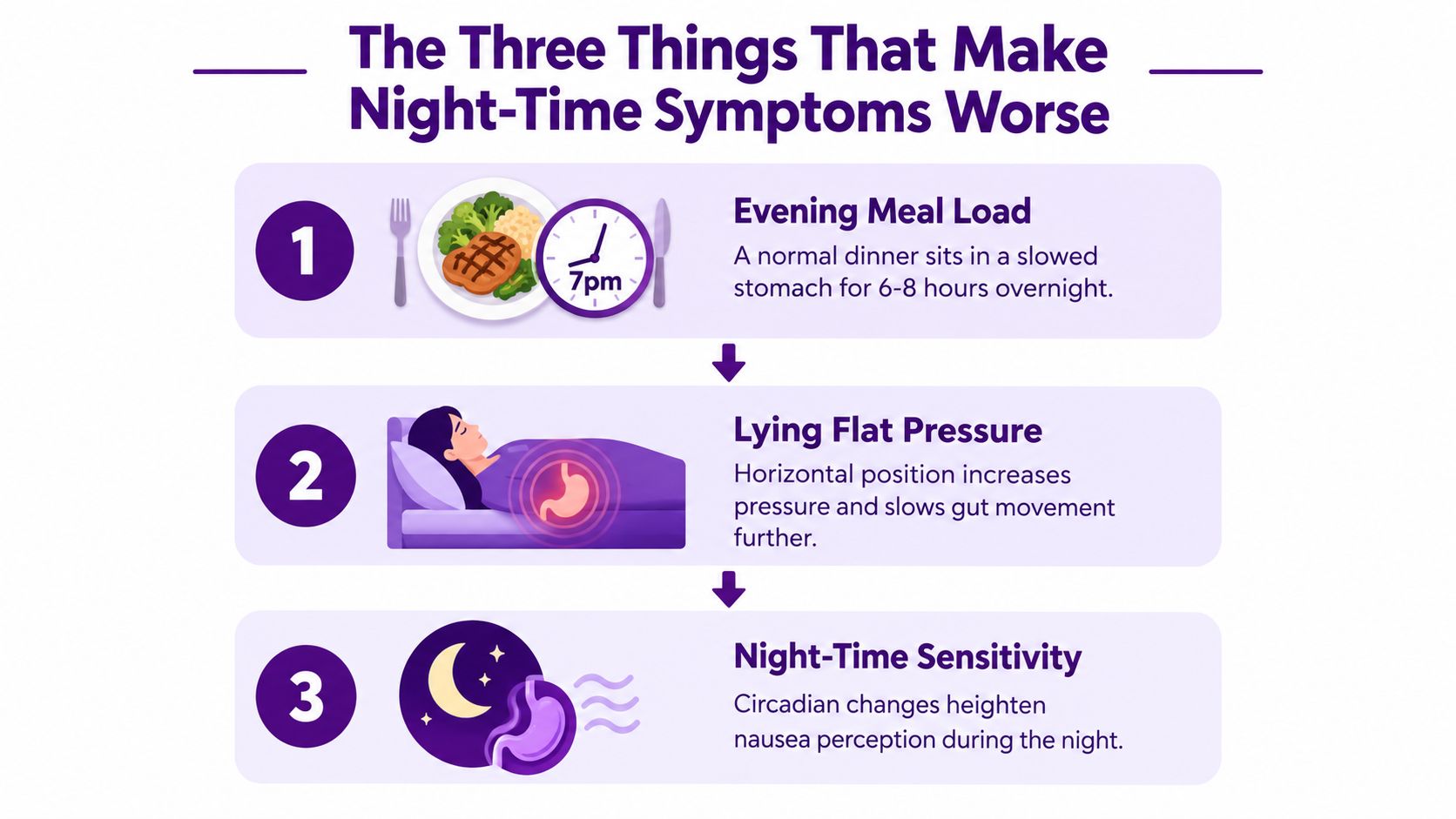
Dose timing and escalation can change the pattern
After starting Mounjaro or moving to a higher dose, the same evening routine may feel harder to tolerate. A late snack, larger dinner or prompt move from the table to bed can expose that increased sensitivity.
Some people notice little nausea on injection day, then feel worse after dinner on the following nights. The food may be unchanged. The stomach's response can shift during the dose-adjustment window, making meal timing, sleeping position and injection timing relevant to the pattern.
Practical Evening Habits That Calm Symptoms Down
If nausea tends to arrive after dinner, adjust the evening in a deliberate order. The aim is to reduce the stomach's workload, keep fluid intake comfortable, and avoid making reflux worse when you go to bed. Change one or two habits at a time so you can identify which adjustment helps.
Make dinner smaller and earlier
Finish your evening meal two to three hours before lying down. A smaller plate with a modest protein source and lower-fat, lower-fibre accompaniments may be easier to tolerate than a large, greasy, heavily spiced or very rich meal. Plain options such as toast, rice, potatoes, yoghurt, eggs, fish or chicken can be practical choices.
Eat slowly and stop at the first clear feeling of fullness. Tirzepatide can make a familiar portion feel excessive because the stomach empties more slowly. Continuing because food remains on the plate may lead to discomfort later in the evening.
For further meal ideas, see this guide to what to eat on Mounjaro.
Sip fluids through the evening
Take regular sips of cold, still water rather than drinking a large amount just before bed. A full stomach can feel stretched or unsettled while digestion is slow, so forceful drinking may add to that sensation.
Avoid alcohol, particularly around injection day. The NHS advises that alcohol can increase nausea and vomiting while taking tirzepatide (NHS tirzepatide advice).
Use posture as part of the routine
Remain upright after dinner. Gentle walking may feel more comfortable than vigorous exercise, and reading or watching television while sitting up gives your stomach time to settle before sleep.
If reflux seems to drive the nausea, try lying on your left side or raising the head end of the bed slightly. A pile of pillows can bend you sharply at the waist and increase pressure around the abdomen, so a gradual incline is preferable.
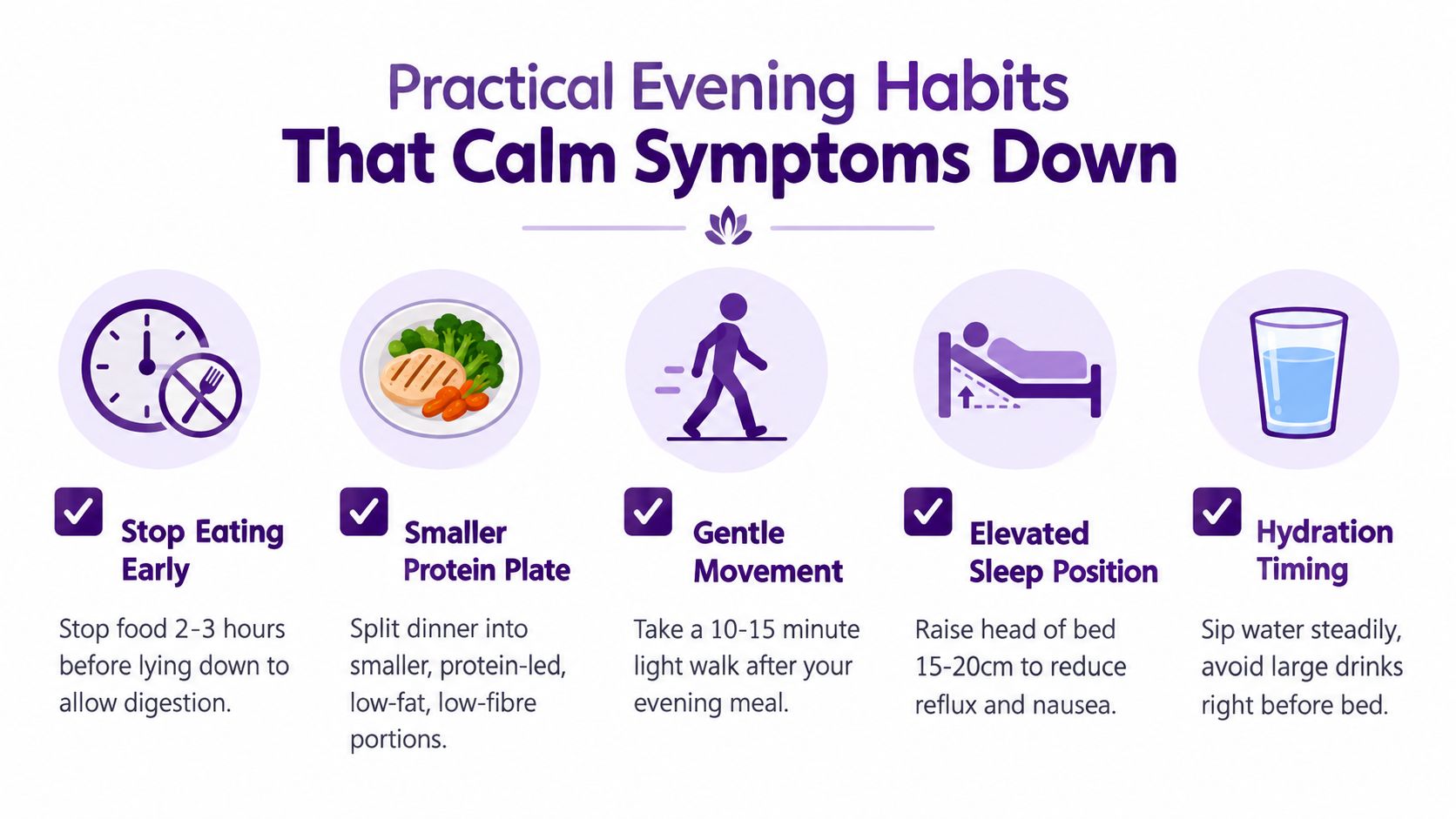
Keep a gentle option available
An entirely empty stomach can worsen nausea for some people. Plain crackers may help, while peppermint tea or ginger feels soothing to others. Supplements still need care. If you are considering ginger capsules or crystallised ginger, ask a pharmacist to check the product and dose, and use Healtsy supplement advice as general information rather than a replacement for clinical guidance.
Tonight's simplest experiment: eat a smaller, low-fat dinner early, stay upright afterwards, and sip water gradually. Record whether the timing, meal size or sleeping position changes your symptoms.
Dosing, Injection Timing and When to Speak to a Clinician
You inject Mounjaro in the evening, eat dinner later than usual, then nausea wakes you during the night. Changing the injection time may make symptoms easier to observe, but it is not a guaranteed treatment. UK hospital guidance says Mounjaro can be given at any time of day, with or without food, so the clock alone does not determine whether side effects occur.
A morning injection may suit someone whose symptoms reliably disturb sleep after an evening dose. You can discuss this option with your prescriber, particularly if daytime monitoring would make you feel safer. Keep the weekly schedule consistent, and check the product instructions or seek clinical advice before changing it.
The dose often matters more than the hour of injection. Tirzepatide's gastrointestinal effects can become more noticeable during dose escalation, when the stomach is adapting to a stronger effect on appetite and digestion. Staying at a tolerated dose for longer may give that adjustment more time. Your prescriber may delay an increase, reduce the dose or review whether another treatment is more suitable.
The Mounjaro peak-time guide explains why nausea may appear later rather than immediately after the injection. Use it to understand the pattern, not to replace an individual dosing plan.
Injection timing and dose-escalation considerations
| Action | What to do | Possible effect on night nausea |
|---|---|---|
| Review injection timing | Ask whether a morning slot fits your routine | May make symptoms easier to monitor, but does not guarantee fewer side effects |
| Hold the current dose | Discuss remaining at a tolerated dose before increasing | Gives your body longer to adjust during escalation |
| Review a recent increase | Tell your prescriber when symptoms began and how they relate to the dose | Helps distinguish an adjustment effect from poor tolerance |
| Discuss anti-sickness medicine | Ask a prescriber or pharmacist whether treatment is appropriate | May relieve symptoms without addressing the underlying cause |
When professional advice is needed
Contact your prescriber if nausea continues at a stable dose, limits eating or drinking, or remains troublesome despite sensible evening changes. The Buckinghamshire NHS formulary guide says persistent nausea lasting more than 8 weeks should prompt consideration of another GLP-1 agonist if Mounjaro is not tolerated (Buckinghamshire NHS tirzepatide initiation guide%20Initiation%20Guide.pdf)).
Over-the-counter antiemetics are not suitable for everyone and may interact with existing conditions or medicines. Ask a prescriber or pharmacist before using one, especially if vomiting, constipation, reflux or abdominal pain is also present.
When Night-Time Nausea Is a Red Flag and Not Just a Side Effect
You wake during the night feeling sick, perhaps after an evening meal or several hours after your injection. Mild nausea can occur as your body adjusts to Mounjaro, but a sudden change in intensity, severe pain, repeated vomiting or signs of dehydration needs a different response.
Expected nausea is generally mild or moderate and may ease once your dose has been stable for a while. Severe or persistent symptoms need a different response, particularly if you had previously tolerated the medicine and the night-time pattern has changed.
Seek urgent advice for warning symptoms
Contact NHS 111, seek urgent GP advice or attend A&E if you have:
- Severe abdominal pain: Pain that is severe, worsening or spreads through to the back may be a warning sign of pancreatitis.
- Repeated vomiting: Vomiting that prevents you keeping fluids down requires prompt assessment.
- Dehydration: Dizziness, a dry mouth, marked weakness or very dark urine may mean you are losing more fluid than you can replace.
- Fever or jaundice: Fever, yellowing of the skin or eyes, or marked tenderness may indicate a problem needing urgent review.
- A sudden change: New severe nausea after a period of comfortable treatment should not be dismissed as ordinary adjustment.
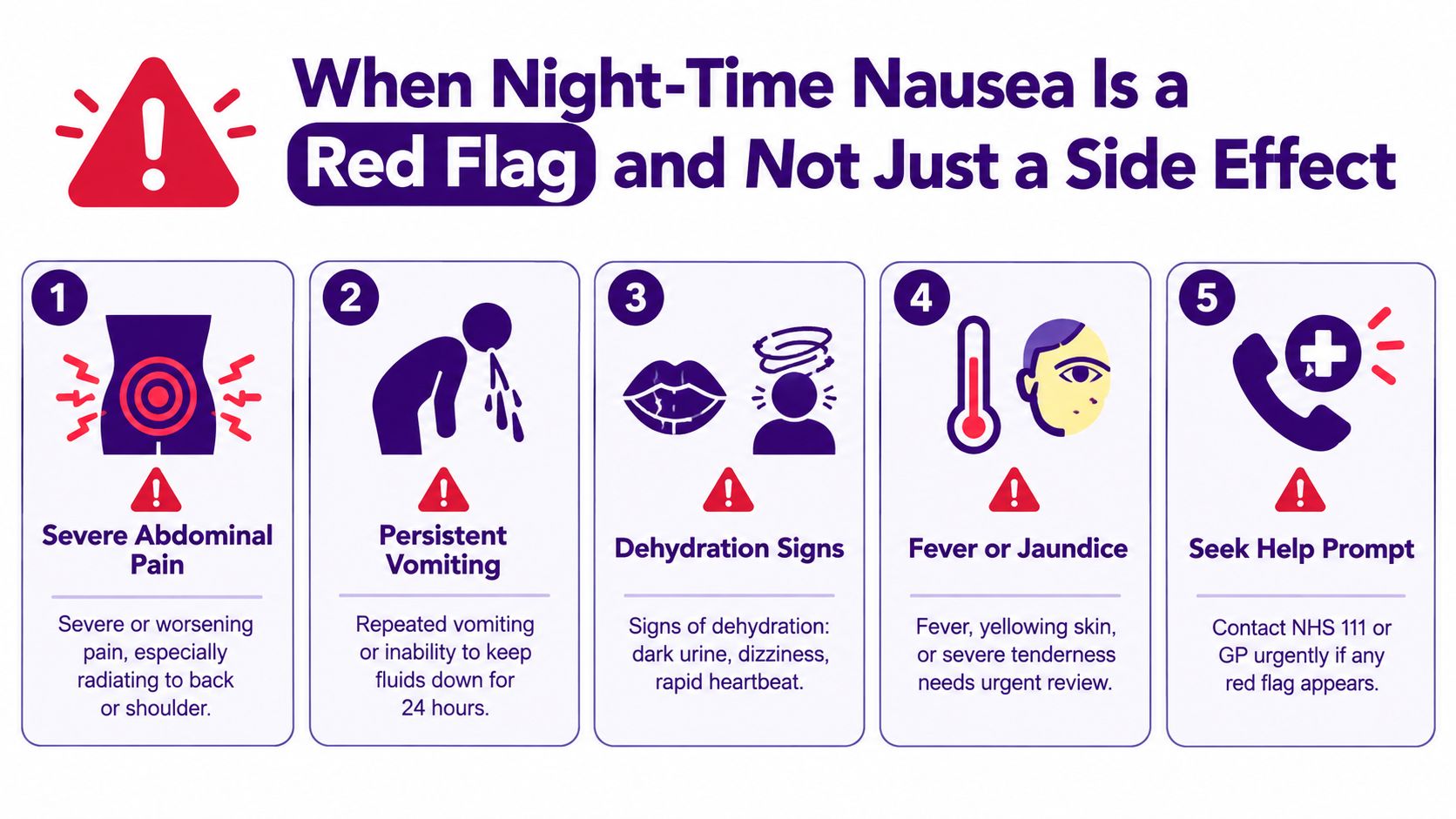
Why these symptoms matter
Severe abdominal pain with nausea or vomiting is highlighted in the UK patient information as a reason to seek urgent help because it may indicate pancreatitis (Mounjaro patient leaflet). Upper abdominal pain, fever or jaundice may also indicate gallbladder disease or another condition, rather than a usual dose-related effect.
If a red flag appears, do not take another injection until a healthcare professional has advised you. Provide your current dose, last injection date, symptom onset and whether you can keep fluids down. Those details help distinguish a tolerability issue from a condition requiring immediate treatment.
Do not wait for a routine appointment if you are repeatedly vomiting, becoming dehydrated or experiencing severe abdominal pain.
A Realistic Timeline, Reassurance and Your Next Step
For many people, nausea is most noticeable while beginning tirzepatide or moving through dose escalation. UK guidance says gastrointestinal reactions generally decrease over time, and the clinical approach of gradual escalation exists to help the body adjust rather than expose you immediately to a higher maintenance dose.
Your own timeline may vary. Some people settle quickly at a stable dose, while others need a slower discussion with their prescriber. Persistent symptoms shouldn't be endured indefinitely, particularly if they affect hydration, nutrition, sleep or your ability to take other medicines reliably.
A simple routine to try tonight
- Finish dinner earlier, leaving two to three hours before lying down.
- Reduce the portion, choosing a low-fat meal with a modest protein source.
- Stay upright, and take a gentle walk if that feels comfortable.
- Sip still water, rather than drinking a large amount at bedtime.
- Avoid alcohol and rich food, especially around an injection.
- Record the pattern, including the injection date, dose, dinner time and symptom severity.
- Contact your clinician if symptoms persist, worsen or include vomiting, dehydration or abdominal pain.
A supervised UK service such as Trim can provide clinician review, dose adjustments, pharmacist support and discussion of antiemetic prescriptions where appropriate. That kind of oversight is more useful than repeatedly changing injection times or restricting foods without understanding the trigger.
Your next step is practical: keep a short record of tonight's meal, injection timing and symptoms, then share it with your prescriber if the nausea continues or returns after every dose increase.
Trim offers medically supervised weight-management consultations, prescription review and access to UK-registered clinicians and pharmacists who can discuss Mounjaro nausea at night. If you need help deciding whether your dose, injection timing or symptoms need review, visit Trim to arrange an assessment.