
How to Maintain Weight Loss and Keep It Off for Good

You've reached the weight you worked hard to lose. Your clothes fit differently, your confidence is returning, and people are congratulating you. Then normal life resumes: a busy week, a few unplanned meals, less movement, stronger hunger, and the scales begin to rise. The problem isn't that you've failed. Keeping weight off requires a maintenance plan, not a return to ordinary habits without support.
Maintenance works best when it includes regular monitoring, repeatable eating patterns, strength-focused activity, and a response plan for setbacks. The evidence from UK trials and guidance shows that long-term support matters, particularly after structured weight loss or medication-led appetite reduction.
Table of Contents
- Why Keeping Weight Off Needs a Different Plan
- Setting Your Maintenance Target and Tracking System
- Everyday Nutrition and Portion Habits That Prevent Regain
- Training Sleep and Stress for Muscle and Metabolism
- Relapse Prevention and Troubleshooting Common Obstacles
- Staying on Track Long Term and When to Seek Support
Why Keeping Weight Off Needs a Different Plan
After losing weight, many people make the same reasonable assumption: once they reach their target, they can relax the routines that created the loss. Consider someone who has spent months planning meals, weighing portions and walking regularly. At target weight, they stop recording food, weigh themselves less often and treat weekends as a break. Nothing changes dramatically on one day, but small decisions gradually become the new pattern.
That transition matters because the body and behaviour have both changed. Appetite may increase, energy expenditure can adapt, and familiar eating cues can return. A strict diet may produce quick progress, but it doesn't automatically teach someone how to manage birthdays, holidays, emotional eating, illness or a less structured timetable.
A systematic review of UK long-term nonsurgical weight-loss studies found that a low-energy formula diet providing 810 to 833 kcal per day produced the largest mean 12-month weight change among complete cases, at −12.4 kg, but 25.3% of participants dropped out. The review also included a 24-month outcome column. That combination is important: substantial early loss can occur in a structured programme, but judging success requires longer follow-up and attention to whether people can remain engaged.
Maintenance is active, not passive
The NHS and NICE treat weight management as an ongoing health issue. NICE guidance states that relapse is normal and that people need support for weight maintenance because overweight and obesity are long-term conditions requiring regular review. This isn't a reason to expect failure. It's a reason to build monitoring and support into the plan from the beginning.
Practical rule: reaching your target weight is the point at which maintenance begins, not the point at which care ends.
A useful mindset is to think in phases. The weight-loss phase creates change. The maintenance phase protects it. During maintenance, the aim isn't to keep dieting harder. It's to find the smallest set of routines that keeps your weight, health and strength in a stable range.
Readers often search for explanations such as what metabolic age means, but a single score can't replace practical follow-up. Your weight trend, waist measurement, activity, food pattern, hunger and strength provide more useful information than one label.
Setting Your Maintenance Target and Tracking System
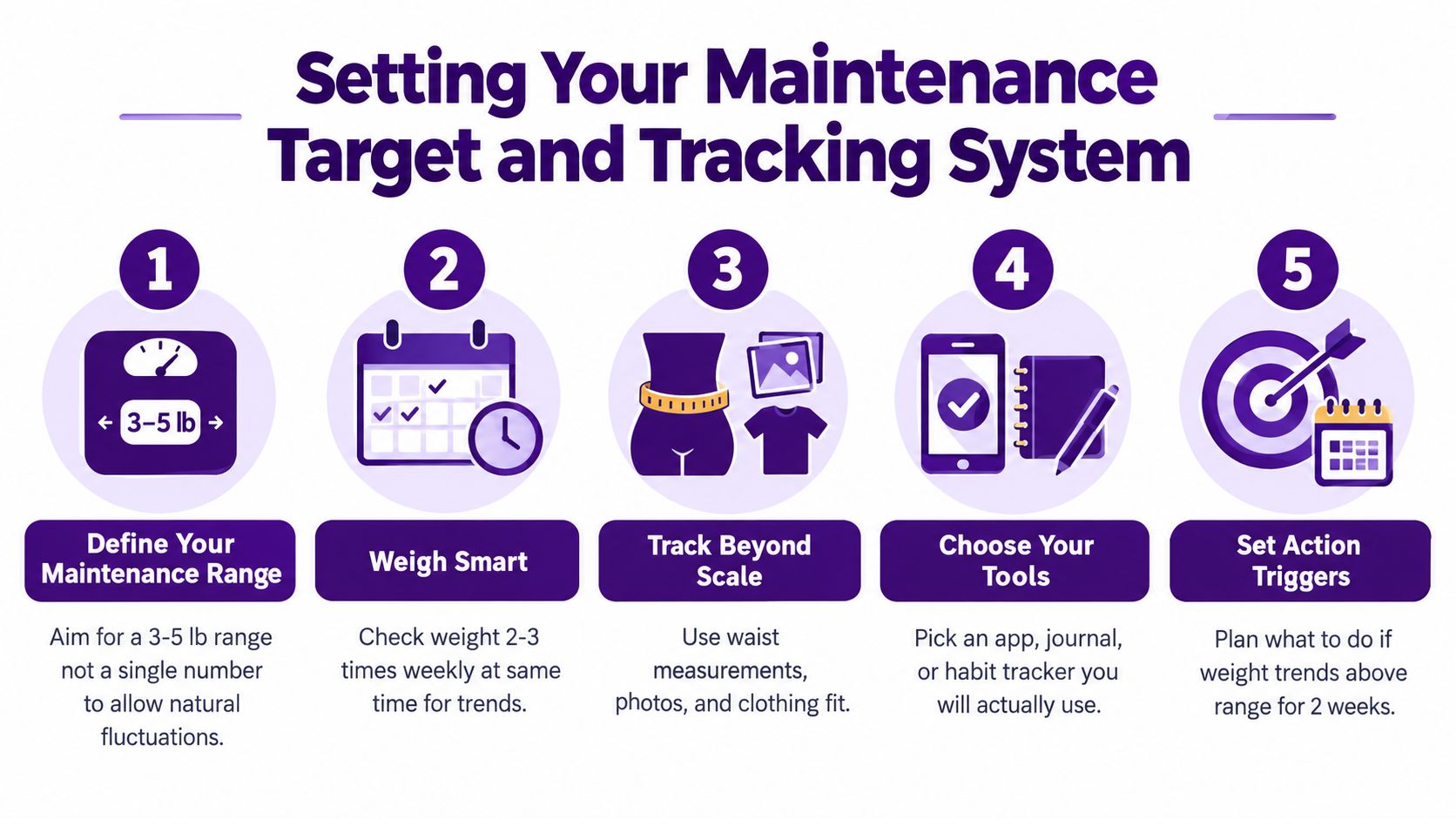
A maintenance target works best as a range, not a single perfect number. Weight can shift because of hydration, digestion, menstrual-cycle changes, salty meals and training. A reading outside the range may be temporary, while a steady upward trend gives you an early opportunity to act.
Build a simple personal dashboard
Record your weight under similar conditions, such as after using the bathroom and before breakfast. Consistency matters more than creating a perfect routine. Review the direction across several readings instead of reacting to one result.
A weekly check can cover:
- Weight trend: Compare readings across time rather than focusing on one measurement.
- Waist or clothing fit: Notice whether body measurements change alongside weight.
- Food pattern: Look for grazing, takeaway meals, alcohol and gradual portion increases.
- Movement: Check whether daily activity and resistance training remain part of the week.
- Hunger and mood: Note unusual appetite, poor sleep or emotional eating.
The NHS Better Health approach centres on calorie control, regular monitoring and sustained behaviour change. The UK weight-management guidance from the British Nutrition Foundation describes a steady deficit of about 600 calories per day for ongoing weight loss and maintenance planning. Maintenance does not mean everyone should continue a fixed deficit. It means calorie awareness still matters, and intake may need to change as activity, appetite and body weight change.
Decide what will trigger action
Set your response before pressure builds. If your weight trend remains above the agreed range for two weeks, review portions, snacks, drinks and movement over the previous fortnight. Choose one or two manageable changes, then reassess. A gradual correction is more useful than a crash diet, particularly during the transition from active weight loss to a structured maintenance programme.
Structured weight-management support can create an initial buffer, but early loss does not guarantee that weight will remain stable without follow-up. Continue your dashboard after a programme ends, and use it to identify whether you need nutrition adjustments, more activity, support with relapse prevention, or a plan for changing treatment, including a post-medication transition.
Everyday Nutrition and Portion Habits That Prevent Regain
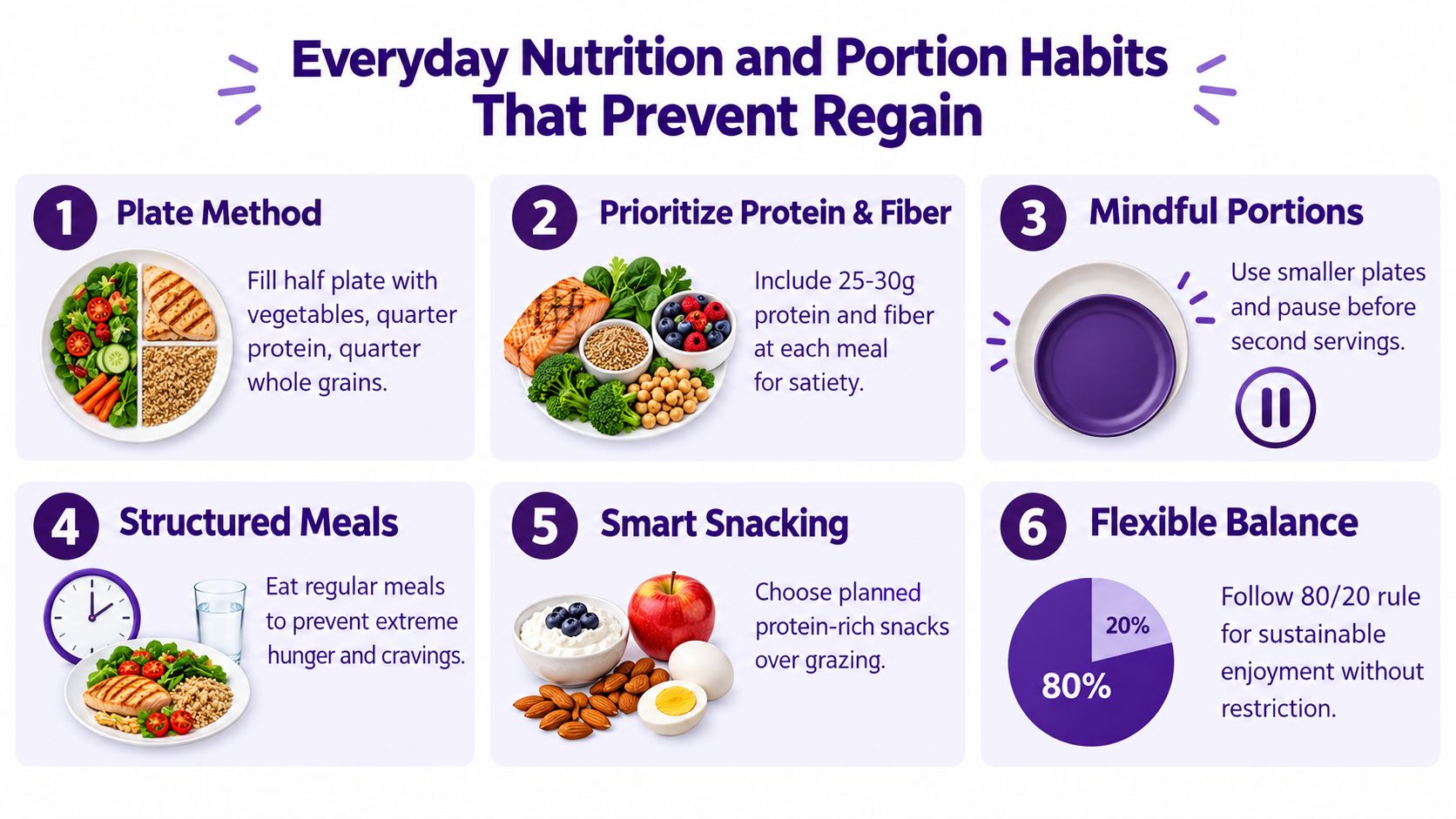
Maintenance eating should feel organised enough to control calories, but flexible enough to survive real life. The common mistake is swinging between strict restriction and ad hoc eating. A repeatable pattern works better: regular meals, satisfying portions, planned flexibility and a way to handle busy days before hunger becomes overwhelming.
Make meals predictable enough
At each meal, include a clear protein source, vegetables or fruit, and a portion of high-fibre carbohydrate or another filling food. This might be Greek yoghurt with fruit and oats, a jacket potato with beans and salad, or salmon with vegetables and wholegrain rice. The exact menu matters less than choosing food that keeps you satisfied and reduces unplanned grazing.
Portion control doesn't require eating tiny meals. Use a smaller plate if that helps, serve food once where possible, and pause before taking seconds. Keep highly tempting snacks out of immediate reach, and portion them into a bowl rather than eating from the packet.
A moderate calorie target is easier to maintain when your meals are planned around your actual week:
- Workdays: Keep a reliable breakfast or lunch available so a delayed meeting doesn't lead to impulsive food choices.
- Weekends: Plan one enjoyable meal rather than treating the whole weekend as unrestricted.
- Eating out: Choose a protein-based main, add vegetables, and decide in advance whether you want a drink, dessert or starter.
- Busy evenings: Keep quick options such as eggs, tinned fish, beans, frozen vegetables or pre-cooked grains available.
The NHS recommends gradual weight loss of 1 to 2 lb, or 0.5 to 1 kg, per week, alongside 45 to 60 minutes of physical activity a day, according to UK NHS and public-health weight-loss guidance. Maintenance doesn't mean chasing that rate indefinitely. The underlying lesson is that repeatable calorie control and daily activity are more useful than dramatic short-term changes.
Manage appetite without turning food into a test
If hunger is consistently intense, review meal size, protein, fibre, sleep and stress before relying on willpower. Eat at a table when possible, slow the first few bites and ask whether you're physically hungry, emotionally activated or just responding to a cue. These mindful eating techniques can help you notice the difference without judging yourself.
Sleep belongs in the same conversation because tiredness can make planning and appetite management harder. For a broader explanation of how rest fits alongside hydration, nutrition and activity, explore how to boost your longevity with sleep.
Use the video below as a practical reminder that healthy maintenance is built from ordinary decisions repeated over time.
A flexible approach leaves room for celebrations. One meal doesn't cause meaningful regain, just as one healthy meal doesn't undo a difficult week. Return to your normal routine at the next meal rather than compensating with extreme restriction.
Training Sleep and Stress for Muscle and Metabolism
The scales can stay stable while body composition changes. Someone may regain fat while losing muscle, becoming lighter or the same weight but less strong. That matters because lean tissue supports movement and contributes to daily energy expenditure, while strength makes ordinary activity easier to sustain.
Build the week around strength
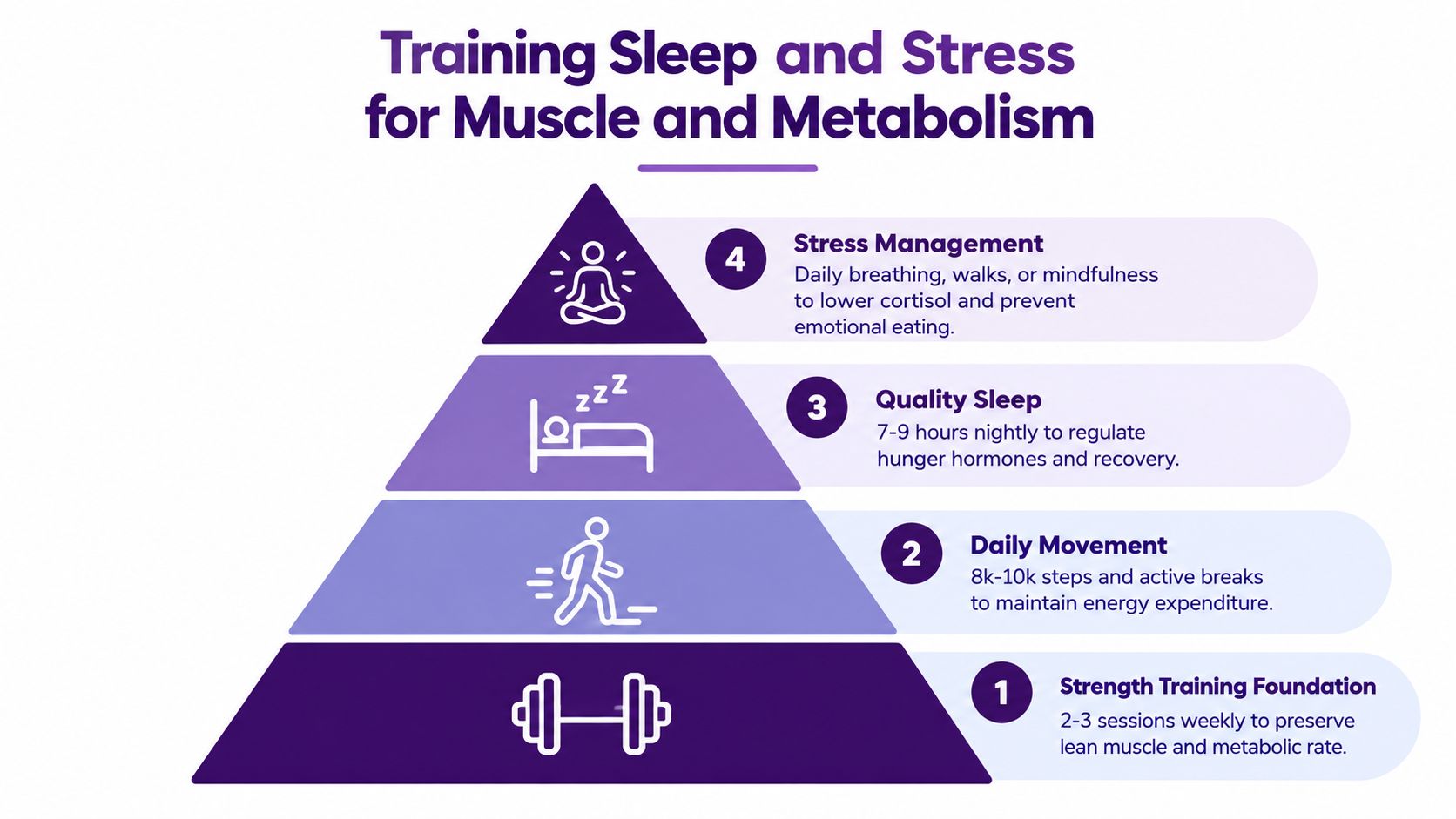
UK-facing clinical advice recommends resistance training 2 to 3 times per week when stopping weight-loss medicines, and evidence-based guidance commonly places protein around 1.2 to 1.6 g/kg alongside regular resistance training for lean-mass preservation, as described in NHS guidance on stopping weight-loss medicines.
You don't need a complicated gym programme. A full-body session can include a squat or sit-to-stand, a hinge such as a deadlift pattern, a push, a pull and a loaded carry. Begin at a level that allows controlled movement, then gradually increase resistance or repetitions. If you're postpartum, managing an injury or experiencing menopause-related changes, ask a qualified clinician or physiotherapist to adapt the plan.
Daily movement complements strength work. Walking, cycling, household activity and active travel help preserve a routine that isn't dependent on formal workouts. The priority is not to use exercise as punishment for eating. It's to maintain the physical capacity that supports a stable, active life.
Protect recovery
Sleep and stress aren't optional extras. Poor sleep can make hunger and food choices more difficult, while chronic stress may increase emotional eating and reduce the likelihood that you'll train or prepare meals. A short walk, regular bedtime routine, breathing practice or a few minutes away from a screen may be more useful than an ambitious plan you can't repeat.
The maintenance aim is not to become smaller but weaker. Preserve strength while keeping nutrition and movement consistent.
Crash dieting creates a particular risk because rapid restriction can make it harder to meet protein and nutrient needs and may reduce training quality. If your appetite is low after a supervised treatment, prioritise tolerable, protein-rich meals and discuss persistent difficulty eating with your clinical team.
A useful weekly rhythm might include two or three resistance sessions, regular walks, planned recovery and one review of sleep and stress. The muscle-preservation guidance for weight management offers further practical context, particularly for people who want fat loss without sacrificing performance.
Relapse Prevention and Troubleshooting Common Obstacles
Regain usually begins with a disruption, not a character flaw. Holidays change meal timing, illness interrupts exercise, work stress encourages convenience food, and emotional events can make tracking feel impossible. A relapse-prevention plan identifies these situations in advance and gives you a response that is specific enough to use when motivation is low.
Turn predictable problems into if-then plans
| Situation | If-then response |
|---|---|
| Holiday or special event | If meals are less structured, then keep one predictable meal and resume normal eating at the next opportunity. |
| Stress or emotional eating | If I notice eating is serving an emotional purpose, then pause, identify the feeling and contact a trusted person before deciding what I need. |
| Illness or injury | If activity drops, then focus first on recovery and keep meals simple rather than trying to compensate aggressively. |
| Two weeks above range | If the trend remains high, then review portions, snacks, drinks and movement and seek advice if the cause isn't clear. |
| A single overeating episode | If one meal goes off plan, then I'll avoid punishment and return to my usual routine immediately. |
Extended support has stronger evidence than assuming people can manage alone. In the UK WRAP randomised controlled trial, average one-year weight loss was −6.76 kg with a 52-week programme, compared with −4.75 kg with a 12-week programme and −3.26 kg with brief intervention; at two years, 39% of the 52-week group had maintained at least 5% loss, compared with 27% in the 12-week group and 22% with brief intervention, according to the NIHR trial summary.
Treat follow-up as part of treatment
The DiRECT follow-up study provides a useful clinical benchmark. At five years, participants in the intervention arm were below baseline weight in 61% of assessments, compared with 29% in the control arm, as reported in The Lancet Diabetes and Endocrinology follow-up study00385-6/fulltext). Among participants who had maintained more than 10 kg of loss at two years, 78% were in diabetes remission at that point, while 14% remained in remission at five years.
Those findings don't mean everyone needs the same programme. They do show why scheduled weigh-ins, coaching and clinical review should continue after initial success. A UK feasibility trial also found that a 12-month motivational-interviewing intervention after prior weight loss was acceptable and feasible, supporting maintenance as a distinct treatment phase rather than an automatic outcome, as described in the UK maintenance intervention trial.
Self-compassion has a practical role. Shame often leads people to avoid the scales and hide eating patterns, which delays help. A calm review asks, “What changed, and what support would make the next week easier?” rather than, “Why can't I control myself?”
Staying on Track Long Term and When to Seek Support
A durable maintenance plan has a small number of routines you can still perform during an ordinary difficult week. It includes a weight range, regular review, satisfying meals, strength training, daily movement and a written response to early regain. It also includes a clear route back to professional support.
Stopping a GLP-1 medicine deserves particular planning. A BBC report on research into stopping injections such as Mounjaro or Wegovy said people regained about 0.8 kg per month on average and might return to pre-treatment weight in around 18 months, as reported in BBC coverage of post-treatment weight regain. NICE updates in 2025 added that people stopping weight-loss medicines should receive advice on maintaining changes and support for health and wellbeing, according to the same source.
This isn't an argument for continuing or stopping any medicine without clinical advice. It's an argument for a planned transition. Appetite, weight, nutrition, activity, side effects and health conditions should be reviewed with the prescribing team, especially if weight begins rising or eating becomes difficult.
Your maintenance checklist
- Keep a defined range: Use a personal range rather than a single “perfect” weight.
- Review regularly: Look at trends, food patterns, movement, sleep and hunger.
- Protect muscle: Include resistance training and adequate protein.
- Plan for disruption: Write if-then responses for holidays, stress, illness and overeating.
- Act early: Make a modest adjustment or arrange support when the trend changes.
- Stay connected: Continue follow-up after a programme or supervised treatment ends.
Trim is a UK-based, GPhC-registered online weight-loss clinic and pharmacy that combines medically supervised treatment with clinical guidance, nutrition support and strength-focused training. Its maintenance support can include app-based progress tracking, coaching and a planned transition after treatment, so visit Trim to explore how structured follow-up could fit your goals.