
Postpartum Weight Loss Breastfeeding

Exclusively breastfeeding women need roughly an extra 330 kcal per day during the first six months, and safe postpartum weight loss is gradual, around 0.5 to 1 kg per week. Those figures make aggressive dieting the wrong starting point while your body is producing milk and recovering from birth.
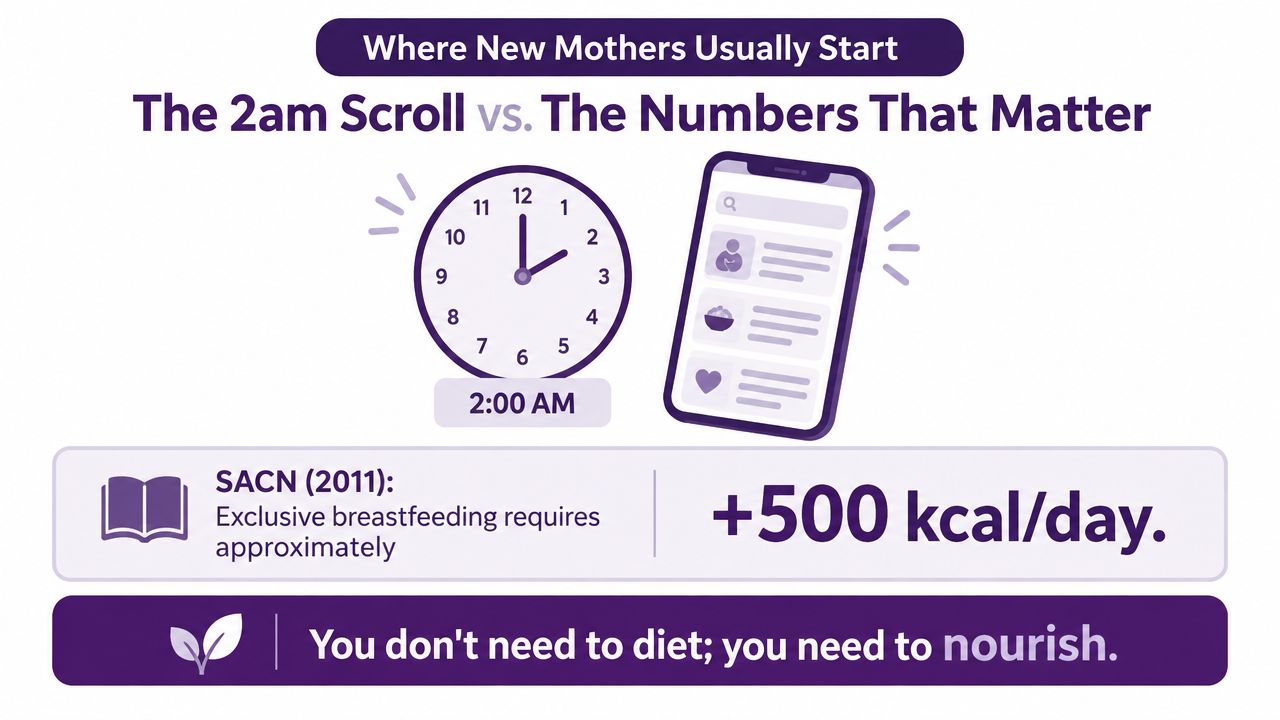
At 2am, with a baby feeding against your chest and a phone glowing beside you, it's easy to search for the fastest way to lose pregnancy weight. You may find promises about injections, detoxes or strict meal plans before anyone explains what your milk supply, pelvic floor, incision, sleep and mood need first. Postpartum weight loss while breastfeeding needs a slower, clinically safer approach.
Table of Contents
- Where New Mothers Usually Start
- Safe Calorie Targets and Weight-Loss Timing
- What to Eat While Breastfeeding
- Returning to Exercise Safely
- Medications and Breastfeeding
- Warning Signs and When to Seek Support
- Your First 90 Days and What Comes After Weaning
Where New Mothers Usually Start
The first useful step is to reset the timescale. The Scientific Advisory Committee on Nutrition guidance states that women who are exclusively breastfeeding need around an extra 330 kcal each day during the first six months. That isn't a licence to eat without structure, but it is a clear reminder that lactation changes energy requirements materially.
The NHS describes healthy postnatal weight loss as about 0.5 to 1 kg per week, while also noting that returning to pre-pregnancy weight can take six months to a year or longer. Its guidance says women considering weight loss should ideally wait until after the six to eight-week health check before starting. NHS postnatal weight-management advice also recommends a healthy, balanced diet and regular moderate exercise.
Why the first weeks aren't a dieting phase
The early postnatal period is about healing, feeding and stabilising, not forcing the scale down. A perineal injury or caesarean incision needs recovery time, your pelvic floor has carried significant strain, and broken sleep can make appetite harder to regulate. Restriction may also leave you too depleted to care for yourself, even if the diet appears disciplined on paper.
Use two simple checks:
- Track energy as well as weight. Notice whether you can get through feeds, showers and short walks without marked exhaustion, dizziness or shakiness.
- Weigh no more than weekly. Use the same day and time, because daily changes often reflect fluid and glycogen shifts rather than body-fat change.
Practical rule: A stable milk supply, improving strength and a manageable routine matter more than a dramatic early scale change.
SACN notes that breastfeeding, particularly exclusive breastfeeding, is associated with greater postpartum weight loss, but UK advice still centres on balanced nutrition rather than aggressive calorie restriction. Your body may lose weight gradually without a rigid programme, and a slower result doesn't mean you're doing anything wrong.
Safe Calorie Targets and Weight-Loss Timing
Calories can be useful as a guardrail, but they shouldn't become another source of pressure. Begin with the NHS six to eight-week health check, then consider whether your bleeding, wound healing, feeding and energy have settled enough for a gentle change. If you're under 12 weeks postpartum, persistently exhausted, or worried about feeding, waiting longer is sensible.
The often-repeated calorie ranges in online breastfeeding plans aren't all supported by the verified UK guidance available here. SACN provides the important lactation adjustment, around 330 kcal daily for exclusive breastfeeding in the first six months, while the NHS provides the pace of loss, 0.5 to 1 kg per week, rather than a universal personal calorie prescription.
| Scenario | Baseline (kcal) | Lactation add-on (kcal) | Daily target at 0.5 kg/week loss (kcal) |
|---|---|---|---|
| Non-lactating adult, individual needs vary | Not fixed by the cited guidance | 0 | Requires individual assessment |
| Exclusively breastfeeding during the first six months | Individual baseline | +330 | Requires individual assessment |
| Breastfeeding after the first six months | Individual baseline | Depends on feeding pattern | Requires individual assessment |
A worked example can show the logic without pretending it applies to everyone. If a clinician has established that your baseline need is 2,050 kcal, exclusive breastfeeding would add 330 kcal, giving 2,380 kcal before any planned deficit. A reduction of 500 kcal per day would produce a theoretical intake of 1,880 kcal, but real needs vary with body size, activity, feeding frequency, recovery and health.
When a deficit is the wrong choice
Stop treating weight loss as the priority and speak with a clinician if you notice a visible milk-supply drop, your baby's weight is faltering, or you have persistent fatigue or low mood. Those signs may reflect inadequate intake, anaemia, feeding difficulties, depression or another issue that a calorie calculator cannot diagnose.
NHS guidance specifically supports healthy food and regular moderate exercise for breastfeeding women who are overweight, including a brisk 30-minute walk each day, and says this approach won't affect the quality or quantity of breast milk. The same guidance recognises that recovery is measured over months, not a few determined weeks.
What to Eat While Breastfeeding
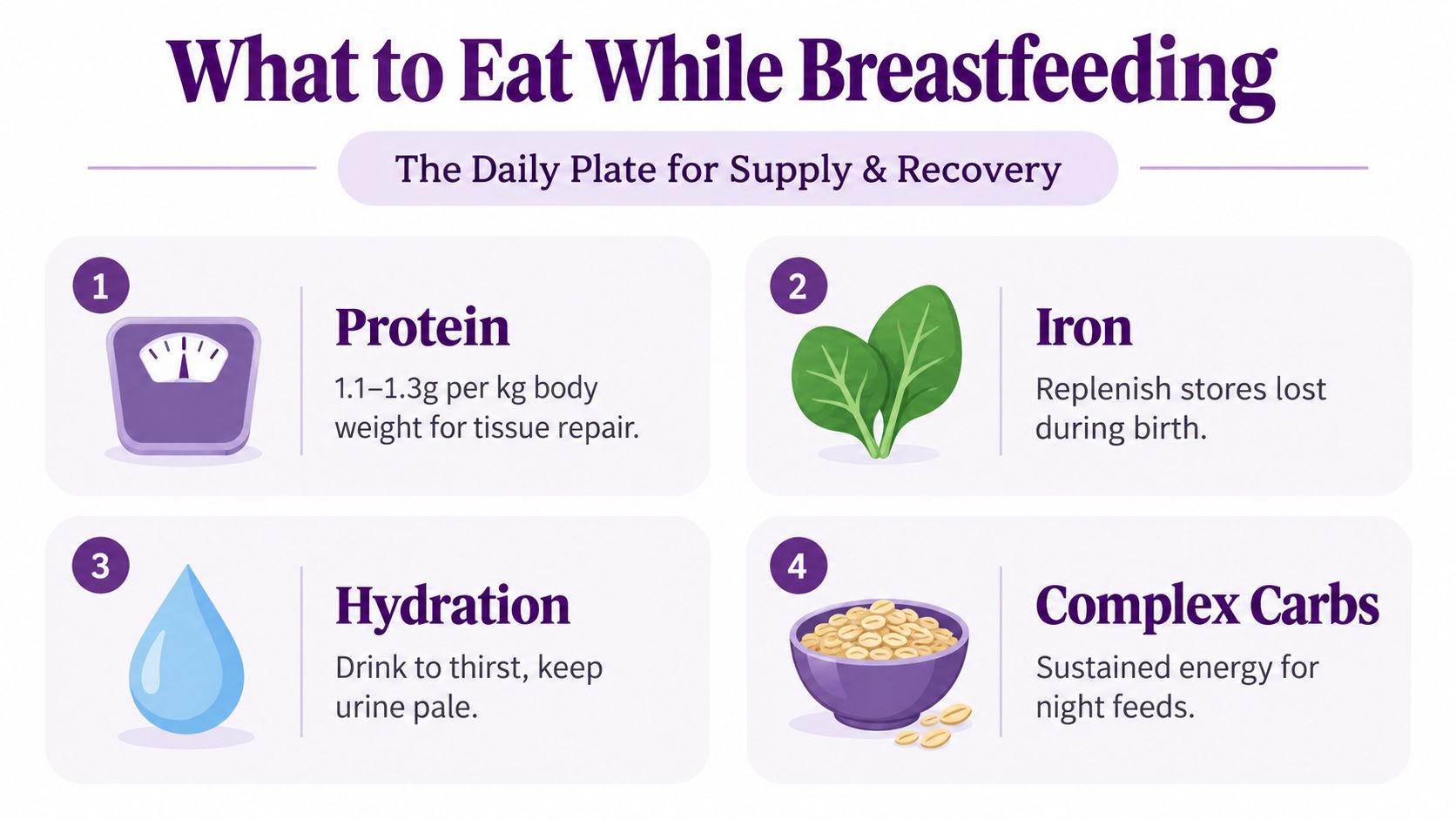
A useful plate has to do several jobs at once. It should provide enough energy for feeding, support tissue repair, help replenish iron after birth, and keep hunger manageable while sleep is fragmented. That's more practical than labelling individual foods as slimming or fattening.
Build meals around a protein source such as eggs, Greek yoghurt, chicken, tofu, lentils or fish. Include iron-rich choices such as lean red meat, lentils and fortified cereals, especially if you had substantial blood loss or have been told your iron is low. Wholegrain bread, brown rice, oats and potatoes provide carbohydrate for sustained energy, while fruit and vegetables add fibre and micronutrients.
Aim for five portions of fruit and vegetables daily, and include two portions of oily fish each week for omega-3 fats, including DHA. If you don't eat fish, ask a clinician or dietitian about an appropriate alternative rather than guessing with supplements. A practical plate might be lentil and vegetable soup with wholegrain toast at lunch, salmon with potatoes and greens at dinner, and yoghurt with oats and fruit between feeds.
Hydration and supply-friendly foods
The British Dietetic Association postpartum resource advises 6 to 8 glasses of non-alcoholic fluid daily, alongside regular meals and physical activity. Keep a bottle near the chair where you feed, but don't force excessive water. Drink regularly and respond to thirst.
Oats, brewer's yeast and flaxseed are commonly used in breastfeeding meals, but no single food overrides overall intake, feeding effectiveness or hydration. Supply problems are more likely to appear when you're consistently under-eating, skipping carbohydrate foods or keeping fat intake extremely low than because you ate one supposedly “bad” ingredient.
For recipe ideas that prioritise protein without turning meals into a rigid diet, see this low-calorie, high-protein food guide. Use it as inspiration, not as a reason to chase the lowest possible intake.
Returning to Exercise Safely
Breastfeeding doesn't automatically rule out exercise. The sensible question is whether your body can tolerate the load you're adding, and whether your food, fluid and rest are keeping pace. The NHS recommends regular moderate activity after birth, while the exact return should reflect your delivery, symptoms and clinician's advice.
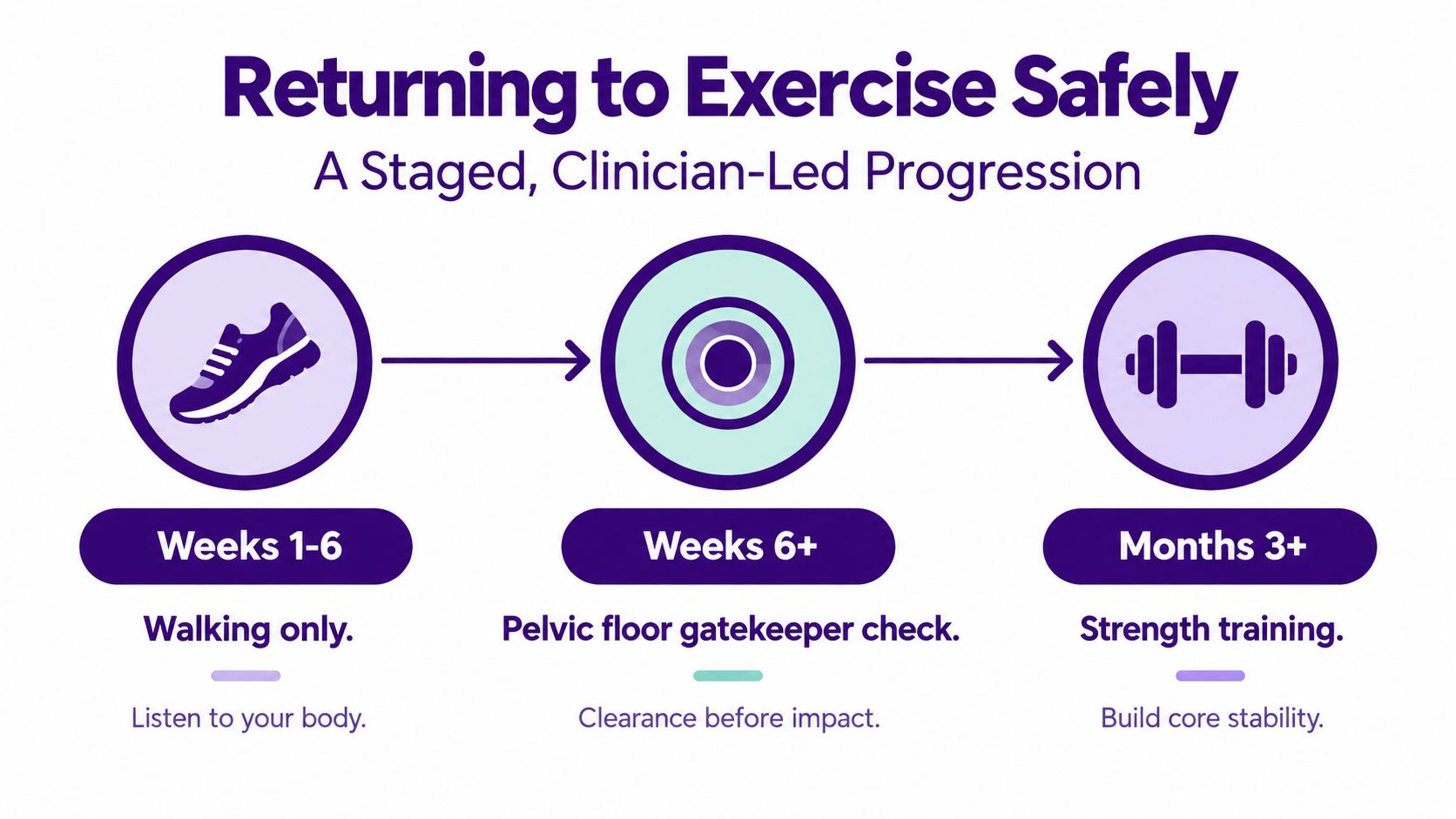
Start with movement that leaves you feeling better rather than punished. A staged approach can help, but it isn't a substitute for a postnatal assessment.
A symptom-led progression
- Early recovery: Begin with short, flat walks when you feel ready, plus relaxed diaphragmatic breathing and gentle pelvic-floor activation. There's no prize for extending the walk if bleeding increases, pain appears or your wound feels strained.
- After medical review: Add longer, easy-paced walks and low-impact bodyweight work if you have no pain, dragging sensation or urinary leakage. Keep pelvic-floor exercises comfortable and consistent.
- Strength rebuilding: Progress towards structured sessions using movements such as sit-to-stand, supported squats, rows, wall presses and carefully loaded carries. Quality matters more than fatigue.
- Impact later: Running and jumping should wait until a pelvic-floor clinician or women's health physiotherapist has considered symptoms, abdominal separation and control under load.
Persistent stress incontinence, pelvic heaviness or abdominal doming is a reason to pause progression. A visible bulge along the midline during a movement can suggest that your abdominal wall isn't tolerating the exercise yet. Ask for assessment rather than trying to train through it.
Feed your baby before exercise if that reduces breast discomfort, wear a supportive bra and replace fluids afterwards. The aim is to build capacity for daily life, not to compensate for food with punishing workouts.
This short video can demonstrate gentle postnatal movement, but stop if symptoms worsen and seek individual advice:
A postpartum fitness plan can help you organise progression, but your midwife, GP or physiotherapist should determine whether your symptoms make a particular exercise appropriate.
Medications and Breastfeeding
Social media has made weight-loss injections look like a routine postpartum shortcut. During lactation, that framing is unsafe. Semaglutide, sold as Wegovy, and tirzepatide, sold as Mounjaro, are generally deferred until after breastfeeding has ended because safety information for nursing infants is limited or absent.
The UK product information and prescribing references should guide individual decisions. Gastrointestinal effects such as nausea, vomiting or diarrhoea can also make it harder for a breastfeeding mother to eat and drink adequately. The theoretical concern is not only the medicine itself, but the consequences of reduced intake and possible infant exposure through breast milk.
That doesn't mean medication can never be discussed. It means the prescriber needs to review your medical history, feeding status, recovery, mental health, other medicines and weight-related risks. A decision belongs with a qualified clinician, and for GLP-1 medicines it will generally be considered after weaning rather than during active breastfeeding.
How common options compare
| Medicine | Lactation safety | Evidence note |
|---|---|---|
| Orlistat | Requires prescriber assessment | Breastfeeding safety and suitability need individual review, particularly where nutrition or fat-soluble vitamin status is a concern. |
| Metformin | Not a routine weight-loss treatment | It may be prescribed for another medical indication, but its use should follow the prescriber's assessment rather than a self-directed weight-loss plan. |
| GLP-1 agonists, including Wegovy and Mounjaro | Generally deferred during breastfeeding | Robust infant-safety data are limited or absent, so use during lactation isn't routinely recommended. |
| Herbal teas, including green tea extract | Not automatically safe | “Natural” doesn't establish lactation safety, dose consistency or infant safety. |
If you're frustrated that a medicine you've heard about isn't appropriate yet, that reaction is understandable. The safer route is to protect feeding and recovery now, then revisit treatment after weaning. This guide to Mounjaro and postpartum weight management should be read as educational information, not a prescription or a reason to delay clinical advice.
Warning Signs and When to Seek Support
Weight loss becomes a clinical concern when it starts to undermine feeding, healing or your ability to function. A sudden drop in milk supply may follow poor latch, illness, dehydration, under-eating or another problem, so don't assume that eating less is the only explanation. If supply concerns last beyond 24 hours, contact your GP or health visitor for a feeding assessment.
A red, painful wedge on the breast with fever or flu-like feelings can indicate mastitis. Contact your GP, particularly if symptoms are worsening or you feel systemically unwell. Persistent pelvic heaviness, new incontinence or abdominal bulging also warrants review before you continue increasing exercise.
Get help promptly
- Contact your GP: For mastitis symptoms, ongoing supply concerns, dizziness, fainting, significant fatigue, or low mood that persists beyond the early baby-blues period.
- Speak to your health visitor: Ask for a feeding assessment, latch support and a postnatal review if you're unsure whether your intake or exercise load is appropriate.
- Call 999 or attend A&E: Seek urgent help for chest pain, breathlessness, calf pain or thoughts of self-harm.
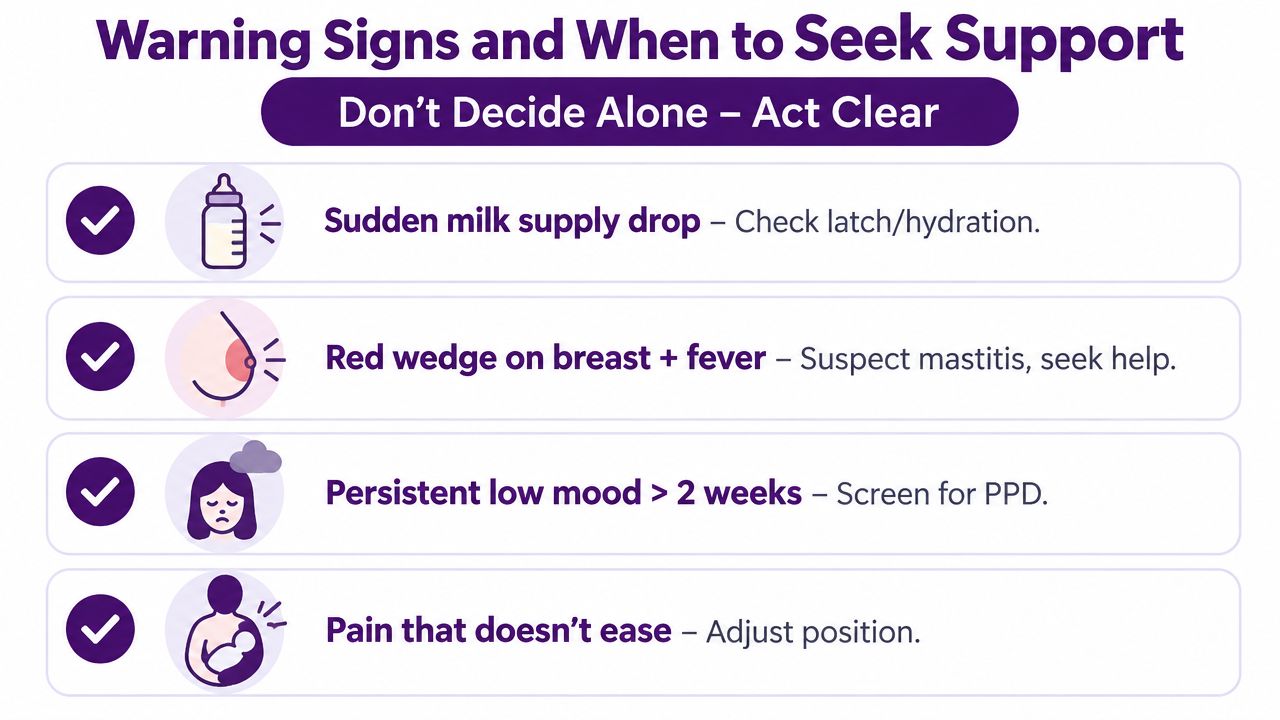
Low mood isn't a willpower problem, and asking for help isn't a failure. It's the appropriate response when nutrition, feeding, movement or sleep no longer feels manageable. Your clinician can help separate normal tiredness from anaemia, depression, infection or excessive restriction.
Your First 90 Days and What Comes After Weaning
A calm plan should fit around feeds, naps and recovery rather than demand a new identity. Use the first three months to establish repeatable habits, then review what your body and your feeding relationship are telling you.
Weeks 1 to 2
Create one sleep-protected eating window each day. Ask someone else to handle a meal, washing-up or one household task while you eat without rushing. Add a gentle 10-minute daily walk if your symptoms allow, keeping the pace easy enough to talk.
The purpose is consistency, not calorie burning. If pain, bleeding, dizziness or exhaustion increases, stop and contact your maternity or primary-care team.
Weeks 3 to 6
Once your health review and symptoms support it, add two short strength sessions each week. Use simple movements such as chair squats, wall presses, supported rows and light carries, alongside pelvic-floor rehabilitation.
Keep meals regular and review whether each contains protein, a carbohydrate source and fruit or vegetables. Don't respond to a slow scale by cutting more food. The NHS pace remains 0.5 to 1 kg per week, and SACN's 330 kcal breastfeeding allowance remains an important reminder that lactation changes your needs.
Weeks 7 to 12
Introduce one longer, comfortable aerobic session if walking and strength work have been symptom-free. Keep a simple food diary for a few days, not to pursue perfection, but to identify skipped meals, long gaps without food, low fluid intake or evening hunger caused by under-fuelling earlier.
High-intensity protocols, restrictive diets below 1,500 kcal, and GLP-1 medicines such as Wegovy or Mounjaro should be deferred during breastfeeding unless a specialist makes a different decision for a clear medical reason. The goal is to preserve milk supply, rebuild strength and create habits that can continue after weaning.
After breastfeeding ends
Weaning can change appetite, feeding frequency and your daily routine. Your menstrual cycle may return at a different point, and hormonal changes can affect how weight and hunger feel. That transition is a suitable time to arrange a proper review rather than immediately starting a severe diet.
After breastfeeding has ended, a clinician can assess whether prescription treatment is appropriate, considering your health history, BMI, risks, goals and previous attempts. Trim is a UK-based, GPhC-registered online weight-loss clinic and pharmacy that uses a digital consultation for clinician assessment and may provide medically supervised options, including GLP-1 medicines or alternatives such as orlistat, when clinically suitable. Its service also combines clinical guidance with nutrition and activity support, but it isn't a substitute for urgent postnatal care or a feeding assessment.
Tomorrow morning, take three concrete steps:
- Eat a proper breakfast with protein and a carbohydrate source before the day becomes fragmented.
- Put a bottle of water and an easy snack beside your usual feeding chair.
- Book or request support from your GP, health visitor or postnatal physiotherapist if you have supply concerns, pelvic symptoms, pain or low mood.
Trim offers clinician-supervised weight-management assessments, nutrition guidance and activity support for people who have finished breastfeeding and want to explore appropriate treatment options. Visit Trim to review the service and complete an assessment when postpartum care and weaning make that conversation clinically appropriate.