
8 Low Calorie High Protein Meals for Sustainable Weight Loss

Achieving and maintaining a healthy weight is a significant health goal for many in the UK, but the journey often feels complex. While new, clinically proven medications like GLP-1 receptor agonists offer powerful support, sustainable success is built on a foundation of smart nutritional choices. Clinical trials consistently highlight the dual benefits of a low calorie, high protein diet: it promotes satiety, helping you feel fuller for longer on fewer calories, and it is crucial for preserving lean muscle mass during fat loss. This metabolic advantage is a key principle of evidence-based weight management programmes.
This article moves beyond generic advice, providing an evidence-based roundup of eight specific meals and snacks. Each is designed not only to align with a calorie-controlled diet but also to support the unique metabolic needs of individuals on a medically supervised weight-loss journey, including those using GLP-1 treatments. To further support your goals, incorporating strategic healthy snacks for weight loss that are rich in protein and fibre can significantly aid your journey. We will explore the science, the practical application, and how these meals can become a cornerstone of your long-term health, backed by data and designed for real-world results.
1. Grilled Chicken Breast with Roasted Vegetables
A cornerstone of any effective, evidence-based nutrition plan, grilled chicken breast stands out as a premier low calorie high protein food. A 100g portion of skinless chicken breast offers a powerful 31g of protein for just 165 calories, making it exceptionally efficient for building and preserving lean muscle mass during weight loss. When paired with a colourful array of roasted vegetables like broccoli, bell peppers, and courgettes, it becomes a nutritionally complete meal that supports sustained energy and fullness.
Why It Works for Weight Management
This meal combination is particularly effective for several reasons. The high protein content significantly boosts satiety, helping to reduce overall calorie intake by keeping you feeling full for longer. The fibre from the vegetables aids digestion and further contributes to this feeling of fullness. This is especially beneficial for individuals on GLP-1 medications, as scientific literature emphasizes the importance of adequate protein intake to counteract the potential for muscle loss while the body loses fat.
Practical Tips for Implementation
- Flavour Without Calories: Marinate the chicken in lemon juice, herbs, garlic, and a touch of vinegar. These add immense flavour without adding significant calories or fat.
- Perfect Cooking: To prevent dry, tough chicken, use a meat thermometer. Your chicken is perfectly cooked and juicy when it reaches an internal temperature of 74°C.
- Meal Prep Efficiency: Batch-cook several chicken breasts and trays of roasted vegetables on a Sunday. This provides a ready-to-go, healthy meal base for several days, simplifying weekday eating.
- Smart Pairings: For a post-workout meal, pair your chicken and veg with a small portion of a complex carbohydrate like quinoa or sweet potato to help replenish glycogen stores and support muscle recovery.
2. Greek Yoghurt Protein Parfait with Berries
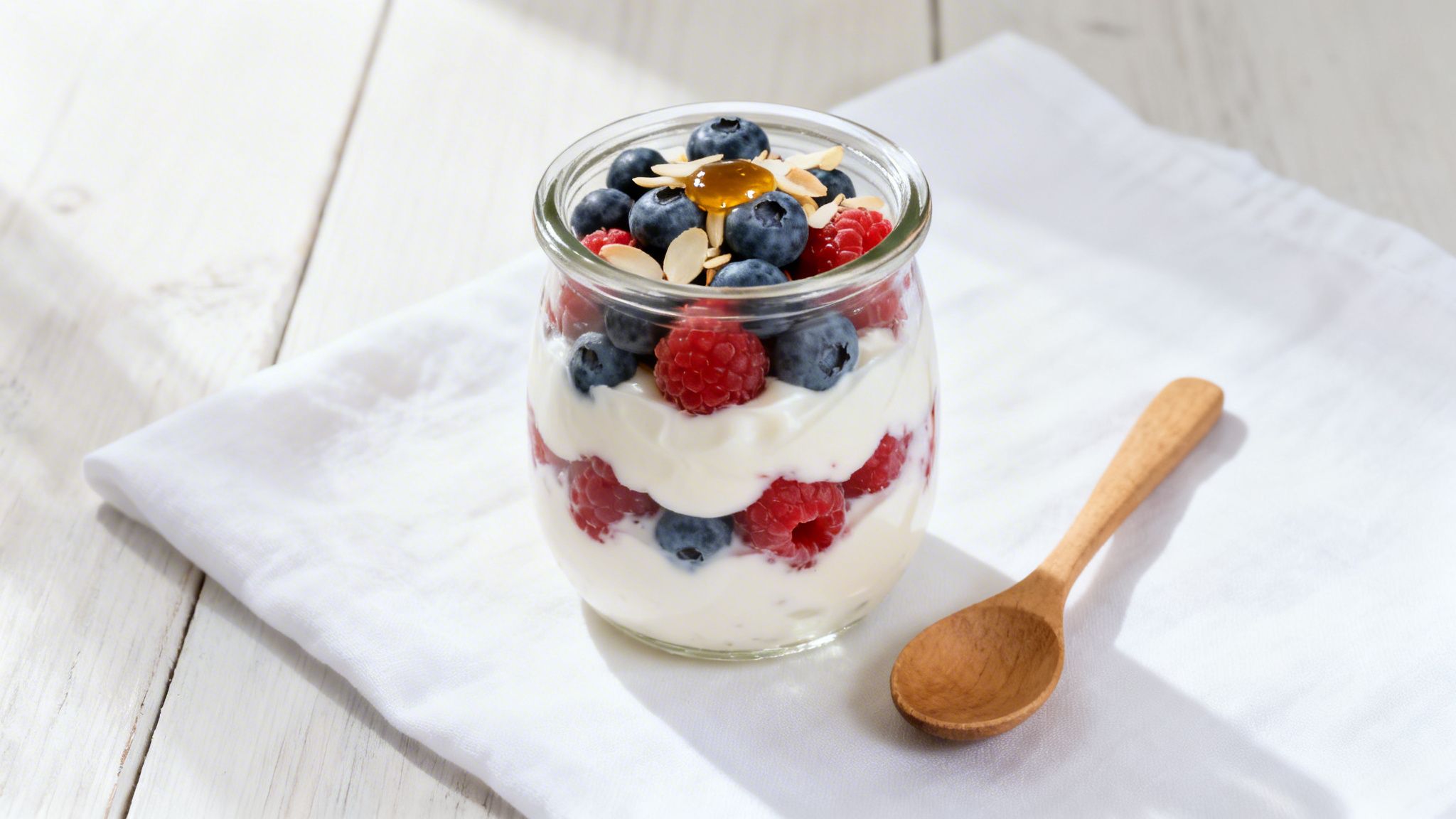
A staple in evidence-based nutrition, Greek yoghurt is a true powerhouse for any low calorie high protein diet. A standard 100g portion of plain, 0% fat Greek yoghurt delivers an impressive 10g of protein for just 59 calories. Layered into a parfait with antioxidant-rich berries and a sprinkle of nuts, it transforms into a delicious and satisfying meal or snack that supports sustained energy release and gut health.
Why It Works for Weight Management
This combination is highly effective due to its nutrient density and satiating properties. The high protein content helps to keep you feeling full, which is a key factor in managing overall calorie intake. The probiotics in the yoghurt support a healthy gut microbiome, which emerging research suggests plays a role in weight regulation. For those on GLP-1 treatments who may experience a reduced appetite, a nutrient-dense option like this parfait delivers maximum nutrition in a small, manageable volume, which is a practical strategy for meeting nutritional requirements.
Practical Tips for Implementation
- Choose Wisely: Opt for plain, 0% or low-fat Greek yoghurt to maximise the protein-to-calorie ratio. Avoid pre-flavoured varieties, which often contain significant amounts of added sugar.
- Portion Control Nuts: While nuts add healthy fats and crunch, they are calorie-dense. Limit your portion to one tablespoon (around 100 calories) to keep the meal balanced.
- Smart Sweeteners: Use the natural sweetness of berries to flavour your parfait. If you need more, a small drizzle of honey or a sprinkle of cinnamon is a healthier alternative to refined sugar.
- Meal Prep Friendly: Prepare several parfaits in jars at the start of the week. Layer the yoghurt, berries (use frozen to prevent them from becoming mushy), and keep nuts or granola in a separate container to add just before eating for maximum crunch.
3. Baked Tofu and Edamame Buddha Bowl
A plant-based powerhouse, the baked tofu and edamame Buddha bowl is an outstanding low calorie high protein option for those following vegetarian or vegan diets. A 100g serving of firm, baked tofu provides around 15g of protein for just 76 calories, while 100g of edamame adds another 11g of protein for 95 calories. When combined with quinoa and cruciferous vegetables, this meal offers a complete amino acid profile, rivalling many animal-based protein sources and supporting muscle maintenance during weight loss.
Why It Works for Weight Management
This combination is a stellar example of plant-based satiety. The tofu and edamame deliver a substantial protein punch, while the quinoa and vegetables contribute significant fibre, promoting a prolonged feeling of fullness that helps manage overall calorie consumption. For individuals on GLP-1 programmes, this type of nutrient-dense, high-fibre meal can support digestive regularity and provide the essential protein needed to preserve lean body mass as fat is lost, aligning with a holistic approach to health.
Practical Tips for Implementation
- Prep Your Tofu: For a firm, non-spongy texture, press extra-firm tofu for at least 30 minutes to remove excess water. This allows it to absorb marinades better and become crispy when baked.
- Boost the Flavour: Tofu is a blank canvas. Marinate it in a mixture of low-sodium soy sauce, minced ginger, and garlic for at least an hour before baking to infuse it with a rich, savoury flavour.
- Enhance Nutrient Absorption: Pair your bowl with vitamin C-rich ingredients like bell peppers or broccoli. Vitamin C significantly increases the body's ability to absorb the non-heme iron found in plant-based sources like tofu and edamame.
- Convenient Assembly: Keep frozen shelled edamame on hand. It can be quickly steamed or boiled, making it an effortless and highly nutritious addition to your meal prep routine.
4. Egg White Omelette with Lean Fillings
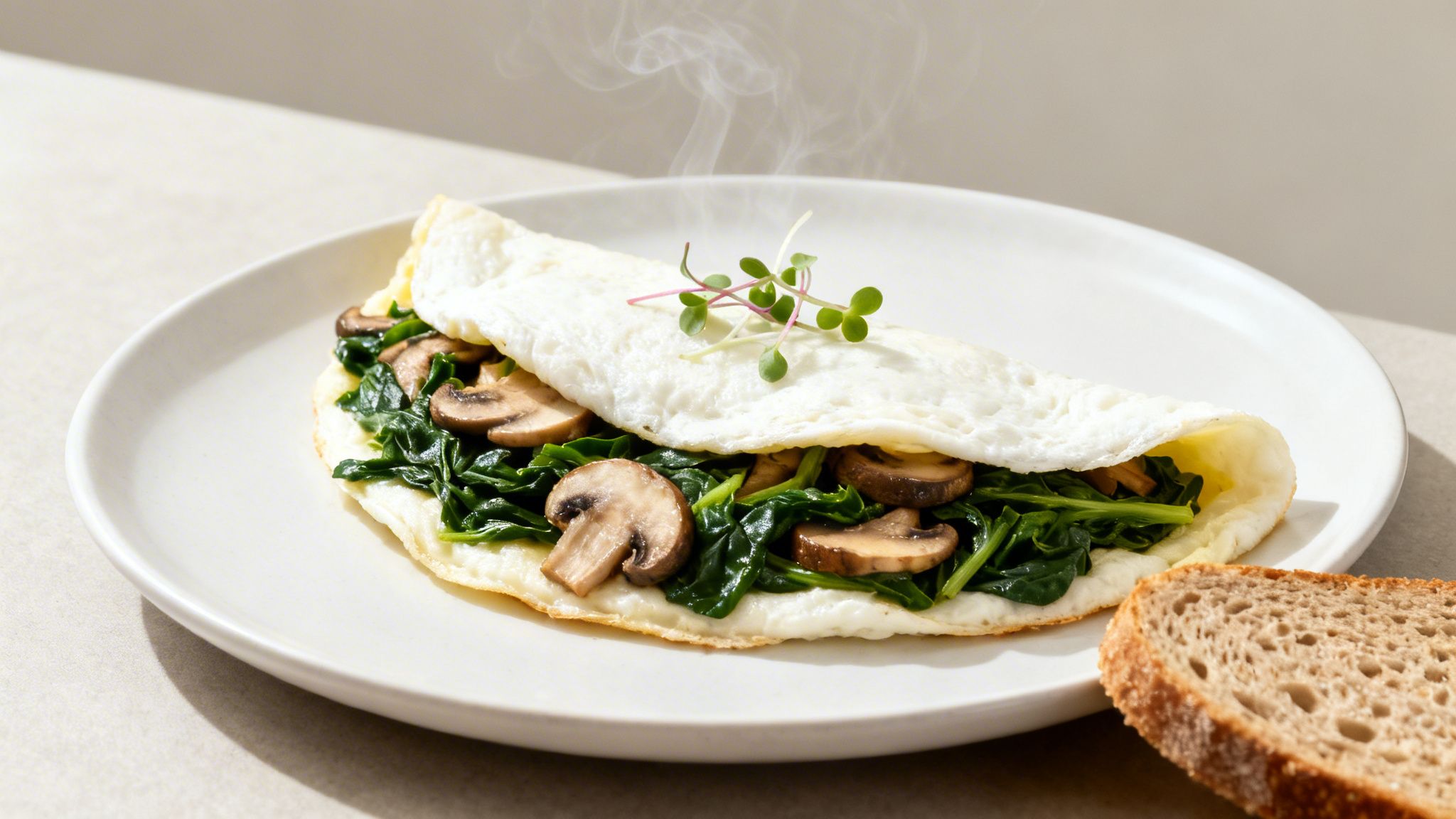
A classic in the world of fitness and nutrition, the egg white omelette is a powerhouse of low calorie high protein goodness. Egg whites are almost pure protein, offering an impressive 11g of protein for just 52 calories per 100g. A generous omelette made from three large egg whites provides a substantial protein boost with very few calories, making it a highly efficient meal for supporting muscle maintenance during a calorie-controlled diet.
Why It Works for Weight Management
This meal is exceptionally effective because it delivers a complete amino acid profile, meaning it contains all nine essential amino acids required for muscle repair and growth. This is particularly important for individuals on a weight loss journey, including those using GLP-1 medications, as preserving lean muscle mass is crucial for maintaining a healthy metabolic rate. The volume added by low-calorie vegetable fillings like spinach and mushrooms enhances satiety, helping to curb hunger and prevent overeating later in the day.
Practical Tips for Implementation
- Minimise Added Fats: Use a quality non-stick pan to cook your omelette. This allows you to use minimal to no oil, keeping the calorie count as low as possible.
- Perfect the Texture: Cook on a medium-low heat. High heat can cause the egg whites to become tough and rubbery. A gentle, even heat ensures a tender result.
- Bulk with Vegetables: Fill your omelette with nutrient-dense, low-calorie vegetables like sautéed mushrooms, onions, bell peppers, and fresh spinach. This adds volume, fibre, and micronutrients.
- Meal Prep for Speed: Whisk a batch of egg whites with your favourite herbs and seasonings and store it in an airtight container in the fridge. This makes preparing a high-protein breakfast incredibly quick on busy mornings.
5. Salmon Fillet with Asparagus and Lemon
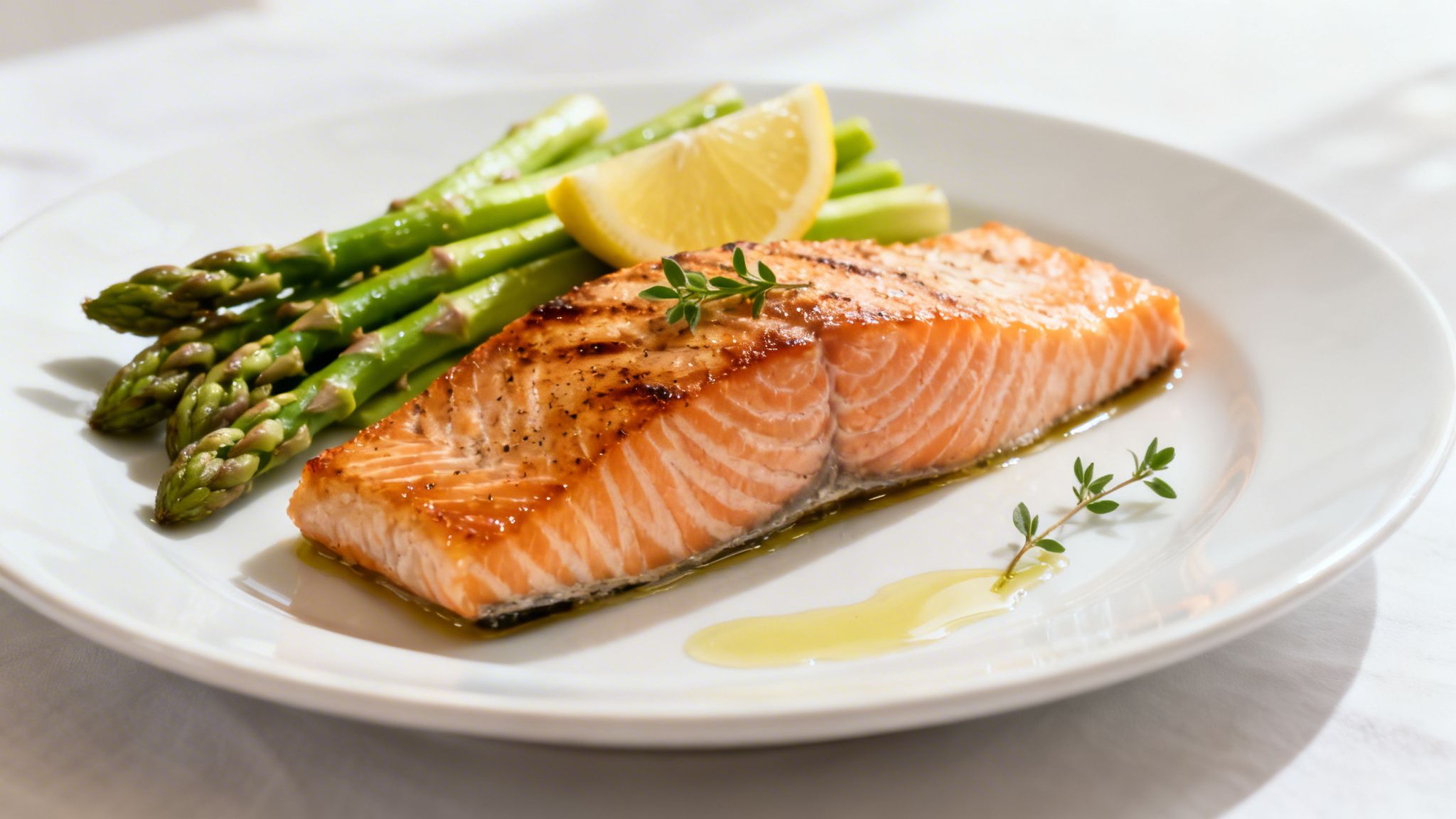
Fatty fish like salmon represents a powerful low calorie high protein option, combining premium nutrition with rich flavour. A standard 100g fillet of salmon provides around 25g of high-quality protein for approximately 206 calories. Its true strength lies in its high concentration of omega-3 fatty acids, which are well-documented for supporting cardiovascular health, reducing inflammation, and potentially enhancing satiety.
Why It Works for Weight Management
The combination of protein and healthy fats in salmon creates a highly satisfying meal that helps regulate appetite. The omega-3s, particularly EPA and DHA, may play a role in metabolic health and appetite control, which is especially beneficial for individuals on clinical weight loss programmes. For individuals on GLP-1 medications, incorporating omega-3-rich foods like salmon can support overall health while the protein content helps preserve vital muscle tissue during fat loss. When paired with fibre-rich asparagus, it creates a nutritionally complete meal under 400 calories.
Practical Tips for Implementation
- Optimal Cooking: For a moist, flaky texture, cook salmon until it reaches an internal temperature of 63°C. This ensures it is both safe and perfectly cooked. To further enhance your salmon dish and ensure it's cooked perfectly, you can find detailed guidance on how to cook salmon in a pan.
- Simple Flavour: Season simply with lemon juice, fresh dill, garlic, and black pepper. These ingredients add vibrant flavour without contributing calories or fat.
- Batch Preparation: Cook several fillets at once, either by baking or pan-searing. Leftover cooked salmon can be refrigerated for up to three days and added to salads or flaked into a healthy wrap.
- Source Smart: When possible, choose wild-caught salmon, as it generally has a more favourable omega-3 to omega-6 fatty acid profile compared to some farmed varieties.
6. Cottage Cheese and Berries Snack
Cottage cheese is a remarkably effective low calorie high protein food, often overlooked in modern diets. A 100g serving of low-fat cottage cheese provides approximately 11g of protein for just under 98 calories, making it a highly efficient choice for muscle maintenance and satiety. When combined with antioxidant-rich berries like raspberries or blueberries, it transforms into a nutritionally dense snack that satisfies sweet cravings while supporting weight management goals.
Why It Works for Weight Management
This combination is powerful due to its blend of slow-digesting casein protein from the cottage cheese and fibre from the berries. Casein forms a gel-like substance in the stomach, leading to a gradual release of amino acids and a prolonged feeling of fullness, which helps to control overall calorie consumption. This is particularly advantageous for individuals on GLP-1 treatments, as it offers substantial nutrition in a small, easy-to-digest portion, which is ideal when appetite is suppressed. The pairing helps ensure protein targets are met to prevent muscle loss during periods of fat loss.
Practical Tips for Implementation
- Maximise the Ratio: Always opt for low-fat or fat-free cottage cheese to get the most protein for the fewest calories.
- Check Sodium Levels: Cottage cheese can be high in sodium. Compare brands and choose a lower-sodium option to support cardiovascular health.
- Enhance Flavour Naturally: Instead of adding sugar, mix in a dash of cinnamon or a drop of vanilla extract to enhance sweetness without adding calories.
- Portion for Success: Pre-portion cottage cheese and berries into small containers. This makes it a convenient grab-and-go snack and prevents overeating.
- Add Healthy Fats: For even greater satiety, top your bowl with a small serving of almonds or chia seeds. This adds healthy fats and a satisfying crunch.
7. Turkey and Vegetable Stir-Fry
A versatile and flavour-packed option, a turkey and vegetable stir-fry is a brilliant low calorie high protein meal. Using lean ground turkey, which delivers around 29g of protein for approximately 190 calories per 100g serving, provides a fantastic alternative to higher-fat red meats. When stir-fried with a vibrant mix of low-calorie vegetables like broccoli, bell peppers, and snap peas, it transforms into a nutritionally dense meal that supports high satiety and sustained energy levels.
Why It Works for Weight Management
This meal excels due to its high protein-to-calorie ratio, which is crucial for preserving lean muscle mass during a calorie deficit, a key principle of effective weight loss. The addition of fibre-rich vegetables not only adds volume and nutrients but also enhances the feeling of fullness, helping to prevent overeating. For men, in particular, turkey is a beneficial protein source that supports testosterone production and lean mass retention. If you're focusing on this goal, you can discover more about how to lose weight and build muscle simultaneously.
Practical Tips for Implementation
- Choose Lean Meat: Opt for 93% lean ground turkey (or leaner) to maximise the protein content while keeping calories and saturated fat low.
- Smart Cooking Technique: Brown the turkey in a quality non-stick pan with minimal oil or a light cooking spray. Add the vegetables towards the end of cooking to ensure they remain crisp and retain their nutrients.
- Flavourful, Low-Calorie Sauce: Create a simple sauce using low-sodium soy sauce or tamari, minced ginger, and garlic. This adds an authentic Asian-inspired flavour without unnecessary sugars or calories.
- Meal Prep Advantage: This dish is ideal for batch cooking. Prepare a large portion and divide it into containers with a side of cauliflower rice or quinoa for quick, healthy meals throughout the week.
8. Lentil and Chickpea Soup with Vegetables
An excellent plant-based choice, lentil and chickpea soup is a nutritional powerhouse that perfectly embodies the low calorie high protein principle. A generous serving of this hearty soup provides substantial plant-based protein and exceptional fibre. For instance, 100g of cooked lentils offers around 9g of protein and 8g of fibre for just 116 calories. Combining them with chickpeas, carrots, celery, and tomatoes creates a satisfying meal that delivers sustained energy release and promotes digestive regularity.
Why It Works for Weight Management
This meal is incredibly effective due to its high fibre and protein content, which work together to maximise satiety and keep you feeling full for hours. This is a significant advantage for managing overall calorie intake. For individuals using GLP-1 treatments, the high-fibre content can help regulate digestion, a common concern with these medications. The slow-digesting carbohydrates in legumes also help maintain stable blood sugar levels, preventing the energy crashes that can lead to cravings for high-calorie snacks.
Practical Tips for Implementation
- Boost Volume and Nutrients: Bulk up your soup with extra non-starchy vegetables like spinach, kale, or courgettes. This adds more volume, vitamins, and minerals without significantly increasing the calorie count.
- Smart Sodium Reduction: Always rinse canned legumes under cold water before use. This simple step can reduce their sodium content by up to 40%. Opt for a low-sodium vegetable broth as your soup base.
- Meal Prep Masterclass: Prepare a large batch of the soup and portion it into individual containers for freezing. This provides a quick, healthy, and perfectly portioned meal for busy days.
- Enhance Flavour Naturally: Use a rich variety of herbs and spices like cumin, coriander, thyme, and smoked paprika to create a deep, complex flavour profile, reducing the need for added salt.
Comparison of 8 Low-Calorie, High-Protein Meals
| Item | Prep Complexity (🔄) | Resources & Cost (⚡) | Effectiveness (⭐) | Typical Outcomes / Ideal Use Cases (📊 💡) |
|---|---|---|---|---|
| Grilled Chicken Breast with Roasted Vegetables | 🔄 Moderate — simple grilling; watch for overcooking | ⚡ Low — basic pan/grill, affordable ingredients | ⭐⭐⭐⭐ — high protein, complete AA profile | 📊 Supports satiety & lean-mass retention; ideal for GLP‑1 users and meal-prep; tip: use thermometer and marinades |
| Greek Yoghurt Protein Parfait with Berries | 🔄 Very low — no cooking, quick assembly | ⚡ Low — refrigerated staple, minimal tools | ⭐⭐⭐⭐ — very high protein-per-calorie (0% fat) | 📊 Quick snack/mini-meal for reduced appetite; ideal for GLP‑1 patients; tip: choose plain 0% and portion nuts |
| Baked Tofu and Edamame Buddha Bowl | 🔄 Moderate — pressing and baking tofu improves texture | ⚡ Low–Medium — oven/pan, plant-protein staples | ⭐⭐⭐ — good plant protein with complementary AA profile | 📊 Plant-based satiety and sustainability; ideal for vegetarian/vegan clients; tip: press tofu and add vitamin C for iron absorption |
| Egg White Omelette with Lean Fillings | 🔄 Low — fast (5–10 min) but needs basic cooking skill | ⚡ Low — non-stick pan; eggs inexpensive | ⭐⭐⭐⭐ — excellent protein-to-calorie ratio; complete AA | 📊 Rapid satiety, aids muscle synthesis; ideal for strength-training and quick meals; tip: use varied veg fillings and non-stick cookware |
| Salmon Fillet with Asparagus and Lemon | 🔄 Moderate — precise cooking for texture/safety | ⚡ Medium — higher ingredient cost, simple cookware | ⭐⭐⭐⭐ — high protein + omega‑3 benefits | 📊 Satiety plus anti-inflammatory & cardiovascular support; ideal for metabolic/heart-health focus; tip: source sustainably and cook to 63°C |
| Cottage Cheese and Berries Snack | 🔄 Very low — minimal prep | ⚡ Low — refrigerated, affordable | ⭐⭐⭐ — casein provides prolonged satiety | 📊 Good snack for reduced appetite; ideal for GLP‑1 users who need nutrient-dense small volumes; tip: choose low-sodium low-fat varieties |
| Turkey and Vegetable Stir-Fry | 🔄 Low — quick stir-fry (10–15 min) | ⚡ Low — pan, lean ground turkey; budget-friendly | ⭐⭐⭐⭐ — high protein, supports muscle building | 📊 Fast, protein-rich meal for muscle maintenance; ideal for men and active clients; tip: use 93% lean turkey and low-sodium sauces |
| Lentil and Chickpea Soup with Vegetables | 🔄 Moderate — longer cook/soak time or canned convenience | ⚡ Very low — pantry staples, low cost | ⭐⭐⭐ — moderate protein, very high fibre | 📊 Exceptional satiety and blood-sugar stability; ideal for vegetarian clients and bulk meal prep; tip: rinse canned legumes and increase fibre gradually |
Integrating These Meals into Your Medically Supervised Journey
Throughout this guide, we've explored a variety of delicious and practical low calorie, high protein meals, from a simple Greek Yoghurt Parfait to a satisfying Salmon Fillet with Asparagus. These aren't just isolated recipes; they are foundational building blocks for a sustainable, healthy lifestyle, especially when navigating a medically supervised weight loss journey. The core principle is clear: prioritising protein is essential for managing hunger, preserving metabolically active muscle mass, and supporting the bodily changes that occur during significant weight loss.
Key Takeaways for Your Health Journey
Let's distill the most crucial insights from the meals and snacks we've covered:
- Satiety is Your Ally: High-protein foods like grilled chicken, eggs, and lentils are scientifically proven to increase feelings of fullness. This helps to naturally reduce overall calorie intake and combat the 'food noise' that can derail progress, a benefit that works in harmony with the appetite-regulating effects of GLP-1 medications.
- Muscle Preservation is Non-Negotiable: During calorie restriction, the body can lose both fat and muscle. A high-protein intake, as demonstrated in numerous clinical studies, provides the necessary amino acids to protect against muscle atrophy. This is vital for maintaining a healthy metabolism and achieving a strong, toned physique rather than just a lower number on the scale.
- Nutrient Density Over Empty Calories: Every meal, from the Baked Tofu Buddha Bowl to the Lentil Soup, is designed to be nutrient-dense. This means you are fuelling your body with essential vitamins, minerals, and fibre, which is particularly important when your overall food volume may be reduced.
Actionable Next Steps to Implement Today
Transforming knowledge into action is the most critical step. Rather than feeling overwhelmed, focus on small, consistent changes that build momentum over time.
Start by selecting just two or three of the low calorie, high protein options from this article that appeal most to you. Plan to incorporate them into your meal routine this week. Perhaps you could swap your usual breakfast for the Egg White Omelette or prepare the Grilled Chicken and Roasted Vegetables for a couple of lunches. Notice how these meals affect your energy levels and hunger signals. This small-scale implementation allows you to build confidence and establish new habits without demanding a complete dietary overhaul. By focusing on consistency rather than perfection, you create a powerful, positive feedback loop that makes lasting change feel achievable and rewarding. This structured approach to nutrition is a cornerstone of comprehensive weight management programmes, where evidence-based eating strategies are integrated with medicine, strength training, and clinical support to deliver synergistic and sustainable results.
Ready to pair these powerful nutritional strategies with a comprehensive, medically-guided framework? Discover how a personalised, evidence-based programme can provide the clinical support and structure you need to achieve your weight loss and health goals. Explore the Trim programme today to begin your journey.