
Why Strength Training Is Important for Weight Loss

The most popular weight-loss advice starts with the wrong question. People are often told to create a calorie deficit and add cardio, as though strength training matters only to bodybuilders or anyone chasing visible muscle. During medically supervised weight loss, the more important question is what kind of weight is being lost, and whether you can still climb stairs, carry shopping, rise from a chair and feel physically capable as your body changes.
Weight reduction and fat reduction aren't identical. Reduced energy intake can lower fat mass, but it can also challenge lean tissue and muscle function. Resistance exercise gives your muscles a repeated mechanical signal to keep producing force, which is why its value can't be judged by calories burned during a session or by the next scale reading.
This matters for people using GLP-1 treatments, managing menopause-related changes, or rebuilding capacity after pregnancy. Strength training is a health behaviour, not a gym identity. It can begin with a chair, a resistance band or controlled bodyweight movements, and it can support the practical outcome that matters most: a body that remains strong enough for everyday life.
Table of Contents
- Rethinking the Role of Resistance Exercise
- The Physiology of Muscle and Bone Preservation
- Complementing GLP-1 Medications and Nutrition
- Navigating Menopause and Postpartum Transitions
- Building an Accessible and Inclusive Routine
- Measuring Progress Beyond the Bathroom Scale
- Prioritising Safety and Sustainable Recovery
Rethinking the Role of Resistance Exercise
A calorie deficit is necessary for weight loss, but it doesn't tell the body exactly which tissues to retain. When food intake falls, the body draws on stored energy, and some of the resulting weight change may involve lean tissue as well as fat. That makes preserving muscle function a clinical priority, particularly when weight is reducing quickly or appetite is substantially lower.
The scale can't separate fat mass, water, bone or muscle. A person may lose fat while maintaining lean mass, so total body weight may move more slowly than expected. That isn't failure. It may indicate a more favourable change in body composition, especially when strength and physical function are improving.
Mechanical loading changes the target
Cardio remains valuable for cardiovascular fitness and general activity, but it doesn't fully replace progressive resistance exercise. Resistance training asks the neuromuscular system to produce force against an external or bodyweight load. That repeated demand helps provide a reason for the body to retain force-producing capacity during energy restriction.
A systematic review and meta-analysis found that adding resistance training during diet-induced weight loss didn't materially change total body mass compared with diet alone, but it protected fat-free mass and increased fat-mass loss, demonstrating why scale weight alone can underestimate the benefit of strength work (systematic review of resistance exercise during diet-induced weight loss).
Practical interpretation: The aim isn't to make the gym session burn as many calories as possible. The aim is to make the weight you lose more likely to represent fat while protecting the physical capacity you need.
This distinction is particularly relevant during perimenopause, when changing symptoms, sleep and body composition can make rigid exercise advice difficult to follow. A practical guide to exercise for perimenopausal symptoms can help connect resistance work with the wider challenges of that transition, rather than treating training as a separate aesthetic project.
Strength training also gives you a measurable task to improve. You might perform a sit-to-stand with greater control, carry a bag more confidently or complete a resistance-band row without stopping. Those changes can matter even when the scale is temporarily uncooperative.
The Physiology of Muscle and Bone Preservation
Weight loss changes more than the number on a scale. Energy restriction can leave fewer resources for recovery, while a lighter body changes the force required for everyday movement. If appetite, fatigue or confidence also reduce activity, muscles receive less of the loading that helps them retain strength and coordination.
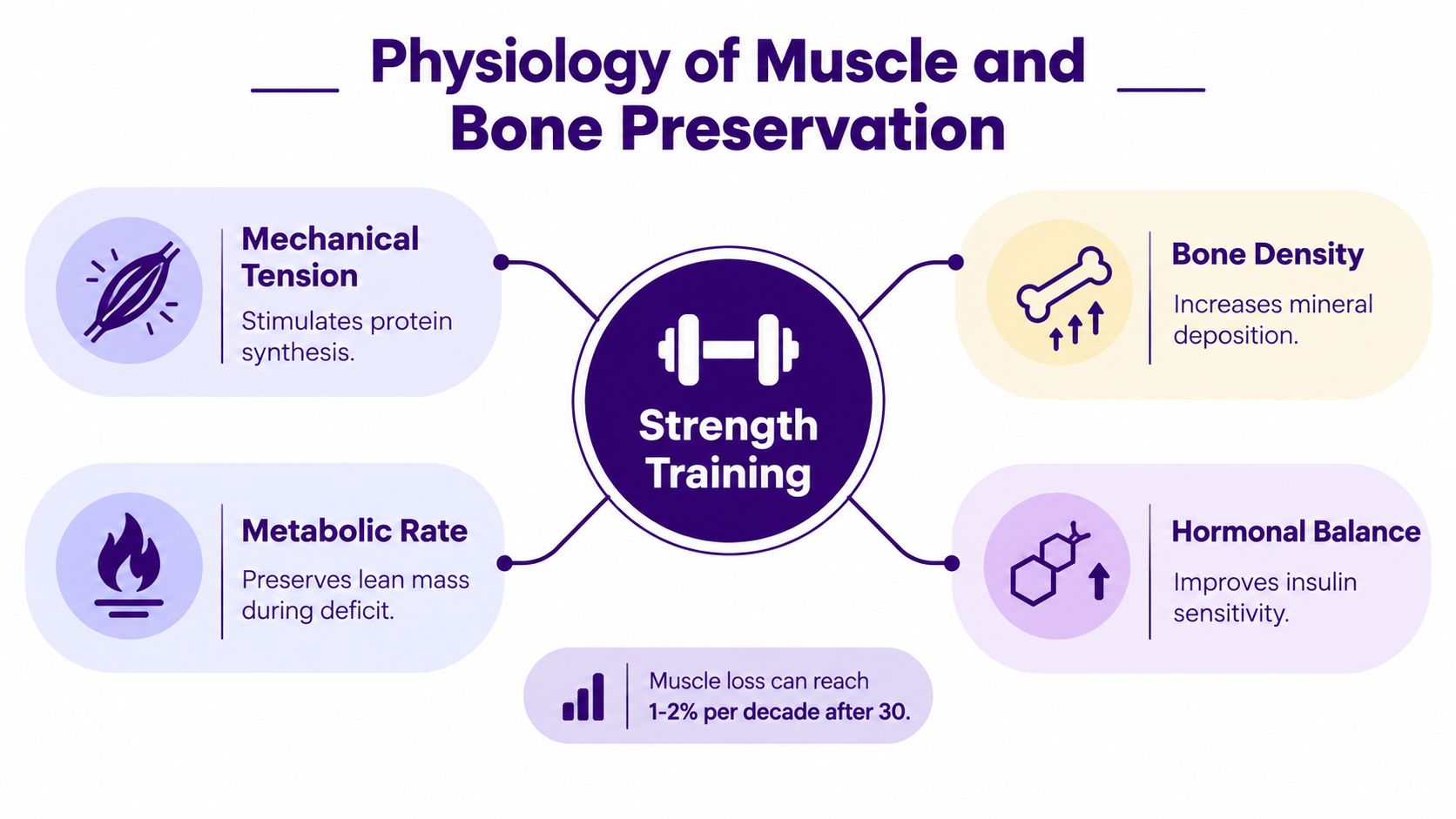
Resistance exercise supplies that mechanical signal. A controlled squat, press, row or hinge creates tension in muscle and connective tissue, while the nervous system organises the required force. Repeated practice with gradual progression can help maintain or improve muscular performance during weight loss. It cannot guarantee that every person will preserve all lean tissue, but it addresses a central physiological demand of the process.
The same principle reaches the skeleton. Muscle contraction creates tension through tendons, placing load on bone and supporting bone-density adaptation. Weightlifting, press-ups, resistance-band exercises and gym-machine work can therefore contribute to skeletal health when performed with suitable technique, as described in NHS guidance on improving strength and flexibility.
Function can change before body composition
A Glasgow-based 12-week pilot randomised controlled trial followed adults with overweight or obesity during diet-induced weight loss. Body mass did not differ significantly between the resistance-training and diet-only groups. However, the resistance-training group improved function, including an average 2.65 kg increase in grip strength, while the diet-only group changed by −0.26 kg. Maximal voluntary contraction force also improved with resistance training and declined in the diet-only group (Glasgow pilot randomised controlled trial).
The practical lesson is straightforward: body composition and physical ability can change at different speeds. Grip strength, rising from a chair and carrying objects rely on force production, coordination and confidence, alongside body mass.
Why bone preservation belongs in weight management
Muscle and bone function as a connected system. Stronger legs can support stair climbing, while stronger hips and trunk muscles assist balance and transfers. Appropriate resistance loading also matters for adults concerned about age-related bone loss, including people experiencing menopause.
Aim for a manageable load applied consistently with sound technique. Increase the challenge only when the current level feels controlled. This method builds capability while keeping health-focused training separate from a test of toughness.
Complementing GLP-1 Medications and Nutrition
GLP-1 medicines can change the practical experience of weight management by reducing appetite for some patients. That can make a calorie-controlled plan easier to follow, but it can also make it harder to eat enough to support training and recovery if meals become too small, protein intake is overlooked or nausea limits food choices.
The medicine, clinical supervision and nutrition plan address different parts of the problem. Resistance exercise addresses another. It supplies a mechanical message to skeletal muscle during a period when lower energy intake may otherwise reduce the stimulus to maintain tissue and force.
Four parts of a complete plan
A medically supervised programme should connect treatment, clinical monitoring, nutrition and movement rather than presenting any single element as a complete solution. GLP-1 treatment may support appetite management where clinically appropriate. Nutrition provides energy and protein. Strength training gives muscles a reason to keep functioning. Clinical guidance helps adapt the plan when side effects, health conditions or changing capacity affect participation.
The European Association for the Study of Obesity's evidence recommendations identify resistance training as particularly relevant during calorie-restricted weight loss because it supplies repeated mechanical loading to skeletal muscle, helping maintain muscle tissue and neuromuscular function while body fat is reduced (EASO physical-activity evidence recommendations).
That doesn't mean resistance training prevents all muscle loss, and it doesn't mean patients should train intensely while unwell. It means the exercise component has a specific physiological job that medication and calorie reduction can't perform on their own.
Nutrition needs to support the signal
Protein is one part of recovery, but it shouldn't be discussed as though food is only a source of calories. A clear explanation of protein calories explained simply can help patients understand how protein contributes both energy and tissue-building material.
People using appetite-reducing treatment may need practical support to spread food across the day and choose tolerable, nutrient-dense options. Guidance on protein intake for weight loss can sit alongside advice from a prescriber or registered dietitian, particularly where nausea, medical conditions or dietary restrictions affect intake.
Start with the capacity you have. A short, well-controlled session that you can repeat is more useful than an ambitious workout that worsens fatigue and disrupts the rest of the week.
Navigating Menopause and Postpartum Transitions
Weight management doesn't occur in a biological vacuum. Menopause can bring changes in body composition, sleep, temperature regulation and recovery, while the postpartum period involves healing, altered routines and the physical demands of caring for a baby. In both situations, a generic instruction to “eat less and do more” can feel both inadequate and blaming.
During menopause, changing hormone levels are relevant to bone and muscle health. Resistance exercise creates loading through muscle contraction and the skeleton, which is why progressive strength work deserves a central place in healthy ageing. The emphasis should be on control, balance and gradual progression, not on proving that you can lift a particular weight.
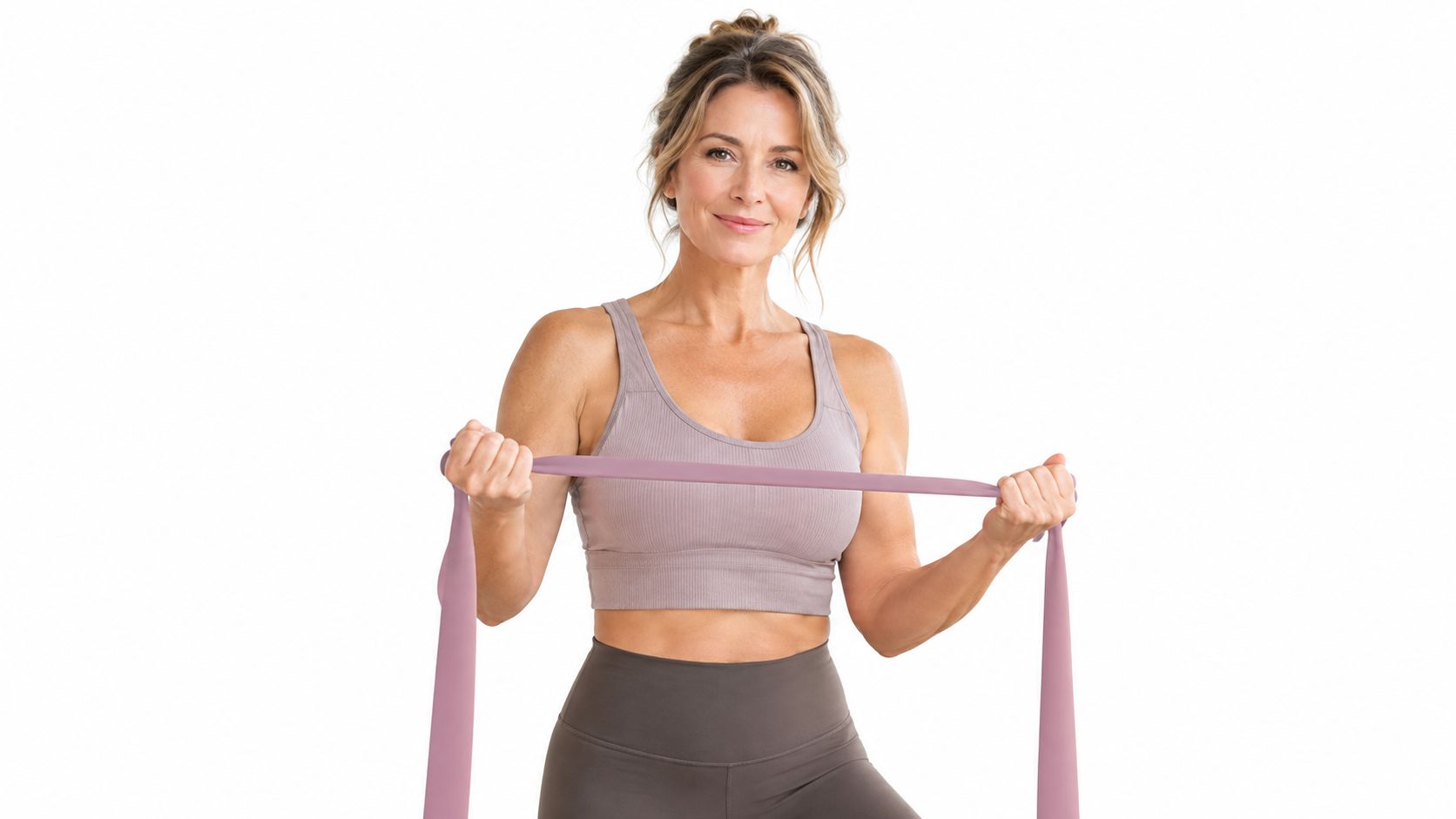
A person returning to exercise after pregnancy may need a different starting point. Pregnancy and birth can affect abdominal function, pelvic-floor symptoms, joint comfort and tolerance for pressure. A supported sit-to-stand, gentle hinge, band row or carefully selected carry may be appropriate for one person, while another may need assessment and a slower rebuild.
The right progression is individual
Someone with pelvic heaviness, leaking, pain, abdominal doming or persistent discomfort shouldn't push through in the hope that symptoms will disappear. A GP, pelvic-health physiotherapist or other qualified clinician can help identify a safe route back to loading.
Menopause also deserves an approach that recognises fluctuating sleep and symptoms. On a low-energy day, reducing resistance or repetitions can preserve the habit without treating a lighter session as a failure. On a better day, a small increase in range of motion or control may be enough progression.
For a more targeted discussion of training in this life stage, strength training for menopause can provide useful context. The broader principle is simple: the programme should match current recovery, medical needs and lived responsibilities.
Strength training becomes a confidence boost when it gives people more options in daily life. Rising from the floor, lifting a child safely, carrying groceries and climbing stairs are meaningful outcomes, especially when hormonal transitions have made movement feel less predictable.
Building an Accessible and Inclusive Routine
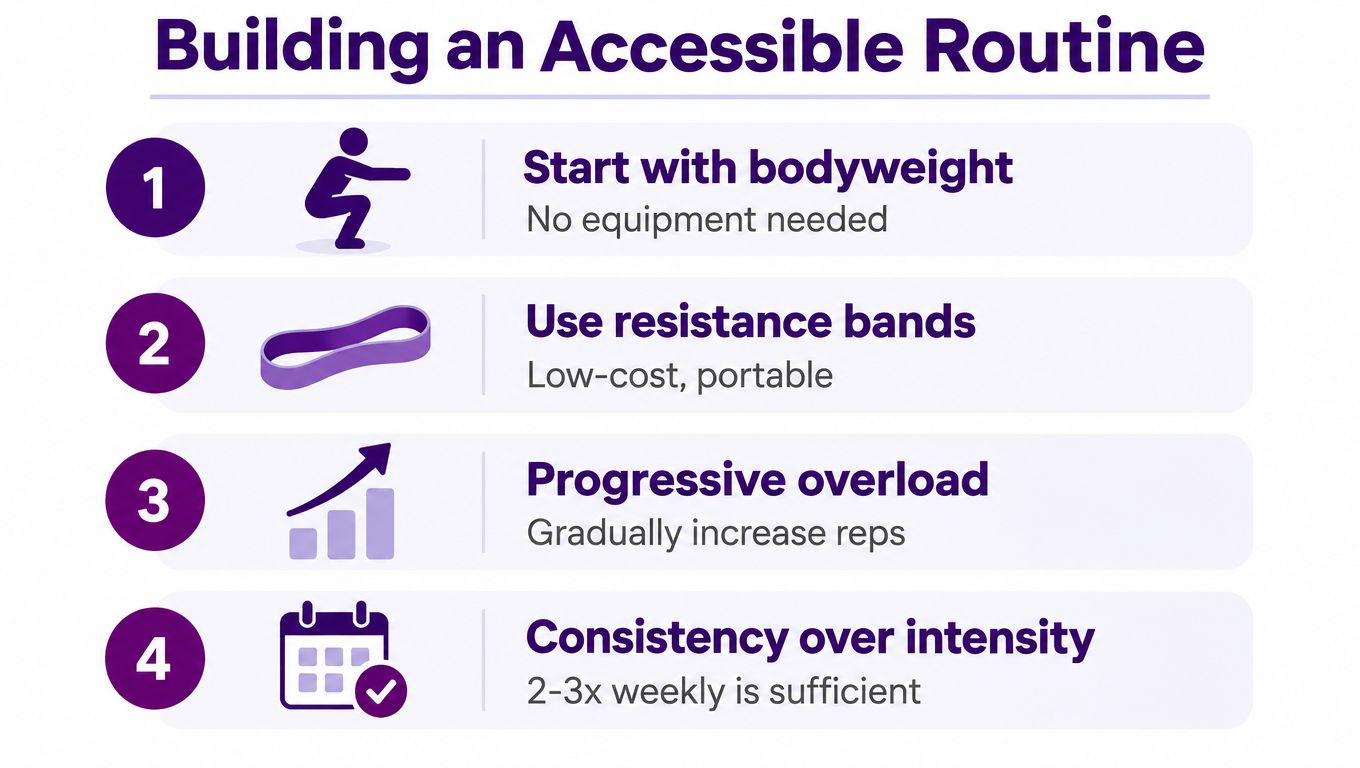
Strength training does not begin with a barbell, gym membership or sporting background. During medically supervised weight loss, the first goal is to give muscles regular work so daily function can keep pace with changes in body weight, appetite and recovery. UK guidance recommends strengthening the major muscle groups on at least 2 days each week (UK Chief Medical Officers' physical-activity guidelines).
Useful resistance can come from bodyweight movements, bands, free weights, machines, stair climbing, lifting or carrying. Carrying shopping and demanding gardening may count when they make the relevant muscles work, although the task should remain safe and controlled.
A simple starting session
Choose one movement from each pattern, adding a stable support where balance, joint comfort or confidence requires it:
- Knee-dominant movement: Rise from a chair or perform a supported squat.
- Hip-dominant movement: Practise a hip hinge with your hands on your thighs, or hold a light load close to your body.
- Pulling movement: Perform a resistance-band row while keeping the shoulders relaxed.
- Pushing movement: Start with a wall press-up, then use a lower surface when control improves.
- Single-leg and carrying work: Add a supported step-up or controlled carry only when balance and joint comfort allow.
A practical starting structure is 8–12 controlled repetitions per exercise for at least 2 sets, progressing towards 3 sets as capacity improves. Rest between sets, and finish before fatigue changes the movement pattern. Controlled repetitions matter because the muscles, joints and nervous system need time to learn the task, not just a higher number of movements.
Progress without intimidation
Progressive overload can be small. Add a repetition, increase band tension, extend the range of motion or slow the lowering phase after the current version feels consistently manageable. A higher chair, shorter range or extra support can make the same exercise appropriate for older adults, people living with obesity and complete beginners.
The repeatable programme is the useful one. It should fit around work, family care, medication effects and recovery. A portable option such as strength training with bands can provide resistance without making equipment a barrier.
Use the following video as a visual demonstration. Adjust each movement to your ability, and seek professional advice if pain, injury or a medical condition affects exercise:
Some strengthening activity is better than none. Starting with manageable work and repeating it regularly gives the body a clearer reason to preserve strength while weight, hormones and treatment-related recovery change.
Measuring Progress Beyond the Bathroom Scale
A lower number does not always mean a better result. During weight loss, resistance training can help preserve fat-free mass while body fat decreases, so body weight may change more slowly even as waist fit, movement quality and physical capability improve.
The scale still has a place. It is one signal, not the whole assessment. Review it alongside measures that reflect treatment goals, including mobility, daily function, confidence and independence.
Track what your body can do
Use simple, repeatable observations rather than relying on memory:
- Grip and carrying strength: Note the heaviest shopping bag you can carry for 20 metres without pausing, and whether you can control it safely.
- Lower-body function: Time how many controlled sit-to-stands you complete in 30 seconds, using the same chair and support each time. Record whether rising feels steadier.
- Walking confidence: Track how comfortable you feel during a familiar walk, including balance, pace and symptoms, rather than focusing only on distance.
- Clothing and waist fit: Check how a consistent pair of trousers fits, or measure your waist under similar conditions. Fluid shifts can make daily changes difficult to interpret.
- Training performance: Log repetitions, resistance, range of motion and recovery between sessions. Progress may mean better control or less breathlessness, not just heavier weights.
The Glasgow pilot trial cited earlier showed functional strength improving despite no significant difference in body mass between home-based resistance training and diet alone. Its lesson is practical: body composition and capability can change before the bathroom scale clearly reflects them.
Use several signals together
One reading can mislead. Body weight varies with fluid balance and digestion, while performance changes with sleep, symptoms and medication effects. Review patterns across several weeks, and compare measurements taken under similar conditions.
A better question: “Am I becoming more capable as my body changes?”
That question keeps weight management connected to independence, health and everyday life. A steadier transfer from a chair, improved carrying control or greater confidence with walking can represent meaningful progress even when weight fluctuates.
Prioritising Safety and Sustainable Recovery
Strength training should challenge you, but it shouldn't punish you. This matters even more during a calorie deficit, when recovery may be affected by lower energy intake, reduced appetite, medication side effects, poor sleep or an existing health condition.
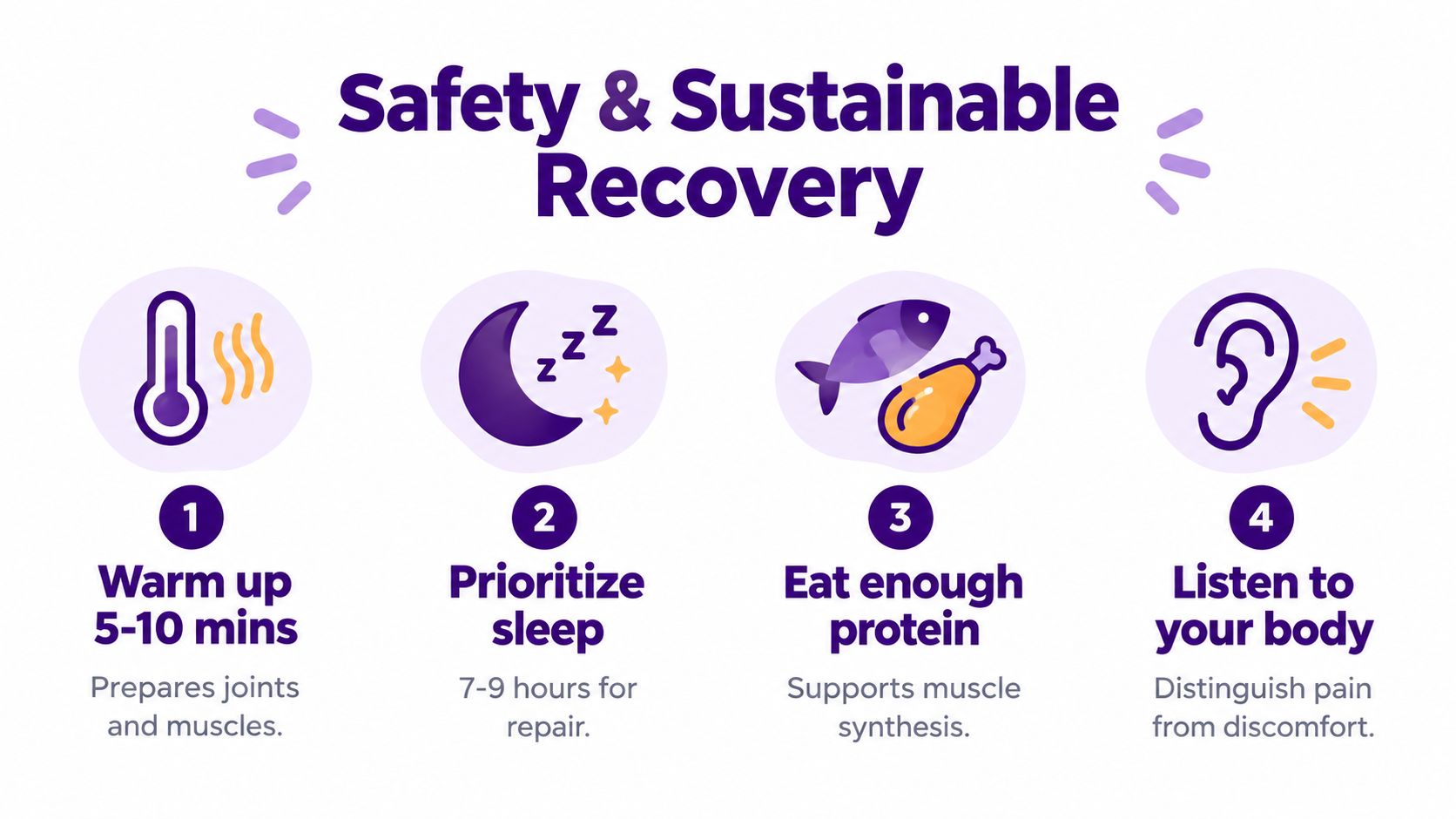
Begin with a brief warm-up that rehearses the movements you plan to perform. Practise the pattern without load, use a smaller range of motion if necessary and keep the resistance light enough to maintain control. Technique comes before heavier resistance, because a technically sound movement gives you a safer foundation for progression.
Build recovery into the plan
Training provides the stimulus, but adaptation also depends on what happens afterwards. Eat in a way that supports your clinician's weight-management plan, include adequate protein where tolerated and consider advice from a registered dietitian if appetite, nausea or dietary restrictions make this difficult.
Sleep also matters for recovery, concentration and exercise tolerance. If you're consistently exhausted, reduce the session's volume or intensity rather than forcing progression. A lighter session can preserve movement practice while giving your body time to recover.
Know when to pause
Normal effort may include muscular fatigue, warmth and a temporary feeling of exertion. Sharp pain, new joint instability, chest pain, fainting, unusual breathlessness or symptoms that persist should prompt you to stop and seek appropriate medical advice.
Progress over several weeks, not from workout to workout. Increase one variable at a time, such as repetitions, resistance or range of motion, and keep a simple record of how the session felt. If you're taking a prescribed treatment, experiencing significant side effects or managing postpartum, pelvic-floor, bone or joint concerns, discuss exercise changes with your clinician.
A sustainable routine is deliberately modest at the beginning. Its purpose is to preserve and build the capacity that supports daily life, not to create exhaustion as proof that it worked.
Trim combines medically supervised weight-management treatment with clinical guidance, personalized nutrition support and strength-focused education, helping patients consider muscle and function alongside weight. Visit Trim to complete its digital consultation and explore whether its UK-based programme is appropriate for your goals and medical circumstances.