
Weight Gain When Ovulating: What's Really Happening

A small mid-cycle rise is usually about fluid and gut contents, not new fat. In the available research, body weight was 0.450 kg higher during menstruation than in the first week of the cycle, while extracellular water was 0.474 kg higher, and a separate study of 28 young women found only a minor post-ovulation peak.
You may have done everything consistently, stepped on the scales after waking, and still seen a higher number this morning. If the reading appeared around ovulation, it can feel as though your progress has suddenly reversed. That reaction is understandable, particularly if you're following a medically supervised weight-management programme where daily measurements and nutrition targets make every fluctuation feel significant.
The more useful question isn't, “How many kilos does ovulation add?” There isn't a universal ovulation number. The practical question is, how can you distinguish a short-lived cycle-related change from a persistent change in body fat?
Table of Contents
- Why the Scales Creep Up Mid-Cycle
- How Hormones Shift Fluid and Gut Contents
- What the Research Shows
- Why a Scale Rise Is Not the Same as Fat Gain
- A Smarter Way to Track Progress Through Your Cycle
- Cycle Changes and GLP-1-Supported Programmes
- When a Cycle Reading Warrants a Clinician's Input
- Putting It Into Practice This Cycle
Why the Scales Creep Up Mid-Cycle
You weigh yourself, notice a modest increase, and immediately replay the previous day's food and exercise. Perhaps you suspect you ate too much, missed a workout, or somehow stopped making progress overnight. Yet the scales measure total body mass, not fat alone. They also reflect water, food and waste moving through the digestive tract, glycogen-associated fluid, and the contents of your bladder.
A historical study involving 28 young women identified only a “minor peak” in body weight shortly after ovulation, and described the change as small rather than sustained (historical menstrual-cycle study). That finding doesn't provide a personal prediction, but it helps challenge the idea that ovulation automatically causes meaningful fat accumulation.
The reading needs context
An ovulation-day measurement might be higher than a measurement taken during the earlier follicular phase, even when your underlying fat-loss trend hasn't changed. A salty meal, constipation, a long flight, poor sleep, or different weighing conditions can add noise to the comparison.
The same number means something different when it appears once and disappears, compared with when it climbs steadily across several weeks. Look at timing, symptoms, and repeated trends, rather than treating one morning's result as a verdict on your programme.
Practical rule: A temporary mid-cycle rise is a measurement to interpret, not a behaviour to punish.
This matters for UK adults using daily weigh-ins, food tracking, or clinician-supervised treatment. A scale can detect a real change in total mass without telling you whether that change is water, bowel content, or adipose tissue. Comparing the same phase of your cycle across successive months is usually more informative than comparing today's ovulation reading with a single earlier low point.
How Hormones Shift Fluid and Gut Contents
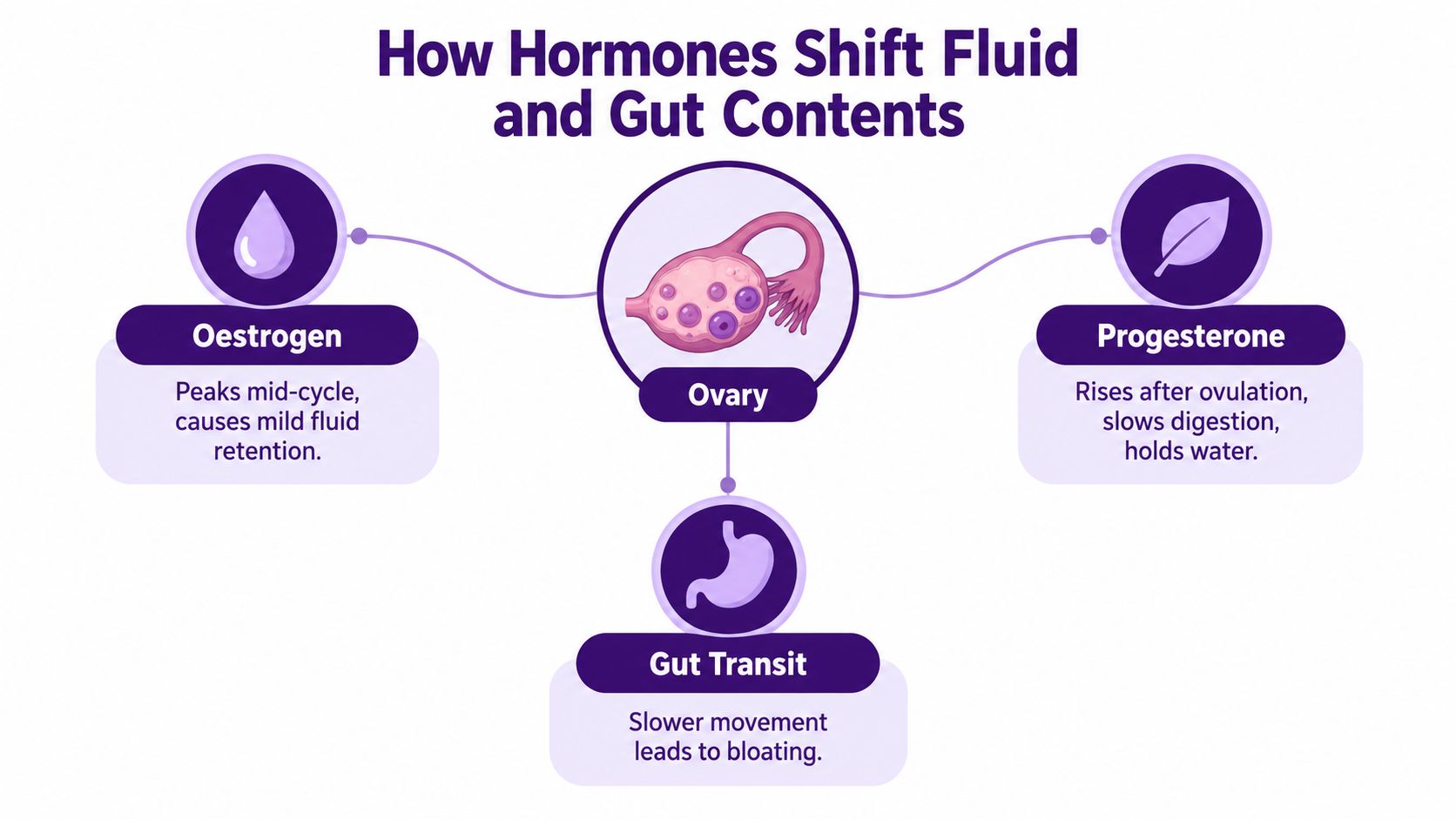
On one morning, your waistband feels tighter and the scale is higher. By the next week, both may have eased without any deliberate change in body fat. Ovulation can affect several systems at once, so the reading reflects fluid, digestion, and other short-term changes rather than a single “ovulation weight.”
The hormone sequence
Oestrogen rises during the late follicular phase and reaches its highest point around mid-cycle. After ovulation, progesterone increases. These hormones influence fluid regulation through pathways involving vasopressin, aldosterone, sodium handling, and the distribution of fluid outside cells.
The effect varies between people and cycles. A temporary change in how the body handles sodium and water may show up as puffiness, a tighter waistband, or a higher scale reading. It does not establish that ovulation has caused a meaningful gain in stored fat.
Digestion can add another layer. Hormonal changes after ovulation may slow gut movement for some people. Stool, gas, and recently eaten food can then remain in the digestive tract longer, increasing abdominal distension while body-fat stores remain unchanged.
What the scales cannot separate
A bathroom scale combines several compartments into one number:
- Body fat, which changes gradually with sustained energy balance.
- Body water, which can shift over a short period.
- Gut contents, including food, stool, and gas.
- Urinary and digestive contents, which vary with timing and routine.
Body-composition research found extracellular water was higher during menstruation while body weight was also higher than during the first week of the cycle. Their close relationship supports a fluid explanation for that cycle-related difference, rather than treating the whole change as fat.
If constipation or bloating follows a recurring pattern, address the symptom without using the scale as a reason to restrict food. Educational guidance on psyllium and GLP-1 weight loss may help you assess fibre-related options, but follow advice suited to your health history and any clinician-supervised programme. For background, see HempWell USA on herbal wellness, while remembering that supplements should not replace assessment of persistent or painful symptoms.
A change in total weight is not automatically a change in stored fat. The timing, accompanying symptoms, and whether the reading settles again give the scale number useful context.
What the Research Shows
A scale reading near ovulation can prompt a simple question: “How much weight do I gain?” The evidence supports a more useful one: does the change match a recurring fluid pattern, or does it persist as a broader trend? Studies measure different cycle phases and outcomes, so they do not establish one standard ovulation increase for everyone.
The clearest numerical evidence concerns the wider menstrual cycle, rather than ovulation alone. A 2023 study of 42 women measured weight, circumferences, skinfolds, and body composition twice weekly across one cycle. Body weight was 0.450 kg higher during menstruation than during the first week, while extracellular water was 0.474 kg higher (2023 body-composition research). The close size of these changes supports fluid as an important contributor to that comparison.
A separate historical investigation of 28 young women found only a minor weight peak shortly after ovulation (ovulation study). Another year-long study followed 62 healthy women across 765 menstrual cycles and recorded perceived fluid retention. Scores rose around the days surrounding ovulation, reached their highest level on the first day of menstrual flow, and showed no significant difference between ovulatory and anovulatory cycles (fluid-retention study).
| Study | Sample | Finding | Caveat |
|---|---|---|---|
| Historical ovulation study | 28 young women | A minor post-ovulation weight peak | Small, older study, not a UK population estimate |
| Body-composition study | 42 women | 0.450 kg higher weight and 0.474 kg higher extracellular water during menstruation | Describes the wider cycle, not ovulation alone |
| Fluid-retention study | 62 women, 765 cycles | Perceived retention changed across the cycle and was highest at menstrual flow | Perception did not establish ovulation-specific fat gain |
| English rugby-player survey | 150 professional female rugby players | 116 participants, or 78.9%, reported cycle-related weight fluctuation | The survey did not isolate ovulation (survey of professional rugby players) |
What the evidence cannot tell you
There is no reliable UK-specific percentage showing how many people gain weight at ovulation, and no nationally representative figure establishing a standard mid-cycle increase. The often-mentioned approximately 0.5 kg describes a broader menstrual-cycle comparison, not a guaranteed ovulation change (menstrual-cycle summary).
For someone on a medically supervised programme, the practical lesson is to compare like with like. Record cycle timing, symptoms, and repeated readings, then look for whether the increase settles at a similar phase. A population average can provide context, but your consistent pattern is more useful for deciding whether a fluctuation resembles cycle fluid or warrants discussion with your clinician.
Why a Scale Rise Is Not the Same as Fat Gain
A higher scale reading is real, but it does not identify what caused it. Water retention, slower gut movement, and food still being digested can increase body mass without adding new adipose tissue. This distinction matters when you are monitoring progress during a medically supervised programme.
Use a three-part model:
- Short-term: water and gut contents can change quickly.
- Medium-term: food intake, sodium, constipation, activity, sleep, and medication effects can shift the trend.
- Long-term: a change that persists across several weeks or cycles calls for a broader review of energy intake, health, and treatment.
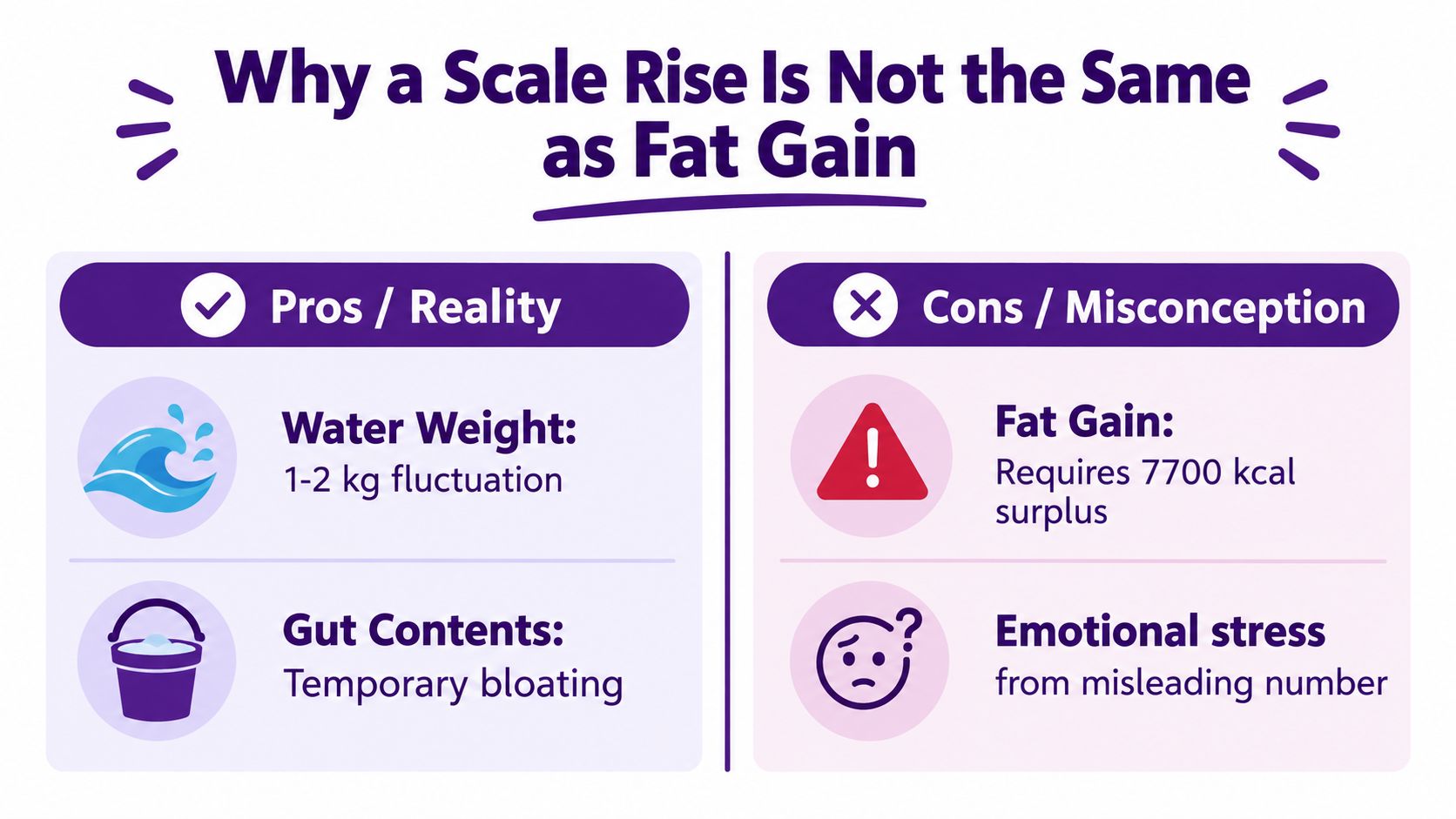
Body-composition research found that extracellular water increased while fat measures did not show a corresponding change. Extracellular fluid then decreased during the late luteal phase after ovulation. Because water rose while fat measures did not, the scales can fall again as fluid shifts, even when food and exercise have not changed dramatically.
Everyday confounders
A saltier evening meal, a later bowel movement, or hours spent sitting during travel can all affect the next reading. These influences may overlap with cycle-related changes, so one measurement cannot reliably identify fat gain or fluid retention.
Persistence provides a more useful test. A small increase that follows a familiar cycle pattern and later settles is more compatible with temporary fluctuation. A rise that continues across 3–4 weeks should prompt a review of calorie intake, constipation, sodium intake, medication effects, and possible medical causes, rather than an automatic assumption that ovulation is responsible.
A scale measures mass, not meaning. The pattern around the reading supplies the context.
NHS-linked guidance recognises abdominal swelling, bloating, and weight gain as cyclical luteal-phase symptoms that generally resolve during or after menstruation (NHS-linked PMS guidance). A predictable pattern can be reassuring, but it should not be used to dismiss symptoms that are severe, persistent, or new.
A Smarter Way to Track Progress Through Your Cycle
The scale is higher on ovulation day, even though your meals and activity look familiar. A consistent tracking routine helps separate a temporary cycle pattern from a longer-term change, particularly during a medically supervised programme.
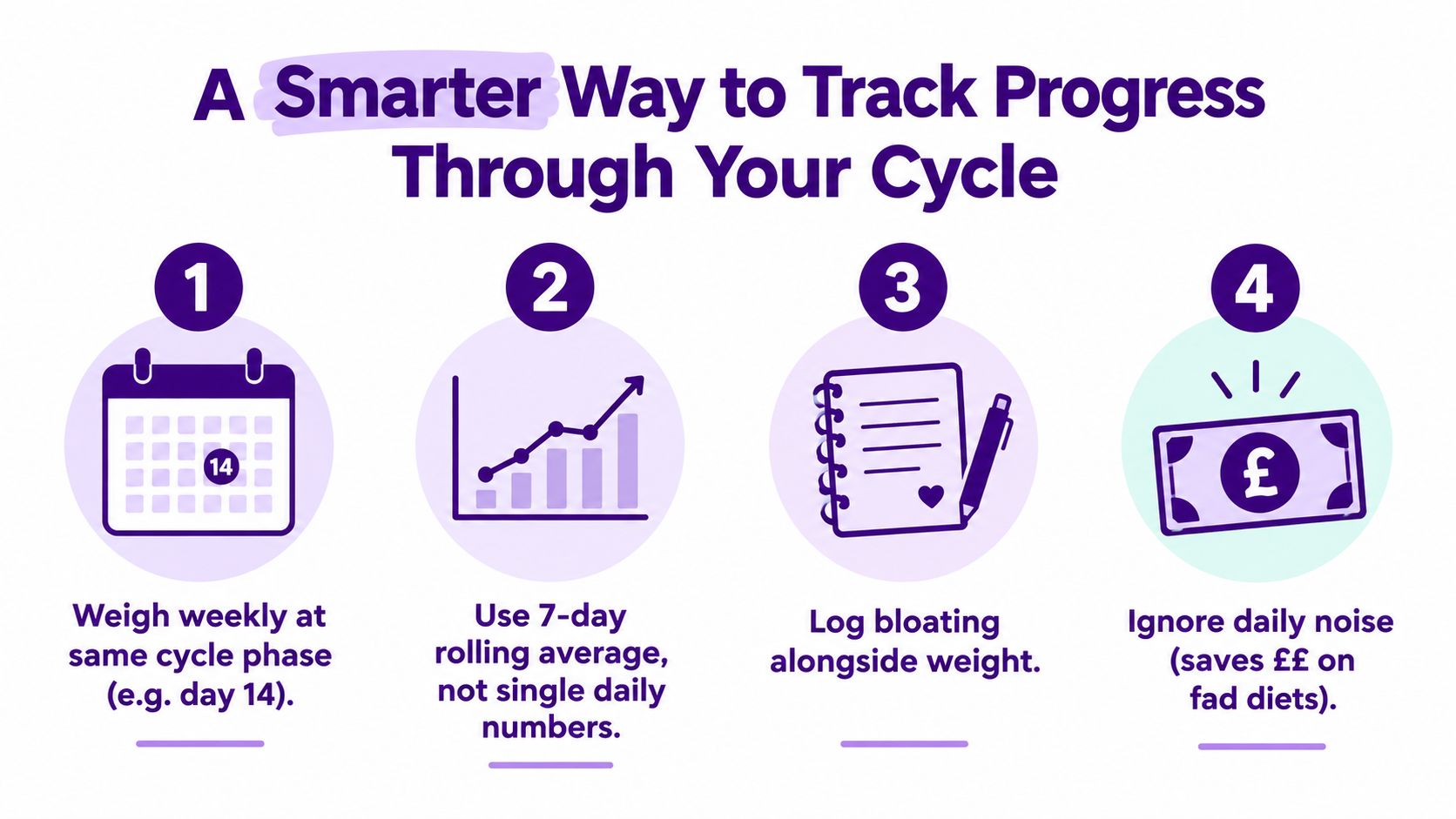
Weigh under matching conditions: after waking, after urination, and before food or drink, using the same scales on a stable surface. Record the date, estimated cycle phase, bloating, bowel regularity, travel, unusual meals, and other symptoms. These notes make a single number easier to interpret.
A practical monitoring routine
- Compare matching phases. Compare an ovulation-day reading with readings from the same phase in other cycles, rather than only with a lower measurement from earlier in the month.
- Use a 7-day rolling average. This reduces the influence of individual changes in body water and gut contents, making the broader direction easier to see.
- Measure your waist consistently. Use the same location, posture, and conditions. One tighter or looser measurement cannot establish a lasting change.
- Log symptoms beside the number. Record bloating, constipation, breast tenderness, disrupted sleep, and appetite changes. The surrounding symptoms provide context for the scale.
Cyclical abdominal swelling and bloating can occur around ovulation and may settle after menstruation for many people. Your own record can show whether the pattern repeats, how long it lasts, and whether the reading returns toward its usual range.
The same method helps when assessing nutrition choices, including how GLP-1 protein snacks work. Food volume, hydration, and bowel habits can affect the next reading, so one morning's weight cannot judge a meal choice or treatment response. A body-composition analysis can add another perspective, but trends and repeated measurements remain more informative than one result.
A spreadsheet, paper diary, or app is enough. The goal is calm observation: recognise a familiar cycle-related rise without mistaking it for fat gain or treatment failure.
Cycle Changes and GLP-1-Supported Programmes
People using medically supervised GLP-1 treatment may notice that cycle interpretation becomes more important. These medicines can reduce food volume and appetite, slow gastric emptying, and affect bowel regularity. Hydration and constipation can therefore move the scale independently of fat loss.
When cycle-related fluid variation is added to changes in gastric contents, a mid-cycle reading may look unexpectedly high or low. That doesn't mean the medicine has stopped working, and it doesn't prove that ovulation has caused fat gain. It means several short-term influences are appearing in the same measurement.
Read the treatment data in context
A clinician reviewing progress should consider more than weight alone:
- Food intake and protein: Has reduced appetite changed meal composition or total intake?
- Bowel habits: Is constipation increasing gut-content weight or discomfort?
- Hydration: Has nausea, vomiting, or reduced drinking altered fluid balance?
- Cycle phase: Does the change repeat at a similar point each month?
- Body composition and waist: Do other measurements support a genuine longer-term change?
This is why medically supervised programmes need monitoring rather than automatic dose changes based on a single reading. Educational information about a GLP-1 weight-loss programme should be considered alongside the advice of the clinician prescribing and monitoring your treatment.
Don't change a prescribed medicine, restrict fluids, or compensate with extreme exercise because the scales rise around ovulation. Record the reading, continue your usual plan where you can, and review the rolling trend with your healthcare team if the pattern persists or concerns you.
When a Cycle Reading Warrants a Clinician's Input
Bloating and weight gain can occur as recognised symptoms of premenstrual syndrome. The American College of Obstetricians and Gynecologists lists both among PMS symptoms, which supports distinguishing temporary cyclical changes from a diagnosis of new fat accumulation (ACOG information on PMS).
Self-monitoring is reasonable when the change is modest, follows a familiar pattern, and settles. Clinical review becomes more important when the pattern changes, continues, or comes with other symptoms.
Seek medical advice for:
- Rapid or marked swelling, especially if it appears suddenly or affects several areas.
- Breathlessness, chest symptoms, or difficulty breathing.
- One-sided leg swelling, particularly when accompanied by pain or tenderness.
- Severe abdominal pain or bloating that is painful rather than merely uncomfortable.
- Persistent unexplained weight change that continues outside your usual cycle pattern.
- Symptoms that don't recur predictably, resolve as expected, or match your established experience.
If you're taking a prescribed weight-management medicine, contact your prescribing clinician when side effects interfere with eating, drinking, bowel function, or daily activities. They can assess whether the issue relates to treatment, the menstrual cycle, another medicine, or a separate health condition.
Good self-awareness includes knowing when tracking has reached its limit. A recurring mild fluctuation is different from unexplained or distressing change.
Don't assume every symptom is hormonal. The menstrual cycle can explain some temporary variation, but it shouldn't delay assessment of breathlessness, unilateral swelling, severe pain, or a persistent trend.
Putting It Into Practice This Cycle
Tomorrow morning, weigh under the same conditions you use for other readings. Record the result alongside your cycle phase, bloating, bowel habits, and any unusual meal, travel, illness, or sleep disruption. Avoid changing your calorie target because of that one number.
Over the next several weeks, use a 7-day rolling average and add a waist measurement taken consistently. At the next similar cycle phase, compare the pattern rather than searching for a perfect number. A reading around ovulation is more informative when you know what happened before and after it.
Review the trend over 3–4 weeks before deciding that your programme needs adjustment. If the increase settles, repeats at a similar cycle stage, and appears with bloating or other familiar symptoms, temporary fluid or gut-content change becomes more likely. If it keeps rising, appears outside the cycle pattern, or comes with red-flag symptoms, speak with your GP or prescribing clinician.
The central question has changed from “How many kilos do I gain when ovulating?” to “Does this change persist, and what else is happening in my body?” That question leads to safer decisions and prevents a single scale reading from driving unnecessary restriction or treatment changes.
A small mid-cycle rise is usually a measurement story, not a fat-gain story, when the long-term trend and symptoms behave as expected.
Trim provides medically supervised weight management in the UK, with clinician assessment, ongoing support, nutrition guidance, and progress monitoring that can account for cycle-related fluctuations. Visit Trim to learn how its structured programme can help you interpret weight trends safely rather than react to one reading.