
Wegovy Weight Loss Results: The Evidence Explained

More than 25% of body weight has been lost by some people using Wegovy over two years, while others have lost less than 5%, according to a June 2026 analysis reported by the BBC. That range is the most useful starting point for understanding Wegovy weight loss results: the headline average matters, but it won't predict exactly what will happen to you.
Clinical trials provide a strong benchmark, not a personal guarantee. Your response can be shaped by biology, dose escalation, treatment persistence, eating patterns, physical activity, and the level of professional support available through your UK care pathway.
Table of Contents
- Understanding Wegovy and Its Role in Weight Management
- Clinical Trial Results: What the Science Shows
- The Typical Wegovy Weight Loss Timeline
- Why Individual Wegovy Results Vary So Much
- How Wegovy Compares to Other Weight Loss Treatments
- Maximising Your Results with Medical Support
- Setting Realistic Expectations for Your Journey
Understanding Wegovy and Its Role in Weight Management
Wegovy contains semaglutide, a prescription medicine that acts as a GLP-1 receptor agonist. It forms part of medical weight management rather than functioning as a casual lifestyle product. The medicine is intended to be used with a reduced-calorie diet and increased physical activity, in adults who meet defined clinical criteria.
NICE guidance recommends semaglutide for adults with a BMI of at least 30 kg/m², or a BMI from 27 kg/m² to under 30 kg/m² when a weight-related comorbidity is present. NHS England's specialist pathway uses more specific access criteria, including a BMI of 35 or more for many patients, or 32.5 or more for some ethnic groups, with lower thresholds applying when additional criteria are met, as set out by the NHS England weight-management injection criteria.
The purpose of treatment isn't just to make the number on the scales fall. Clinicians also consider appetite, eating behaviour, physical function, health risks, side effects, and whether the treatment remains appropriate over time. A slower response may need review, rather than an assumption that the medicine has failed.
Clinical context: Wegovy should be viewed as one part of a supervised weight-management plan, not as a replacement for nutritional care, movement, or follow-up.
This article is educational, not a sales pitch or a substitute for individual medical advice. The central questions are practical: what did the trials show, how quickly can results develop, why do responses differ, and how do NHS and private support structures affect real-world outcomes?
Clinical Trial Results: What the Science Shows
The STEP clinical trial programme found a mean body-weight reduction of 15.3 kg, or 14.9%, at 68 weeks with semaglutide 2.4 mg, a reduced-calorie diet, and increased physical activity. The placebo group lost a mean of 2.6 kg, or 2.4%, under broadly similar lifestyle conditions, according to the UK Wegovy clinical efficacy summary.
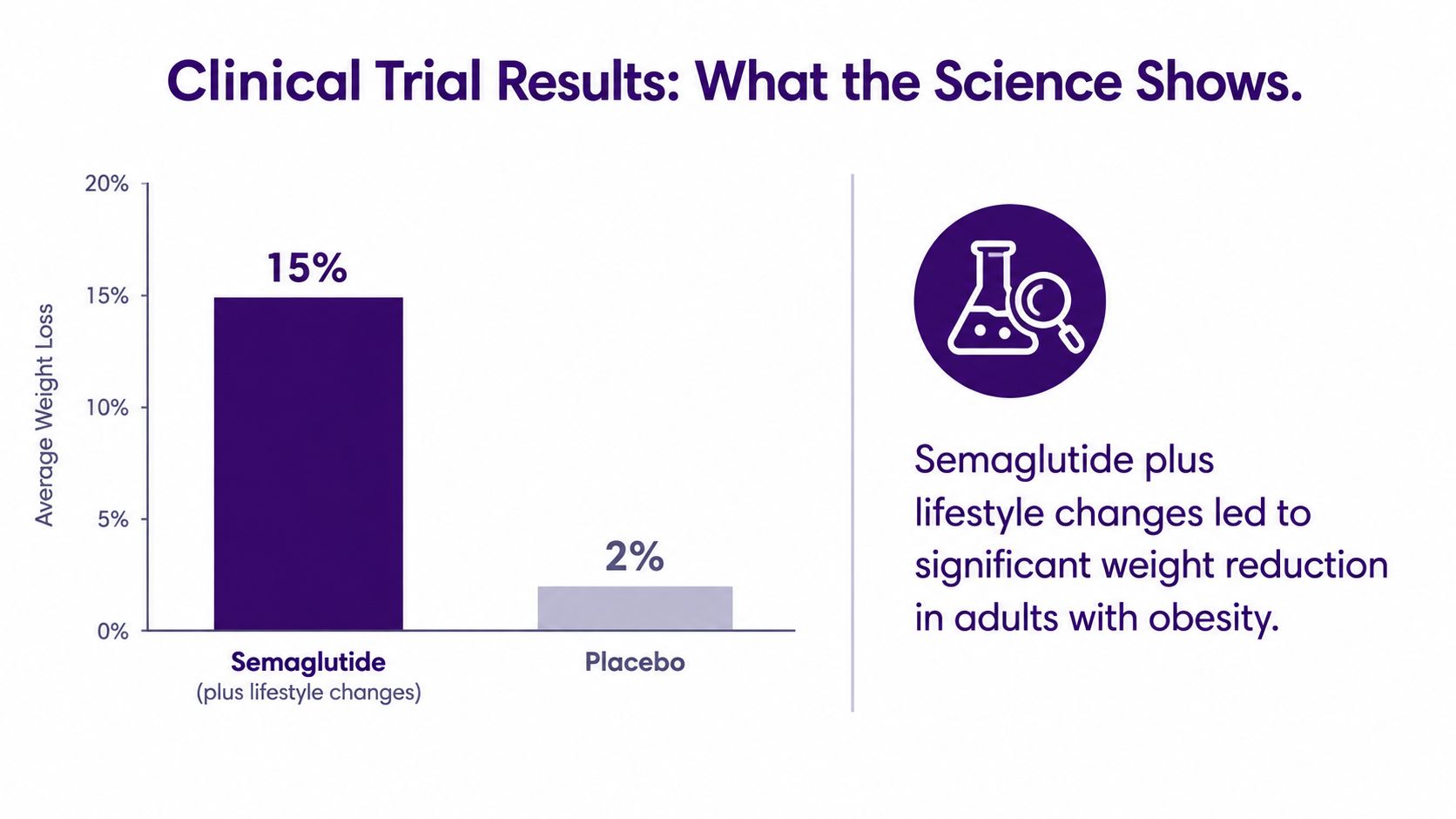
These are average changes across a study population, not a promised result for each patient. Some participants lost less than the average, while others lost more. A person starting at a lower weight would also lose fewer kilograms than someone starting at a higher weight if both achieved the same percentage reduction.
For that reason, the percentage is usually the fairer way to interpret the trial. Your starting weight, health conditions, tolerance of treatment, eating patterns, activity levels, and access to follow-up can all affect the result. In the UK, structured NHS support and private prescribing services may offer different levels of appointment time, dietetic input, and monitoring, so trial outcomes cannot be transferred directly to every real-world pathway.
What the placebo comparison tells us
NICE reported a mean percentage treatment difference of -12.4% at 68 weeks. Both groups received lifestyle guidance, yet the semaglutide group achieved substantially greater average weight reduction. The comparison therefore measures the added effect seen with semaglutide, rather than suggesting that lifestyle support has no value.
Individual responses still varied. 30% of participants lost more than 20% of their baseline body weight in the STEP 1 trial, as summarised in a NICE evidence briefing. This result sits alongside the average, rather than replacing it. A strong response is possible, but it should not be treated as the expected outcome for everyone.
The NICE semaglutide appraisal provides a practical UK review point. Treatment may be stopped if a person has lost less than 5% of initial body weight after six months, subject to clinical assessment. That threshold is a decision point about benefit and continuation, not a weekly target or guarantee.
The Typical Wegovy Weight Loss Timeline
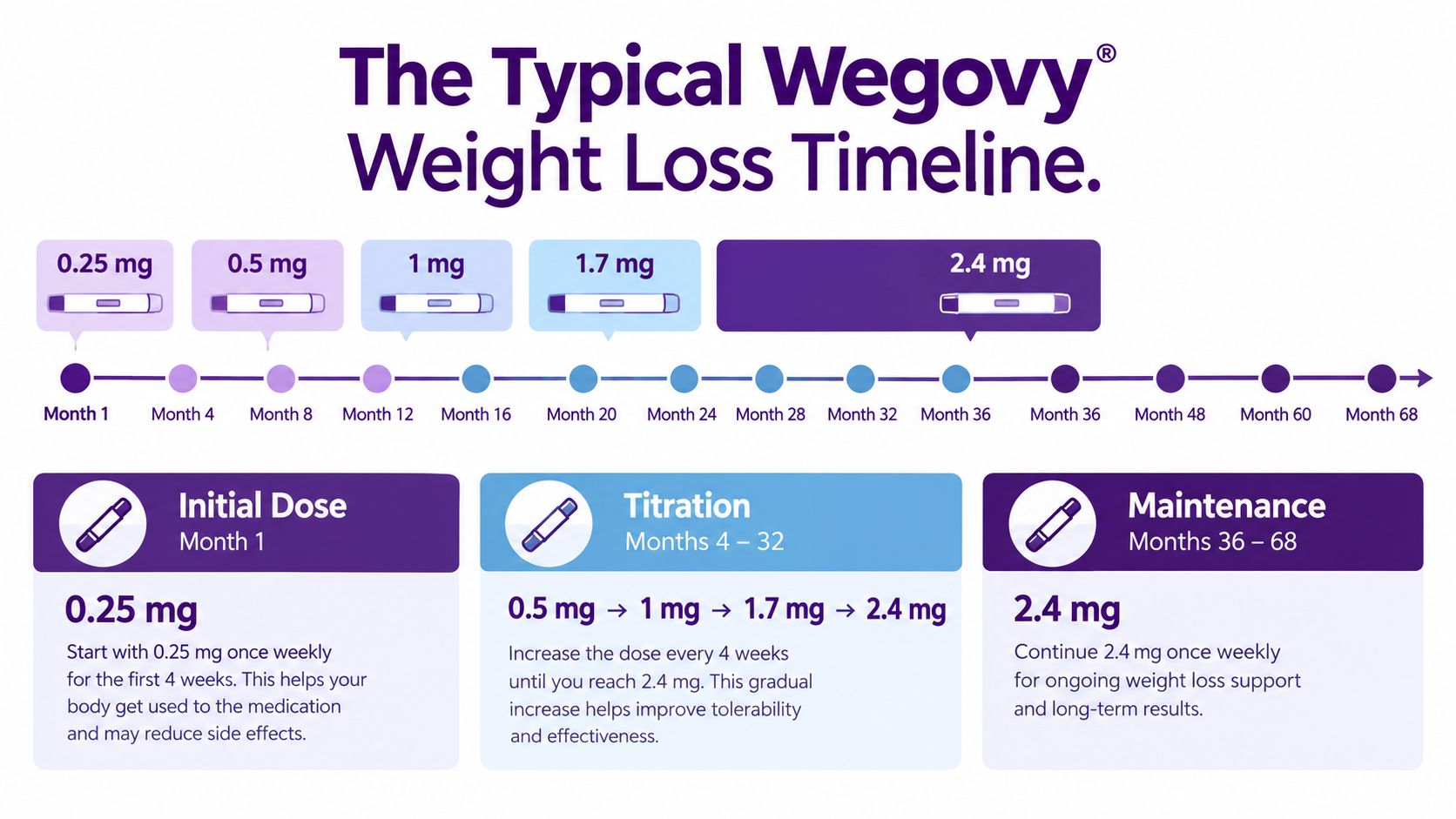
Weight loss usually develops over a period of months rather than appearing immediately. Wegovy treatment starts at a low dose and is increased gradually under clinical direction, which helps the prescriber manage tolerability. Your schedule may need adjustment if side effects or other clinical considerations arise, so you shouldn't change the dose independently.
The first phase is often about adapting to treatment. Some people notice appetite changes early, while scale changes may be modest or uneven. A single week can be affected by fluid shifts, digestion, menstrual-cycle changes, and ordinary variation, so clinicians look for a pattern rather than treating every weigh-in as a verdict.
For an accessible explanation of how progress can unfold, this weight loss timeline guide can help you think about trends without expecting an identical schedule to someone else's. Your prescribed dosing instructions should come from your clinician, and the Wegovy dosing schedule provides additional UK-focused educational context.
How longer-term progress can look
The longer-term STEP 5 study followed participants for 104 weeks. Mean weight change was -15.2% with semaglutide, compared with -2.6% with placebo, and 77.1% of semaglutide-treated participants achieved at least 5% weight loss, according to the STEP 5 study report.
The study found that weight loss plateaued after about week 60 and was then maintained. That pattern matters because a plateau isn't automatically a sign that treatment has stopped working. A stable weight after substantial loss may represent a maintenance phase, although a clinician should review any unexpected change, renewed hunger, or concerning symptoms.
A sensible way to follow progress is to record weight consistently, note appetite and side effects, and discuss the overall trend at review appointments. The aim is not to chase a particular weekly figure, but to understand whether the treatment is effective and sustainable for you.
Why Individual Wegovy Results Vary So Much
A clinical-trial average describes a group, not an individual forecast. The June 2026 analysis highlighted a wide spread in outcomes over two years and linked that variation to differences in treatment persistence, dose reached, and patient characteristics. One person's result therefore cannot be judged fairly against another's by using a single average.
The biology of appetite is only part of the explanation. Starting weight, diabetes, other health conditions, concurrent medicines, side effects, and how consistently treatment is continued can all shape the response. A person who pauses dose increases because of nausea has a different treatment exposure from someone who tolerates escalation well. Some responses also become clearer only after a longer period of observation.
UK access and follow-up can add another layer. NHS weight-management services may provide structured clinical review, but appointment availability and local eligibility pathways differ. Private providers may offer more frequent contact or dietetic support, although the level of monitoring varies between services. These differences can affect how quickly side effects are addressed, whether lifestyle advice is reinforced, and how promptly an ineffective or poorly tolerated plan is reviewed.
The factors clinicians consider
Baseline characteristics help clinicians interpret progress. Starting weight, BMI, diabetes status, other medicines, and weight-related conditions affect both the expected response and the health meaning of a given change. A percentage may look similar between two people while representing different clinical priorities.
Dose and tolerability matter because Wegovy is increased gradually. People may not reach, or may not remain on, the same dose. Nausea, vomiting, constipation, diarrhoea, and reduced appetite can affect hydration, nutrition, daily functioning, and willingness to continue. Managing these effects is part of safe prescribing.
Lifestyle support also influences how treatment works in practice. Wegovy is used alongside dietary and activity changes, not as a replacement for them. Support may cover adequate protein and fibre, regular meals, resistance exercise, sleep, and practical ways to manage hunger, according to the person's circumstances.

A low early response calls for review rather than blame. The prescriber can check how the medicine is being used, whether escalation has been tolerated, whether another condition or medicine is affecting weight, and whether benefits still outweigh risks.
A trial average provides context, while regular clinical review shows whether your own response is effective and sustainable.
How Wegovy Compares to Other Weight Loss Treatments
Wegovy is one option within UK weight management, alongside Mounjaro and oral medicines such as orlistat. The differences are not limited to the average percentage reported in a trial. Each medicine has a different mechanism, route of administration, evidence base, eligibility criteria, and practical support requirements.
Semaglutide activates the GLP-1 receptor, while tirzepatide acts on both GLP-1 and GIP pathways. These mechanisms can affect appetite, blood-glucose regulation and tolerability. They do not make one treatment automatically suitable for every patient. NHS access, private prescribing, follow-up appointments and nutrition support can also influence how closely real-world treatment reflects trial conditions.
| Medication | Active Ingredient | Mechanism | Average Weight Loss, Clinical Trials | Administration |
|---|---|---|---|---|
| Wegovy | Semaglutide | GLP-1 receptor agonist | 14.9% at 68 weeks vs 2.4% placebo (NICE, 68 weeks) | Injection |
| Mounjaro | Tirzepatide | GLP-1 and GIP receptor agonist | Varies by trial, dose, population and follow-up | Injection |
| Orlistat | Orlistat | Reduces absorption of dietary fat in the gut | Varies by study and individual response | Oral medicine |
The table provides orientation, not a guarantee of personal results. Trial averages describe groups under defined conditions. A person receiving limited NHS follow-up may have a different experience from someone paying privately for frequent reviews, dietetic advice and help managing side effects.
Why direct comparisons can mislead
Clinical trials do not recruit identical patients or use the same follow-up period. Starting BMI, diabetes status, lifestyle support, dose, treatment duration and withdrawal rates can all change the result. Comparing percentages from separate studies is therefore like comparing race times on different courses. The figures may be informative, but they are not a head-to-head test.
For a fuller educational comparison of the two newer injectable options, read Wegovy versus Mounjaro. Gastrointestinal symptoms are relevant to GLP-1-based medicines, whereas orlistat has a different tolerability profile because it acts in the digestive tract.
Sleep and breathing problems can also enter the discussion. They should not determine medicine choice without clinical assessment, but The Sleep Consultant on Ozempic for sleep offers background on why weight and sleep health may be considered together.
The appropriate choice depends on eligibility, medical history, other medicines, contraindications, likely tolerability, access, cost and available support. A clinician should weigh these factors rather than selecting treatment from a single advertised percentage.
Maximising Your Results with Medical Support
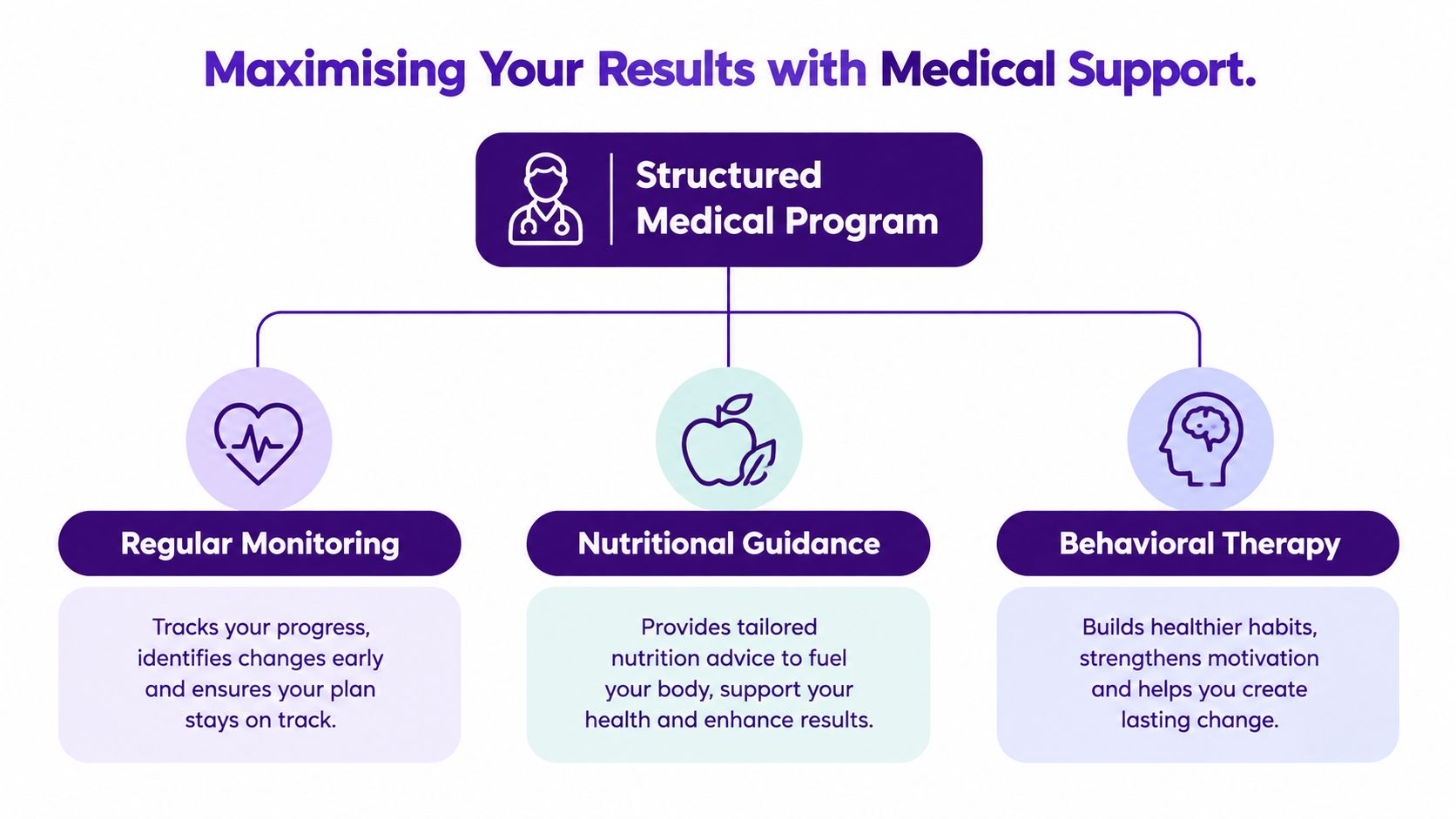
Medical support has three practical jobs: checking safety, reviewing your response, and helping you build habits that can last. Wegovy works on appetite, but a prescription alone does not provide a complete weight-management plan. NICE recommends semaglutide alongside a reduced-calorie diet and increased physical activity, with a review under its six-month treatment framework.
A clinician first considers whether Wegovy is appropriate for you, including your medical history, other medicines, and possible contraindications. Follow-up then covers side effects, adherence, dose progression, and changes in weight or appetite. These reviews work like checkpoints on a journey. They show whether the route remains safe and useful, rather than treating the starting prescription as a fixed plan.
What structured care adds
Regular monitoring can identify problems early. A clinician may review persistent gastrointestinal symptoms, hydration, mood, eating behaviour, and whether treatment remains suitable.
Nutritional guidance keeps the focus broader than the scales. When appetite falls, patients may need help maintaining balanced meals and adequate nourishment. Nausea or food aversion can make this harder, so practical adjustments matter.
Behavioural and activity support turns general advice into a workable routine. Strength-focused movement, daily activity, sleep routines, and strategies for emotional eating can be adapted to a person's health, mobility, work, family responsibilities, and life stage.
Access also shapes the experience in the UK. NICE recommends Wegovy, while NHS prescribing is limited to specialist weight-management services. Private services may provide more frequent digital reviews or additional coaching. NHS provision varies by local pathway and capacity, so two people using the same medicine may receive different levels of education, dose-review support, and help with lifestyle changes.
Trim is one UK option combining clinician assessment with medical treatment, nutrition guidance, activity tracking, and ongoing support. Its guide to accessing Wegovy explains the assessment process. Eligibility and prescribing decisions still belong to a registered clinician.
Setting Realistic Expectations for Your Journey
The evidence shows that Wegovy can produce clinically significant weight loss for many people, particularly when combined with dietary and activity support. The strongest UK-relevant benchmark is the NICE-appraised average of 14.9% at 68 weeks, but the documented range of individual responses shows why that figure shouldn't become a personal promise.
A realistic plan includes several expectations:
- Progress may be uneven. Early changes don't always predict the final response.
- Dose escalation takes time. Treatment is increased under clinical direction to balance effectiveness and tolerability.
- A plateau can be normal. Longer-term evidence found that weight loss levelled off after about week 60 and was then maintained.
- Side effects need attention. Nausea and other gastrointestinal symptoms should be discussed with a clinician, especially if they affect hydration, eating, or treatment persistence.
- Support remains important. Diet, physical activity, monitoring, and behaviour change are part of the UK clinical approach, not optional extras.
Wegovy is a tool, not a cure. The most useful question isn't only, “How many kilograms will I lose?” It is, “Is this treatment helping me safely, and do I have the clinical support to continue a sustainable plan?”
Trim offers UK adults a medically supervised assessment for treatments such as Wegovy, alongside nutrition guidance, activity tracking, and ongoing clinical support. Visit Trim to review how its structured programme could fit your weight-management goals and arrange a clinician-led suitability assessment.