
Wegovy Diet Plan: What to Eat for Real Results

You've started Wegovy and noticed a striking change. The constant food noise is quieter, portions that once seemed ordinary now feel uncomfortably large, and you may be unsure whether you should eat when you're not hungry. That uncertainty matters, because appetite suppression can make it easy to mistake eating less for eating well.
A sensible Wegovy diet plan isn't a rigid menu or a licence to survive on coffee and a few bites of toast. It's a practical way to create a reduced-calorie intake while protecting protein, fibre, vitamins, minerals, hydration and muscle. It also needs to fit the UK's prescribing and monitoring framework, where semaglutide is used within supervised weight management rather than as a standalone shortcut.
Table of Contents
- Why Your Wegovy Diet Plan Matters More Than the Injection
- Setting Realistic Calorie and Nutrient Targets
- Foods to Build Your Meals Around
- Managing Reduced Appetite and Common Side Effects
- A Sample Day and Week on Wegovy
- Pairing Your Diet Plan with Exercise and Clinical Support
- Tracking Progress and What to Do When Weight Loss Stalls
Why Your Wegovy Diet Plan Matters More Than the Injection
Wegovy, or semaglutide, mimics the action of the gut hormone GLP-1. It affects appetite signals and slows the movement of food through the stomach, so many people feel satisfied sooner and think about food less often. That can create a useful opportunity to change eating habits, but it can also leave you taking in too little food if every meal becomes an afterthought.
UK guidance is clear about the medicine's role. NICE recommends Wegovy only alongside a reduced-calorie diet and increased physical activity, not as a standalone treatment, as outlined by Diabetes UK's explanation of Wegovy and UK access. NHS access is generally limited to adults with a BMI of at least 35.0 kg/m², or 30.0 to 34.9 kg/m² with referral criteria for specialist weight-management services. For some ethnic groups, the thresholds are 32.5 kg/m² and 27.5 to 32.4 kg/m² respectively, so eligibility isn't identical for everyone.
The window of opportunity
The injection can make a calorie deficit easier to maintain, but it doesn't decide whether your meals contain enough protein or whether you're drinking enough. A plate that's too large may feel impossible, while a small plate made mostly of low-protein foods may leave you tired and nutritionally short.
Think in terms of small, useful meals. A modest portion of chicken, lentils, fish or Greek yoghurt can provide more nutritional value than a much larger meal built around refined carbohydrates or fried food. The aim isn't to force food past comfortable fullness. It's to use the appetite window deliberately.
Practical rule: Stop when you're comfortably satisfied, then make the next eating occasion count.
The plan ahead focuses on four questions. How much energy should you aim for? Which foods deserve priority? What can you do when nausea or constipation disrupts eating? And how should you respond when progress slows or your clinical review is due?
Setting Realistic Calorie and Nutrient Targets
“Eat healthily” is too vague to guide you when appetite has changed. A structured energy deficit gives you a clearer starting point, while nutrient density helps prevent the common mistake of eating so little that protein, vitamins and minerals disappear from the day.
The British Heart Foundation's guide to weight-loss injections cites British Nutrition Foundation guidance for a daily deficit of about 600 kcal, translating roughly to 1,400 kcal per day for women and 1,900 kcal per day for men. These figures are reference points, not personal prescriptions. Your clinician or dietitian may need to adapt them for your health, activity, age, body size, pregnancy or breastfeeding status, and any medical conditions.
The important warning is what happens below the target. Semaglutide can suppress appetite enough that you don't feel driven to eat, but your body still needs building materials. The BHF highlights the risk of a nutritionally unbalanced intake when people eat less without a structured plan.
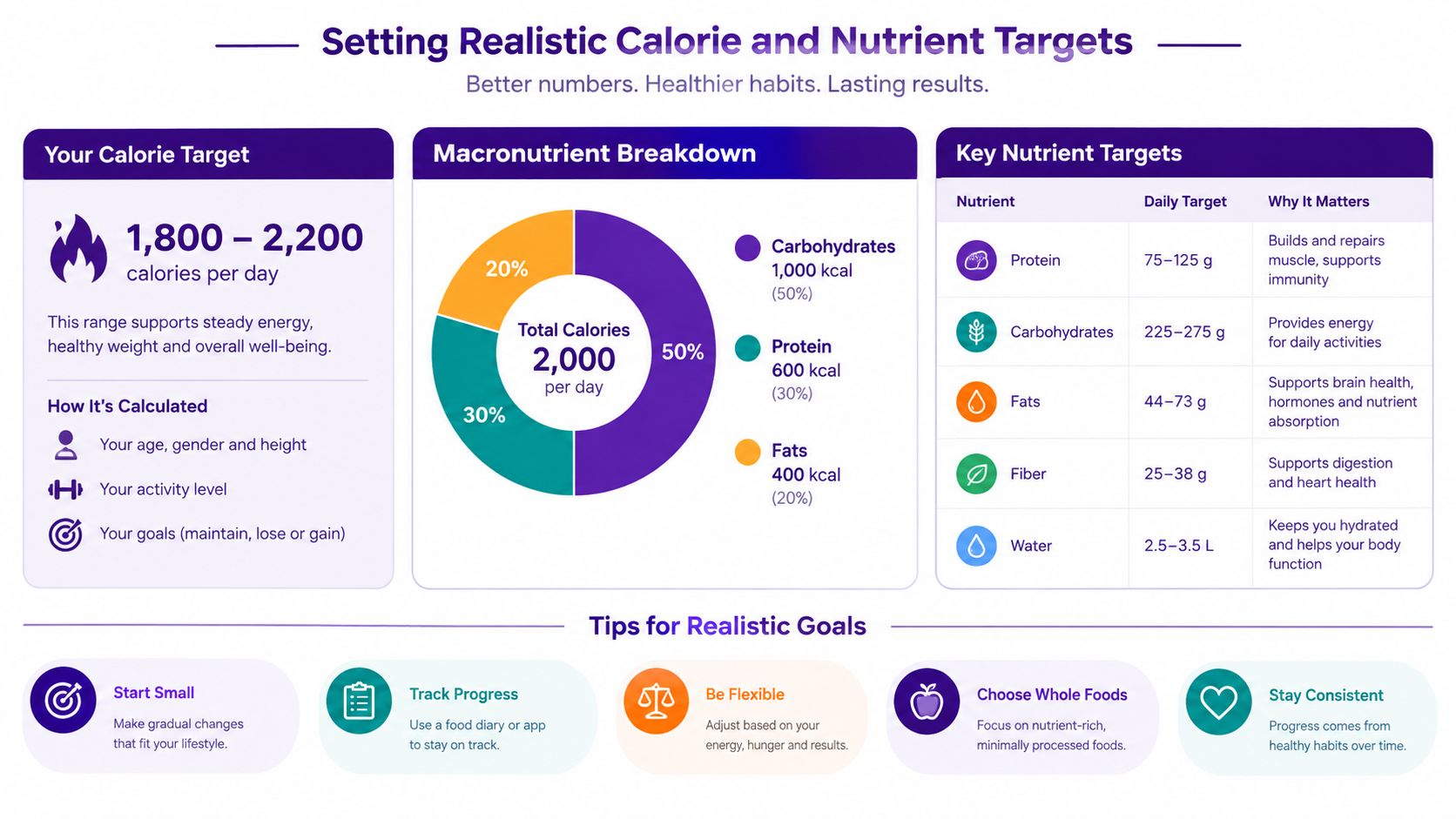
A fridge-friendly reference
| Target | Women, around 1,400 kcal/day | Men, around 1,900 kcal/day | Why it matters |
|---|---|---|---|
| Energy | About 1,400 kcal | About 1,900 kcal | Creates a structured deficit rather than relying on appetite alone |
| Protein | Include a source at each meal | Include a source at each meal | Supports muscle and improves the nutritional value of small meals |
| Fibre | Increase gradually through vegetables, oats, pulses and fruit | Increase gradually through vegetables, oats, pulses and fruit | Supports bowel regularity and fullness |
| Fluids | Drink regularly across the day | Drink regularly across the day | Helps reduce dehydration-related headaches and supports digestion |
| Vitamins and minerals | Choose varied, fortified and nutrient-dense foods | Choose varied, fortified and nutrient-dense foods | Reduces the risk of deficiencies when portions are smaller |
There isn't one universal protein number that suits every Wegovy user. Instead, build the day around a protein source at breakfast, lunch and dinner, then use a snack such as yoghurt, an egg or cottage cheese if your meals are small. This guide to protein intake for weight loss can help you discuss a more individual target with a qualified professional.
Fibre needs pacing. If constipation is already a problem, suddenly adding large amounts of bran, beans and raw vegetables may make bloating worse. Start with manageable portions, drink consistently, and increase fibre as your digestion tolerates it.
Foods to Build Your Meals Around
The simplest way to construct meals on Wegovy is to ask, what useful nutrition can fit into this portion? Start with protein, add a tolerable carbohydrate, then include vegetables or fruit and a small amount of fat for flavour and nourishment.
Lean protein works especially well because a small serving can still contribute substantially to the meal. Rotate chicken, turkey, fish, eggs, Greek yoghurt, cottage cheese, tofu and lentils. If you eat meat, a palm-sized serving at breakfast, lunch or dinner is often more realistic than saving all your protein for one large evening meal.
A practical plate pattern
- Protein first: Try eggs with wholemeal toast, Greek yoghurt with berries, chicken in a grain bowl, salmon with vegetables, or lentils with a small serving of rice.
- Fibre at a comfortable pace: Use oats, berries, cooked carrots, peas, spinach, broccoli, beans and potatoes with their skins when tolerated. Cooked vegetables may feel easier than a large raw salad during periods of nausea.
- Calcium and vitamin D sources: Include dairy or fortified alternatives, such as Greek yoghurt, milk or fortified plant drinks. Ask your clinician about supplementation if your diet is restricted.
- Small, nutrient-dense snacks: A boiled egg, yoghurt, fruit with a little nut butter, hummus with cucumber, or cottage cheese can fill a gap without demanding a large volume.
Bland food doesn't have to mean nutritionally empty. A plain jacket potato with tuna and yoghurt, scrambled eggs with spinach, or porridge topped with yoghurt can be gentle while still offering protein and useful nutrients.
Some foods are worth limiting because they commonly aggravate digestive discomfort, not because they're morally “bad”. Fried meals, very fatty portions, heavily processed foods, sugary drinks and alcohol can be difficult to tolerate when digestion is slower. Keep meals simple around injection days if you notice a pattern.
You can use top meal planners for weight loss to organise ingredients and reduce last-minute decisions. Choose a planner that lets you swap meals, because a rigid menu is less useful than a repeatable structure that fits your appetite and household.
Managing Reduced Appetite and Common Side Effects
Side effects can turn a sensible plan into a cycle of skipped meals, dehydration and exhaustion. The correction usually isn't to push through a large portion. It's to reduce volume, choose easier foods and keep some nutritional structure.
Match the response to the symptom
Nausea: Eat small portions slowly and avoid lying down soon after eating. Plain carbohydrates such as toast, crackers or rice may be easier temporarily, but pair them with a little protein when you can, such as yoghurt or an egg. Very fatty or fried meals often make nausea harder to manage.
Early fullness: Don't wait until you're uncomfortably full. Serve a smaller plate, eat slowly and split one meal into two sittings if necessary. A palm-sized protein portion at several eating occasions is more practical than one large serving.
Fatigue or headache: These symptoms can reflect under-eating or dehydration rather than the medicine alone. Review your recent intake, including fluids, and contact your healthcare professional if symptoms persist or feel severe.
Constipation: Increase fluids and introduce fibre gradually through oats, fruit, cooked vegetables and pulses. Gentle movement can also help, but persistent constipation needs clinical advice, particularly if you have significant pain or vomiting.
The emotional adjustment is real. You may miss the pleasure of a favourite meal or feel awkward when friends expect you to eat as much as before. At a restaurant, try saying, “My appetite is smaller, so I'm going to order something light and take the rest home.” At a family dinner, serve yourself a small portion and explain that you're focusing on comfort and nutrition rather than finishing everything.
For further symptom guidance, read this practical overview of Wegovy side effects. Many symptoms settle as your body adjusts, but don't assume every problem is something you must tolerate.
Contact your prescribing clinician promptly if you can't keep fluids down, have persistent vomiting, severe or worsening abdominal pain, signs of dehydration, or symptoms that concern you. Don't change your dose or stop prescribed treatment without clinical advice.
A short video can also help you visualise how smaller meals may be arranged through the day.
A Sample Day and Week on Wegovy
A useful day doesn't need to begin with a large breakfast. If you wake with little appetite, start with something small and protein-containing, such as Greek yoghurt, a milky coffee alongside food, or a boiled egg with toast. The purpose is to create a gentle first eating occasion, not to force a full meal.
Around midday, build a protein-anchored bowl with chicken, tuna, tofu or lentils, a modest serving of grains or potatoes, and cooked or raw vegetables according to tolerance. Add a light dressing rather than a heavy, creamy sauce. An afternoon snack such as fruit with an egg can provide energy and nutrients without creating too much stomach volume.
Dinner might be salmon with vegetables and a small serving of rice, or a lentil stew with yoghurt and wholemeal toast. If your appetite is lowest after the injection, make that day's meals smaller and simpler rather than abandoning the plan. Smooth yoghurt, soup with added lentils, eggs and soft fish can be easier options.
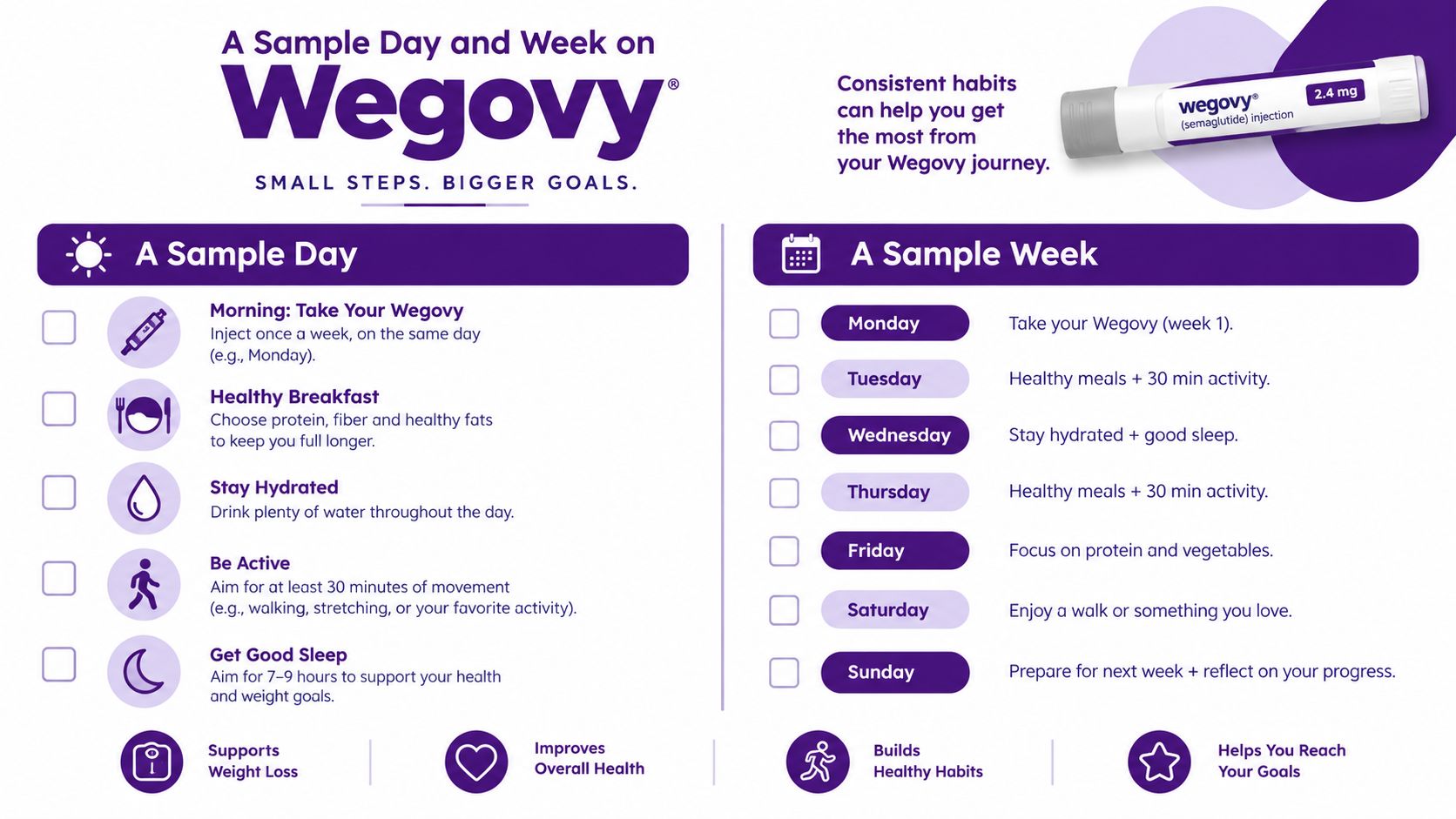
Repeat the rhythm, not the menu
A flexible week could use batch-cooked chicken, boiled eggs, cooked grains, chopped vegetables and yoghurt as building blocks. One day might use chicken and rice, another tuna and potatoes, and another lentils with vegetables. Vegetarian swaps can include tofu, beans, lentils or eggs.
Keep the basic sequence consistent:
- Morning: A small protein-led breakfast, even when appetite is low.
- Midday: A balanced meal with protein, fibre and a tolerable carbohydrate.
- Afternoon: A planned snack if your meals are modest.
- Evening: A lighter meal that stops at comfortable satisfaction.
The approximately 1,400 kcal example is based on the women's reference point described earlier, not a universal target. Check the day as a whole rather than judging one meal. Have you included protein several times? Have fluids and fibre been realistic? Are you eating enough to function, rather than trying to make the deficit as large as possible?
For more ideas that prioritise protein without excessive volume, explore this collection of low-calorie, high-protein meals. Adapt recipes for budget, culture, allergies and family meals.
Pairing Your Diet Plan with Exercise and Clinical Support
Food provides the energy deficit, but a weight-management programme also needs to protect your ability to move and maintain muscle. If weight falls while protein intake and resistance exercise remain low, some of the lost tissue may be muscle rather than fat. That can make everyday activity harder and maintenance less secure.
Strength-focused training doesn't require an elaborate gym routine. Bodyweight sit-to-stands, resistance bands, dumbbells or supervised gym exercises can all be useful, provided the programme matches your ability and medical history. Begin at a manageable level, progress gradually and ask for professional guidance if you have joint problems, cardiovascular symptoms or a long period of inactivity.
Four parts of a supervised pathway
A well-organised programme can bring together:
- Evidence-based medicine, prescribed only after an assessment of suitability.
- Clinical guidance, including support with dose questions and side effects.
- Nutrition advice matched to you, so the calorie deficit doesn't become accidental under-fuelling.
- Strength-focused training, to support muscle while body weight changes.
Digital tools can make this easier to follow. Meal and activity tracking may reveal that appetite is returning, fluids are consistently low or snacks are replacing balanced meals. A clinician can then help interpret the pattern rather than leaving you to respond by cutting calories further.
The wider evidence also explains why cardiovascular health belongs in the conversation. The MHRA reported that a multinational, double-blind trial involving more than 17,600 participants found a 20% reduction in major adverse cardiovascular events, with events occurring in 6.5% of semaglutide users compared with 8% on placebo. This supported UK approval on 23 July 2024 for reducing the risk of serious heart problems in adults who are overweight or obese, according to the MHRA announcement on semaglutide and cardiovascular risk.

Trim is one UK pathway that combines online clinical assessment with prescribed treatment, nutrition and activity support, app-based tracking, and 1:1 clinician access. Its model may be relevant to readers comparing supervised services, just as information about gym revenue from nutrition coaching can help fitness professionals understand why nutrition support matters alongside exercise.
Tracking Progress and What to Do When Weight Loss Stalls
A stall doesn't automatically mean the treatment has failed. Body weight can fluctuate with fluid balance, constipation, menstrual changes, salt intake and changes in activity. Look for patterns across consistent weigh-ins rather than reacting to one reading.
Track more than the scales. Waist measurement, energy, strength, appetite, bowel habits and how comfortably you manage planned meals can all add useful context. A short weekly note is often enough: what you ate, how symptoms behaved, whether activity felt easier, and what changed around the injection.
Use the UK review points
NICE sets a structured framework. Semaglutide should be used for a maximum of 2 years, and treatment may be stopped if you've lost less than 5% of your initial weight after 6 months, as summarised in NHS medicines guidance on semaglutide for overweight and obesity. This makes early monitoring important, but it isn't a reason to panic or slash food intake.
If progress stalls, work through the basics in order:
- Review portions: Appetite may have changed again, so previously suitable portions may no longer create the same deficit.
- Audit drinks and grazing: Liquid calories, tastes while cooking and unplanned snacks are easy to overlook.
- Check movement: Look at walking, daily activity and strength sessions without using exercise as punishment.
- Review symptoms: Constipation, nausea or fatigue may be undermining your routine.
- Speak to the clinical team: Dose, suitability, other medicines and health conditions need professional review.
NHS access is narrower than many online diet articles suggest because treatment is tied to specialist services and eligibility criteria. If you're outside those criteria, discuss options with your GP or consider a regulated private pathway with proper prescribing, follow-up and nutrition support. Avoid unverified sources or medicines supplied without a clinical assessment.
A sustainable Wegovy diet plan should still make sense if your appetite changes, your weight plateaus or treatment eventually ends. Build meals you can live with, keep protein and nutrient density visible, and use clinical reviews to make measured adjustments rather than chasing faster losses.
Trim offers medically supervised Wegovy support through UK-registered clinicians, with nutrition and activity guidance alongside treatment assessment and ongoing 1:1 support. If you want help building a structured plan that fits your appetite, symptoms and progress, visit Trim to begin the consultation process.