
Is It Good to Drink Water Before Bed in 2026

Whether drinking water before bed helps or harms depends on the individual. For someone mildly dehydrated, a small sip can help, but for people prone to nocturia, the same habit can fragment sleep.
The popular advice to “drink more water” misses the more useful question: when should you drink it? A full pint just before brushing your teeth may feel like a healthy routine, yet it can also fill your bladder at the very time your body is trying to protect sleep. UK NHS guidance generally favours drinking enough across the day, then moving more of that intake earlier when night-time urination is a problem.
That creates a practical trade-off. A small amount may ease a dry mouth or mild thirst. A large late drink may bring an avoidable bathroom trip, particularly if caffeine, alcohol, age-related changes or an existing bladder problem are also involved. If you're reviewing the quality and convenience of water at home, homeowner water filter help may also be useful, but water access doesn't change the importance of timing.
Table of Contents
- The Bedtime Water Question: Why Timing Matters More Than Volume
- How Bedtime Fluids Affect Your Body Overnight
- The Evidence-Based Benefits of a Small Evening Drink
- Why Drinking Too Much Before Bed Can Disrupt Your Sleep
- NHS-Aligned Timing and Volume Recommendations
- Tailoring the Rule to Different Groups and Lifestyles
- Common Myths About Evening Hydration
- Your Practical Bedtime Hydration Checklist
The Bedtime Water Question: Why Timing Matters More Than Volume
A bedtime drink is not automatically a healthy habit. The more useful question is whether you are meeting your fluid needs during the day, or trying to catch up just before sleep. The same amount of water can be comfortable at one time and disruptive at another.
Hydration isn't a last-minute task. NHS materials advise maintaining adequate fluid intake during the day rather than dehydrating yourself to prevent nocturia. One NHS leaflet recommends an overall intake of 6 to 8 cups, about 1.5 to 2 litres, while suggesting that people troubled by night-time toilet trips move their final drink earlier, such as 8:00pm instead of 10:00pm (NHS nocturia guidance).
Quantity and timing are separate questions
You can drink enough overall and still take in a large amount at the least convenient time. Your kidneys continue processing fluid during sleep, and your bladder responds to the volume, regardless of whether it came from a health-conscious routine or an evening meal.
Consider a person who finishes a 500ml glass at 10:30pm and usually wakes to urinate at 2:00am. Moving that drink to 8:30pm and observing the pattern over three nights may show whether timing is contributing. It is a practical test, not a universal rule.
A small sip may settle genuine thirst or a dry mouth. Someone already waking to urinate may find that even this delays uninterrupted sleep. Medway Community Healthcare reports that about a third of adults get up once at night to urinate, rising to two-thirds in older adults, and recommends limiting fluid for two hours before bed (Medway nocturia information).
If you are assessing water access at home, homeowner water filter help may also be useful. It does not change the basic timing question.
How Bedtime Fluids Affect Your Body Overnight
The bladder works as a reservoir. As fluid enters the bloodstream, the kidneys filter it into urine and the reservoir gradually fills. Pressure signals can then move the brain from sleep towards wakefulness, sometimes before you feel fully alert.
A drink close to bedtime begins this process during the wind-down period. Lying down may also shift fluid from the legs into the circulation, giving the kidneys more to filter. Urine can therefore continue collecting while the body is trying to maintain uninterrupted sleep.
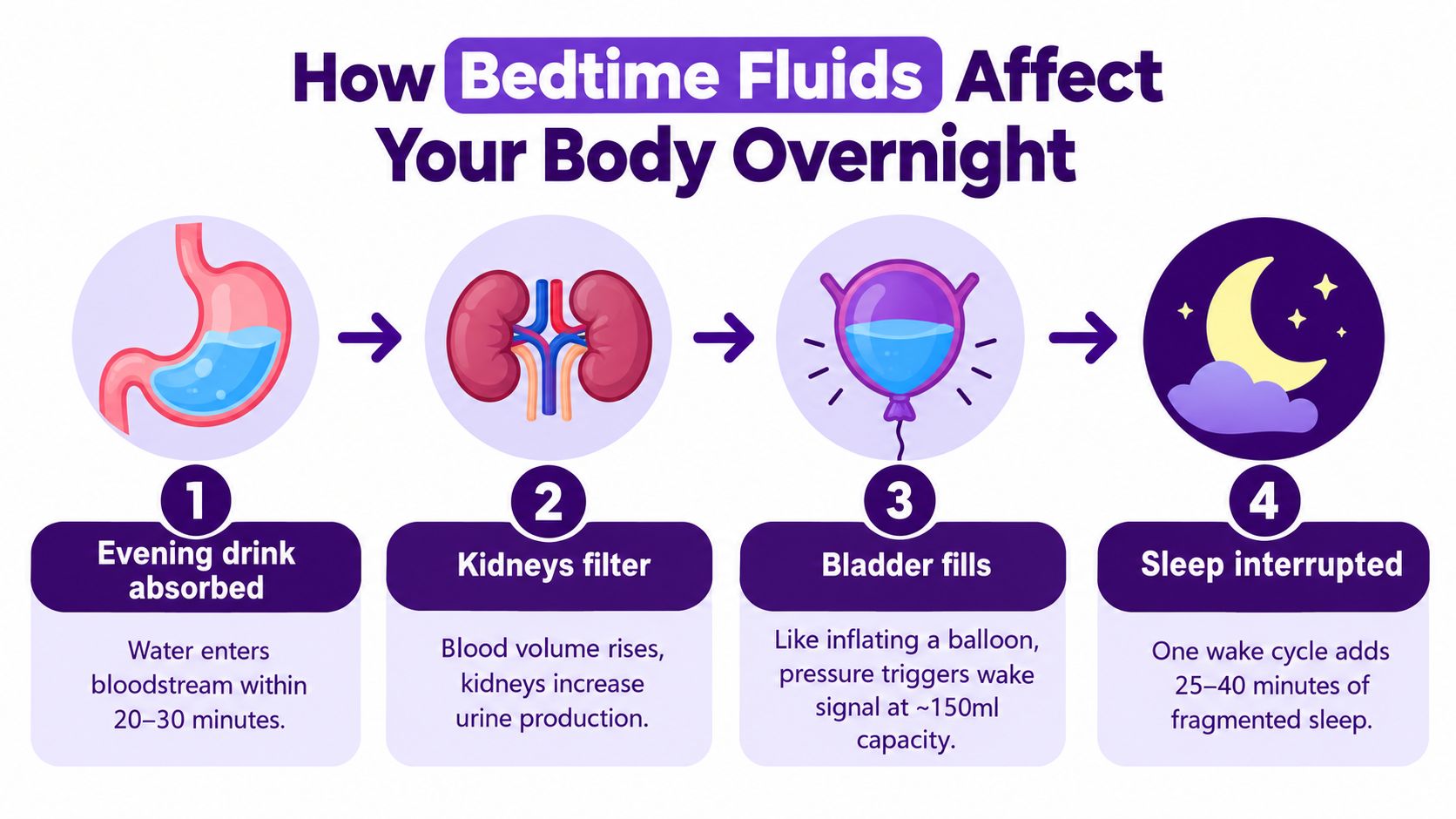
The night-time braking system
At night, the body usually releases more antidiuretic hormone, or ADH. This hormone acts like a brake, telling the kidneys to reduce urine production during sleep. A large late drink can add more fluid than this braking system can comfortably offset. The British Association of Urological Surgeons lists excess fluid before bedtime as a contributor to nocturnal polyuria, alongside the age-related reduction in ADH (BAUS guidance on nocturnal polyuria).
The response varies between people. Meal contents, caffeine, alcohol, medication, bladder capacity and underlying health can all affect how quickly the bladder fills. Someone already near their waking threshold may notice a small drink, while another person may sleep through it.
Sleep also affects appetite, energy and daily routines, which helps explain the relationship discussed in how sleep can affect weight loss. In short, the bladder does not pause for sleep. A late drink asks the kidneys to process fluid when the body is trying to keep urine production low.
The Evidence-Based Benefits of a Small Evening Drink
A measured drink can be useful when it addresses a genuine need. Dry mouth is one example. People who breathe through their mouth, use a CPAP mask or sleep in a warm bedroom may feel uncomfortable without a little fluid available. A few sips can moisten the mouth without creating the same bladder load as a large glass.
The benefit is also relevant after an evening that increases fluid loss, such as exercise, illness or alcohol use. That doesn't make water a treatment for the effects of alcohol or illness, and it doesn't remove the need to replace fluids earlier. It acknowledges that some people reach bedtime with more thirst than others.
A small top-up can be reasonable
The key word is small. A controlled drink earlier in the wind-down period may reduce thirst and help someone settle, while a large drink immediately before lights-out is more likely to become a sleep interruption. The NHS position is not to restrict total hydration unnecessarily. The NHS advice on urinary incontinence says people with nocturia should drink less in the hours before bed while still drinking enough during the day.
There isn't a universal bedtime amount that suits everyone. Someone who has exercised, feels thirsty or has a dry mouth may need more than someone who has already drunk steadily throughout the afternoon and evening. Someone with repeated nocturia may benefit more from moving fluids earlier than from trying to solve thirst at the bedside.
Avoid treating speculative wellness claims as established clinical benefits. The strongest practical case for a small evening drink is comfort and appropriate hydration, not “detoxing”, guaranteed sleep improvement or a special overnight metabolism effect.
Why Drinking Too Much Before Bed Can Disrupt Your Sleep
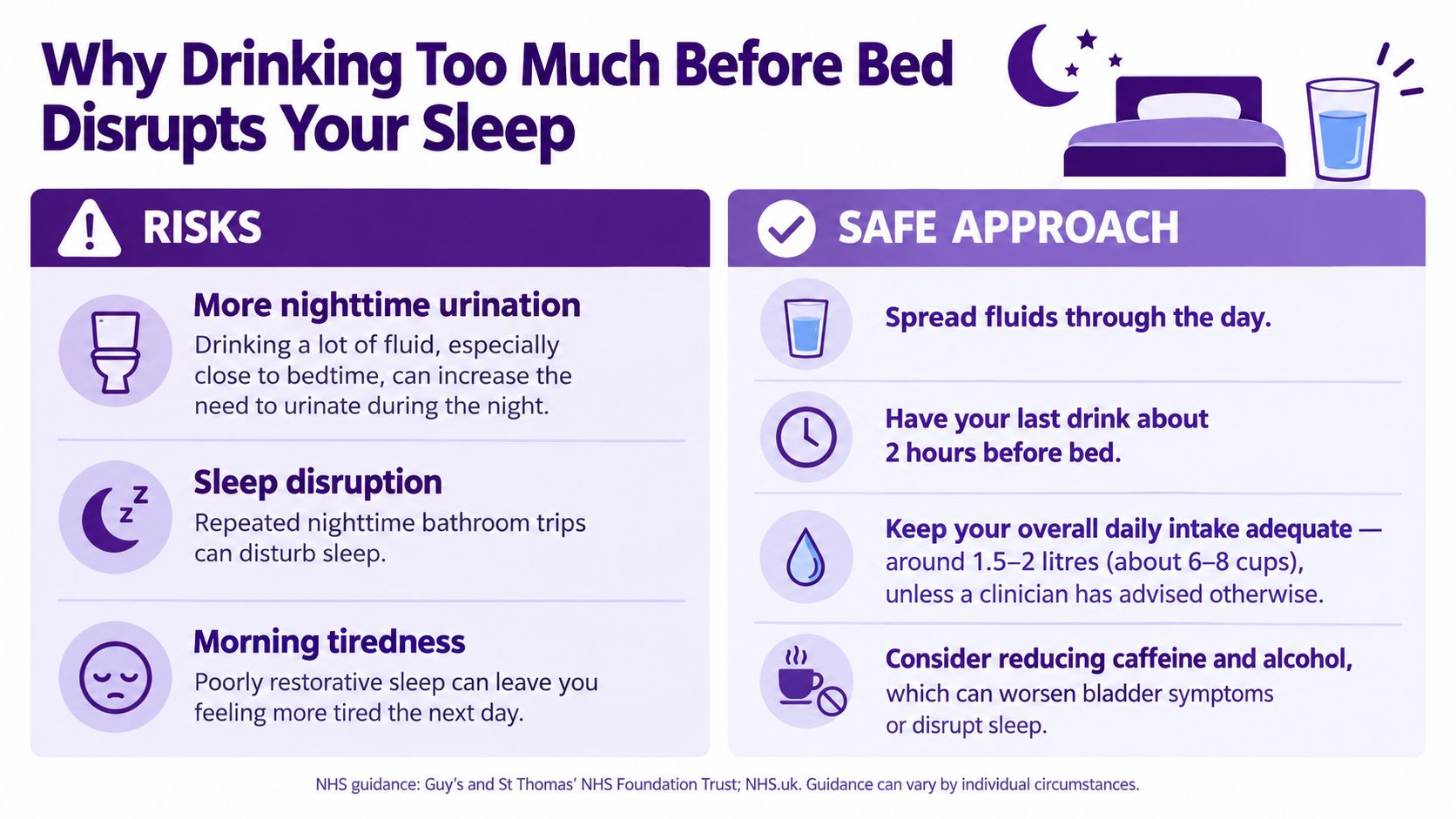
A bedtime drink can be reasonable, yet a large one may turn sleep into a series of toilet trips. One night-time visit may be normal. Nocturia becomes a problem when repeated waking disrupts sleep or affects daytime life. Nocturnal polyuria means producing an unusually large share of urine during the night. The Royal Devon NHS guidance on nocturia and nocturnal polyuria describes this as 20% or more of urine at night in people under 65, or 33% or more in those over 65.
Each awakening can make returning to steady sleep harder. Bright lights, walking around and anticipating another interruption may keep the brain alert after the bladder has emptied. For older adults, a dark trip to the toilet can also increase the risk of a fall when balance, vision or mobility is limited.
Look beyond the water glass
Late drinking is only one possible contributor. Caffeine and alcohol can increase bladder activity, while bladder overactivity, swelling in the legs and sleep problems can also lead to night-time urination. Medical conditions may contribute too. Meal timing and underlying health also shift the outcome.
The Royal Devon guidance advises limiting evening fluids and avoiding drinks for at least two hours before bed. In selected cases, it discusses not exceeding about 1.5 litres of non-irritant fluids per day, but this is not a general target. If night-time waking persists after two weeks of earlier fluid cut-offs, book a GP review rather than tightening restriction further. This protects the difference between drinking enough overall and drinking at the wrong time.
NHS-Aligned Timing and Volume Recommendations
Bedtime hydration works best as a timing exercise. Spread drinks across the day, then bring the larger share into waking hours. If night-time urination is troublesome, NHS guidance commonly suggests reducing drinks during the two hours before bed, while continuing to drink adequately earlier in the day.
A simple evening routine
Use your usual sleep time as a reference rather than following a fixed schedule. For someone who goes to bed at 10:00pm, shifting the final substantial drink to 8:00pm may reduce the chance that recently consumed fluid contributes to a toilet trip. The Medway NHS nocturia leaflet also advises avoiding caffeine-based drinks for about five hours before bedtime, since caffeine may increase bladder overactivity.
- Earlier day: Drink regularly instead of leaving most fluids until evening.
- Two hours before bed: Start tapering if nocturia is affecting sleep.
- Near bedtime: Sip only enough to settle genuine thirst or a dry mouth.
- Caffeine: Reduce coffee, tea and cola later in the day.
- Alcohol: Treat it differently from water, because it can worsen sleep and may increase night-time urination.
The aim is not to become dehydrated. It is to move suitable drinks earlier, much like shifting a meeting away from the time you need to sleep.
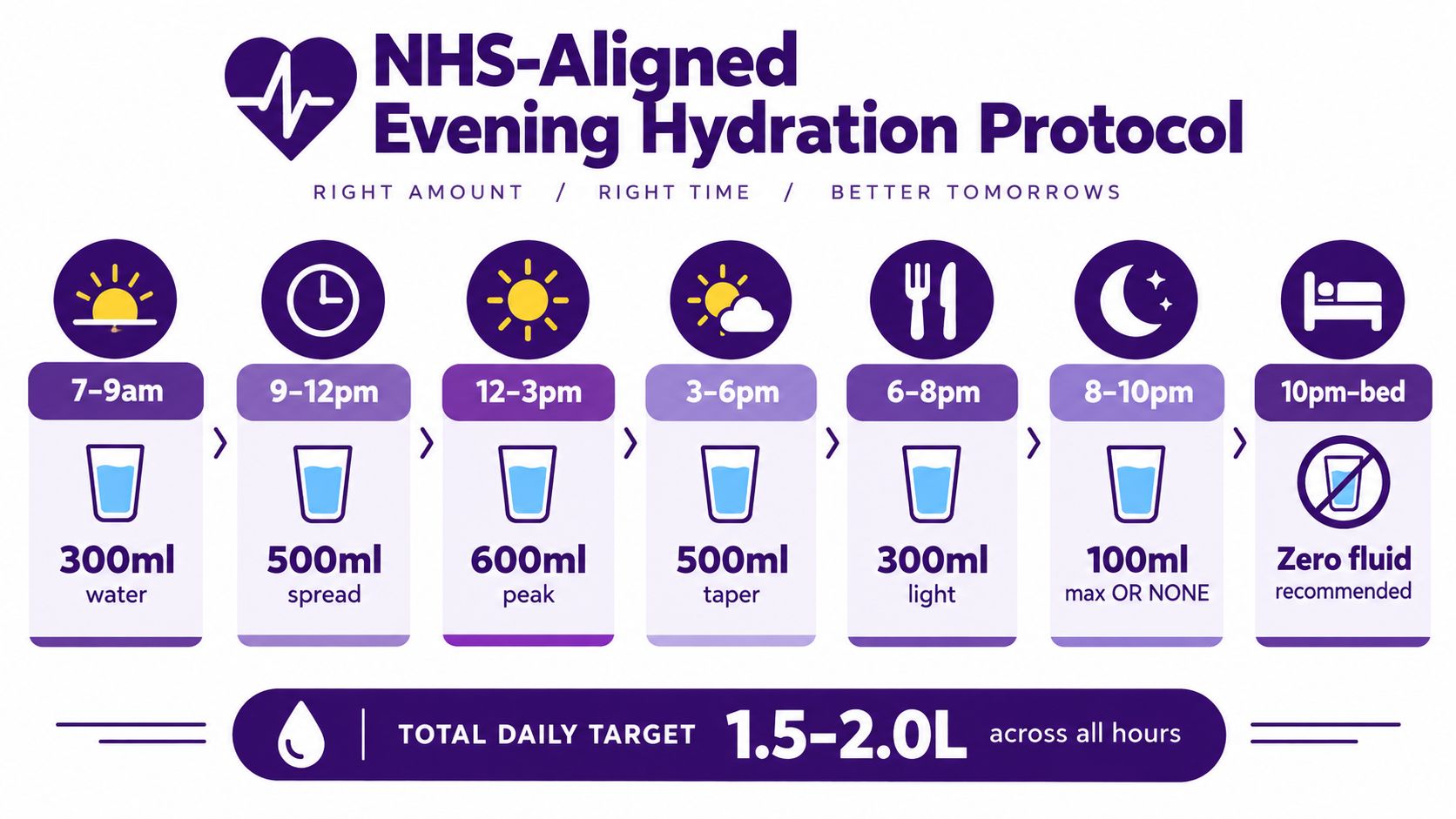
As a practical illustration, an adult drinking 2L daily might place roughly 1.5L before 6pm and keep the final two hours to no more than 200ml, adjusting for thirst, heat, exercise and medical advice. General water intake recommendations can provide context, but symptoms and clinical needs take priority.
The following NHS-endorsed walkthrough demonstrates how to space fluids across the day:
Tailoring the Rule to Different Groups and Lifestyles
The right bedtime routine changes when the reason for drinking changes. An older adult with frequent nocturia has a different balance from an athlete finishing an evening session, while pregnancy may make small, regular sips more comfortable than a large drink.
| Group | Last drink timing | Evening volume cap | Key trade-off |
|---|---|---|---|
| Older adults | Earlier in the evening | Keep late intake modest | Supporting hydration while reducing nocturia and night-time falls |
| Pregnancy or postpartum | Earlier, with small sips as needed | Avoid a large drink close to sleep | Easing thirst or nausea without adding bladder pressure |
| Evening athletes | Soon after training, then taper | Replace needs after exercise, not at lights-out | Recovery versus a late bathroom trip |
| People on weight-loss or diuretic-style programmes | Follow the prescriber's timing advice | Don't change fluid or medicine routines independently | Managing night-time urine output safely |
Why personal context matters
Older adults may produce more urine overnight as ADH regulation changes with age. Pregnancy can add pelvic pressure and more frequent urination, while postpartum recovery brings its own comfort and hydration needs. Athletes who train late may need deliberate rehydration after exercise, but shifting that drink earlier in recovery is usually more sleep-friendly than chugging immediately before bed.
People taking prescribed diuretics should ask their clinician or pharmacist about timing. Don't alter a prescribed medicine to avoid a bathroom visit. People using weight-management programmes may also find information about menopause and water retention helpful for separating fluid sensations from symptoms that need medical advice.
For general health information from a UK service, you can also visit Telomyx, but online guidance shouldn't replace an assessment when symptoms are persistent, new or worsening.
Common Myths About Evening Hydration
Myth: You should drink your daily water allowance before bed.
Reality: NHS guidance focuses on drinking enough overall and shifting the timing earlier when nocturia is a problem. One NHS leaflet gives 6 to 8 cups, about 1.5 to 2 litres, as an overall daily reference, not a bedtime target (NHS fluid and nocturia guidance).
Myth: You should stop every fluid after a particular evening hour.
Reality: The clock alone doesn't determine the result. A small sip may be reasonable for genuine thirst, while a larger volume can be unhelpful for someone who wakes to urinate. Meal timing, caffeine, alcohol and bladder sensitivity matter too.
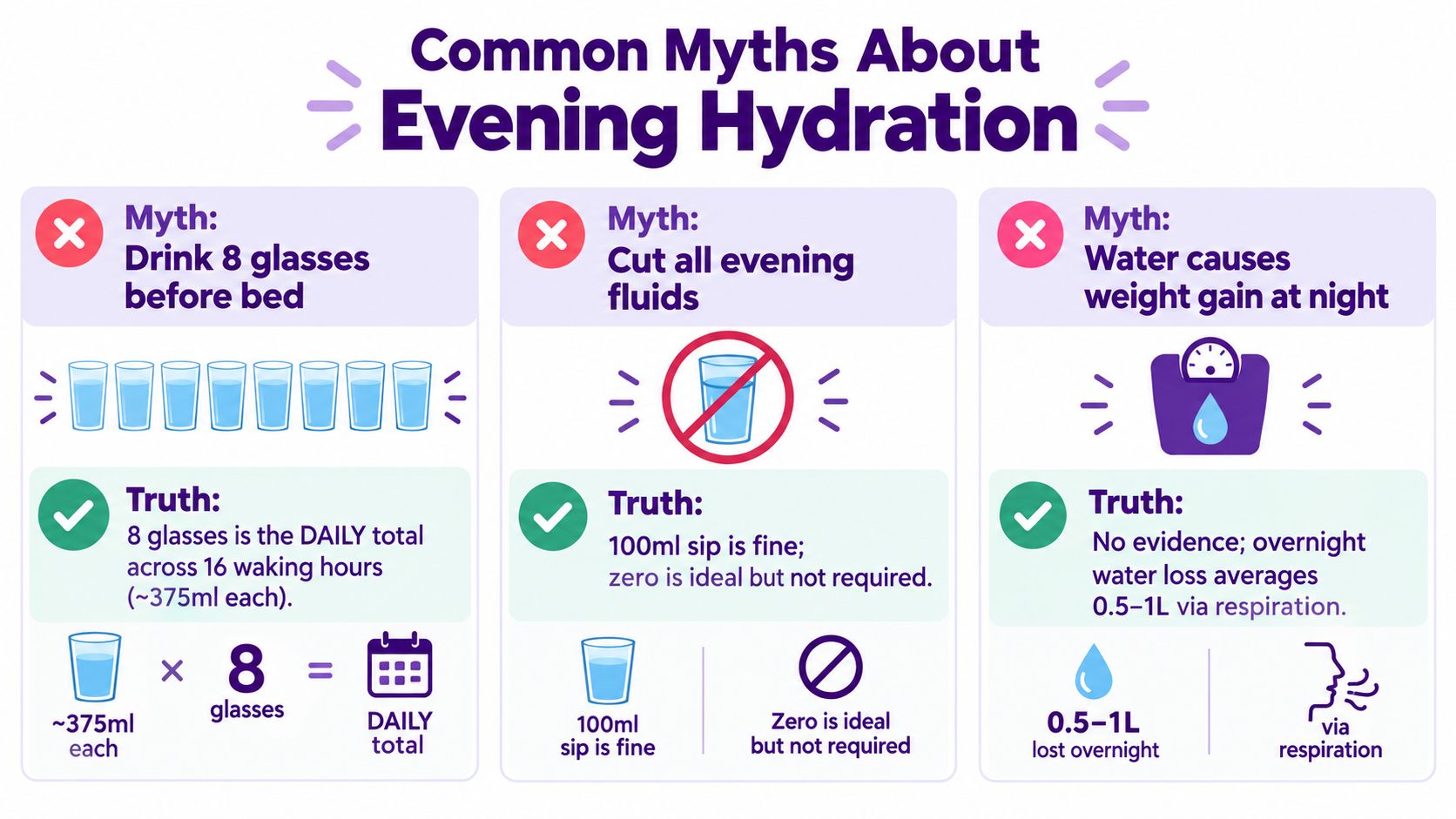
Myth: Cutting all evening fluid is always safest.
Reality: Severe restriction can leave someone thirsty, uncomfortable and inadequately hydrated. NHS advice specifically warns against reducing total daily intake below what is needed for hydration (NHS urinary incontinence guidance).
Myth: Night-time urination proves you drank too much water.
Reality: Persistent nocturia can have several causes. Blaming every episode on water may delay a useful clinical review. Oversimplified rules often create a second problem while trying to solve the first.
Your Practical Bedtime Hydration Checklist
Match evening intake to what you need, not to a fixed ritual. If you drank normally through the day and aren't thirsty, you may not need a bedtime drink. If you exercised, feel unwell or have a dry mouth, a modest earlier drink may be more sensible than forcing yourself to go without.
A routine to try tonight
- Front-load your fluids. Drink regularly during the morning and afternoon so bedtime isn't the moment when you try to catch up.
- Notice the difference between thirst and habit. Ask whether you want water because your mouth feels dry, or because a large glass has become part of brushing your teeth.
- Taper before sleep. If nocturia affects you, follow the NHS approach of reducing drinks during the two hours before bed while keeping your total daytime intake adequate (NHS nocturia advice).
- Choose a small amount when needed. Take enough to settle genuine thirst, rather than automatically finishing a full glass.
- Reduce evening bladder stimulants. Caffeine-based drinks may increase bladder overactivity, and alcohol can make sleep less stable. Medway NHS guidance advises avoiding caffeine for about five hours before bedtime (Medway NHS leaflet).
- Use the toilet before sleep. This simple step won't address every cause of nocturia, but it can remove one avoidable source of bladder pressure.
- Keep a short pattern record. Note evening drinks, caffeine, alcohol, bedtime and awakenings. A clear pattern can help a GP assess the problem.
When a hydration tweak isn't enough
Seek clinical advice if you're waking frequently, especially if the pattern is new or worsening. A review is particularly important with repeated night-time urination, new leg swelling, breathlessness when lying flat or persistent dry mouth despite adequate intake. These symptoms may point beyond bedtime water and deserve assessment rather than increasingly strict fluid restriction.
The answer to is it good to drink water before bed is therefore personal. A small drink can improve comfort for one person, while earlier fluids and less evening intake may protect sleep for another. The useful rule isn't “always drink” or “never drink”. It's to stay hydrated across the day and adjust the final drink according to your symptoms, lifestyle and clinical context.
Trim offers UK adults medically supervised weight-management support through a GPhC-registered online clinic, with clinician assessment, personalised nutrition guidance and ongoing support. If sleep, hydration and weight goals are connected for you, visit Trim to explore whether its structured programme is suitable.