
Water Intake Recommendations for Weight Loss

The most popular hydration advice is also the least useful for many people: “drink eight glasses of water a day” sounds precise, but it ignores food, activity, climate, illness, pregnancy, breastfeeding, and medication-related changes in appetite. For someone following a medically supervised weight-loss plan, fluid intake isn't a box to tick. It can affect digestion, energy, comfort, exercise tolerance, and the ability to maintain a consistent nutrition routine.
GLP-1 treatments such as Mounjaro and Wegovy can reduce appetite and slow gastric emptying. That may help with weight management, but it can also make eating and drinking feel less important. A practical hydration plan therefore needs to be evidence based, flexible, and linked to the way you live.
Table of Contents
- Rethinking Hydration for Weight Management
- Official UK Fluid Intake Guidelines Explained
- How Hydration Supports Fat Loss and GLP-1 Treatments
- Adjusting Your Target for Lifestyle and Life Stages
- Recognising Dehydration and Overhydration Risks
- Practical Strategies for Meeting Daily Fluid Targets
- Integrating Hydration into Your Weight Loss Programme
Rethinking Hydration for Weight Management
The “eight glasses” rule is a starting prompt, not a prescription that fits every person. The NHS Eatwell Guide recommends generally aiming for 6 to 8 cups or glasses of fluid per day, with water, lower-fat milk, tea, and coffee contributing to that amount. Needs can rise during pregnancy, breastfeeding, prolonged physical activity, illness, recovery, or hot weather.
The same target can feel very different during weight loss. Eating fewer calories may mean eating less water-rich food. Nausea may make steady drinking difficult, while a structured programme may increase exercise. A glass-count target cannot capture all of these changes.
Practical rule: Start with the general target, then adjust it for your body, activity, environment, and clinical circumstances.
Hydration can remove practical obstacles from fat loss. Fluids support comfortable digestion and may help meals feel more satisfying. Dehydration can also make tiredness or poor concentration resemble hunger, which may complicate decisions about food. Water does not replace nutritious meals or cause fat loss by itself. Adequate intake reduces one source of discomfort while consistent eating and activity habits do the main work.
For people taking GLP-1 medication, hydration should support tolerability and routine rather than involve forcing down large volumes. Slower gastric emptying can make a large drink uncomfortable, especially with a substantial meal. Smaller, regular amounts may be easier to manage when nausea, constipation, or reduced appetite limits normal eating and drinking. Keeping fluids available and taking them between meals can make the routine more realistic, provided this fits the prescriber's advice.
Hydration also supports a muscle-preserving weight-loss plan. Protein and resistance training provide the building materials and stimulus for maintaining muscle; water is not a substitute for either. It supports normal body function while the body adapts to a calorie deficit, helping the wider plan remain manageable.
Persistent vomiting, severe diarrhoea, inability to keep fluids down, or marked dizziness requires prompt contact with the prescribing clinician or another healthcare professional.
Official UK Fluid Intake Guidelines Explained
UK guidance uses two related measures, total water intake and fluid from drinks. Total water includes moisture in food, whereas fluid intake usually means beverages. Keeping these categories separate explains why apparently different recommendations can all be reasonable.
The NHS gives the public a practical starting point of 6 to 8 cups or glasses of fluid per day, often expressed as roughly 1.5 to 2.0 litres daily. Urine colour offers another everyday check: pale yellow urine generally suggests adequate hydration. Water, lower-fat milk, tea, coffee, and sugar-free drinks can all contribute to the total. (NHS guidance on water, drinks and health)
Professional guidance based on EFSA intake values gives more specific beverage figures. For adults and adolescents aged 14 years and over, the British Dietetic Association lists an adequate intake from drinks of 2,000 ml per day for men and 1,600 ml per day for women. Pregnancy adds 300 ml per day, while breastfeeding adds 600 to 700 ml per day. These figures are reference points for drinks, not rigid instructions that ignore body size, diet, activity, temperature, or health needs. (British Dietetic Association fluid guidance)
The difference becomes easier to understand through food. Drinks commonly provide around 70% to 80% of water needs, with food supplying the remaining 20% to 30%. Soup, yoghurt, fruit, vegetables, and other moisture-rich foods can therefore contribute meaningfully, even when they do not appear in a drinks diary. For someone using GLP-1 medication, this distinction helps prevent an unrealistic target based only on plain water. (BDA explanation of fluid from drinks and food)
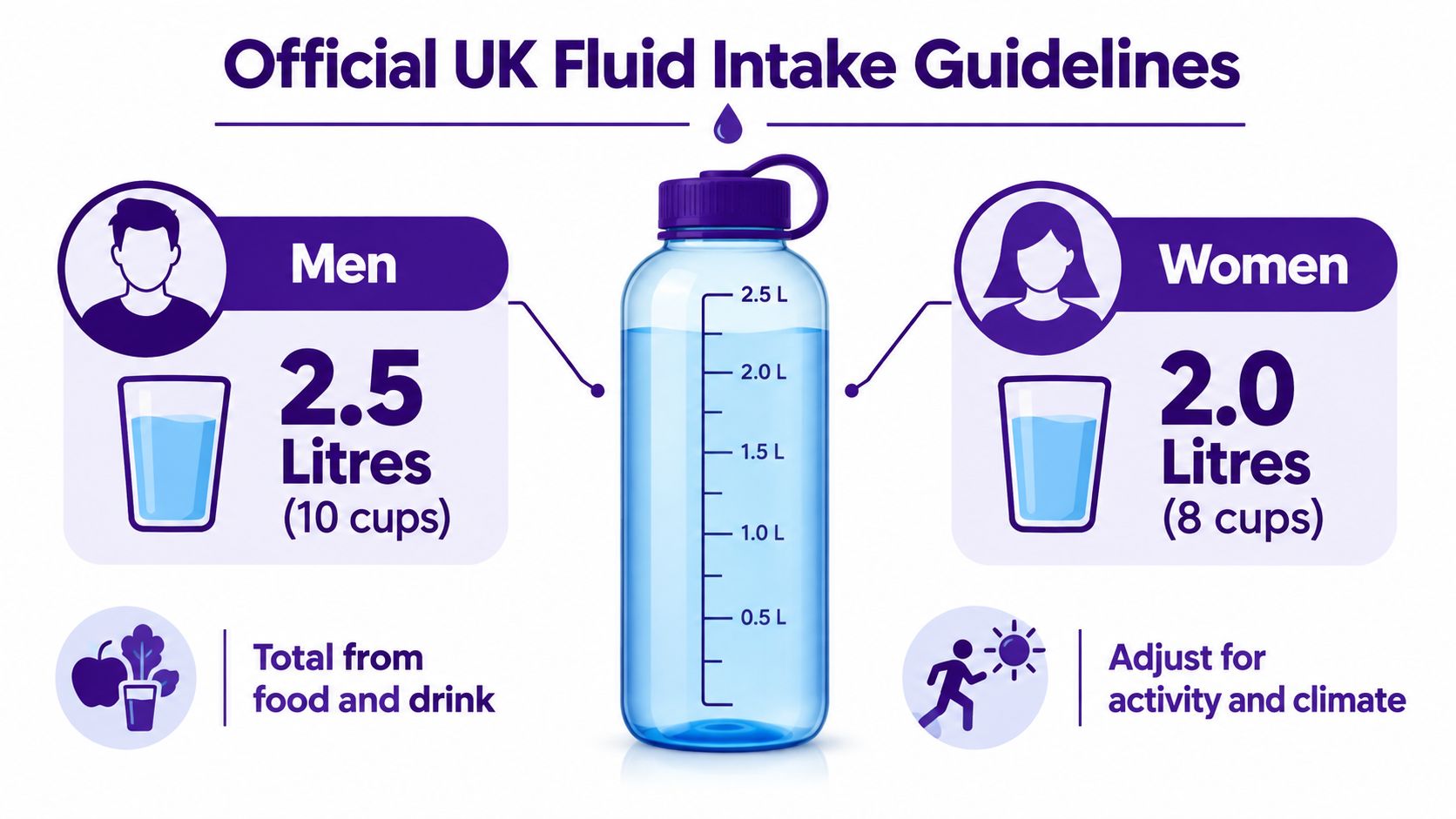
A separate NHS-facing resource reports EFSA-based adequate total water intake of 2.0 L per day for adult females and 2.5 L per day for adult males aged 14 years and over, counting water from both food and drinks. (European Food Safety Authority-based hydration guidance) These recommendations describe different parts of the same intake, so they are not contradictory.
How Hydration Supports Fat Loss and GLP-1 Treatments
Hydration supports weight management indirectly. Your body needs fluid for digestion, circulation, temperature regulation, and the removal of metabolic waste. When intake falls, fatigue, dry mouth, headache, and reduced concentration can make meal planning and physical activity more difficult. Those effects can undermine a weight-loss routine even when the underlying nutrition plan is sound.
The relationship with GLP-1 treatment is especially practical. These medicines can reduce appetite and slow gastric emptying. A person may eat less, feel full sooner, and unintentionally drink less because meals and drinks no longer occupy the same place in the day. Reduced fluid intake can make constipation more troublesome, while nausea can make large drinks feel unpleasant.
The answer isn't to treat water as a fat-burning medicine. Adequate hydration doesn't replace a calorie-aware eating pattern, sufficient protein, or progressive resistance training. Instead, it helps create the physiological conditions in which those parts of a programme are easier to follow.
The muscle-preservation connection
During a calorie deficit, maintaining muscle requires more than losing scale weight slowly. People need appropriate nutrition and strength-focused exercise, while hydration supports normal muscle function and training tolerance. If dehydration contributes to weakness or light-headedness, completing a useful session becomes harder.
Kidneys also require fluid to process and excrete waste products. That doesn't mean drinking excessive amounts will accelerate fat loss. It means avoiding inadequate intake removes one preventable obstacle from a demanding period of dietary change.
A useful companion resource for appetite-related habits is this guide to reducing appetite naturally. It should complement, not replace, advice from the clinician managing your treatment.
The clinical priority is comfort and safety. If medication-related nausea, constipation, or vomiting persists, don't try to solve the problem by repeatedly increasing fluids without assessment. A prescriber can review the wider treatment plan, eating pattern, and symptoms.
Adjusting Your Target for Lifestyle and Life Stages
A baseline fluid target is an anchor, not a ceiling. Pregnancy, breastfeeding, prolonged activity, illness, recovery, and hot environments can all increase fluid needs. The NHS guidance on when fluid needs rise outlines these situations.
Start with the beverage target that fits your usual circumstances, then check what has changed today. A long workout, heated room, hot weather, fever, or recovery from illness may require more fluid. This approach is more useful than automatically adding a fixed number of glasses.
| Category | Baseline Beverage Target | Additional Fluid Required |
|---|---|---|
| Adult men | 2,000 ml per day | Adjust upwards when activity, heat, illness, or recovery increases need |
| Adult women | 1,600 ml per day | Adjust upwards when activity, heat, illness, or recovery increases need |
| Pregnancy | 1,600 ml per day female baseline | Additional 300 ml per day |
| Breastfeeding | 1,600 ml per day female baseline | Additional 600 to 700 ml per day |
| Prolonged physical activity or hot environment | Individual baseline | More may be needed, based on conditions and losses |
The beverage figures and life-stage additions are based on British Dietetic Association guidance using EFSA-derived values. (BDA fluid recommendations) These figures are starting points, not a substitute for clinical advice if a health condition affects fluid balance. For people using GLP-1 medication, adjusting gradually can support comfort while preserving the energy and training capacity needed for fat loss and muscle retention.
Use conditions, not guesswork
During exercise, drink regularly and observe how your body responds. Heat, prolonged activity, and sweating increase losses, so keep drinks accessible and adjust your routine rather than waiting until you feel unwell. Travellers preparing for warmer destinations can use these heat hydration tips for travelers when planning drinks and daily activities.
Illness requires more care. Fever, vomiting, and diarrhoea may change fluid requirements while also affecting electrolytes and medication tolerance. If you cannot keep fluids down or symptoms are significant, seek medical advice instead of trying to correct the problem with a generic target.
Pregnancy and breastfeeding need separate calculations. Add 300 ml per day during pregnancy, and 600 to 700 ml per day during breastfeeding, to the adult female beverage baseline described above.
Hormonal changes can affect thirst, bloating, and fluid retention. People experiencing menopause may find this explanation of menopause and water retention helpful, while keeping hydration decisions separate from assumptions about swelling or rapid scale changes. This distinction matters during weight loss, because short-term fluid shifts can disguise changes in body fat without reflecting treatment effectiveness.
Recognising Dehydration and Overhydration Risks
Hydration is not a contest. Too little fluid can impair comfort, digestion, and daily function, while repeatedly drinking well beyond thirst and normal guidance can also create risk. For weight-loss patients, the practical aim is steady balance. Adequate fluids can support GLP-1 treatment tolerance, while recognising warning signs helps prevent nausea, constipation, dizziness, or weakness from disrupting food intake and muscle-preserving activity.
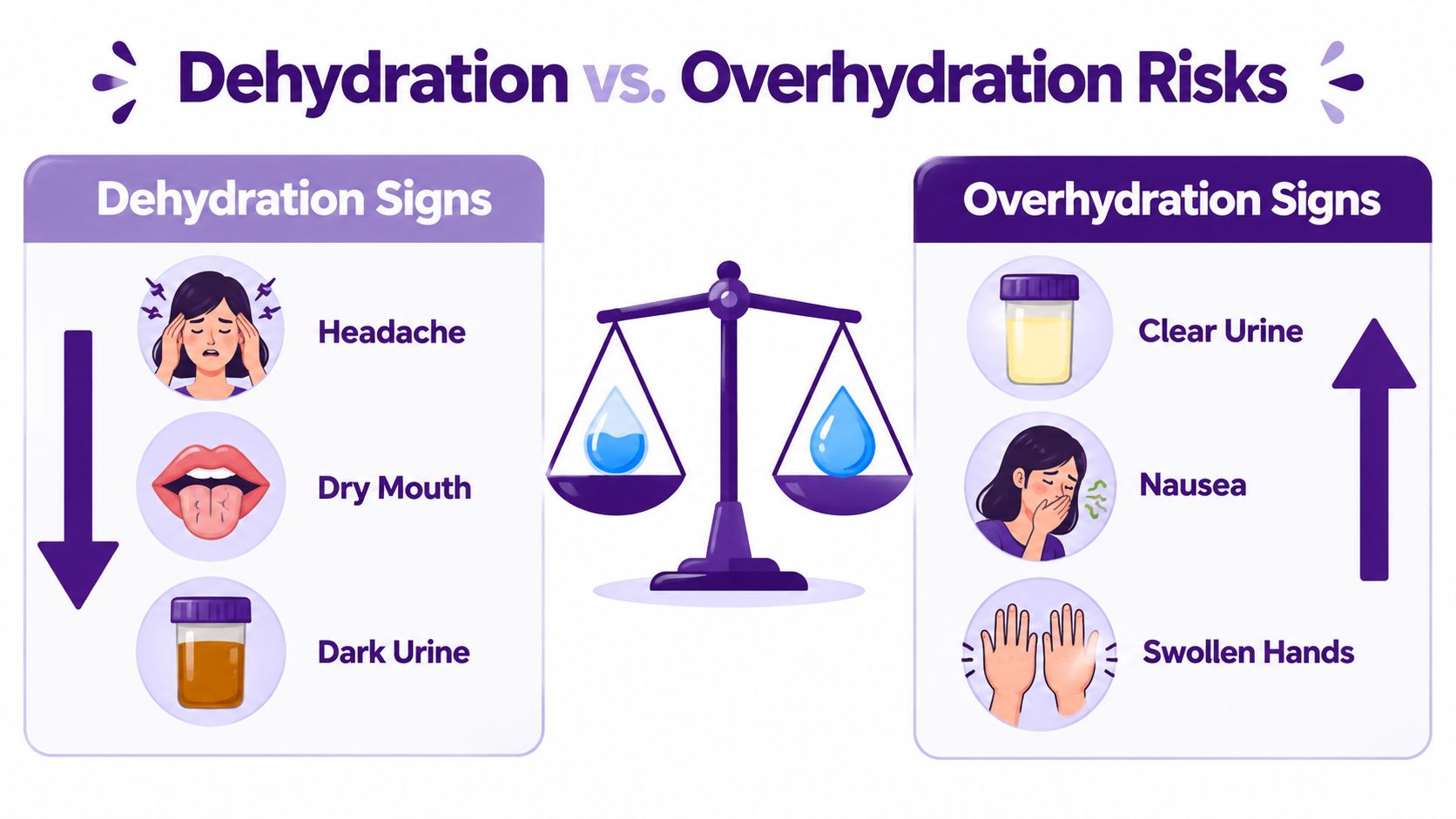
Common dehydration clues include dry mouth, headache, dark urine, tiredness, dizziness, and constipation. Thirst provides useful information, but it should not be the only checkpoint. Older adults and people taking appetite-suppressing medication may notice thirst less clearly. Nausea can also make drinking difficult precisely when the body needs fluid.
The NHS describes pale-yellow urine as a practical sign of adequate hydration. Very dark urine may indicate that more fluid is needed, although medicines, supplements, and other factors can change urine colour. Use urine colour as a signal, not a target to chase. (NHS urine-colour guidance)
The opposite problem
Overhydration can dilute sodium in the blood, causing hyponatraemia, a potentially serious condition. Warning symptoms may include nausea, headache, confusion, unusual drowsiness, or swelling. Clear urine throughout the day, frequent urgent urination, and drinking large amounts without a clear reason are prompts to reassess your routine.
The concern increases during prolonged exercise. Replacing water alone may overlook nutrition and electrolyte needs, especially when sweating is substantial. Do not force fluids until urine becomes completely clear.
Safety check: Persistent vomiting, confusion, severe weakness, fainting, or inability to keep fluids down needs medical assessment.
Heart, kidney, and liver conditions can change fluid requirements or impose restrictions. A clinician familiar with the person's medical history should set the appropriate target. People using weight-loss medication should report persistent gastrointestinal side effects to their prescriber, rather than trying to manage worsening symptoms alone.
Practical Strategies for Meeting Daily Fluid Targets
A fluid target is easier to reach when it fits routines you already follow. The goal is not hourly calculation. Make drinks visible, available, and comfortable, especially when GLP-1 treatment reduces appetite or nausea makes larger volumes difficult.
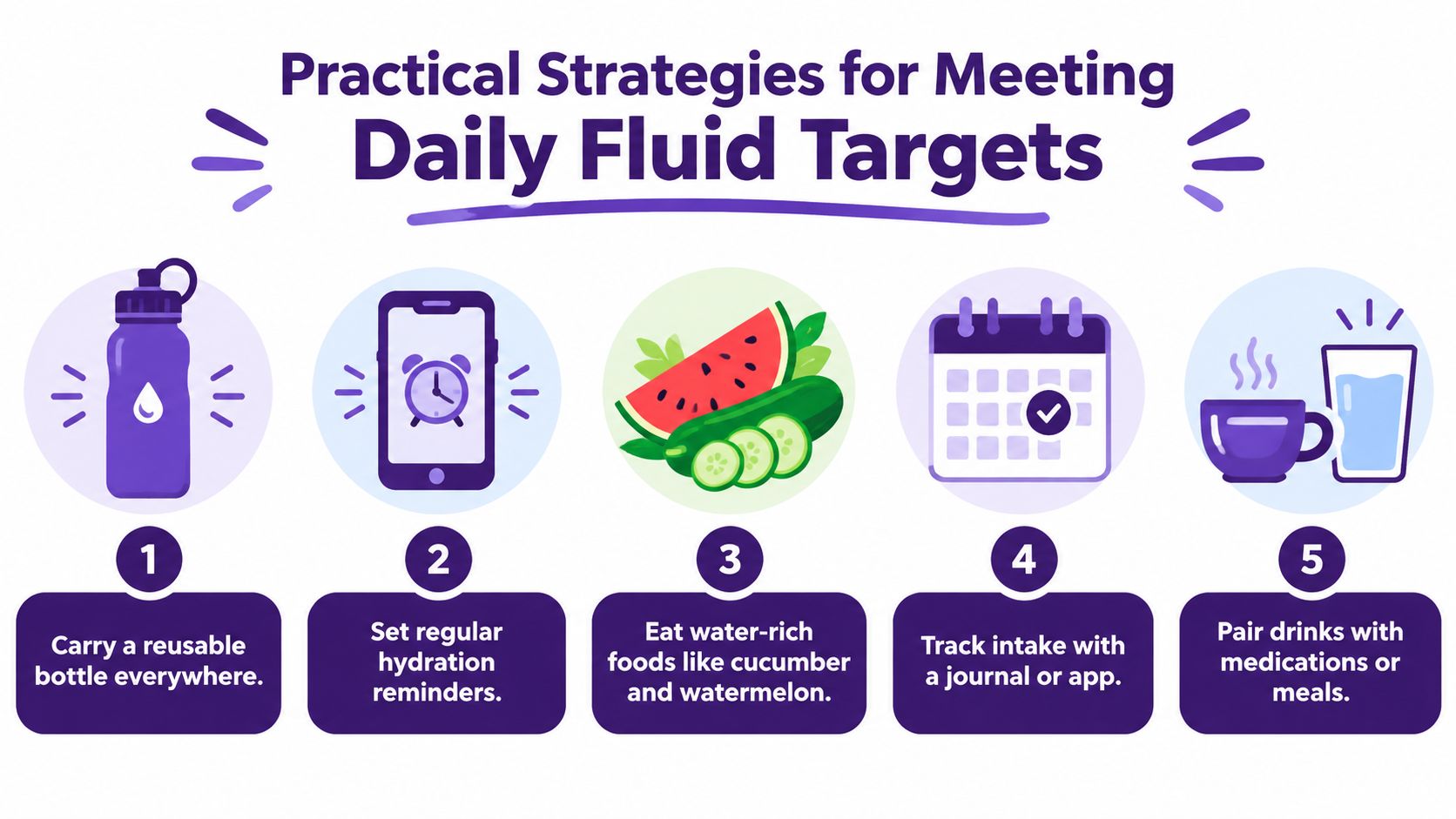
Try these approaches:
- Keep access simple: Carry a reusable bottle, leave a glass near your workspace, and refill it while preparing meals.
- Use reminders selectively: A phone alert can help if a busy schedule or appetite suppression makes drinking easy to overlook. Spread prompts across the day rather than catching up at night.
- Count more than plain water: Water, lower-fat milk, tea, coffee, and sugar-free drinks can all contribute to daily fluid intake, as noted earlier.
- Add moisture through food: Soups, yoghurt, cucumber, and watermelon provide water alongside meals. They complement drinks rather than replacing them completely.
- Track patterns, not perfection: A short diary can reveal whether nausea, meetings, exercise, or travel is reducing intake.
Make medication routines gentler
With a GLP-1 medicine, connect drinks with meals or another established habit. This provides a reliable cue without treating hydration as a substitute for prescribing advice. Small, frequent sips may feel easier than a large drink, particularly when fullness or nausea is present.
Tea and coffee can count toward intake, while highly sweetened drinks may add calories without helping the wider weight-loss plan. A varied pattern of water, unsweetened drinks, lower-fat milk, and water-rich foods is often easier to maintain. That broader nutrition pattern also supports adequate protein, fibre, and energy for activity, which matter when the aim is fat loss with muscle preservation. These nutrition tips for weight loss can help with the food-planning side.
Cold weather can disrupt the habit. Indoor heating may leave the mouth and throat feeling dry, while a lack of heat or sweating can reduce the urge to drink. Warm drinks, a bottle within reach, and fluids paired with meals help keep intake steady through winter.
Choose equipment that removes practical barriers. A bottle should be easy to clean, carry, and refill, with a size and material that suit daily use. This guide to choosing the best metal water bottle outlines features to compare.
Integrating Hydration into Your Weight Loss Programme
Effective hydration planning has three parts: a sensible starting point, adjustments for circumstances, and a simple self-check. For many UK adults, begin with the NHS 6 to 8 cups or glasses of fluid per day. Foods and drinks both contribute, while pale-yellow urine offers a practical indication of hydration. (NHS Eatwell hydration advice)
This figure is a starting point, not a rigid prescription. Beverage intake differs from total water intake, and pregnancy, breastfeeding, prolonged activity, hot conditions, illness, and recovery can alter requirements. Anyone with a condition affecting fluid balance should follow individual clinical advice.
During GLP-1 treatment, steady fluid intake supports the wider weight-loss plan. It may make reduced appetite easier to manage, support comfortable digestion, and help you maintain activity, protein intake, and strength-focused habits. These factors matter when the goal is fat loss while preserving muscle. Hydration supports treatment, but does not replace medication instructions, nutrition, resistance training, or follow-up care.
Use a routine you can sustain. Drink regularly, choose fluids you tolerate, include water-rich foods, and check for dehydration signs. Do not force large amounts when you are not thirsty or advised to do so. Persistent or severe side effects require contact with the prescribing team.
Trim offers UK adults a medically supervised weight-loss programme with clinician assessment, ongoing support, personalised nutrition guidance, and strength-focused training alongside appropriate treatment options. Visit Trim to learn how its structured approach can support hydration and other sustainable habits.