
Menopause Weight Loss Medication: A Practical UK Guide

The most popular advice about menopause weight gain is also the least precise: “Eat less and move more.” That message ignores why body composition, appetite, sleep and fat distribution can change during the menopausal transition. It also encourages women to search for a menopause-specific weight-loss injection that doesn't currently exist.
The more useful question is different. Can you access evidence-based obesity treatment under UK eligibility rules, and how should symptoms, HRT and health risks shape that decision? Medicines such as Wegovy and Mounjaro may be appropriate for some women, but they're licensed for weight management, not for menopause itself. Their use requires clinical assessment, realistic expectations and a plan to protect muscle, nutrition and long-term health.
Table of Contents
- Why Menopause Has No Dedicated Weight Loss Drug
- How Menopause Reshapes Weight, Appetite and Body Composition
- Prescription Weight Loss Medicines Used in the UK
- What the Clinical Trials Actually Show in Menopausal Women
- NICE Eligibility and UK Access Pathways
- Safety, Side Effects and Interactions With HRT
- Pairing Medication With Resistance Training and Protein
- Practical Decision Guide and Frequently Asked Questions
Why Menopause Has No Dedicated Weight Loss Drug
No licensed weight-loss medicine is approved specifically to treat menopause-related weight gain. That statement can feel surprising because the weight changes are real, often stubborn and closely linked with the menopausal transition. The regulatory position, however, is different from the lived experience.
UK obesity pathways include tirzepatide, semaglutide, liraglutide and orlistat as medicine options for adult weight management. They're prescribed according to obesity-related criteria, such as BMI and weight-related health conditions, rather than according to whether someone is perimenopausal or postmenopausal. UK guidance on GLP-1 treatment and menopause explains this distinction clearly.
That matters for three reasons:
- Access: Menopause alone doesn't create an automatic route to NHS weight-loss medication.
- Clinical expectations: A clinician must assess obesity risk and treatment suitability, not just prescribe for a change in waist size during perimenopause.
- Evidence: Trial results from general obesity studies can inform treatment, but they don't automatically prove that a medicine treats menopause biology.
A woman may have significant abdominal weight gain, poor sleep and hot flushes, yet still not meet the relevant criteria for specialist obesity treatment. Another woman with the same symptoms may qualify because her BMI and associated conditions place her within a recognised pathway. The difference is clinical eligibility, not whether one woman's symptoms are more valid.
Practical rule: Treat menopause symptoms and excess weight as related but separate clinical problems. They may need a coordinated plan, but one medicine shouldn't be presented as a cure for both.
This is why searches such as retatrutide availability in the UK can distract from the immediate decision. The central issue isn't finding a futuristic or menopause-branded drug. It's establishing whether you need menopause care, specialist obesity care, or both, and then choosing treatment within the evidence and prescribing rules that apply today.
How Menopause Reshapes Weight, Appetite and Body Composition
Menopause doesn't switch off weight loss. It changes several systems that previously helped regulate hunger, muscle and fat storage.
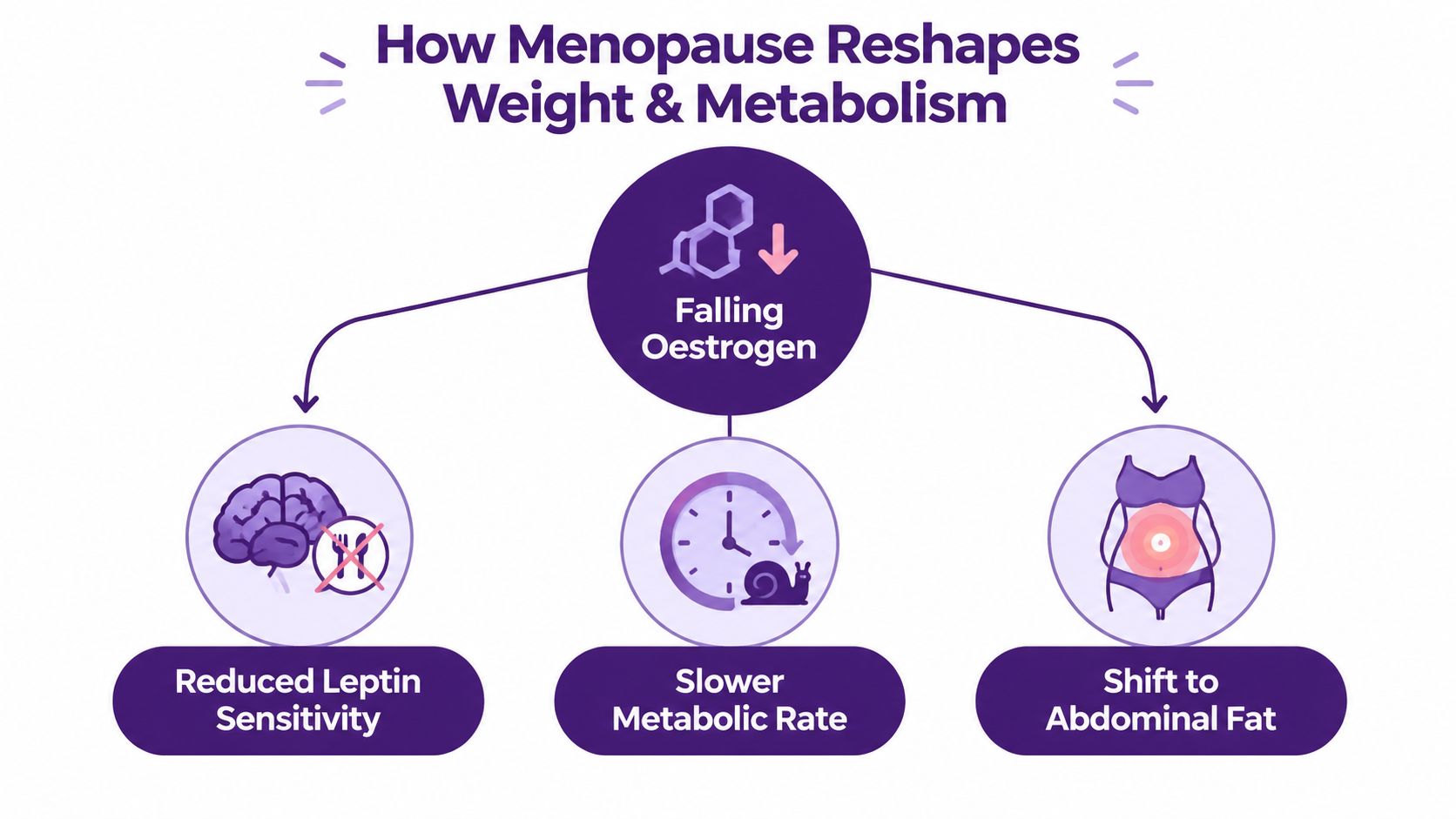
Oestrogen is one part of that system. As levels fall, the body may become less responsive to signals that normally help the brain recognise stored energy. Leptin is one of those signals. If leptin signalling becomes less effective, appetite regulation can feel less reliable, particularly when sleep and stress are also disturbed.
Insulin sensitivity can change as well. When cells respond less efficiently to insulin, the body may need more insulin to manage blood glucose. That can make energy storage and hunger feel harder to control. The change in fat distribution also matters. Fat may shift away from the hips and thighs towards the abdomen, including deeper visceral fat around the organs.
The muscle and sleep connection
Muscle is metabolically active tissue. If muscle mass declines, the body may use less energy at rest and during ordinary daily activity. That doesn't make weight loss impossible, but it means an old diet may no longer produce the same result, especially if the diet also causes muscle loss.
Sleep disruption adds another layer. Hot flushes and night sweats can fragment sleep, while persistent tiredness can increase cravings, reduce activity and make appetite more difficult to judge. Ghrelin, which encourages hunger, and cortisol, which rises with stress and poor sleep, are part of the wider appetite picture.
Perimenopause and postmenopause aren't identical:
- Perimenopause: Oestrogen and progesterone fluctuate, periods may become irregular, and symptoms can vary from week to week.
- Postmenopause: Oestrogen remains lower after the menopausal transition, so changes in fat distribution, muscle and sleep may become more consistent.
This physiology explains why calorie counting alone can feel inadequate. It doesn't mean energy balance has stopped mattering. It means appetite, movement, sleep, muscle and fat storage all influence how easy it is to maintain that balance.
Prescription Weight Loss Medicines Used in the UK
The main UK options work in different ways, and their evidence doesn't carry the same strength for menopausal women. Orlistat blocks some dietary fat absorption in the gut. Liraglutide and semaglutide are GLP-1 receptor agonists, while tirzepatide acts on both GIP and GLP-1 pathways. These medicines reduce appetite and alter digestion, but they aren't menopause treatments.
The evidence-led comparison below should be read carefully. The verified data available here provides a specific mean result for semaglutide and menopause-stage results for an oral GLP-1 trial. It doesn't provide a complete, directly comparable UK table of clinical-trial results for every medicine, dose and route. Where a precise result isn't available, it's safer to describe the evidence qualitatively than to manufacture a figure.
| Medicine | Brand | Mechanism | Route | Mean weight loss, trial | UK availability |
|---|---|---|---|---|---|
| Orlistat | Orlistat brands | Lipase inhibitor, reduces absorption of dietary fat | Oral capsule | Evidence varies by study and isn't specified here | Used within UK weight-management pathways, subject to clinical criteria |
| Liraglutide | Saxenda | GLP-1 receptor agonist, reduces appetite and slows gastric emptying | Daily injection | Menopause-specific result isn't specified here | Licensed option for adult weight management, with access depending on NHS or private assessment |
| Semaglutide | Wegovy | GLP-1 receptor agonist, reduces appetite and slows gastric emptying | Weekly injection | 14.9% over 68 weeks versus 2.4% with placebo in STEP 1, as reported by the STEP 1 evidence summary | NICE eligibility applies; private access depends on a regulated prescriber |
| Tirzepatide | Mounjaro | Dual GIP and GLP-1 receptor agonist | Weekly injection | A menopause-stage ATTAIN-1 result is cited in the following section | NICE and UK prescribing pathways apply, with access varying by service |
The Medicines and Healthcare products Regulatory Agency indication, dose escalation and suitability checks must be confirmed with a prescriber. A medicine's brand name doesn't make it suitable for everyone, and a private clinic should assess medical history rather than rely on a questionnaire alone.
Food remains important even when appetite falls. A practical resource on balanced meals for GLP-1 treatment can help organise protein, fibre and micronutrient-rich meals without turning eating into a punishment.
Clinicians may also consider medicines such as metformin or naltrexone/bupropion in selected circumstances, including off-label use, but they aren't first-line menopause-specific choices. For a wider explanation of weight-loss medication pathways in the UK, focus on eligibility, supervision and follow-up rather than brand comparisons.
What the Clinical Trials Actually Show in Menopausal Women
The strongest message from the available trial data is reassuring but limited: women across menopause stages can lose weight with incretin-based treatment. The data doesn't show that these medicines treat menopause itself, nor does it establish that one option is uniquely effective for perimenopausal or postmenopausal women.
In STEP 1, adults taking semaglutide 2.4 mg lost a mean 14.9% of body weight over 68 weeks, compared with 2.4% with placebo. The placebo-adjusted difference was 12.5 percentage points. That trial demonstrates substantial weight-management efficacy, but its result shouldn't be interpreted as a menopause-specific outcome.
A menopause-focused analysis of ATTAIN-1 reported weight loss across stages. At the highest oral GLP-1 dose, premenopausal women lost up to 12.8%, perimenopausal women up to 14.4%, and postmenopausal women up to 14.1% after 72 weeks. Up to 51.5% achieved at least 15% weight loss, according to the ATTAIN-1 menopause-stage analysis.
| Trial | Drug and dose | Total weight loss versus placebo | At least 5% responders | Menopausal subgroup data |
|---|---|---|---|---|
| STEP 1 | Semaglutide 2.4 mg | 14.9% versus 2.4% over 68 weeks, a 12.5 percentage-point difference | The verified data doesn't specify this responder breakdown | Not presented here as a menopause-specific primary result |
| ATTAIN-1 | Oral GLP-1, highest dose reported in the analysis | Stage-specific losses were reported, but a placebo comparison isn't specified here | Up to 51.5% achieved at least 15% loss | Premenopausal, perimenopausal and postmenopausal results were reported |
| SCALE | Liraglutide 3.0 mg | A menopause-specific result isn't specified here | A menopause-specific breakdown isn't specified here | No precise subgroup result is available in the verified data provided |
What the evidence can't answer
Major obesity trials frequently include women, but that does not guarantee they were designed with women aged 45 to 60 in mind, accounting for fluctuating perimenopausal hormones or HRT use. Findings related to menopause stages may derive from pooled or post-hoc analyses rather than from trials where menopause was the primary research question.
The studies also don't establish a head-to-head winner specifically for menopausal women. They can show that substantial weight loss is possible, but they can't tell you whether hot flushes, sleep disruption, progesterone use or an oestrogen formulation should determine the medicine selected. Those decisions still require individual assessment.
NICE Eligibility and UK Access Pathways
Eligibility starts with BMI, weight-related comorbidities and the level of service required, not with menopause status. NICE recommends semaglutide alongside a reduced-calorie diet and increased physical activity for adults with at least one weight-related comorbidity and an initial BMI of at least 35.0 kg/m². A lower BMI pathway, 30.0 to 34.9 kg/m², may apply exceptionally when the person is referred to tier 3 specialist services, as set out in NICE's semaglutide recommendations.
A simple self-check looks like this:
- Calculate or confirm your BMI. Use a clinician's assessment where possible, particularly if body composition makes BMI less representative.
- Identify weight-related conditions. These may include recognised complications associated with excess weight.
- Ask whether specialist referral is required. The lower BMI route is linked to selected referrals into tier 3 services, not routine menopause prescribing.
- Confirm the medicine and funding route. NHS implementation and private prescribing aren't interchangeable.
NHS and private assessment
NHS access depends on local service arrangements and commissioning. Private clinics can offer assessment outside NHS waiting lists, but they should be properly regulated, use UK-registered prescribers and provide ongoing monitoring. The Care Quality Commission, or CQC, is relevant to regulated healthcare services, while the pharmacy supplying medicine should meet the appropriate pharmacy requirements.
An initial consultation should cover your weight history, current medicines, blood pressure where relevant, eating patterns, mental health, pregnancy potential, HRT, gallbladder disease and pancreatitis risk. You should also ask how the service reviews progress over time, including the supervised review point associated with long-term treatment decisions.
The UK government confirmed approval of the first GLP-1 tablet for weight loss on 11 June 2026, a development relevant to people who dislike injections. The government announcement doesn't remove the need for eligibility checks or supervised prescribing.
Safety, Side Effects and Interactions With HRT
The commonest problems with GLP-1 and dual-agonist medicines involve the digestive system. Nausea, vomiting, constipation and diarrhoea can occur, especially while the dose is being increased. Some people also experience reflux, reduced appetite to an uncomfortable degree or difficulty maintaining fluid and food intake.
Orlistat creates a different pattern because it affects fat absorption. Meals containing more fat can cause urgent bowel movements, oily stools and leakage. It can also reduce absorption of fat-soluble vitamins, so a clinician may need to review supplementation and timing.
| Medicine | Common side effects | Key contraindications or warnings | HRT and menopause interaction notes |
|---|---|---|---|
| Semaglutide | Nausea, vomiting, constipation, diarrhoea and digestive discomfort | Pancreatitis, gallbladder disease and delayed gastric emptying require clinical assessment; thyroid C-cell risk has been clarified from rodent findings | Severe nausea can make oral medicines harder to tolerate; review HRT formulation and symptoms with the prescriber |
| Tirzepatide | Gastrointestinal symptoms similar to GLP-1 medicines | Gallbladder problems, pancreatitis and gastroparesis need careful consideration | Oral medicines may need individual review if vomiting or delayed gastric emptying occurs |
| Liraglutide | Gastrointestinal effects and injection-site reactions | Similar digestive and pancreatic cautions apply | Coordinate treatment decisions with the menopause clinician if symptoms fluctuate |
| Orlistat | Oily stools, urgency and diarrhoea | Malabsorption problems and medication interactions require review | Reduced fat absorption can affect fat-soluble vitamins; discuss HRT and supplement timing |
HRT is not a simple interaction question
HRT doesn't automatically rule out weight-loss medication. The details matter. Oral oestrogen and transdermal oestrogen have different routes through the body, and a clinician should consider gallbladder history, migraine, cardiovascular risk and overall HRT suitability rather than treating every formulation as identical.
Progesterone can affect mood and symptom perception for some women. If a new medicine causes nausea, poor sleep or low mood at the same time as an HRT change, changing both together can make the cause difficult to identify. It's often more practical to introduce changes in an organised sequence, unless there's a clinical reason to act urgently.
Seek urgent medical advice for severe, persistent abdominal pain, particularly if it radiates to the back, or for repeated vomiting and inability to keep fluids down. The clinical discussion of HRT and Mounjaro should be treated as a starting point for questions, not a substitute for an individual medication review.
Pairing Medication With Resistance Training and Protein
Medication can reduce appetite so effectively that eating enough protein becomes difficult. During menopause, that creates a particular concern because the body is already vulnerable to muscle loss, reduced strength and changes in bone health. Weight on the scales can fall while the proportion of lost tissue matters more than the total result suggests.
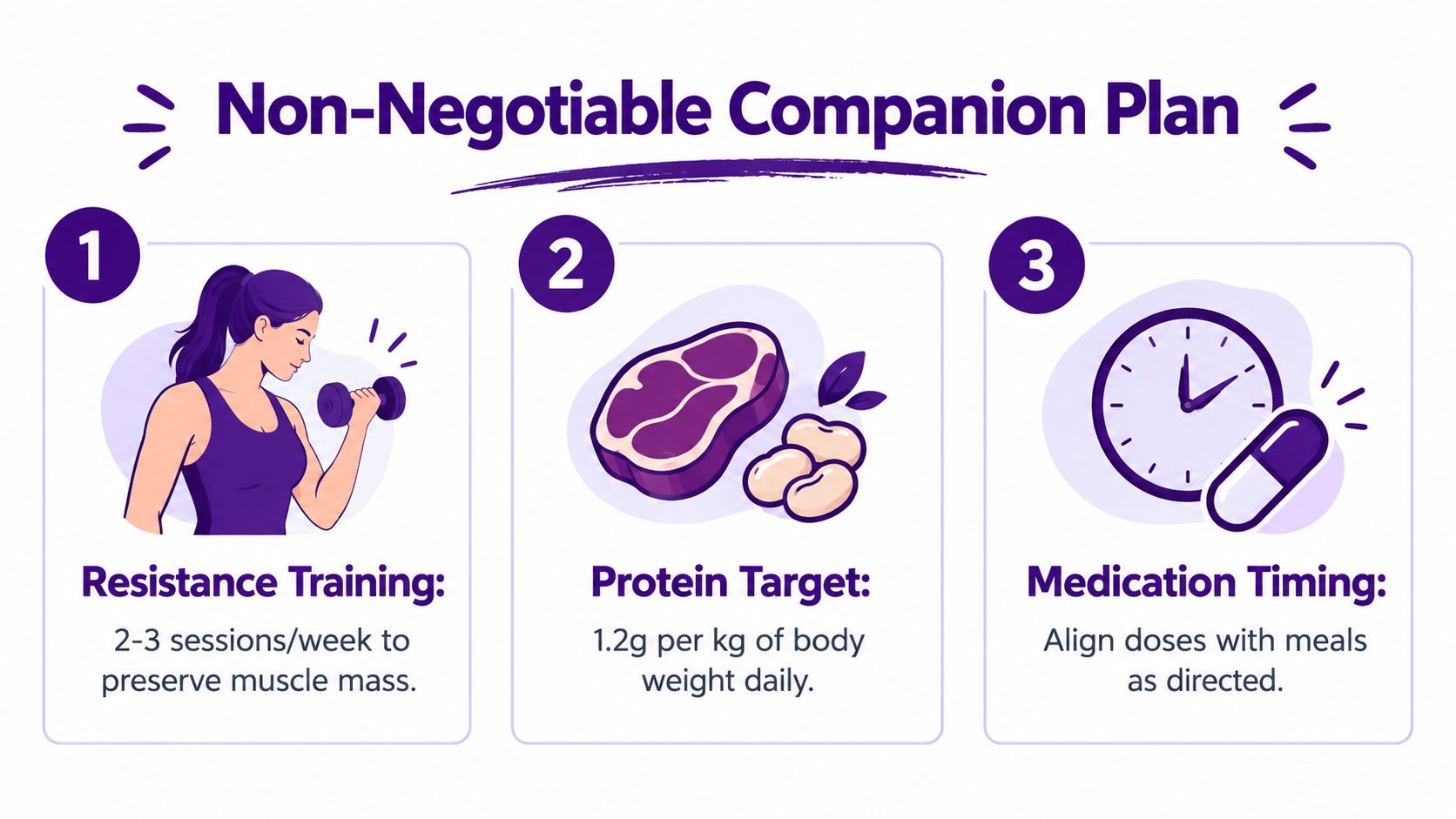
Resistance training is therefore part of treatment, not an optional lifestyle extra. A practical programme may include two to three sessions of 45 to 60 minutes, covering major muscle groups through exercises such as squats, hinges, rows, presses and loaded carries. Start at a manageable level, then increase resistance gradually with advice from a qualified professional if you have joint pain, osteoporosis or another condition affecting exercise safety.
Protein needs individual assessment, especially with kidney disease or other medical conditions. The commonly suggested target in the plan for this article is 1.2 to 1.6 g per kg of body weight daily, divided across three to four meals, with each meal containing 25 to 35 g of leucine-rich protein. Those figures should be confirmed with a dietitian when your health history makes standard targets unsuitable.
Build meals around what your body needs
A smaller appetite doesn't mean meals should become nutritionally empty. Choose protein first, then add vegetables, fibre-rich carbohydrates and fats in portions that your digestion tolerates. If nausea is prominent, smaller meals may work better than forcing a large plate.
HRT may improve symptoms such as hot flushes and sleep disruption for suitable patients, which can make exercise feel more manageable. It doesn't build muscle by itself, so the stimulus still comes from progressive resistance work.
The aim extends beyond weight. Strength supports balance, daily function and bone loading. It also gives you a better chance of maintaining independence if medication is reduced or stopped.
A useful explanation of how appetite suppression, nutrition and strength work together appears in the following video:
Practical Decision Guide and Frequently Asked Questions
Start with the problem you're trying to solve. If hot flushes, night sweats, vaginal symptoms or mood changes dominate, a menopause consultation may be the right first step. If obesity-related health risks dominate, ask for a weight-management assessment. Many women need both forms of care, but one shouldn't be used as a substitute for the other.
A sensible clinical sequence
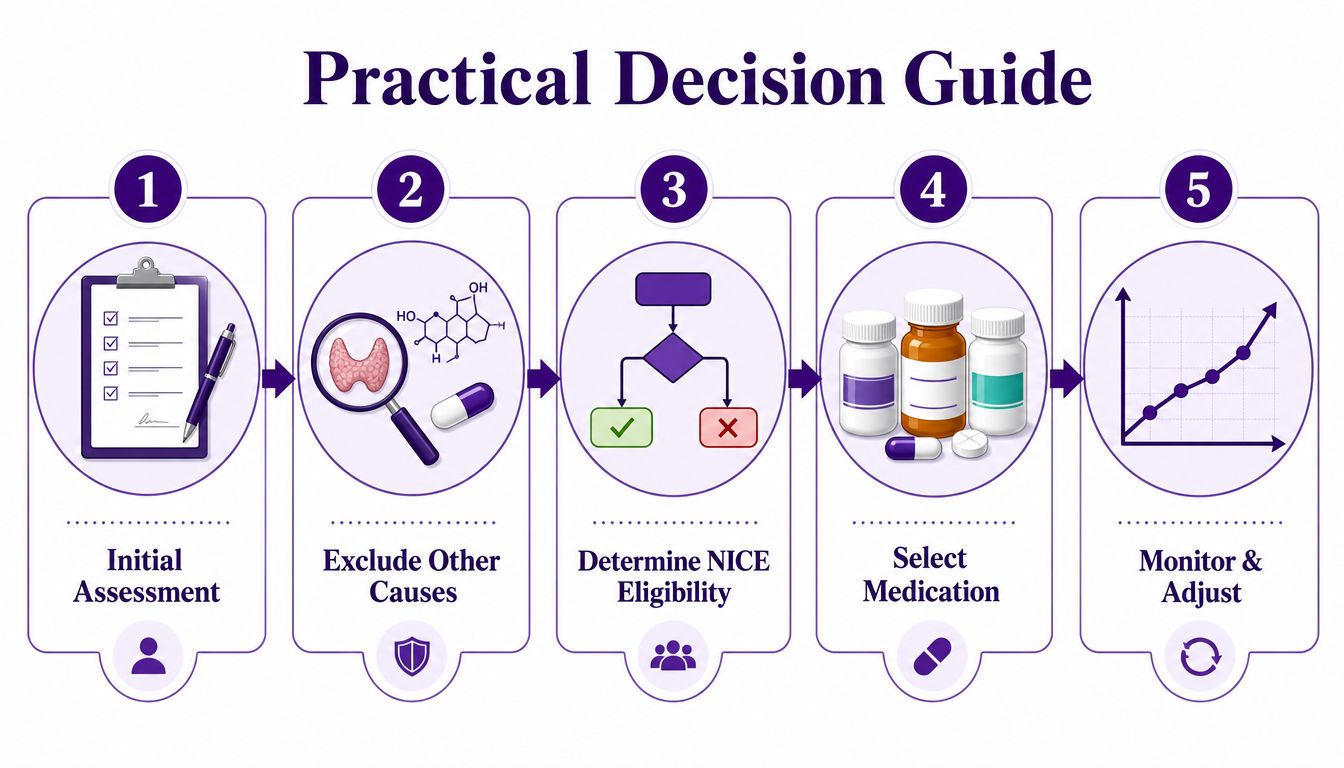
- Confirm the baseline. Record weight, BMI, waist concerns, symptoms, medicines and relevant medical history.
- Check for other causes. A clinician may consider thyroid disease, cortisol-related disorders and medicines such as mirtazapine where symptoms or history justify investigation.
- Assess eligibility. Apply the relevant NICE criteria and decide whether primary care, tier 3 specialist care or a regulated private service is appropriate.
- Choose treatment. HRT may be discussed when menopause symptoms need treatment. Orlistat, semaglutide or tirzepatide may be considered only when clinically suitable.
- Monitor the whole person. Review side effects, nutrition, strength, mental health, gallbladder symptoms, bone health and treatment response.
Questions patients commonly ask
Does HRT interact with weight-loss medication?
It doesn't automatically prevent treatment, but oral medicines, vomiting, delayed gastric emptying, gallbladder history and symptom changes need individual review. Tell the prescriber exactly which oestrogen and progesterone products you use.
How much do private Wegovy and Mounjaro treatment cost?
Private prices vary by provider, dose, dispensing arrangements and consultation model. The verified information available for this article doesn't establish a reliable current price range, so ask for a full written cost before starting, including follow-up and delivery.
When should I stop a GLP-1 medicine before surgery?
Don't make this decision alone. Contact the prescribing clinician and surgical team early because fasting, anaesthesia, gastric emptying and the medicine's dosing schedule all affect the plan.
What should I do about gallbladder pain?
Seek prompt medical advice for significant or persistent upper abdominal pain, fever, jaundice or repeated vomiting. Do not continue dose escalation while waiting for symptoms to settle.
How long will treatment last, and what happens if it stops?
Duration depends on response, tolerability, eligibility and clinical goals. Appetite may return after withdrawal, so nutrition, resistance training and follow-up are important before any planned stop.
For emotional support, NHS Talking Therapies may be appropriate where anxiety, low mood or disordered eating affects weight management. The British Menopause Society register can help patients identify clinicians with relevant menopause expertise. Ask any service how it monitors bone density, mental health and micronutrient intake rather than focusing only on kilograms lost.
Trim provides medically supervised UK weight-management consultations, with clinicians assessing options such as Mounjaro, Wegovy or orlistat when appropriate, alongside nutrition and strength-focused support. If you're considering menopause weight loss medication, visit Trim to complete an assessment and discuss whether a regulated treatment pathway fits your health history and goals.