
Food Craving Control: Evidence-Based Strategies That Work

In the UK, food cravings are far more common among people who diet than among those who don't. A British English validation study of the Food Craving Inventory found that cravings were experienced by approximately 68% of non-dieters and 92% of people actively dieting (Food Craving Inventory study). That finding changes the question. Food craving control isn't mainly about forcing yourself to resist. It's about reducing the conditions that make cravings louder, then building a response that still works when hunger, stress, habit and a tight food budget are involved.
The most effective approach combines regular eating, slower meals, practical environmental changes, emotional support and, where clinically appropriate, medical treatment. Some popular tactics are useful in the right situation, while others fail because they ignore under-eating, food insecurity or the biological effects of restriction.
Table of Contents
- Why Food Cravings Happen and What Drives Them
- Immediate Techniques to Ride Out a Craving
- Daily Habits That Reduce Cravings Over Time
- When Budget Pressures Shape Cravings
- Medical Support and What the Evidence Shows
- Sleep Stress and Behavioural Approaches
- Tracking Progress and Knowing When to Seek Help
Why Food Cravings Happen and What Drives Them
A craving is a focused desire for one particular food, often appearing quickly and feeling urgent. Hunger tends to build more gradually and can usually be met by several foods. You may be physically full after dinner yet still want one specific chocolate bar.
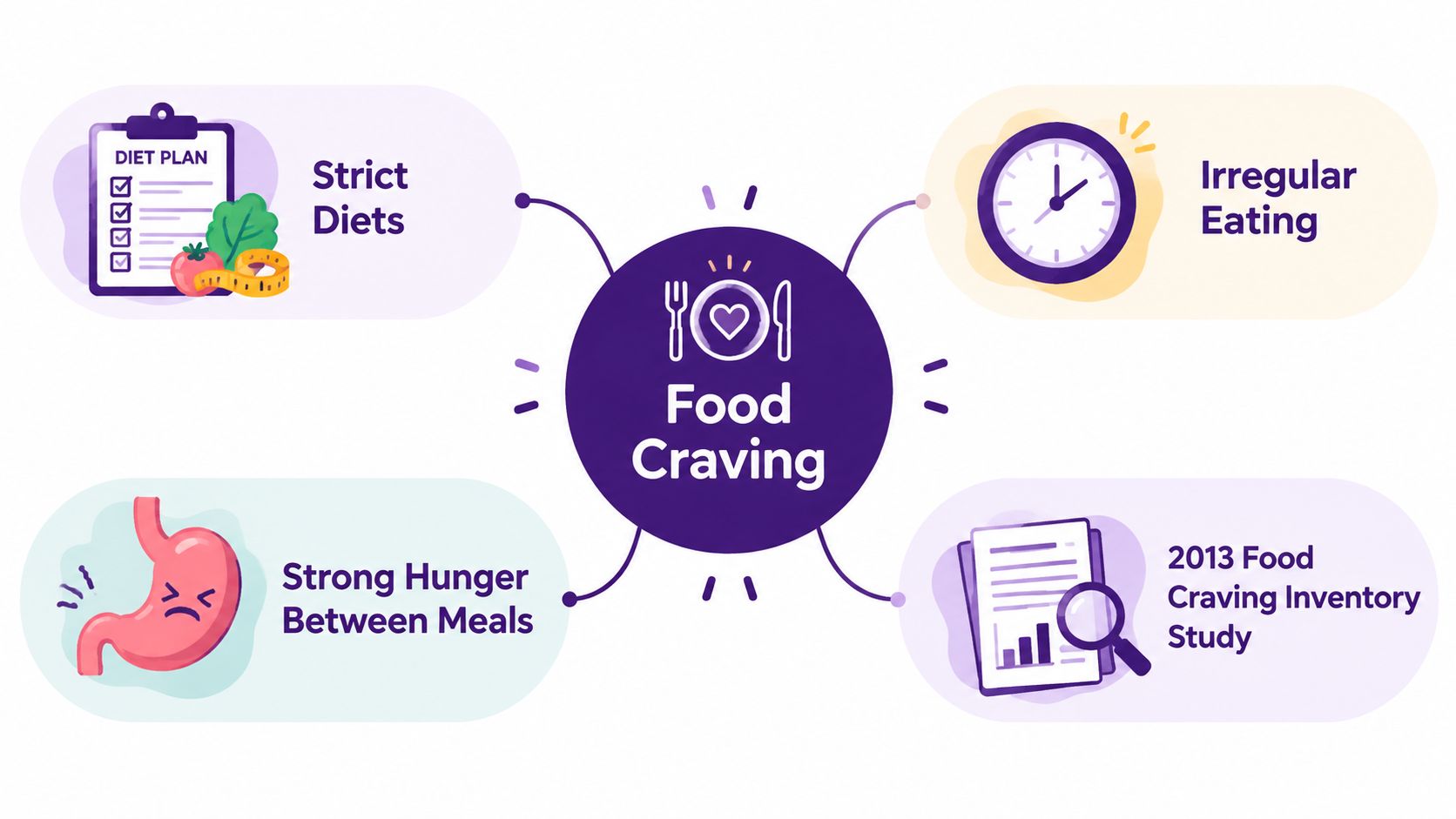
The clearest UK-specific pattern concerns dietary restriction. In the 2013 Food Craving Inventory study, approximately 68% of non-dieters reported cravings, compared with 92% of active dieters. The finding supports a practical clinical observation: rigid dieting can make a desired food more mentally prominent, particularly when meals are skipped, portions are heavily restricted or familiar foods are labelled forbidden.
The biology behind the urge
Physical hunger, low energy availability and long gaps between meals all direct attention towards food. Stress and emotional distress can increase the appeal of energy-dense, highly rewarding foods. Learned cues add another layer, such as watching television with snacks, passing a bakery on the way home or eating at a familiar time.
Wanting food and feeling physically satisfied do not always occur together. Sight, smell, taste and the expected comfort of a food can trigger a learned response after the stomach is full. A craving therefore does not necessarily indicate a deficiency in the nutrient contained in that food. If hunger remains after a meal, why you may feel hungry even after eating explains why satiety and appetite can diverge.
Clinical perspective: Treat the craving as information about a trigger, a habit or an unmet need, not as evidence of poor character.
Irregular eating often intensifies the problem. Someone who repeatedly postpones meals may reach the evening intensely hungry, less patient and less able to make a deliberate choice. They may eat quickly, continue past comfort and respond the next day with even stricter restriction. That pattern reinforces itself.
Food-price anxiety can complicate this cycle. If a person is unsure whether they can afford enough food, saving food, choosing the cheapest filling option or delaying a meal may feel sensible in the short term. Those decisions can also create longer gaps between meals and make later cravings harder to interpret. Food craving control must account for affordability, not assume that everyone can buy regular, preferred meals.
Persistent food thoughts, binge episodes or distress around eating may require more than dietary advice. Psychological support can identify restrictive patterns, emotional triggers and loss-of-control eating. A suitable starting point may be therapy for eating issues with Therapsy, particularly when cravings are linked to binge-eating symptoms rather than ordinary appetite.
Immediate Techniques to Ride Out a Craving
A craving often changes within 20 to 30 minutes, so treat it as a short experiment rather than a test of willpower. NHS guidance recommends eating slowly, choosing a smaller portion and waiting 30 minutes before acting, because the urge may pass (NHS craving guidance).
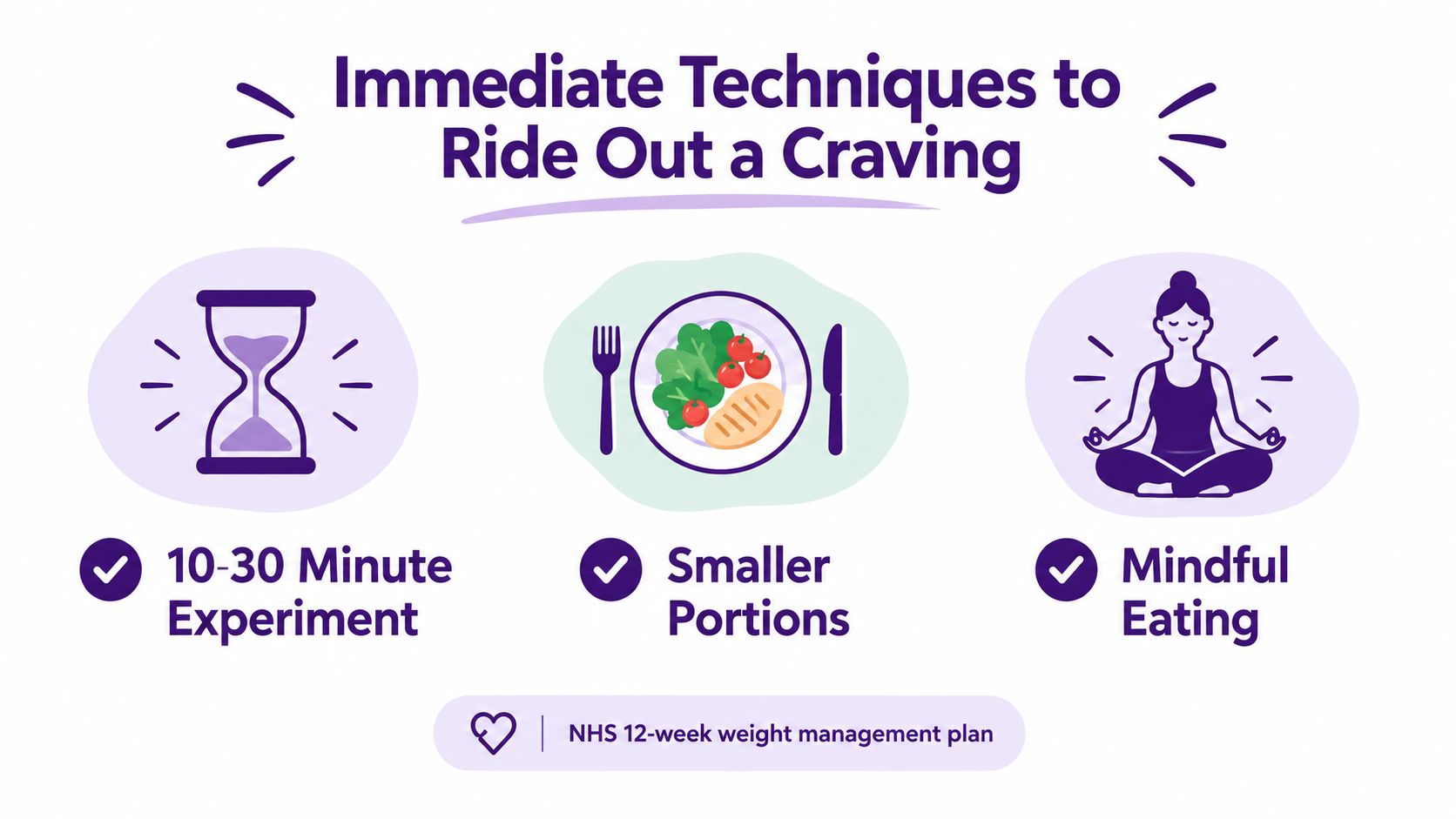
Rate the craving from zero to ten, then ask: am I physically hungry, or do I want a specific food despite being able to eat something else? If you have missed food and feel weak, shaky or intensely hungry, delaying may prolong under-fuelling. Eat a proper meal or snack rather than trying to distract yourself indefinitely.
For a moderate craving when you are not underfed, use this sequence:
- Create distance. Leave the kitchen, put the packet away or move to another room. Changing the setting interrupts the automatic cue and response.
- Set a timer. Wait for 20 to 30 minutes while drinking water, taking a short walk, breathing calmly or completing an ordinary task. The NHS advises 30 minutes. UK dietetic guidance also notes that many cravings fade after about 20 minutes.
- Reassess the urge. If it has reduced, continue with your planned meal or activity. If it remains, choose an amount deliberately instead of eating from the packet.
- Serve the portion. Put the food on a plate, sit down and remove the television or phone if possible. A measured portion limits grazing, while slower eating helps you notice whether enjoyment and satisfaction are falling.
- Avoid punishment. A planned portion is not a failure. Guilt can lead to renewed restriction, which may increase the risk of overeating later. For practical behaviour strategies, see NHS behavioural guidance.
The aim is not to suppress every food thought. Trying to banish a thought can make it more noticeable. Food craving control means creating enough space to choose, whether that means waiting, eating a smaller portion or recognising that you need a substantial meal.
This video offers a practical visual introduction to pausing and responding to cravings:
Daily Habits That Reduce Cravings Over Time
Cravings are easier to manage when fewer decisions are made under extreme hunger. A regular pattern of meals, with planned snacks where appropriate, limits the long gaps that can make convenience food feel irresistible. UK dietetic guidance recommends eating at regular intervals of around 3 to 4 hours to reduce hunger-driven overeating.
Build meals around foods that provide lasting satisfaction. Eggs, beans, fish, yoghurt and lean meat provide protein. Oats, potatoes, wholegrain foods, fruit and vegetables add fibre-rich carbohydrate. Some dietary fat can improve taste and satisfaction. The right balance depends on medical conditions, preferences, cultural foods and total intake, but meals based only on refined carbohydrate may leave you hungry sooner than a mixed meal.
A practical meal pattern is more useful than a perfect one. If cost, work or family commitments make a plan difficult, choose combinations you can repeat reliably, such as oats with yoghurt, eggs with wholegrain toast, or beans with vegetables and potatoes.
Eat at a table when possible. Serve food into a bowl or onto a plate, put the utensil down occasionally and check halfway through whether the food still tastes as good as it did at the beginning. Seated, less distracted eating makes portions, enjoyment and fullness easier to notice.
Give satiety time to register
Satiety signalling from the stomach to the brain takes about 20 minutes, according to UK NHS dietetic guidance. A meal does not need to last exactly 20 minutes, but rapid eating can leave you ahead of your own fullness signals. Slowing the pace slightly, especially at the start of a meal, gives those signals more opportunity to register.
Do not ban every trigger food. Buy a smaller amount, keep it out of immediate reach and decide when you will eat it. A planned food is less likely to become an emergency food. Cooking lighter versions of favourites at home helps too; the Comfort Food Reimagined cookbook covers mac and cheese, pot pies, casseroles and desserts made with less fat and sugar, so familiar dishes stay in the rotation without takeaway portions. Also identify the setting around the craving. Late-night work, loneliness, boredom, a particular room or a difficult conversation may be the trigger rather than hunger itself.
| Foundation | How it helps | Practical cue |
|---|---|---|
| Regular meals | Limits extreme hunger and rushed decisions | Decide the next meal before the current one ends |
| Protein and fibre | Supports a more satisfying meal pattern | Add beans, eggs, yoghurt, fish, oats, fruit or vegetables |
| Seated eating | Makes portions and fullness easier to notice | Put food on a plate and sit away from screens |
| Planned treats | Reduces forbidden-food thinking | Buy a smaller amount and portion it before eating |
| Trigger planning | Replaces automatic behaviour | Write one alternative for stress, boredom or tiredness |
Sleep also affects appetite regulation. A consistent sleep and wake pattern can make it easier to pause before acting on a craving. Exercise can support health and mood, but using it to cancel food may reinforce compensatory restriction.
For more practical strategies, see how to reduce appetite naturally. The useful test is repeatability. A routine that looks perfect for a few days but creates deprivation is unlikely to provide lasting food craving control.
When Budget Pressures Shape Cravings
Food craving control in the UK isn't always a willpower problem. It can be a shopping problem. In March 2026, 91% of people were concerned about food prices, while concern about household food affordability rose from 19% in February 2026 to 26% in May 2026, remaining high at 24% in June 2026 (UK Government consumer tracking).
Those figures describe an environment in which people may choose food under financial pressure, not according to appetite or nutrition knowledge alone. Skipping a meal because money is tight can leave someone intensely hungry later. The cheapest immediately available calories may then seem more compelling than a carefully planned meal, particularly when time, cooking equipment or transport are also limited.
Build satiety around affordable staples
A budget-aware plan can include tinned beans, oats, eggs, frozen vegetables, tinned fish and batch-cooked meals. These foods aren't magic craving cures, but they can make regular eating more realistic. Frozen vegetables reduce waste, oats can form a filling breakfast, and beans can extend soups, stews and chilli without relying on expensive convenience foods.
| Food | Avg Price Per Portion (£) | Satiety Score (out of 5) | Best Craving Type to Address |
|---|---|---|---|
| Tinned beans | Not specified | Not specified | Evening hunger and savoury cravings |
| Oats | Not specified | Not specified | Sweet breakfast and mid-morning hunger |
| Eggs | Not specified | Not specified | Quick, protein-rich meal cravings |
| Frozen vegetables | Not specified | Not specified | Large-volume meal needs |
| Tinned fish | Not specified | Not specified | Savoury cravings and rushed lunches |
| Batch-cooked meals | Not specified | Not specified | Takeaway and convenience-food urges |
The requested price and satiety ratings can't be presented responsibly without a consistent supermarket, portion definition and current price check. Costs vary by retailer, brand and location. A useful approach is to compare the cost of a complete meal, not just the price of one ingredient.
Food insecurity also changes what advice can achieve. Telling someone to keep a wide range of fresh, high-protein foods available may be unrealistic if their budget is already stretched. Healthy Start vouchers, local food banks and community pantries may provide appropriate support for eligible households, and signposting should be treated as part of care rather than as a judgement.
A craving plan that ignores affordability will work best for the people who need it least.
The practical question is not “why didn't you resist?” It's “what food was available, affordable and satisfying at the point hunger became urgent?” That framing produces more honest interventions, including cheaper staples, fewer skipped meals and less dependence on expensive convenience food.
Medical Support and What the Evidence Shows
Medication can influence appetite and cravings, but it isn't a substitute for assessment, nutrition support or follow-up. A GP or specialist weight-management service can consider medical history, current medicines, eating patterns, contraindications and whether treatment is appropriate.
Orlistat is a non-GLP-1 option recognised in the UK prescribing pathway. It reduces the absorption of dietary fat, and its gastrointestinal effects can affect whether people continue treatment. NICE lists orlistat as an option for weight management in the UK (NICE prescribing guide). It doesn't directly remove the emotional or cue-based reasons someone may want food.
What GLP-1 evidence can and cannot tell us
In a randomised, placebo-controlled UK obesity study, once-weekly semaglutide was associated with less hunger and fewer food cravings, better control of eating and a lower preference for high-fat foods. Participants also reported less craving for savoury foods and lower pleasantness ratings for food compared with placebo (semaglutide appetite and food-preference study).
A peer-reviewed review found that GLP-1 therapy was associated with reduced energy intake, less food preoccupation or “food noise”, less emotional eating, less external eating and fewer binge-eating episodes. The review reported energy intake reductions of 16% to 39% versus placebo, although this is a treatment-level finding rather than a guarantee for an individual (peer-reviewed GLP-1 obesity review).
Semaglutide, including Wegovy, and liraglutide, including Saxenda, act through GLP-1 pathways that influence appetite and eating behaviour. Tirzepatide acts through both GIP and GLP-1 pathways. These descriptions are educational, not a recommendation to obtain a particular medicine.
| Medication | Mechanism | Avg Weight Loss (trial data) | Effect on Cravings | NICE Eligibility |
|---|---|---|---|---|
| Orlistat | Reduces dietary-fat absorption | Not specified in the verified data | May not address food noise directly | UK prescribing pathway option |
| Semaglutide | GLP-1 pathway treatment affecting appetite and eating control | Not specified in the verified data | Less hunger, cravings and preference for high-fat foods in a UK trial | Assessment depends on clinical criteria |
| Liraglutide | GLP-1 pathway treatment | Not specified in the verified data | Appetite effects are clinically relevant, but individual response varies | Assessment depends on clinical criteria |
| Tirzepatide | GIP and GLP-1 pathway treatment | Not specified in the verified data | Can be discussed as an appetite-focused medical option | Assessment depends on clinical criteria |
NICE states that low-energy and very-low-energy diets shouldn't be used as a long-term strategy for managing obesity (NICE obesity guidance). That matters because severe restriction may briefly reduce intake while worsening preoccupation with food. Medication, when prescribed, works more safely alongside regular meals, realistic portions and behavioural support.
People researching supervised options can read weight-loss medication in the UK, then discuss suitability with a qualified prescriber rather than treating online information as a prescription.
Sleep Stress and Behavioural Approaches
Sleep and stress alter the conditions in which cravings occur. When someone is exhausted, worried or emotionally overloaded, a highly rewarding food can offer an immediate, familiar response. That doesn't make the craving imaginary. It means the food is serving more than one function.
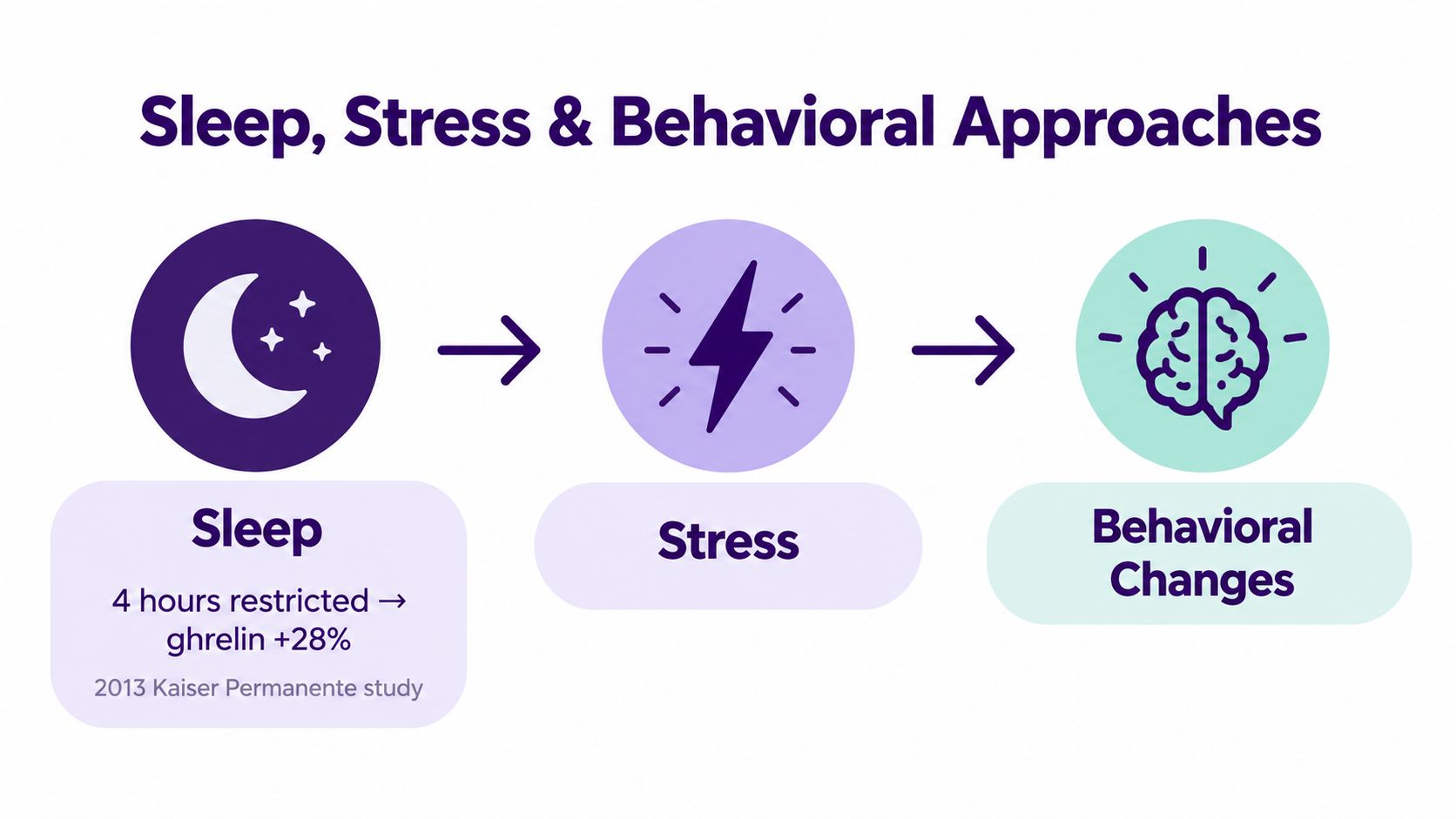
Start with the simplest sleep intervention: protect a consistent wake time and make the bedroom suitable for rest. Reduce late-night scrolling, keep a wind-down routine and deal with persistent insomnia or suspected sleep apnoea through a GP. A tired person often needs fewer decisions, not another demanding diet rule.
Use behavioural tools instead of self-criticism
Cognitive behavioural approaches help by separating the trigger, the thought and the action. For example:
- Trigger: You finish a stressful call and walk towards the snack cupboard.
- Automatic thought: “I need something sweet before I can cope.”
- Alternative response: Pause, breathe, leave the kitchen and decide whether you're hungry, distressed or both.
- Review: Record what happened without calling the outcome a success or failure.
This process doesn't require pretending that cravings are pleasant or easy. It makes the sequence visible, which gives you more opportunities to alter it. Therapy can be particularly valuable where cravings accompany anxiety, low mood, binge eating or longstanding restrictive dieting.
Supplements should be treated cautiously. Evidence for a product varies by ingredient and formulation, and a supplement can't replace sleep, food security or psychological care. People considering one may find a calm focus supplement guide useful for questions to raise with a pharmacist or clinician, especially if they take prescribed medicines.
A sustainable plan combines nutritional structure with stress regulation. A short walk, paced breathing, daylight exposure, a phone call or a pre-prepared meal may sound modest, but each can reduce the number of moments in which a craving has to carry the full burden of comfort and energy.
Tracking Progress and Knowing When to Seek Help
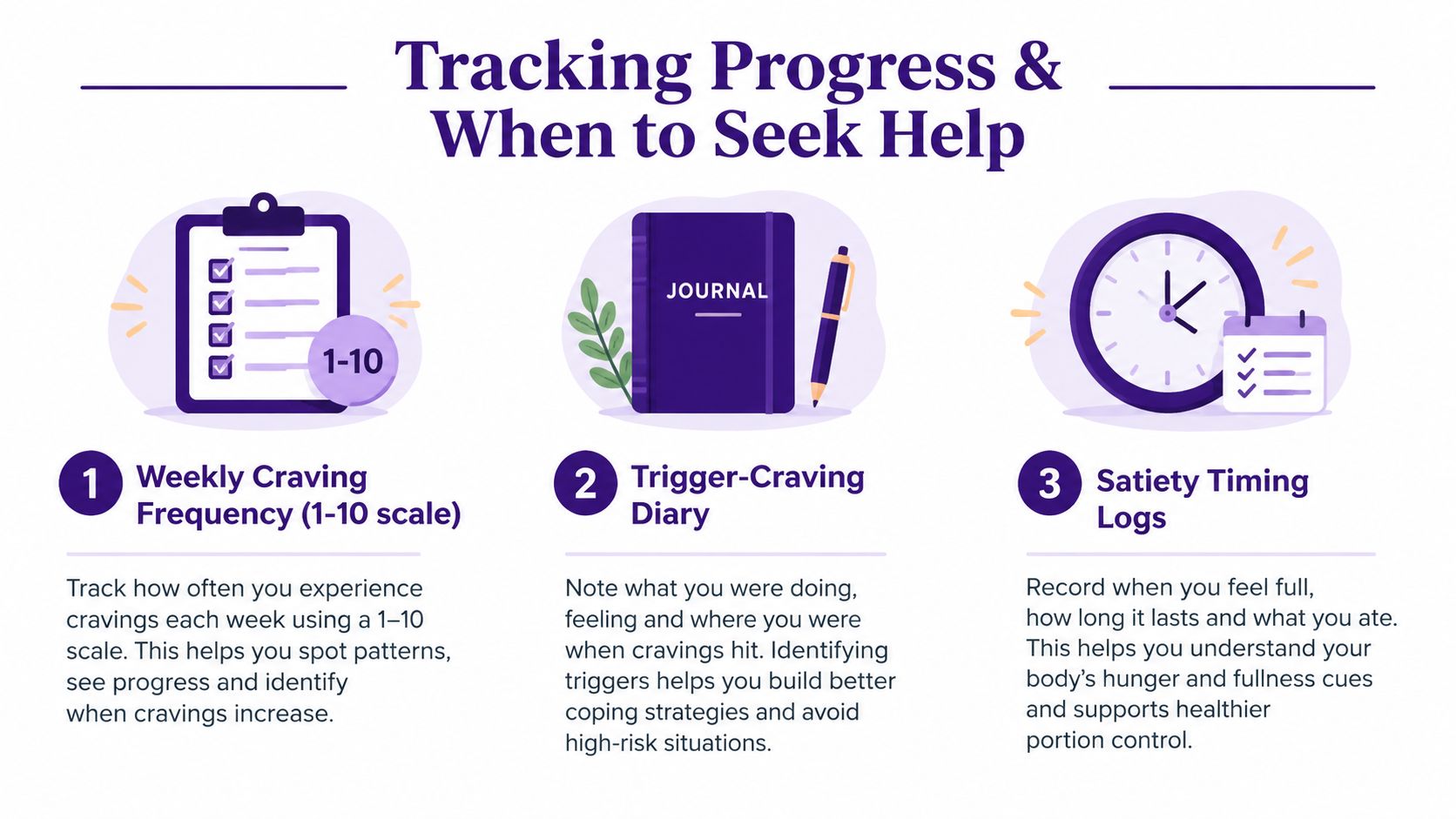
Weight is only one outcome, and it doesn't tell you why a craving happened. For food craving control, track frequency, intensity, context and recovery. A craving that still appears but falls from overwhelming to manageable represents progress that a scale may miss.
Record the craving on a zero-to-ten scale, the food wanted, the last meal, your sleep, mood, location and what you did next. Add a satiety timing note: did you feel comfortably full during the meal, immediately afterwards or only later? The NHS provides a My Weight Loss Plan tracker, and tools such as MyFitnessPal or Noom can support food records and reflective prompts, although no app can replace clinical judgement.
A simple review system
Use this four-part routine:
- Log each significant craving. Write the intensity and what happened before it.
- Review the pattern weekly. Look for missed meals, particular times, stressors or foods that leave you unsatisfied.
- Assess change after 30 days. Compare frequency, intensity and your ability to pause, not only body weight.
- Arrange medical support if progress remains stalled for three months. A GP can review health factors, eating behaviour and whether referral or medication assessment is appropriate.
Seek prompt clinical help if you regularly eat unusually large amounts with a sense of lost control, feel unable to stop, compensate through severe restriction or exercise, or experience intense shame around eating. These patterns may indicate an eating disorder or another condition requiring specialist support, rather than a need for stricter rules.
NICE obesity guidance supports structured assessment and specialist care where clinically indicated. Eligibility for particular services or medicines depends on factors such as BMI, health conditions, previous treatment and local NHS arrangements, so avoid applying a single threshold to yourself without professional advice.
A practical programme should leave you with better information, not more fear of food. Track what changes, ask for help when the pattern persists and choose support that addresses appetite, behaviour and the realities of daily life.
Trim offers medically supervised weight-management care through UK-registered clinicians, with treatment options that can include GLP-1 medicines or alternatives such as orlistat when suitable. If persistent cravings are affecting your eating and you'd like a structured clinical assessment, visit Trim to complete the consultation and discuss appropriate support.