
What to Eat at Night When Hungry: Healthy UK Choices

If the usual advice is to stop eating after dinner, what should you do when you're hungry before bed? The useful question isn't whether it's late. It's why you're hungry, what you've eaten during the day, and whether you need a snack, a more substantial meal or support with a recurring problem.
Choosing what to eat at night when hungry doesn't require a banned-food list. Start with the cause, then choose an amount and combination that fits your needs. The evidence deserves the same care: an association between late eating and body weight isn't proof that a bedtime snack causes weight gain.
Table of Contents
- Night Snack Options and Portions at a Glance
- Real Hunger or Habit at Night
- Build a Filling Snack From Protein and Fibre
- Timing, Calories and Sleep Trade-Offs
- When Night Hunger Needs a Clinician's Input
- Prepare and Test Your Night Snack Plan for One Week
Night Snack Options and Portions at a Glance
A planned, portion-controlled snack is a sensible response to genuine hunger, not a failure. These options offer a practical starting point.
Sensible night snacks, portions and why they work
| Snack | Portion | Why it works |
|---|---|---|
| Natural yoghurt with berries | 125 g pot, plus one tablespoon of nuts or a small bowl of berries | Protein from yoghurt, with fibre and vitamins when fruit is included |
| Apple slices with nut butter | One medium apple, sliced, with a thin layer of nut butter | Fibre-rich carbohydrate paired with unsaturated fat |
| Vegetable sticks with hummus | A handful of vegetables with a small portion of reduced-fat hummus | Contributes towards daily fruit and vegetable intake |
| Cottage cheese with wholegrain crispbread | A small portion of cottage cheese on wholegrain crispbread | Protein plus fibre from wholegrains |
| Beans on wholemeal toast | One slice of wholemeal toast with a standard portion of beans, checked on the label | Pulses add fibre and protein |
| Small bowl of wholegrain cereal with yoghurt | One small bowl with plain yoghurt | Supplies fibre; choose a lower-sugar cereal rather than a sugary variety |
| Handful of grapes or small bowl of berries | One portion of fruit at a time | Fruit with fibre and natural sugars in a set amount |
| Plain popcorn | A measured bowl, not eaten from the packet | A wholegrain choice with low energy density when prepared without rich toppings |
The yoghurt and fruit quantities reflect examples in the BDA low-carbohydrate snack sheet. The other portions are practical serving descriptions, not universal prescriptions.
What makes these sensible choices
The British Dietetic Association fact sheet hosted by Norfolk and Norwich University Hospitals explains that snacks can contribute energy, vitamins, minerals, protein and fibre, while some add excess fat, sugar and salt. Its wider dietary message includes aiming for at least five portions of varied fruit and vegetables daily, with foods high in fat, salt and sugar eaten less often and in small amounts.
Yoghurt provides protein, while berries add fruit and fibre. Apple and nut butter combine fibre-rich carbohydrate with unsaturated fat. Vegetables and hummus bring produce and pulses together, while cottage cheese and crispbread pair dairy protein with wholegrains.
Beans supply both protein and fibre. Wholegrain cereal offers a convenient fibre source, provided you compare sugar content. Grapes or berries work when you want something light, and plain popcorn offers a wholegrain alternative to richer savoury snacks.
Practical rule: Choose something that supplies protein or fibre, and put the portion in a bowl or on a plate before sitting down.
Crisps, biscuits, confectionery and large takeaway portions aren't included because they make it easier to add substantial energy, sugar or salt without addressing the nutritional gap. They aren't forbidden foods.
For a separate discussion of evening food choices and sleep, The Sleep Consultant's guide to foods that support better sleep offers useful context, rather than a guarantee that a particular snack will improve sleep. Tonight, choose an option you already have and decide the portion before eating.
Real Hunger or Habit at Night
A desire to eat can come from physical hunger, habit, boredom, stress or thirst. Eating while partly asleep is different again and deserves attention if it recurs or you barely remember it.
Check the cause before choosing food
- Try a drink first. Have water and pause briefly. This helps you check whether thirst, rather than food, is what you need.
- Review dinner. Did it include a protein food, a fibre-rich starchy carbohydrate and vegetables? An unusually early or small dinner may explain why you're hungry again.
- Check your surroundings. Notice whether the urge starts with television, scrolling, a stressful evening or a predictable slump. A familiar cue doesn't automatically mean you need food.
- Notice physical signs. Stomach rumbling and low energy can support the picture of hunger, but no single sensation gives a definitive answer.
Use this decision path to separate a need for nourishment from an automatic evening routine.
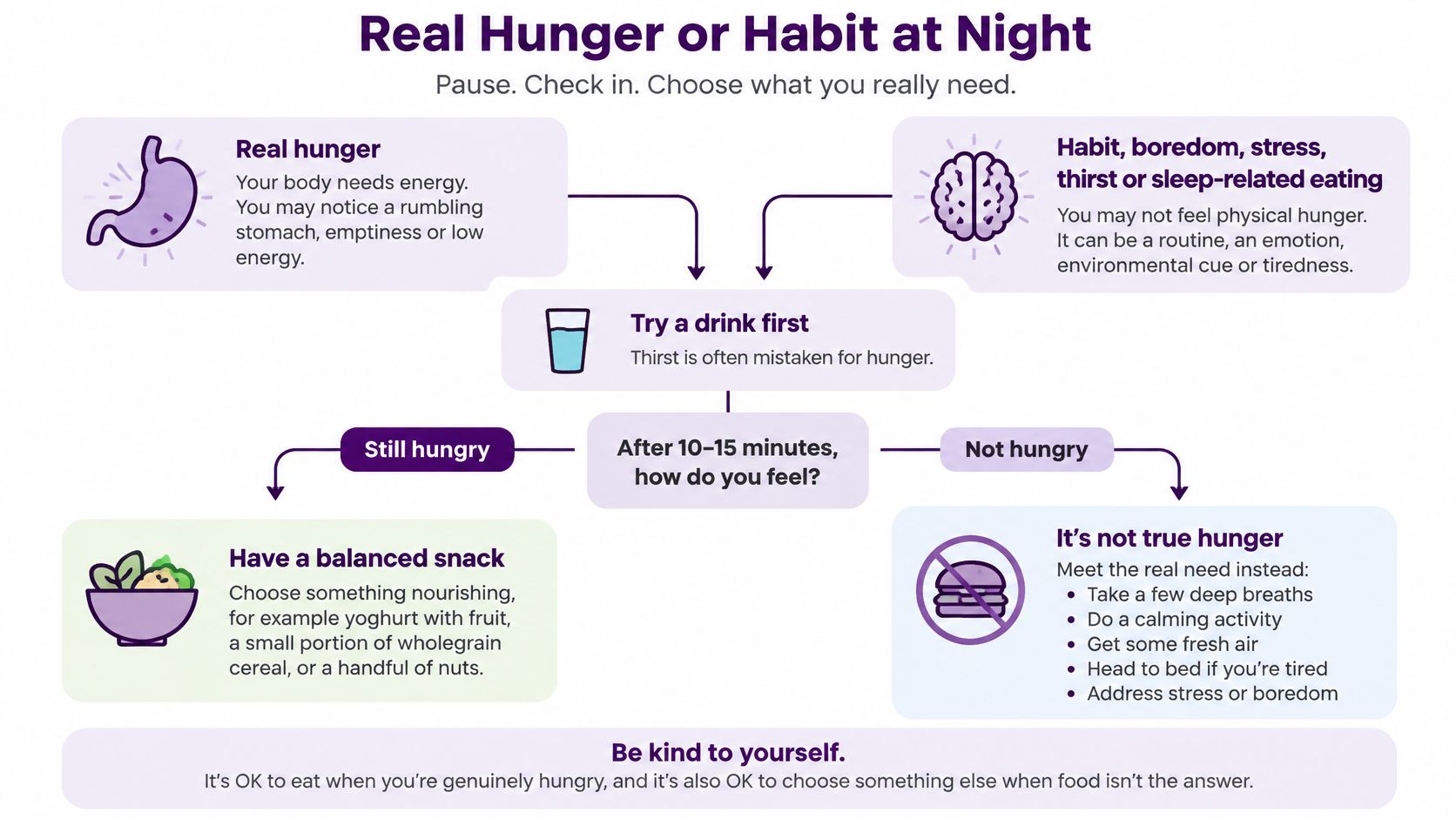
The NHS healthy-eating guidance for weight loss recognises that some people need snacks between meals, particularly when they're very active. Hunger after late exercise therefore isn't a reason to impose universal fasting.
If you've eaten too little during the day, improving breakfast, lunch or dinner is more useful than demanding extra willpower at bedtime. For broader meal-planning ideas, this guide to reducing appetite naturally explores everyday habits without making hunger something to ignore.
Persistent physical hunger calls for food. Habit or boredom may call for changing rooms, switching off the television or choosing another activity. Stress may need a calming routine or conversation, not stricter food rules.
Build a Filling Snack From Protein and Fibre
Think of fibre as the bulk and protein as the anchor. Fibre adds volume and can slow digestion, while protein supports satiety, the feeling of satisfaction after eating. Neither needs to come from a specialist product.
A simple combination can look like this.
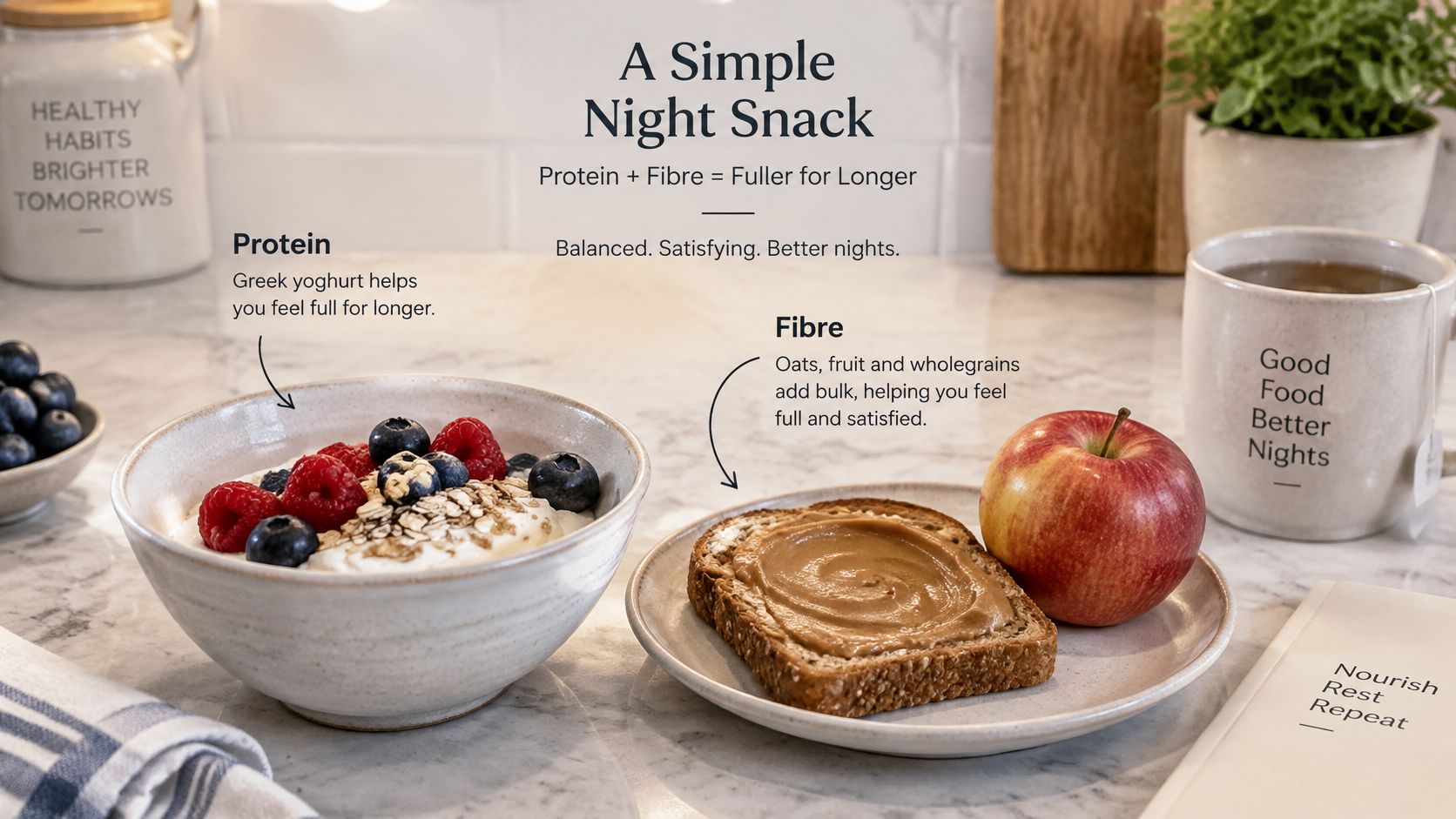
UK healthy balanced diet guidance on nidirect identifies fruit, vegetables, wholegrain starchy foods, beans, pulses, eggs, fish, meat, dairy and alternatives as core food groups; the accompanying National Diet and Nutrition Survey figures put average fibre intake among adults aged 19 to 64 at about 16.4 g daily, against a 30 g recommendation, with 96% falling short. Higher-fibre choices can help people feel full while contributing towards that shortfall.
Make the pairing work for your appetite
Plain yoghurt with berries and oats combines dairy protein with fibre-containing fruit and grain. Cottage cheese with wholegrain crispbread suits a savoury preference. Beans on wholemeal toast provide pulses and wholegrain bread without much preparation.
If you missed a meal, a snack-sized pot may not be enough. A small jacket potato with tuna or beans and salad is a more appropriate light meal, combining starchy carbohydrate, protein and produce. This can provide more sustained fullness than relying on biscuits, crisps or sugary cereal.
For more detail on fitting protein across meals, see this guide to protein intake for weight loss. The aim isn't to keep adding protein foods indefinitely, but to build a balanced amount you can comfortably eat.
The accompanying video provides another format for exploring food choices.
Nuts and spreads can fit, but generous additions of these plus confectionery can turn a modest snack into an energy-dense meal. Measure additions rather than pouring them freely.
Check for a protein source, a fibre source and a defined portion. You don't need a complicated recipe.
Timing, Calories and Sleep Trade-Offs
A fixed cut-off time may sound decisive, but the available evidence does not establish one. A University of Surrey population study analysed two days of food diaries from 21,020 adults and found associations between later eating and body weight.
Evening eating and weight association in the Surrey study
| Measure | Coefficient or odds ratio | 95% confidence interval |
|---|---|---|
| Calories after 21:00, association with BMI | β = 0.74 | 0.32 to 1.16 |
| Calories after 22:00, association with BMI | β = 0.75 | 0.18 to 1.32 |
| Energy after 21:00, odds of excess weight or obesity | Odds ratio 1.33 | 1.10 to 1.59 |
These are associations, not proof that late eating causes weight gain. The study did not assign people a bedtime snack, and its coefficients cannot predict an individual's weight change. Differences in people's routines may also help explain the results.
Balance the amount with comfort and routine
Consider the snack's size and composition alongside the time. The BDA snack-planning approach favours regular snack times, avoiding snacks immediately before a planned meal, and counting snacks as part of the day's food rather than as extras.
For a homemade snack, use Recipe One to calculate calories in your recipes. Estimates can help you understand portions, while hunger and a clinician's nutritional advice still matter.
Sleep, stress and distracted eating can all shape night-time choices. Read more about how sleep affects weight loss. NHS dietetic resources offer further context on eating patterns.
At bedtime, brushing still matters if you have eaten. Repeated sugary or acidic snacks close to bed can also raise an oral-health concern. Eat seated, without screens, so you can pay attention to the amount and notice when you feel satisfied. Finish the snack rather than grazing, and ask your dentist about persistent sensitivity.
No food guarantees good sleep, and a rigid eating deadline will not address every cause of restless nights.
When Night Hunger Needs a Clinician's Input
Night hunger symptoms and who to contact
| Symptom | Suggested action | Who to contact |
|---|---|---|
| Persistent nausea or vomiting | Pause the snack plan and seek advice | GP or prescriber |
| Reflux or heartburn that keeps returning | Review snack timing and portion size with advice | GP or pharmacist |
| Dizziness | Seek advice before changing meals or snacks | GP promptly; urgent care if severe |
| Unable to meet protein or fluid needs | Ask about a dietitian referral | GP or dietitian |
| Diabetes or regular appetite-affecting medicine | Get individual advice on snack timing | Diabetes team or prescriber |
| Guilt, secrecy or loss of control around night eating | Seek early support | GP |
Know when general advice has limits
Occasional hunger after a small dinner is different from repeatedly waking hungry while feeling unwell. If you use prescribed weight-loss medicines and also have persistent nausea, vomiting, reflux, dizziness, or difficulty eating and drinking enough, contact your prescriber rather than reducing food intake further. Don't change the prescribed dose yourself.
If you have diabetes, snack timing may need to fit your medicines, glucose patterns and activity. Follow your individual diabetes plan, particularly if you suspect low blood glucose, rather than using a general snack list as treatment.
The Eatwell Guide booklet provides a framework for balanced eating, not personalised management of symptoms or medicine side effects. Its food-group approach can help you review whether your overall intake is adequate.
A small appetite needs a different approach
NHS dietetic guidance on eating with a small appetite supports nourishing snacks and drinks, including at bedtime, when full meals are difficult. That's an important distinction: advice designed to increase nutritional intake shouldn't be confused with a universal weight-loss rule.
Strong guilt, secrecy or feeling unable to stop eating also deserves care. You don't need to wait until the problem becomes severe before speaking to your GP.
Seek support early: Recurring symptoms, inadequate intake or distress are reasons to book an appointment, not tighten your food rules.
If vomiting prevents you keeping fluids down or dizziness is severe, seek urgent medical advice rather than continuing to test snacks.
Prepare and Test Your Night Snack Plan for One Week
What tends to happen before you reach for food at night? A snack plan works best when it starts with that question. Hunger after an early dinner may call for food, while reaching for snacks automatically during a familiar routine may call for a change to the routine itself.
Prepare a snack you'll actually want
Use familiar foods, and make the choice easy before your usual evening hunger arrives. For example:
- Yoghurt and berry bowl: Spoon berries and oats onto a pot of plain yoghurt.
- Apple with nut butter: Slice an apple and spread the nut butter thinly.
- Crispbread and cottage cheese: Top wholegrain crispbread with cottage cheese, then add cucumber or tomato.
- Beans on toast: Heat the beans and add spinach or tomato if available.
- Vegetable sticks with hummus: Cut carrot, pepper or cucumber into sticks and portion the hummus.
- Small cereal bowl: Add plain yoghurt and fruit to a small bowl of wholegrain cereal.
Keep the menu somewhere visible. That way, you won't have to make a fresh decision when you're tired.
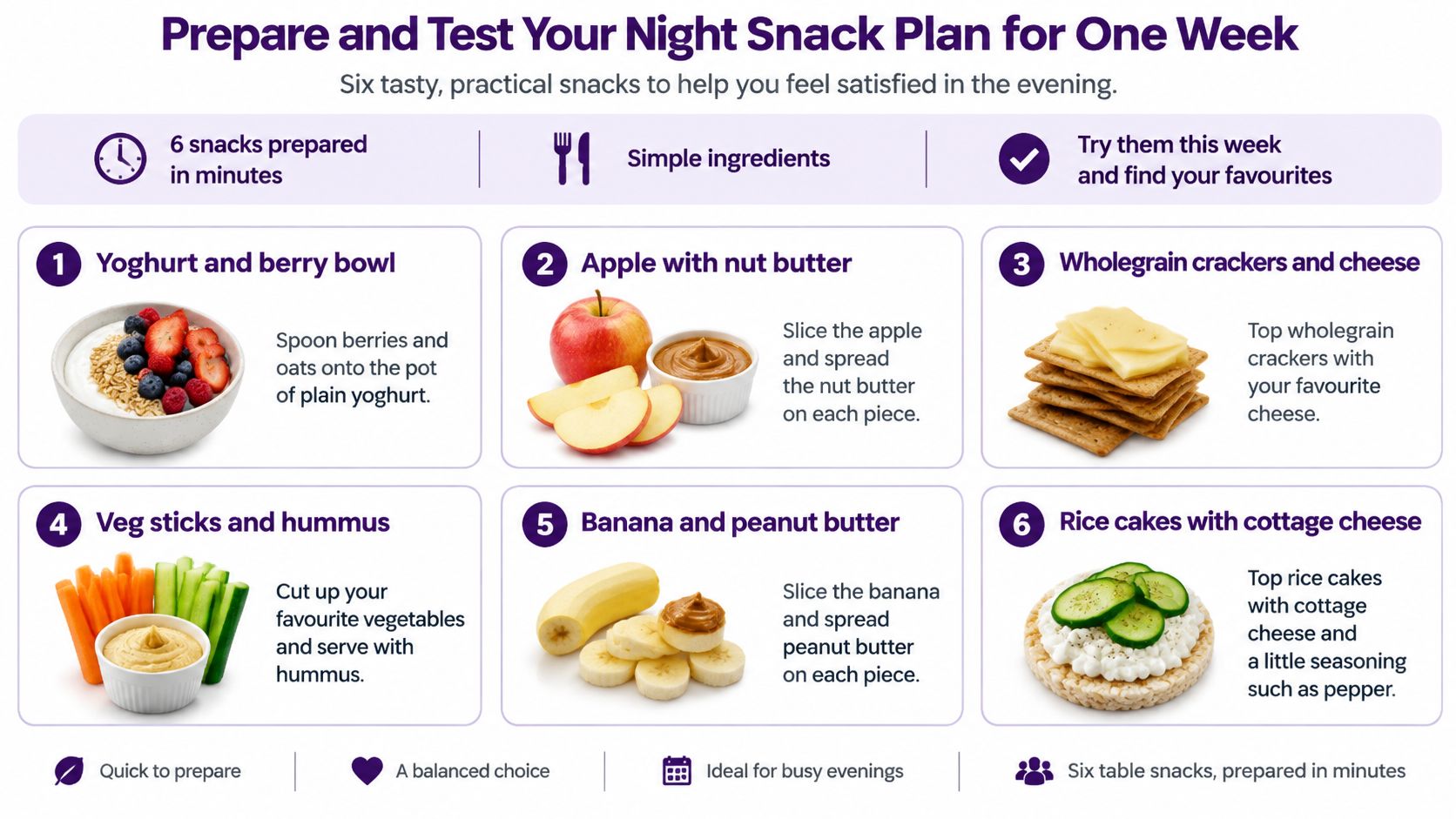
The BDA snack-planning resource suggests identifying a troublesome time, preparing alternatives ahead and making snacks you tend to eat automatically less visible or available. If you want a sweet treat, serve a portion rather than keeping an open packet beside the sofa.
Store prepared pots and chopped vegetables in clear, covered containers at the front of the fridge. Follow storage instructions and prepare only what you'll use while it remains fresh.
Run a practical test
Choose a recurring situation, such as feeling hungry after an early family dinner or getting home from exercise. Note what is happening, then choose a snack that suits the situation instead of reaching for whatever is nearest.
- Prepare before the trigger. Assemble the ingredients while making dinner or clearing up.
- Serve before sitting down. Put away the remaining ingredients so the amount is deliberate.
- Record the experience briefly. Note whether you felt physically hungry, what you ate and whether you felt comfortably satisfied.
- Review the pattern. Look for fewer unplanned kitchen visits, steadier energy, and whether reflux or disrupted sleep persists.
At the end of the week, adjust anything that wasn't practical. Continue for another week if useful, then review hunger timing, sleep, energy, reflux and any tooth sensitivity. If you track weight, look at the trend rather than expecting a particular snack to produce a predictable change.
This is a personal routine check, not a clinical trial or a promise of weight loss. Keep your GP informed about ongoing symptoms. Any prescribed treatment requires clinical assessment.
Tonight, write down when you usually feel hungry and which snack you'll try. If the difficulty keeps returning despite a workable routine, take your notes to your GP or dietitian.
If you'd like support beyond self-directed changes, you can find out more about Trim's UK weight-management service, which combines clinical assessment with nutrition guidance and ongoing support, at gettrim.co.uk.