
Mounjaro Night Sweats: Causes and What to Do

UK product information does not list night sweats as a quantified adverse effect of Mounjaro, and sweating is described as a hypoglycaemia symptom that may affect more than 1 in 10 adults with type 2 diabetes only when tirzepatide is used with insulin or a sulphonylurea.
Plenty of online advice treats Mounjaro night sweats as a near-certain early effect, or even as a sign the weekly injection is "doing its job". That framing is the problem. A soaked pillow can come from low glucose, a menopausal flush, wine, a heavy duvet, or an illness that has nothing to do with the pen. Product information puts sweating inside a low-glucose warning, not on a standalone night-sweat rate. The practical question is which medicines you already take, and whether the episode travels with hunger, shaking, or a meter reading.
Table of Contents
- Mounjaro Night Sweats and the Evidence So Far
- How Low Blood Sugar Triggers a Night Sweat
- Other Causes That Mimic a Drug Reaction
- Three Overnight Patterns Worth Comparing
- How to Manage Sweats While Staying on Plan
- Readings and Symptoms That Need a Clinician
- Frequently Asked Questions About Mounjaro and Night Sweats
- Decide Your Next Step With Clinical Support
Mounjaro Night Sweats and the Evidence So Far
A night sweat does not, by itself, show that Mounjaro is causing a direct side effect. UK product information does not give night sweats a separate frequency. It describes sweating as a possible symptom of low blood sugar, with the risk depending partly on other glucose-lowering medicines.
The NHS guidance on tirzepatide describes hypoglycaemia as very common in adults with type 2 diabetes taking Mounjaro alongside insulin or a sulphonylurea. That category means it may affect more than 1 in 10 people in that treatment group. It is a rate for low blood sugar, not for night sweats.
What the numbers actually measure
The Mounjaro Summary of Product Characteristics does not list night sweats as a common, specific adverse reaction. It reports clinically significant hypoglycaemia at up to 0.04 events per patient-year when tirzepatide is used alone or with non-insulin oral medicines. In trials, glucose below 3.0 mmol/L occurred in 10–14% of patients taking tirzepatide with a sulphonylurea, and in 14–19% when it was added to basal insulin. These are measures of low glucose, not of sweating.
| Treatment context | What UK sources report | Meaning for night sweats |
|---|---|---|
| Tirzepatide alone or with non-insulin oral medicines | Clinically significant hypoglycaemia up to 0.04 events per patient-year | A low-glucose sweat is comparatively uncommon |
| Tirzepatide with a sulphonylurea | Glucose below 3.0 mmol/L in 10–14% of trial patients | Sweating may accompany a hypo; do not change doses alone |
| Tirzepatide added to basal insulin | Glucose below 3.0 mmol/L in 14–19% of trial patients | Low glucose is more frequent in these trial results; symptoms need prompt attention |
| Night sweats as their own labelled effect | No standalone frequency given | A sweat alone cannot establish a direct drug reaction |
The European Medicines Agency information on Mounjaro also gives no separate night-sweat statistic. The key distinction is between a symptom that can occur during hypoglycaemia and a measured adverse-effect rate for night sweats.
For a drenching episode, note when it happened alongside your injection, meals, alcohol, exercise, and any other glucose-lowering medicine. If you already use a meter, check your glucose during symptoms. Repeated readings below 4.0 mmol/L, any reading below 3.0 mmol/L, confusion, a seizure, or being unable to treat yourself call for urgent clinical advice. Do not change insulin or a sulphonylurea without speaking to the prescriber.
A doctor, pharmacist, or nurse can help assess suspected side effects, and suspected reactions can be reported through the MHRA Yellow Card scheme. For broader background on non-surgical medical options, see clinical weight loss guidance in Columbia. That commercial information does not establish the cause of an individual night sweat.
How Low Blood Sugar Triggers a Night Sweat
A night sweat is a symptom to investigate, not proof that Mounjaro directly caused it. If glucose falls too low, the body's alarm response can bring on sweating while you sleep. You may feel well at 10 pm and wake drenched later.
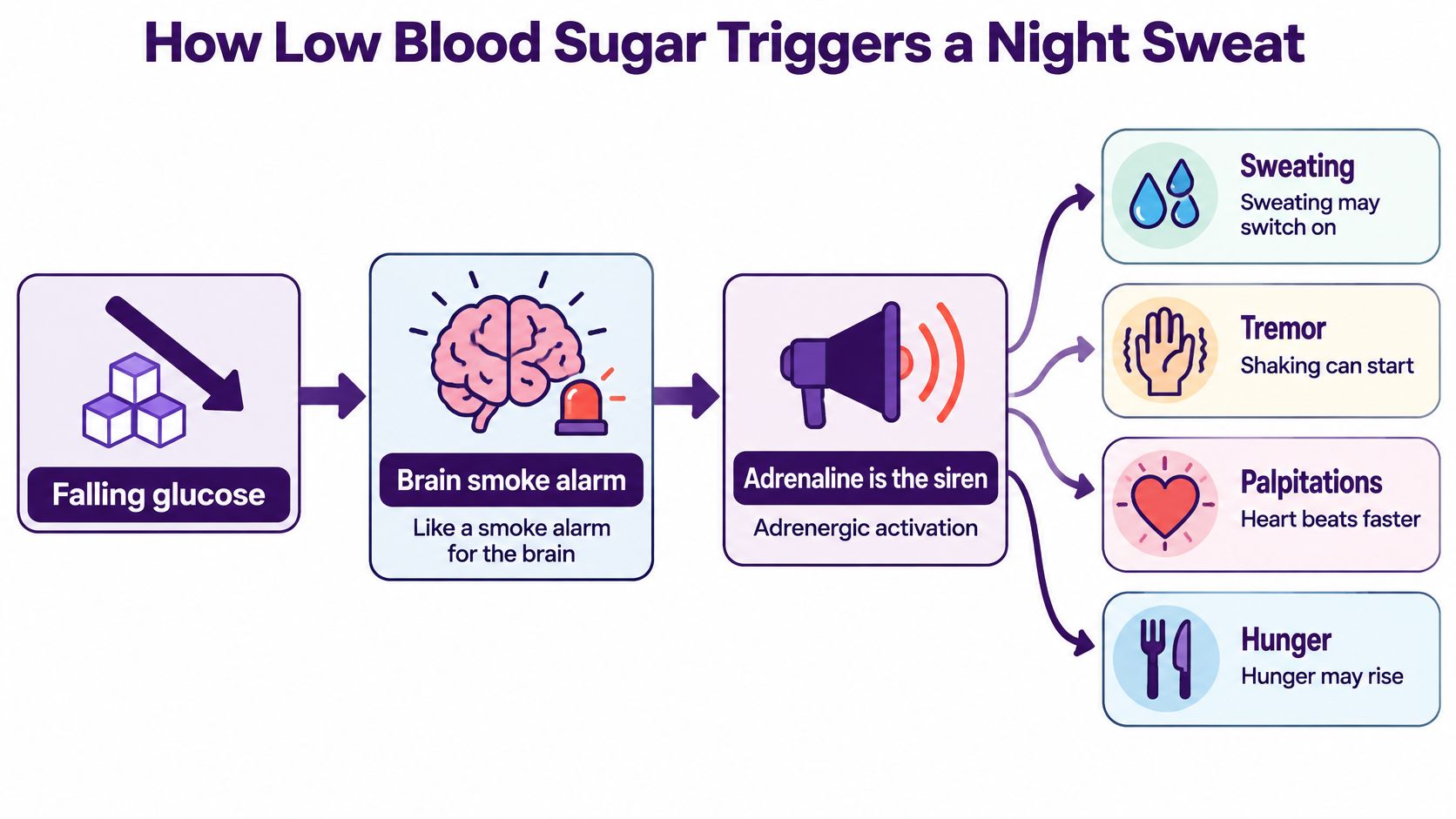
For example, after an evening injection, reduced appetite might mean a smaller dinner. Add more walking than usual and a glass of wine, and the overnight picture may differ from a typical evening. Tirzepatide slows stomach emptying and can reduce appetite. If insulin or a sulphonylurea is also lowering glucose at its usual dose, low glucose may trigger sweating, shaking, palpitations, hunger, dizziness, confusion, or waking.
Why the other medicines matter more than the pen
The Mounjaro patient information leaflet does not list night sweats as a distinct adverse reaction. It describes sweating as a symptom of low blood sugar, particularly when tirzepatide is used with insulin or a sulphonylurea. The doses of those medicines may need adjustment, but only the prescriber should advise on changes. Cutting a dose yourself can leave glucose too high.
A hypo-related sweat may come with hunger, shaking, or muddled thinking. A menopausal flush can feel like a sudden wave of heat without a low glucose reading. Low blood sugar can also occur in people without diabetes who use GLP-1 medicines for weight management, so a weight-loss prescription does not make repeated drenching sweats automatically harmless. Sleep and glucose are linked in other conditions too. Read more about why diabetes matters in sleep care.
What the leaflet will not tell you
UK product information gives no typical start day, usual duration, or dose at which night sweats should appear. The relevant context is whether tirzepatide is used alongside insulin or a sulphonylurea, another diabetes treatment, or no glucose-lowering medicine.
Record when the sweat happens in relation to injections and meals. Note any shaking, palpitations, weakness, confusion, or intense hunger.
Seek clinical assessment if episodes are unexplained or keep returning, especially if they come with confusion or other neurological symptoms, or occur while using diabetes medicines.
Other Causes That Mimic a Drug Reaction
UK regulatory text describes hypoglycaemia symptoms but gives no frequency, duration, or usual timing for night sweats on tirzepatide. There is also no UK post-market figure that splits night sweats by diabetes status, dose step, other medicines, or menopausal status. A short diary beats a guess.
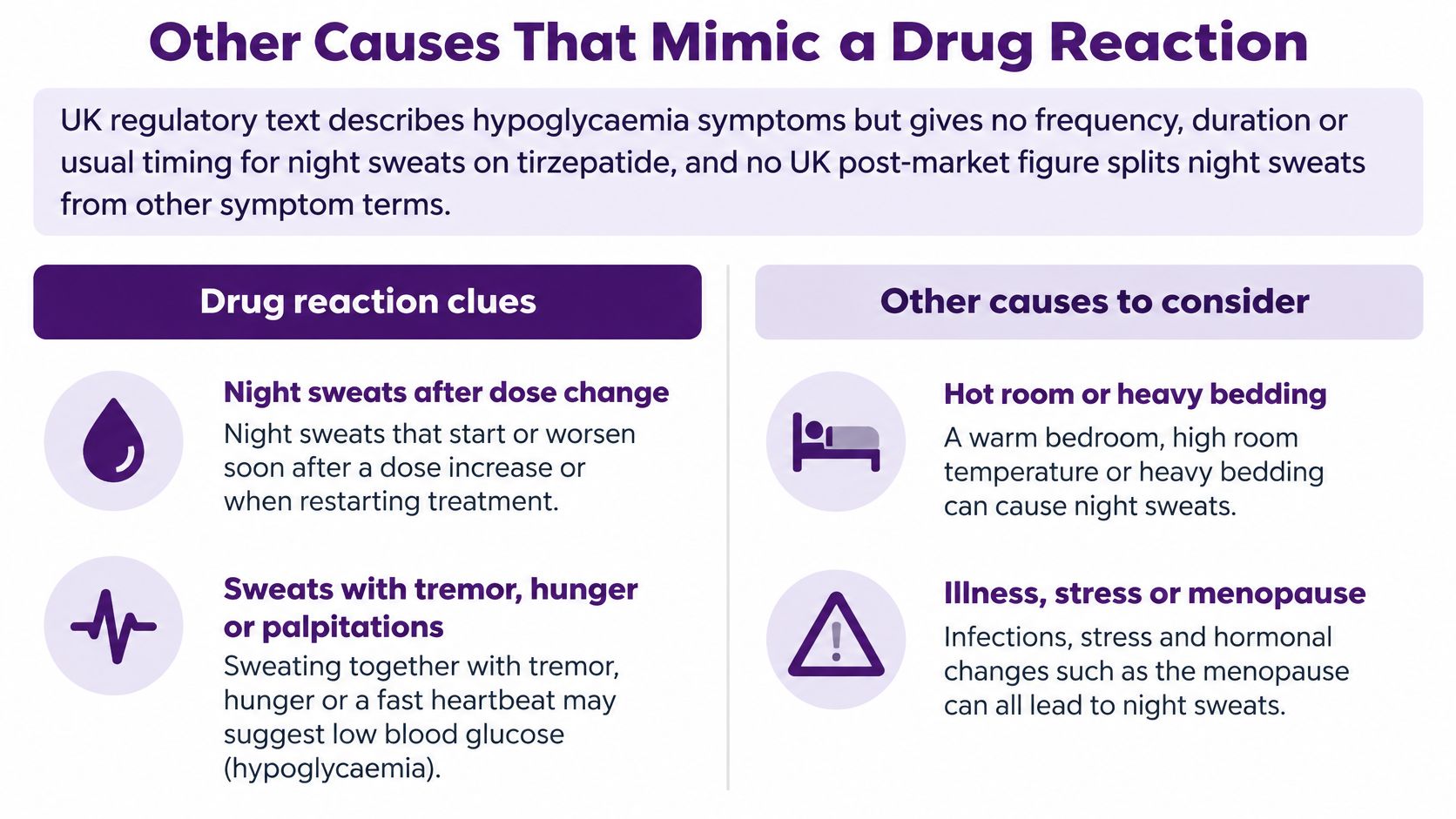
The MHRA product information focuses on low-glucose symptoms rather than a timetable for sweats. Patients are left without a reliable expectation of what should fade after a dose step, and what needs investigation.
Menopause can share the same week
Perimenopausal and menopausal vasomotor sweats often start, or worsen, in the same months as a new weight-loss plan. Blaming every episode on tirzepatide can delay a hormone assessment. If flushes track the cycle, or you already use HRT, that history belongs in the same note as the injection date. Overlap between hormone therapy and tirzepatide is covered in more detail in this guide to HRT and Mounjaro.
Infection adds fever, cough, urinary symptoms, or a general feeling of being unwell. Alcohol, anxiety, an overactive thyroid, and a hot bedroom can each soak the sheets without a low glucose reading.
| Possible cause | Typical clues | Points away from a hypo | What to record |
|---|---|---|---|
| Hypoglycaemia pattern | Sweat with hunger, shaking, confusion or a fast heartbeat | Reading at or above 4.0 mmol/L with no hunger or shaking | Capillary glucose, meals, insulin or sulphonylurea |
| Menopause or perimenopause | Flushes, cycle change, longer vasomotor history | Often no hunger, tremor or low reading | Cycle, HRT, timing versus injection |
| Infection | Fever, cough, urinary symptoms, feeling unwell | Temperature and illness, not meal timing | Thermometer reading and other symptoms |
| Alcohol | Sweats after evening drinks | Follows alcohol more than the weekly dose | Units and time of drinks |
| Anxiety or nightmares | Racing thoughts or panic on waking | Palpitations with a normal glucose | Stress and sleep pattern |
| Thyroid disease | Heat intolerance and tremor by day | Symptoms continue away from injection day | Known thyroid history |
| Hot bedroom or bedding | Warm room or heavy duvet | Settles when the room cools; no confusion | Room temperature and bedding |
Write down injection date and dose, food, alcohol, room temperature, cycle or menopausal symptoms, and any hunger, shaking, palpitations, weakness, or confusion. A sweat that matches a hypo on Monday and a hot room on Thursday still goes to the clinician with the diary. It doesn't go into a private change of diabetes medicines.
Recurrent drenching sweats, fever, weight falling beyond the intended treatment effect, fainting, confusion, or severe weakness should prompt medical review rather than another week of self-management.
Three Overnight Patterns Worth Comparing
A wet sheet does not identify its cause. The timing, other symptoms and medicine context help distinguish a possible low blood sugar from menopause or a hot room.
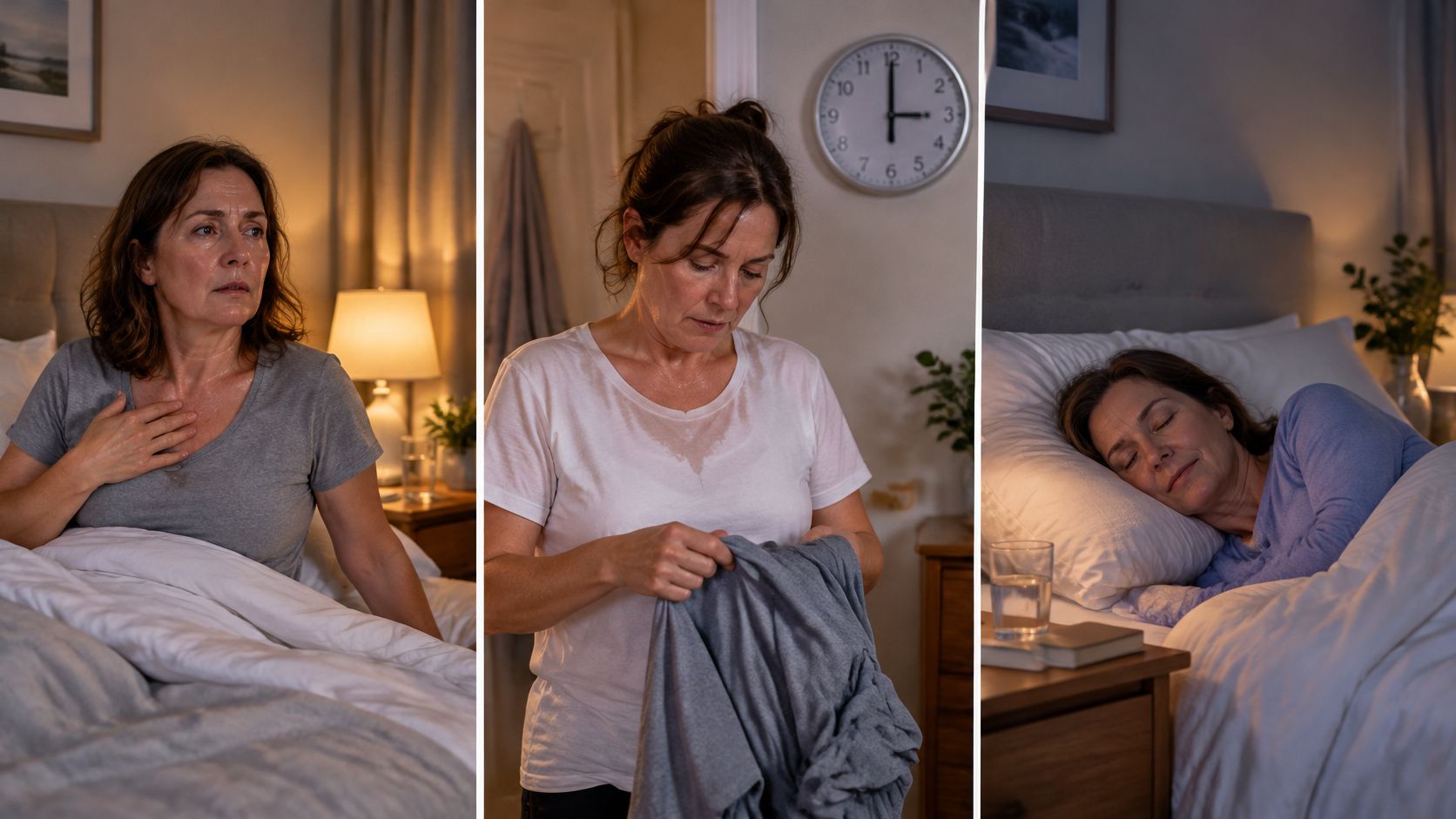
A woman in her early fifties using tirzepatide for weight management wakes drenched. She has also had daytime flushes for months. Her morning glucose is in her usual range, and she has no hunger or shaking. Menopause is one possible explanation; the injection is not the only suspect.
Someone with type 2 diabetes who still uses basal insulin wakes at 02:00 sweaty, hungry and shaky. The meter reads 2.8 mmol/L. A reading of 2.8 mmol/L with these symptoms is a hypo that needs treating straight away with fast-acting carbohydrate if you can swallow safely, then urgent contact with the prescriber. Do not change insulin without their advice.
A third person drinks wine and sleeps under a heavy duvet on the evening after a dose increase. They have no confusion or tremor. Heat or alcohol could explain that night, so record the circumstances rather than assuming it is a drug reaction.
Sweating was not what the trials measured
NICE evidence on tirzepatide describes two phase 3 weight-management trials: SURMOUNT-1, with 2,539 adults without diabetes, and SURMOUNT-2, with 938 adults with type 2 diabetes. Participants received once-weekly tirzepatide at 5 mg, 10 mg or 15 mg, or placebo, alongside lifestyle support. The trials' main outcomes at week 72 were percentage change in body weight and the proportion of participants who lost at least 5%.
Night sweats were not a primary outcome. An isolated episode is not a measure of treatment success or a typical trial result. The trial evidence described here concerns longer-term weight outcomes, not short-term reports of appetite or feeling hot overnight.
A short explainer on recognising low glucose may help if you also use insulin or a sulphonylurea:
Compare the timing and symptoms before drawing conclusions. Keep the record for your clinician, and do not change a medicine dose on your own.
How to Manage Sweats While Staying on Plan
These are comfort and safety steps. They are not permission to alter Mounjaro, insulin, or a sulphonylurea.
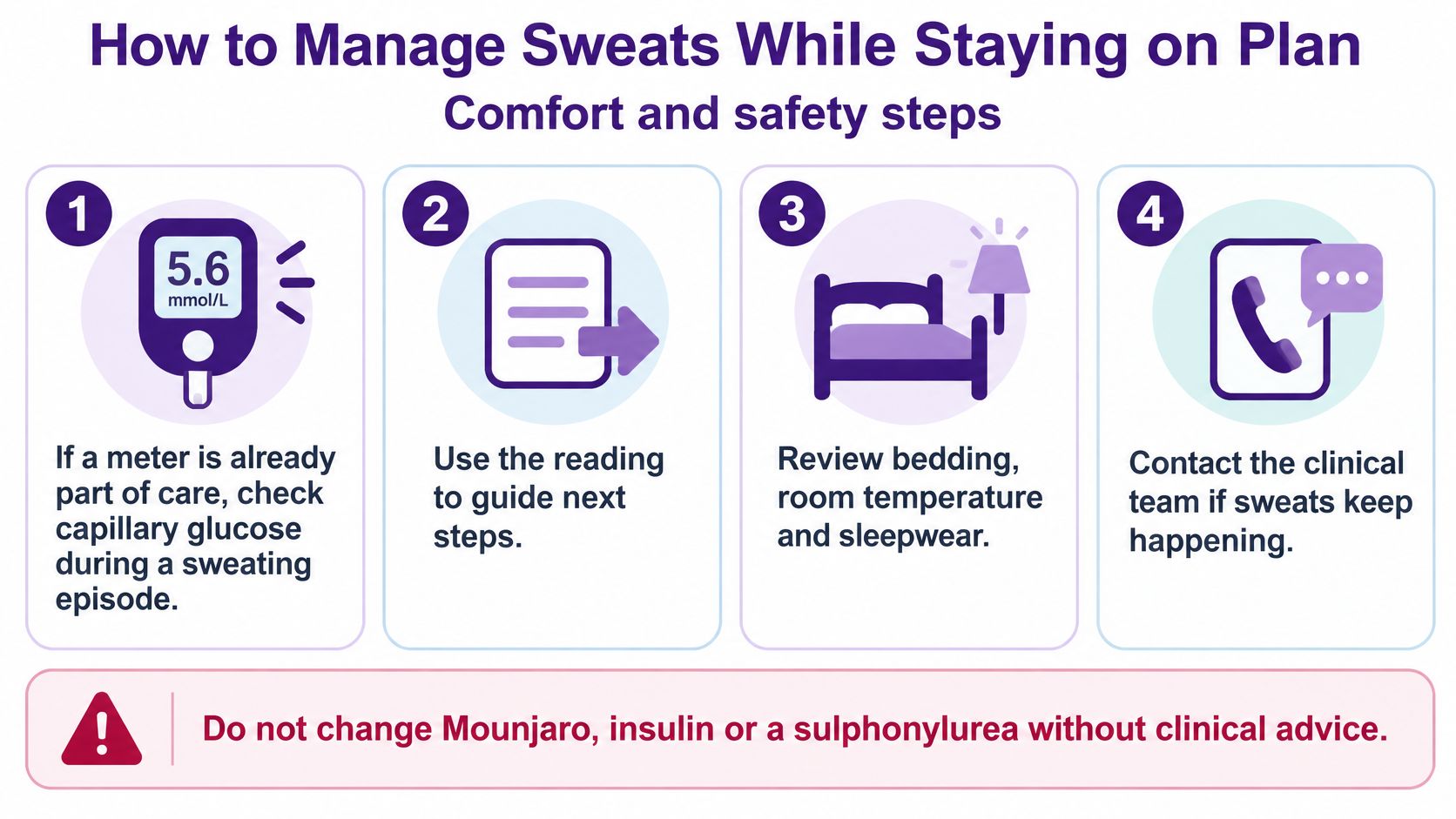
- Check during symptoms. If a meter is already part of your care, check capillary glucose while you are sweating and write the number beside the time, because a reading taken only at breakfast can miss the overnight dip.
- Build a two-week note. Record injection day, current dose, last meal, alcohol, and hard exercise so a clinician can see whether sweats cluster after the pen, after a skipped meal, or at random.
- Cool the room first. Use lighter bedding and a spare layer you can throw off, rather than assuming every soak is the injection.
- Don't skip the evening meal during dose escalation. A long gap plus another glucose-lowering medicine is a set-up for a night-time low, and meal ideas that fit a reduced intake are set out in this guide to what to eat on Mounjaro.
- Keep alcohol modest, especially on injection day. It can warm the body and affect glucose in the same night.
- Follow the hypo plan you already have. If a low reading and hypo symptoms are present and you can swallow safely, use the fast carbohydrate your team has already advised.
- Leave prescribed doses alone. Don't stop tirzepatide, and don't cut insulin or a sulphonylurea, because rebound high glucose and undertreated diabetes are their own risks.
- Book a routine review if sweats recur but stay mild, with no red-flag symptoms, so the pattern is assessed before it becomes a habit of waiting.
NICE expects tirzepatide for weight management to sit alongside a reduced-calorie diet and more physical activity. Nutrition changes should stay inside the plan a clinician has agreed.
These steps can't prove the cause. They also don't replace the thresholds for urgent contact.
Readings and Symptoms That Need a Clinician
Seek urgent help now, using 999 if needed, for any glucose reading below 3.0 mmol/L with symptoms, for confusion, a seizure, or fainting, and for any low you can't treat yourself or can't swallow safely. Those situations aren't a "wait until morning" problem.
Prompt, but not always an ambulance
Recurrent readings below 4.0 mmol/L, even if you recover with carbohydrate, need same-day or prompt prescriber advice rather than another night of watching. Insulin and sulphonylurea doses stay unchanged until the prescriber decides.
Night sweats with weakness, dizziness, a fast heartbeat, irritability, or muddled thinking warrant prompt contact with a clinician. Call as well for fever, a new severe illness, sweats that keep returning after the room and bedding have been sorted, or weight falling faster than the agreed plan.
Who to contact in the UK
- Prescribing team, pharmacist, or nurse: suspected side effects and routine concerns, with your diary and any readings in hand.
- 999: an unconscious or fitting person, or someone who can't swallow safely.
- MHRA Yellow Card: a place to report a suspected side effect. It collects safety information and doesn't replace treatment.
A wider list of recognised reactions, so a sweat isn't the only symptom you know how to describe, is in this overview of Mounjaro side effects.
Drenching sweats together with confusion, a seizure, or a low reading are a glucose emergency until a clinician has assessed them.
Frequently Asked Questions About Mounjaro and Night Sweats
Do night sweats mean the injection is working? No. The trials measured weight change and the share of people who lost weight. A sweat isn't a success marker.
Should I stop Mounjaro if I sweat at night? Don't stop or change the dose on your own. Take the diary and any glucose readings to the prescriber.
Can I check my glucose overnight without a meter? Not reliably. If you have no meter and the symptoms worry you, seek urgent advice rather than waiting for morning.
When should sweats be reported rather than logged? Report them promptly if they recur, come with red-flag symptoms, or don't settle after you change the room and bedding. A single mild episode with a clear cause, such as a hot duvet, can be logged.
Does tirzepatide cause hot flushes? It isn't listed as a specific reaction. A flush pattern that tracks the menstrual cycle should be assessed for menopause.
Can an online service review my sweats? A clinician can assess suitability and recurring symptoms. Urgent symptoms still need urgent care, not a routine message.
Decide Your Next Step With Clinical Support
Night sweats aren't a listed common Mounjaro effect, so they call for a clinical check rather than a guess about the pen.
NICE recommendations on tirzepatide limit the weight-management use to adults with an initial BMI of at least 35 kg/m² plus at least one weight-related health condition, alongside a reduced-calorie diet and increased physical activity. That is narrower than a claim that the medicine suits anyone who wants to lose weight. People using it may already have obesity-related conditions, diabetes, or other medicines that affect sweating on their own. Suitability and new symptoms belong with a healthcare professional, not an online symptom list. For women weighing treatment context more broadly, you can explore weight loss injections for women from ProMD Health Bel Air as background reading, then take any symptom questions to your own prescriber.
If you are already in care, take the diary and any glucose readings to the prescriber before any dose change. UK adults who want that review inside a supervised weight-management service can use Trim's clinically supervised online consultations, where a clinician judges suitability and follows up on symptoms. That is a route to supervised follow-up. It isn't a reason to start or continue treatment because of sweats.
Red-flag symptoms mean urgent care tonight. No red flags means arranging a clinical review and leaving prescribed doses unchanged in the meantime.
If night sweats are part of a wider question about whether a GLP-1 plan still fits you, Trim's UK-registered clinicians can review your history in a supervised online consultation and follow up on symptoms rather than leaving you to guess. The service pairs that clinical check with nutrition and activity support, so a reduced-calorie plan and any glucose concerns stay inside one programme. Visit Trim to start a consultation and bring your symptom diary with you.