
Weight Training for Women Over 40: A Practical Guide

You're in your mid-40s, you walk most days, perhaps run at weekends or attend yoga, yet your arms feel softer, recovery takes longer and fat around your middle seems unusually stubborn. You're active, but you've never followed a structured resistance programme. The answer isn't necessarily another cardio session. Weight training for women over 40 starts with a simpler question: are your major muscle groups receiving a progressive challenge often enough to adapt?
Table of Contents
- Why Strength Work Matters Once You Cross 40
- The Participation Gap and the Menopause Window
- A Two-Session Starter Plan You Can Run This Week
- Progressing Loads Without Burning Out Joints or Spirit
- Training While Using GLP-1 Weight-Loss Medicines
- Recovery, Protein, Sleep and Symptom Management
- Putting It Together and Knowing When to Ask for Help
Why Strength Work Matters Once You Cross 40
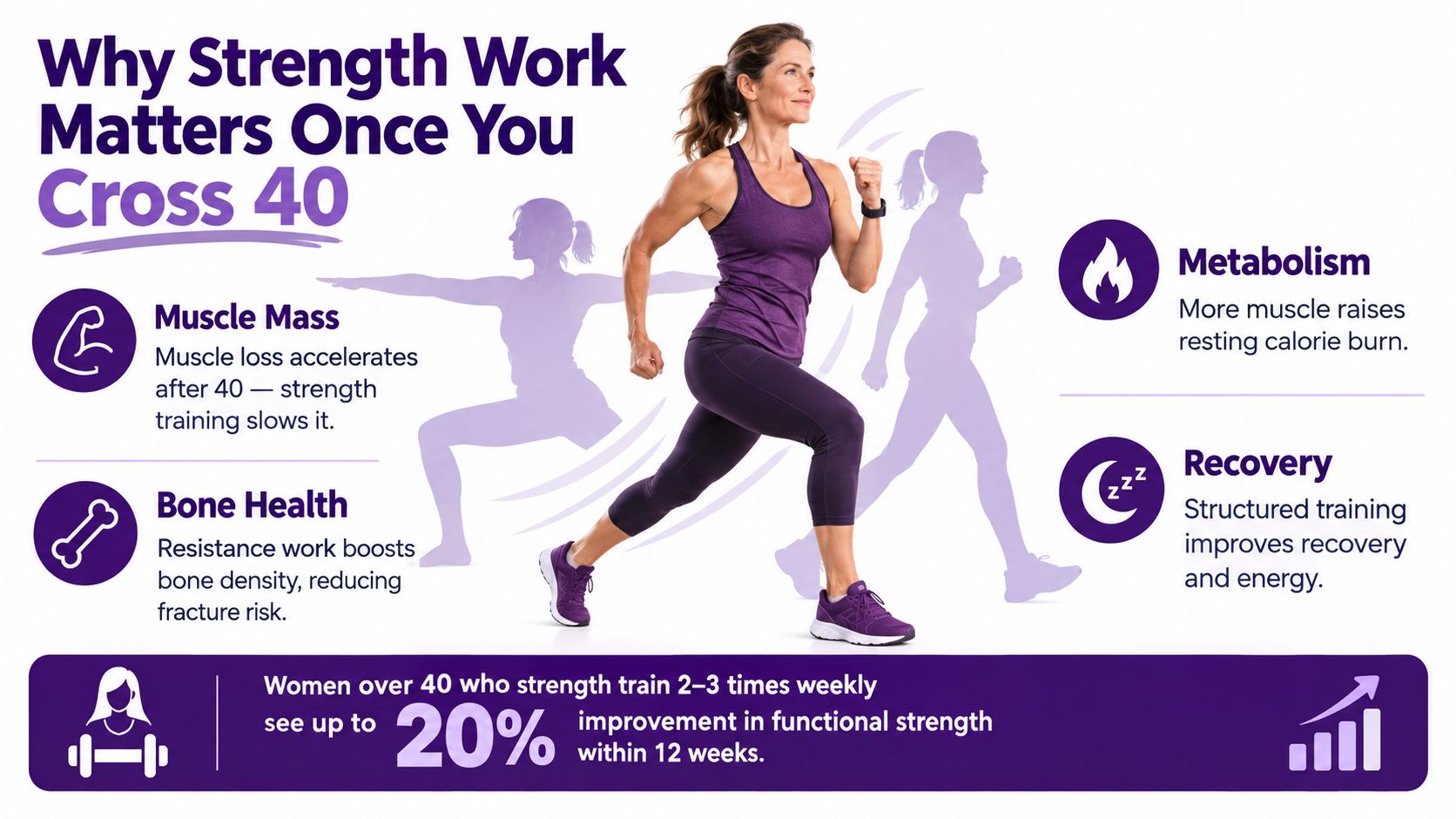
At 44, it is common to be active on paper and still miss the kind of training that keeps muscle and function moving in the right direction. You may walk most days, do a class, even run at weekends, yet still notice that carrying shopping feels heavier, getting up from the floor is less fluid, or recovery is slower than it used to be.
The UK baseline is straightforward. The Chief Medical Officers advise muscle-strengthening work for all major muscle groups on at least 2 days each week, alongside aerobic activity. The UK physical activity guidelines report that only 29% of women met the muscle-strengthening recommendation in the 2021 Health Survey for England, compared with 36% of men.
That shortfall is not a motivation problem. Women are often told to move more, burn calories, or pick a class. They are told much less often how to choose a load, how the last few repetitions should feel, or how to adjust around an irritable knee, shoulder, or back. General activity and planned strength training overlap, but they are not the same habit.
The useful starting point: two calm, full-body strength sessions each week are enough to establish the UK recommendation. You do not need daily gym sessions or maximal lifting.
Resistance training gives your body a reason to keep and build force-producing tissue. In plain terms, it helps with stairs, shopping bags, balance, and the confidence that ordinary tasks will feel manageable rather than taxing. It also places load through bone, a point that becomes more relevant through the menopause transition, as outlined in this guide to the benefits of strength training for women.
Walking and running still matter. Daily steps can support appetite regulation, mood, and consistency, and the REVETIX guide to step goals is a useful way to organise that side of the week. But steps do not automatically train pushing, pulling, squatting, hinging, and carrying against resistance. A strength plan fills that gap.
This matters even more when real life is messy. Perimenopause can bring poor sleep, hot flushes, joint niggles, and appetite shifts. Medication-supported fat loss can complicate things further, especially if nausea or reduced hunger makes fuelling harder. The practical question is not whether you should train perfectly. It is how to train well enough, consistently enough, to preserve muscle and function without irritating joints or draining energy.
This article is educational, not a replacement for clinical advice. If you have a diagnosed bone condition, significant joint symptoms, cardiovascular symptoms, or prescribed weight-loss treatment, align your programme with your clinician or a suitably qualified physiotherapist.
The Participation Gap and the Menopause Window
Scottish data show the same pattern as England. In 2023, 26% of women met the muscle-strengthening recommendation, compared with 32% of men. Participation also declined with age among women, from 46% at ages 16 to 24, to 33% to 34% at ages 25 to 54, and 19% at ages 55 to 64, echoing the UK-wide guidance noted earlier.
The figures help explain why a woman can feel she's doing plenty and still lack a resistance habit. Walking, swimming, cycling, running and many classes may improve aerobic fitness, but they don't necessarily provide a planned, progressive stimulus for every major muscle group. It is like a diet that only covers one food group. It sustains you, but it leaves specific needs unmet.
A UK menopause-focused study makes that distinction especially clear. Although 75% of predominantly perimenopausal and postmenopausal participants reported reaching the aerobic target of 150 minutes of moderate-to-vigorous activity per week, only 54.1% reported strength work on 2 or more days weekly. Just 48% met both recommendations, as reported in the menopause-focused UK study.
Why motivation isn't the main bottleneck
The same research found that 57.2% believed their activity had decreased during their menopause life stage, while 74.6% wanted to become more active. That combination matters. Desire isn't absent. Many women lack a plan that survives tired mornings, hot flushes, caring responsibilities and unpredictable recovery.
Meeting the strength recommendation was also associated with mental-wellbeing differences exceeding 3 points on the Warwick–Edinburgh Mental Well-being Scale. Because the study was observational and used a self-selected sample, it can't prove that resistance training caused better wellbeing. It does show that strength participation and wellbeing travelled together in this group.
Menopause isn't a deadline after which muscle and strength gains stop. A University of Exeter study involving more than 70 women (programme report) found that menopause didn't prevent gains in muscle and strength. A 12-week low-impact resistance programme improved hip function and lower-body strength by 19%, flexibility by 21%, and dynamic balance, mobility and stability by 10%. Those results support a practical interpretation: the window for useful adaptation remains open, but the programme must be manageable enough to repeat.
A Two-Session Starter Plan You Can Run This Week
Start with two non-consecutive sessions, such as Monday and Thursday. A Lothian NHS menopause resource suggests 2 to 3 sessions per week, lasting about 20 to 30 minutes, with 7 to 10 exercises, beginning with 2 to 5 movements and building towards one set of 6 to 12 repetitions where the final repetitions feel challenging. The NHS Lothian exercise resource provides the framework.
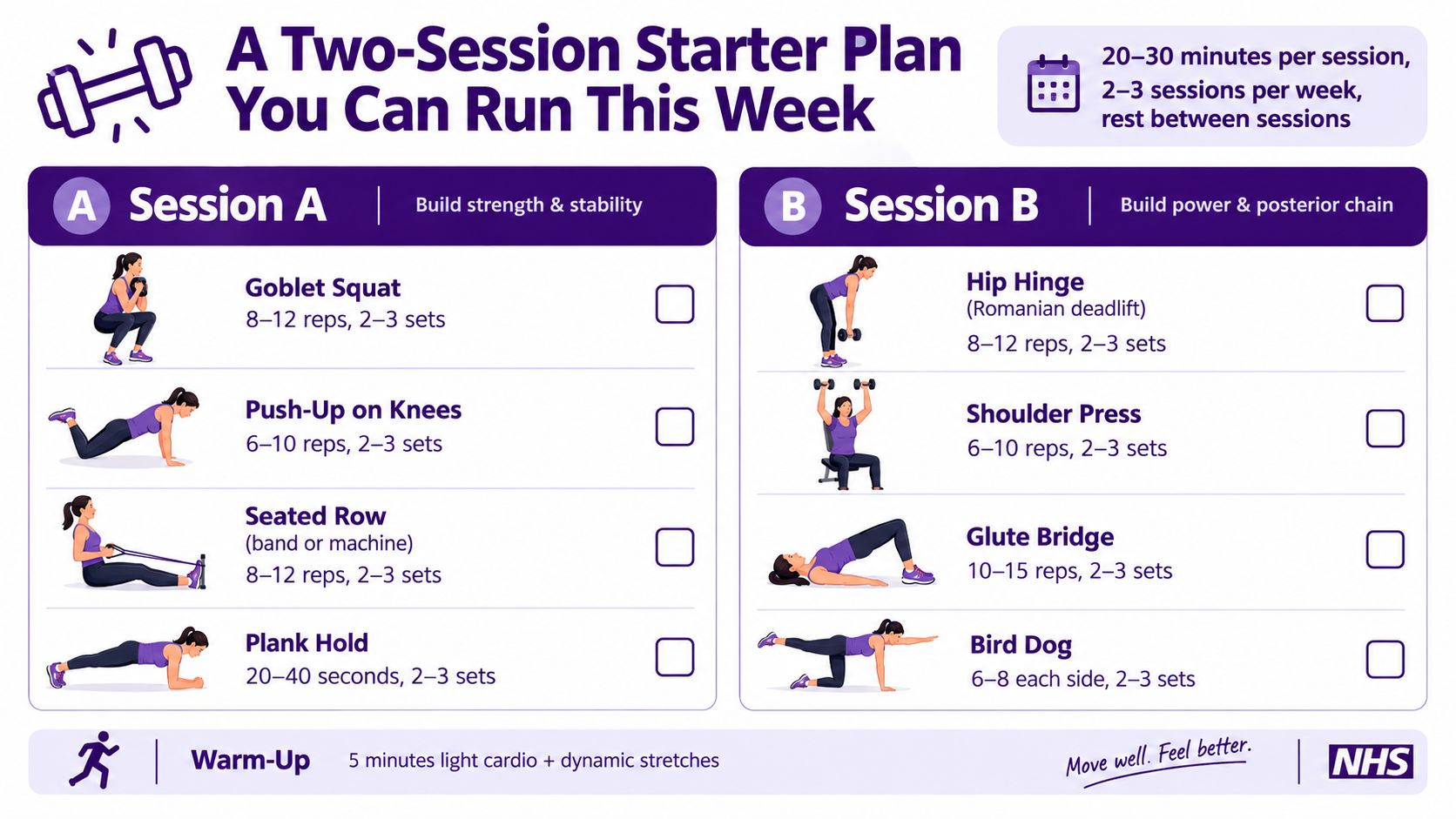
Use the following as a starting template, not a rigid prescription:
Session A
- Goblet squat: Hold one dumbbell at your chest and sit towards a chair, then stand. This trains the legs and hips through a movement you use every day.
- Push-up on knees: Keep your ribs controlled and lower only as far as your shoulders tolerate. A wall or raised surface is an easier version.
- Seated row: Use a resistance band or machine. Pull towards your ribs without shrugging, building the pulling strength that balances desk work and repeated forward-reaching.
- Plank hold: Start with hands on a raised surface if the floor version makes your lower back sag. Think of resisting extension, not merely surviving discomfort.
Session B
- Hip hinge or Romanian deadlift: Move your hips backwards while keeping the spine long. This develops the posterior chain, including the muscles that support hip extension and lifting from the floor.
- Shoulder press: Press light dumbbells overhead only if your shoulders move comfortably. A landmine press or incline press can be a friendlier alternative.
- Glute bridge: Squeeze the buttocks at the top without arching the lower back. It's a low-complexity way to practise hip extension.
- Bird dog: Reach opposite arm and leg while keeping the pelvis steady. This challenges trunk control without requiring heavy spinal loading.
Warm up with 5 minutes of light cardio and dynamic stretches, as represented in the NHS Lothian resource. Rest roughly 60 to 90 seconds after compound movements and 45 to 60 seconds after smaller accessory movements. Choose a load that moves with control, makes the final two repetitions feel like work and doesn't alter your technique.
Log the exercise, load, repetitions and how many good repetitions you had left. If symptoms make a full workout unrealistic, try exercise snacks lasting 2 to 10 minutes, performed 5 to 7 times per week, as another NHS-supported entry point. Short sessions are a useful way to preserve the habit, not a lesser form of participation.
Progressing Loads Without Burning Out Joints or Spirit
Progression doesn't mean testing a personal best every week. It means giving your muscles a slightly clearer challenge while keeping your joints and nervous system within a tolerable workload.
Three useful tiers
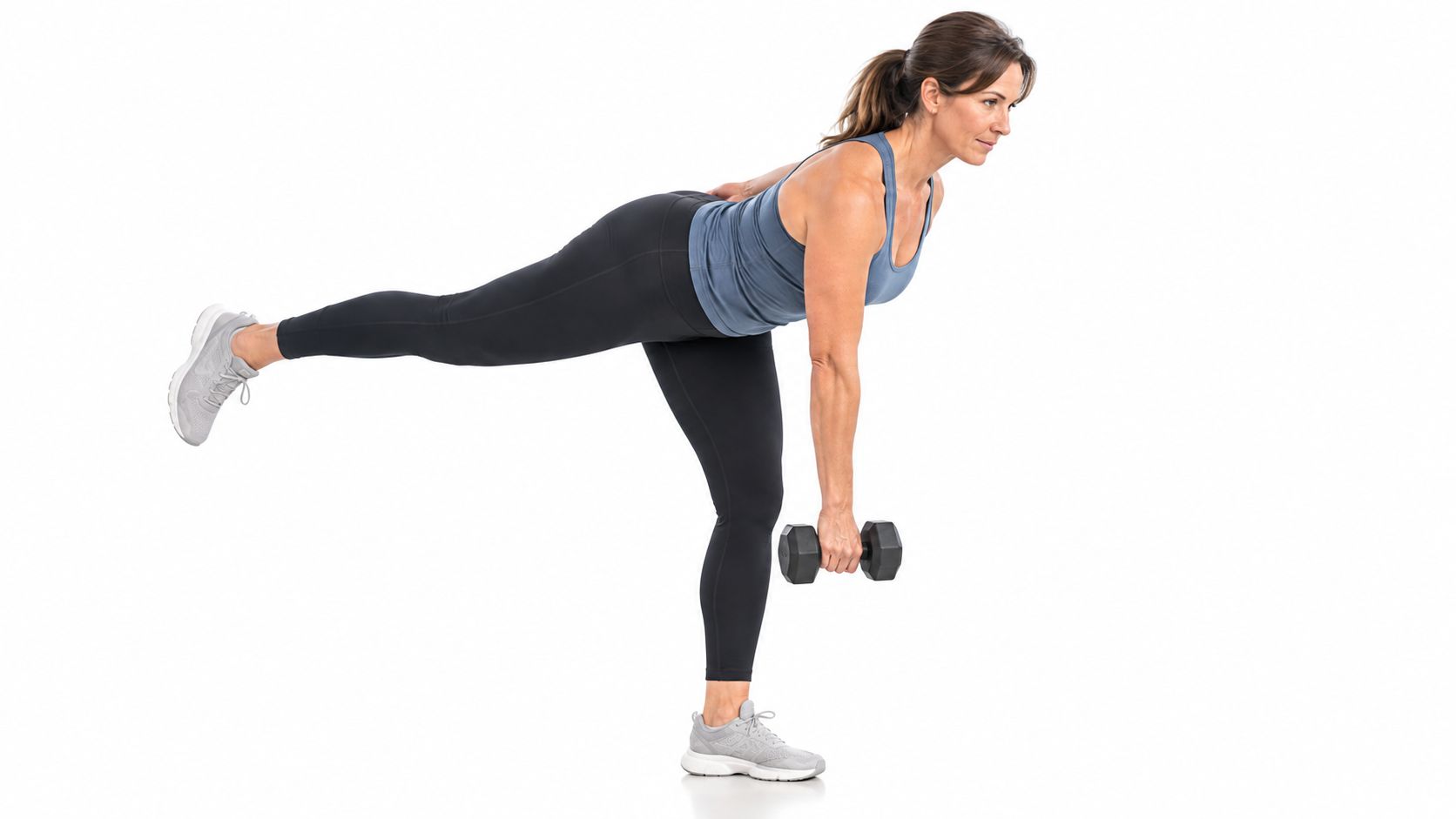
Tier one is bodyweight control. Slow the lowering phase, pause at the hardest point or use a single-arm or single-leg variation. A split squat holding onto a support can be more appropriate than adding weight to a poorly controlled squat. This tier suits a return from injury or a joint that dislikes sudden loading.
Tier two adds bands and light dumbbells. Work towards the upper end of the 6 to 12 repetition range while keeping the final two repetitions demanding but technically sound. If the band pulls you out of alignment or your wrist collapses around a dumbbell, the resistance is too high for that variation.
Tier three introduces heavier dumbbells, machines or barbells. A coach or physiotherapist can help you learn the movement before the load becomes demanding, particularly for squats, deadlifts, pressing and loaded carries. External load isn't automatically safer or more effective. It becomes useful when you can control the movement it increases.
Decision rule: if the top of your repetition range feels easy across two sessions, increase the next load by roughly 5% to 10%. If form breaks down, keep the same load or reduce it.
A planned deload, roughly every 4 to 6 weeks or after a period of poor sleep and high stress, can reduce accumulated fatigue. Keep the movements but use less resistance, fewer repetitions or more recovery. A quieter week is part of training, not evidence that you've failed.
Stop progression and seek advice for new joint pain that doesn't settle within 48 hours, swelling, dizziness or any symptom a clinician has asked you to monitor. Hot flushes that repeatedly crash your training quality also justify changing the plan rather than forcing the session.
Training While Using GLP-1 Weight-Loss Medicines
Women taking Mounjaro, Wegovy or similar treatment often ask whether lifting can protect muscle during weight loss. The honest answer is that direct experimental evidence on well-designed resistance-training interventions during GLP-1 treatment remains limited.
Liverpool researchers report that up to one-third of weight lost with weight-loss medicines may be non-fat mass, including muscle and bone. Their review identifies resistance training and adequate protein as protective strategies, but it doesn't prove that lifting can prevent all non-fat-mass loss. The findings are discussed in the academic review of muscle preservation during GLP-1 treatment.
NICE's January 2025 obesity guidance recommends physical activity and dietary support alongside weight-management medicines. It doesn't prescribe a specific protein target or detailed resistance-training protocol. That leaves room for a sensible minimum plan rather than a false guarantee.
A realistic medication-compatible approach
Keep two quality full-body sessions in the week where possible. On a day when appetite is reduced but you can eat and hydrate, maintain the session at a moderate effort. On a nausea day, reduce the load, shorten the workout or complete a walk and mobility circuit. The aim is to preserve continuity without treating side effects as a test of willpower.
Some weeks will be about maintaining strength rather than progressing. That still gives you useful information. Record whether your usual dumbbell feels stable, whether your grip holds during a carry, and whether stairs or rising from a chair feel easier.
Scale weight and many home body-composition devices are blunt tools for estimating lean mass. Use them alongside function, clothing fit, training performance and clinical monitoring. No programme guarantees zero muscle loss. Results depend on adequate overall food intake, including protein, progressive loading, recovery and medical oversight, not resistance training alone. The guide to losing weight while building muscle offers related educational context.
Recovery, Protein, Sleep and Symptom Management
Training is only one part of adaptation. If appetite is low, sleep is fragmented and symptoms are intense, the same workout can feel substantially harder. Recovery, nutrition, sleep and symptom management therefore work as one system.
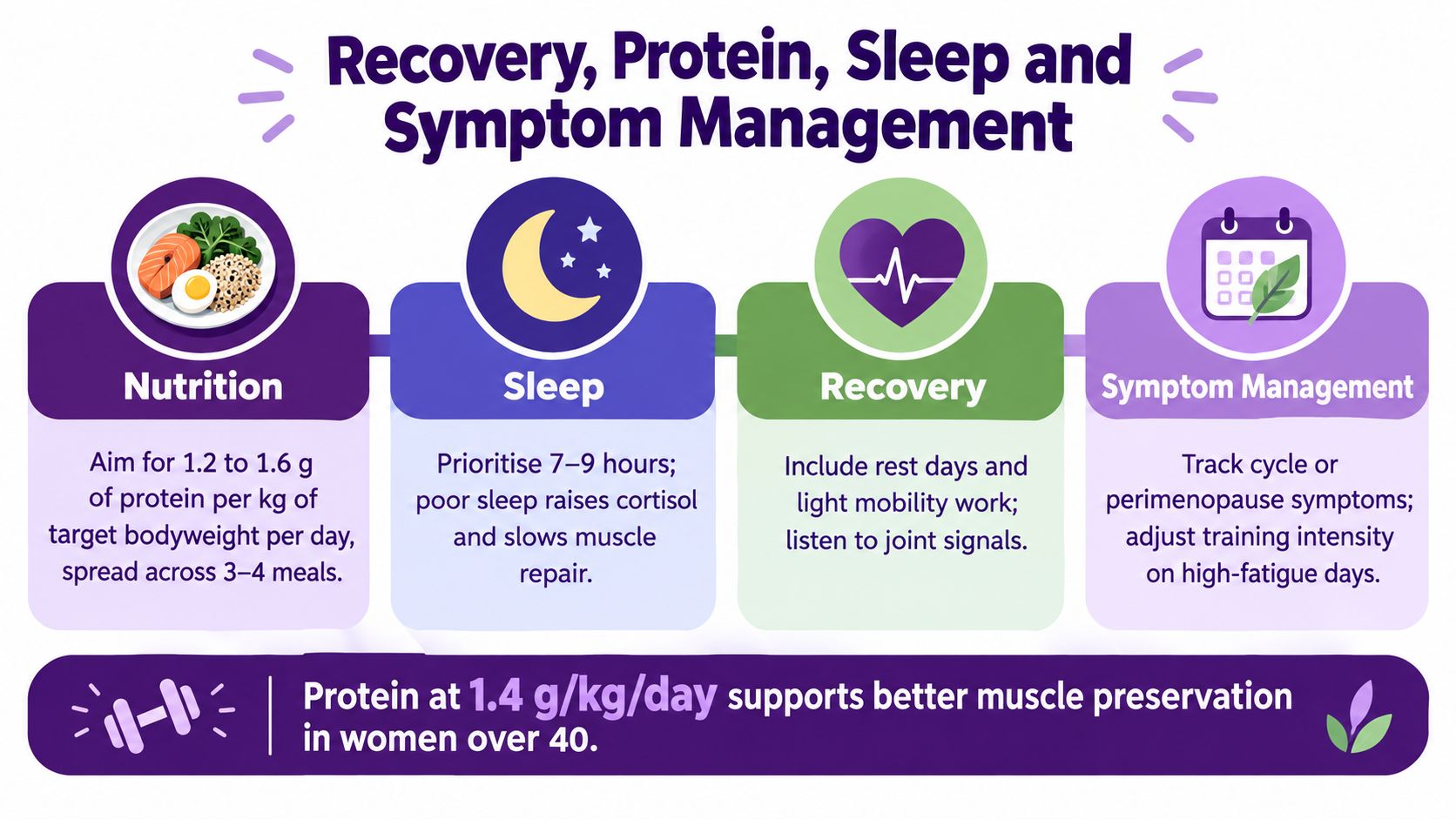
For protein, a practical target is roughly 1.2 to 1.6 g per kg of target bodyweight per day, divided across three or four eating occasions. A post-training serving of 20 to 30 g can be convenient, especially when a normal meal won't appeal. These figures are a practical range rather than a universal prescription. If you use a GLP-1 medicine and can manage only a small meal, yoghurt, eggs or a whey-based shake may provide relatively compact, leucine-rich options, subject to your clinician's advice and tolerance.
Bone health adds another reason to keep resistance work in the programme. An NHS menopause guide reports that a progressive resistance programme lasting at least 4 to 6 months can positively influence bone density, and notes the Royal Osteoporosis Society recommendation of 2 to 3 strength-training sessions per week. NHS menopause advice also supports weight-bearing activity and dietary calcium sources such as milk, yoghurt and kale.
Adjust the dose, not your identity
Poor sleep can raise perceived exertion and reduce tolerance. After a bad night, keep the movement pattern but reduce load or volume, or make the day a walk and mobility session. A cooler training time, a fan, breathable layers and access to water can make hot-flush management more practical.
You can also use a symptom traffic light:
- Green: symptoms are mild, so follow the planned session.
- Amber: fatigue, poor sleep or heat symptoms are noticeable, so reduce load or sets.
- Red: dizziness, unusual breathlessness, chest discomfort or severe symptoms mean you stop and seek appropriate clinical advice.
For more general background on strategies that may speed up muscle recovery, use sources critically and prioritise established basics first. Your core tools remain enough food, appropriate loading, rest and medical support where needed. Further nutrition guidance is available in this protein intake resource for weight loss.
The UK menopause research found an association between meeting strength recommendations and meaningful differences in mental wellbeing scores. That doesn't prove causation, but it reinforces a broader point: strength training is about capacity, mood and independence, not only body shape.
Putting It Together and Knowing When to Ask for Help
Choose two full-body sessions, practise bodyweight control, add bands or dumbbells when the repetitions become manageable, and protect sleep and food intake. Progress in small increments only while your form remains reliable.
| Phase | Weeks | Focus | Progression Rule | When to Pause |
|---|---|---|---|---|
| Foundation | 1 to 4 | Technique, breathing and effort awareness | Keep loads stable and stop with controlled repetitions in reserve | Pain, dizziness or repeated form loss |
| Build | 5 to 8 | Add resistance or modest volume | Increase only when the top of the range feels easy across two sessions | Poor sleep, high fatigue or worsening joint symptoms |
| Consolidate | 9 to 12 | A heavier wave or a new movement pattern | Test a small increase while keeping the same movement quality | Medication changes, unusual symptoms or recovery decline |
A three-month run of consistent sessions matters more than one ambitious workout. If you're following prescribed treatment, ask your clinical team how training days fit around dose escalation, side-effect windows and nutrition reviews. People who want broader support can also find integrative weight care alongside their existing medical advice.
Is heavy lifting safe with osteopenia or osteoporosis? Resistance training can support bone health, but the right exercises and loading depend on fracture history, bone density and technique. Get individual guidance from a clinician or physiotherapist before lifting heavily.
Should hot flushes or poor sleep change the plan? Yes. Lower the load, shorten the session or walk on high-symptom days. Persistent or severe symptoms deserve clinical input.
Can you combine lifting with running or walking? Yes, but increase total training gradually. Keep the two strength sessions manageable and avoid turning every day into a hard day.
Is strength training worthwhile if your weight barely changes? Yes. Functional strength, confidence, muscle performance and bone loading can improve without a large change on the scales.
Trim provides medically supervised weight-management treatment through UK-registered clinicians, alongside nutrition, activity and strength-focused guidance. If you want help aligning weight loss, GLP-1 treatment and a realistic training routine, visit Trim to learn how its clinical support may fit your goals.