
Weight Loss Over 40: The Science-Backed Strategy

The most popular advice about weight loss over 40 is also the least complete: eat less, move more, and rely on willpower. That formula describes energy balance, but it doesn't explain why the same routine can produce different results in midlife, or why a lower scale reading can sometimes conceal declining muscle and physical function.
Your body isn't failing because you lack discipline. Age-related changes in muscle, fat distribution, hormones, sleep and appetite regulation can alter the response to a familiar diet. The more useful question is not "How do I lose weight?" It's "How do I reduce excess fat while protecting strength, muscle and long-term health?"
Table of Contents
- Why Standard Diet Advice Fails After 40
- The Three Physiological Changes Reshaping Your Weight
- Hormonal Shifts During Perimenopause and Menopause
- Nutrition and Resistance Training for the Muscle-Sparing Approach
- Medical Options and Clinically Supervised Programmes
- Tracking the Right Metrics for Body Composition Over Scale Weight
Why Standard Diet Advice Fails After 40
Willpower alone is a poor explanation for weight gain after 40. A person can follow the same eating pattern that worked earlier in life and still find that weight management has become more difficult, because the biological context has changed.
The scale of the challenge is clear in England. In 2022–23, 64% of adults aged 18 and over were overweight or living with obesity, while the figure reached 72.8% among adults aged 55–64. In that same age group, 32.4% were living with obesity, according to England's adult obesity statistics. Those figures don't prove that age makes weight loss impossible. They do show that midlife weight management is a widespread health issue, not a private moral failure.
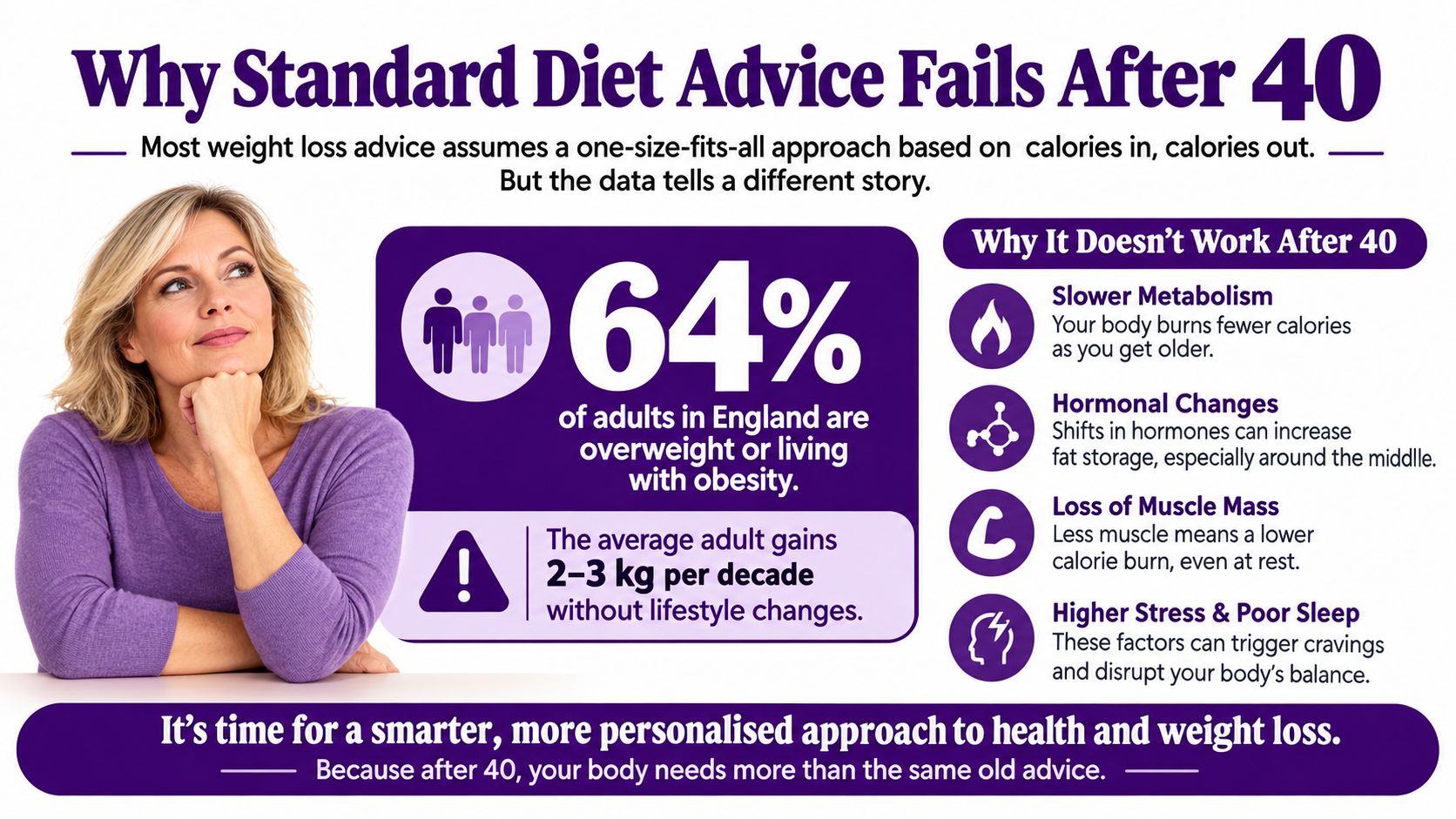
The calorie equation is still real
Calories remain relevant. If your body consistently uses more energy than it receives, stored energy will generally fall. The problem is that “calories in, calories out” is a description of the outcome, not a complete treatment plan.
Your energy needs can change as muscle mass declines. Hormonal transitions can influence where fat is stored. Poor sleep, pain, stress, medicines and reduced daily movement can also affect appetite and activity. A diet that creates a large deficit but neglects protein and resistance training may reduce body weight while taking too much lean tissue with it.
The practical correction: aim for fat loss, not merely weight loss.
A midlife plan should therefore ask several questions. Is waist size falling? Are strength and mobility stable? Are meals satisfying enough to support adherence? Can the routine continue during busy weeks, illness, travel or hormonal symptoms?
Why the old approach feels harsher
Many people respond to a stalled scale by cutting food further or adding punishing exercise. That can work briefly, but severe restriction often makes hunger, fatigue and recovery harder to manage. It can also leave less energy for the strength training that protects the tissue you most want to preserve.
A better approach treats the body as a changing system. You still create an appropriate energy deficit, but you build it around muscle preservation, adequate nutrition, resistance exercise, sleep support and medical review where appropriate. That is a more precise response than blaming yourself for not producing the same result with an old method.
The Three Physiological Changes Reshaping Your Weight
Weight management after 40 is influenced by several overlapping changes. They don't affect everyone in the same way, but three themes deserve attention: energy use, hormone signalling and lean tissue.
A smaller metabolic engine
Muscle is active tissue. If you carry less of it, your body generally needs less energy at rest and during everyday movement. This doesn't mean your metabolism has “broken”. It means the size and demands of the system may have changed.
Think of a car with a smaller engine and the same fuel tank. The tank can still hold the same amount, but the vehicle may use fuel differently. If you continue eating and moving exactly as before, the balance can gradually shift.
The answer isn't to chase a mythical metabolism reset. It's to make the engine more useful by preserving or rebuilding muscle, increasing everyday movement where possible and choosing an eating pattern that you can sustain.
Hormones change the storage pattern
Hormones influence appetite, reproduction, muscle maintenance, blood sugar regulation and fat distribution. During the menopause transition, falling oestrogen is associated with more fat being stored around the waist. Men can also experience changes in body composition and muscle maintenance over time, although individual patterns vary widely.
These shifts don't make calorie balance irrelevant. They make a generic plan less reliable. Two people with the same body weight may need different priorities because one is losing strength, another has disrupted sleep, and another has symptoms or medicines affecting appetite and activity.
Muscle loss changes the target
A lower body weight is not automatically a healthier result. If a diet removes fat and preserves strength, it may improve health and function. If it removes a substantial amount of lean tissue, the result can be much less favourable even when the scale looks encouraging.
| Physiological change | Impact on weight | Mitigation strategy |
|---|---|---|
| Reduced muscle and changing energy needs | Fewer calories may be required to maintain the same weight | Progressive resistance training and sufficient protein |
| Hormonal transition | Fat may be stored more centrally, with appetite and sleep affected | Symptom-aware nutrition, clinical assessment and consistent activity |
| Lower recovery capacity | Hard exercise or severe restriction may become difficult to sustain | Gradual progression, rest and realistic routines |
For broader context on how body composition and function evolve later in life, body changes after sixty can help explain why preserving strength matters beyond the number on the scales.
The important distinction is between a smaller body and a stronger, healthier body. Weight loss over 40 should aim for the second.
Hormonal Shifts During Perimenopause and Menopause
A woman in perimenopause may notice that her clothes fit differently even when her eating habits seem familiar. The change may appear first around the waist, alongside disrupted sleep, hot flushes, lower energy or a reduced tolerance for intense exercise. That experience is common enough to deserve a biological explanation, but it still needs individual assessment rather than assumptions.
The British Menopause Society's clinical material reports that women gain approximately 1.5 kg per year on average during perimenopause. The same source links falling oestrogen with visceral fat rising from roughly 5–8% to 10–15% of total body weight. These figures describe averages and associations, not a prediction for every woman.
Why the waist matters
Visceral fat sits around internal organs and has greater metabolic relevance than fat stored just beneath the skin. A woman may therefore benefit from reducing waist circumference even if total weight changes slowly.
Sleep can complicate the picture. Night sweats, anxiety, pain or frequent waking may increase tiredness and make planning meals or exercising more difficult. The sensible response isn't to prescribe a harsher diet. It's to address symptoms, protect muscle and choose activity that can be repeated consistently.
Resistance exercise is especially valuable because it gives muscle a direct reason to stay. Nutrition should provide enough protein and fibre-rich foods to support fullness and recovery, while the overall energy intake remains appropriate for the person's health and goals.
Supplements need careful framing
Some people explore a dietary supplement for menopause. Supplements may be relevant to a conversation about symptoms or nutritional gaps, but they don't replace assessment, resistance training, a balanced diet or treatment for a diagnosed condition. Check ingredients, interactions and suitability with a pharmacist or clinician, particularly if you take prescribed medicines.
Women who want a more focused discussion of this transition can also read menopause weight loss guidance. The central message is straightforward: menopause-related changes are real, but they don't remove your ability to improve body composition. They do make a personalised plan more useful than generic calorie counting.
Nutrition and Resistance Training for the Muscle-Sparing Approach
The strongest muscle-sparing strategy combines an appropriate energy deficit with two protections: a reason for muscle to remain and the nutrients required to repair it. Resistance training supplies the first. Protein and a well-organised diet support the second.
Evidence reviewed by Moving Medicine found that resistance-training programmes lasting 8–16 weeks, typically involving 3–5 sessions each week for 30–60 minutes, consistently reduced body-fat percentage and improved strength and endurance in menopausal women, as described by the British Menopause Society evidence review.
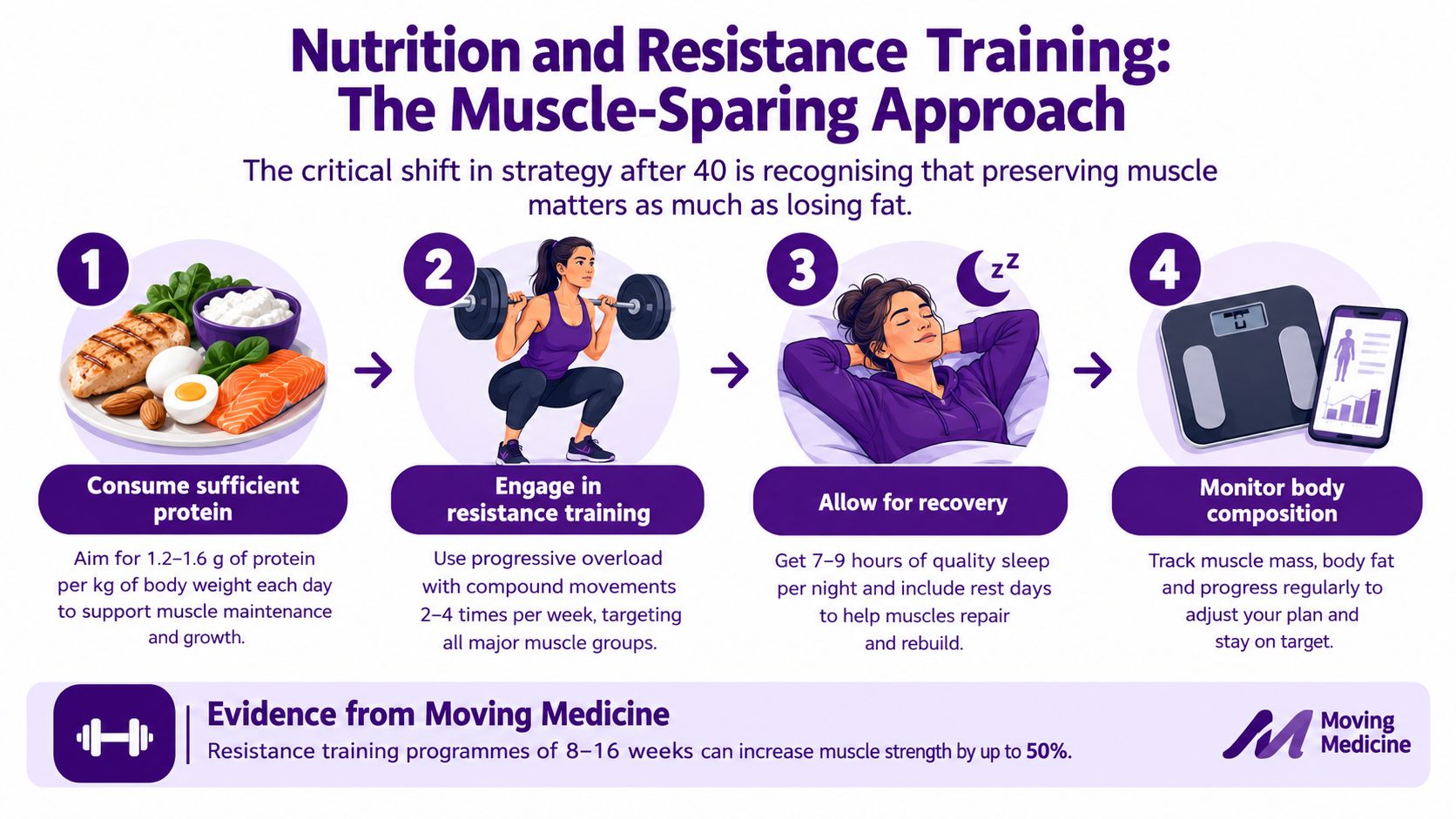
Compare the main levers
Calorie restriction alone can lower scale weight, but it doesn't tell your body which tissue to retain. It may also make fatigue and hunger harder to manage.
Protein-led nutrition makes meals more filling and supplies amino acids for tissue repair. Spread protein across meals rather than treating it as an afterthought at the end of the day. The exact amount should reflect body size, kidney health, activity, dietary preferences and clinical advice.
Resistance training creates the most direct signal to preserve strength. Start with movements such as a squat variation, a press, a row, a hinge and loaded carries, adapting them for joints, confidence and experience. Progress may mean more repetitions, a heavier load, better control or a larger range of movement.
Aerobic exercise supports cardiovascular fitness and daily energy expenditure. Walking, cycling or swimming can complement strength work, but cardio shouldn't crowd out the training that protects muscle.
Recovery is part of the prescription
A muscle-sparing plan fails if every session leaves you exhausted. Allow recovery between demanding sessions, sleep as well as circumstances permit and increase training gradually. If pain, dizziness, unusual breathlessness or marked weakness appears, stop and seek clinical advice.
Use a simple weekly check:
- Protein: Include a clear protein source in meals.
- Training: Record the movement, load and repetitions.
- Recovery: Note sleep, soreness and energy.
- Function: Track whether everyday tasks feel easier or harder.
For practical ideas on protecting muscle during medically supported weight loss, see how to maintain muscle mass.
A lower-calorie diet can be useful, but it should be judged by its effect on waist size, strength, energy and adherence, not by speed alone.
Medical Options and Clinically Supervised Programmes
Lifestyle measures remain important, but some people need more support than diet and exercise can provide. A clinician can review your medical history, current medicines, blood pressure, blood sugar, sleep, eating patterns and previous attempts before discussing treatment.
NICE recommends semaglutide, marketed as Wegovy, for adults with obesity who have a BMI of at least 35 and at least one weight-related condition, such as type 2 diabetes or high blood pressure, according to UK guidance on the obesity medicines pilot. Eligibility and prescribing arrangements can change, so a registered clinician should confirm whether a treatment is appropriate.
What clinical trial results mean
UK Government guidance states that clinical trials found weight-loss medicines could help people lose up to 15% of body weight after one year when combined with dietary changes, physical activity and behavioural support. That is a trial-based outcome, not a promise for an individual, and it describes a wider programme rather than medication in isolation.
Medicines that affect appetite can make it easier for some people to reduce energy intake. They don't automatically provide adequate protein, preserve strength or teach long-term maintenance habits. Nausea, bowel symptoms and other side effects also need discussion, monitoring and appropriate management.
A safer decision process
- Confirm suitability. A clinician should assess eligibility, contraindications and relevant health conditions.
- Set the wider plan. Decide how nutrition, resistance training, activity and follow-up will work together.
- Monitor response. Review weight, waist, symptoms, strength, eating quality and treatment tolerance.
- Plan maintenance early. Stopping treatment without a maintenance strategy can lead to regain, so future support matters.
A regulated service such as medically supervised weight loss can be one route for people seeking structured clinical review. The appropriate choice may instead be NHS care, a GP referral, a specialist service or lifestyle support alone. The decision should be based on clinical need, not pressure to lose weight quickly.
Tracking the Right Metrics for Body Composition Over Scale Weight
The scale answers one narrow question: how much the body weighs at a particular moment. It can't tell you whether a change came from fat, muscle, water, food in the digestive system or temporary fluid shifts.
That limitation matters during weight loss over 40. Recent evidence indicates that approximately 40–60% of weight lost during GLP-1 treatment may be lean mass, with an estimate of about 40% among adults aged 65 and over, as discussed in this review of GLP-1 treatment and muscle health. The estimates vary by study and method, and the review also highlights limited generalisable long-term evidence on falls, fractures and physical function.
Four measures that tell a fuller story
Waist circumference provides a practical marker of central fat change. Measure consistently, using the same method and similar conditions, rather than reacting to a single reading.
Strength progression shows whether your muscles are maintaining capacity. Record a safe movement, such as the load used for a sit-to-stand variation, press or row. If strength is falling quickly while weight drops, review the deficit, protein intake, training and medical context.
Mobility and balance connect body composition to daily life. Notice stair climbing, getting up from a chair, carrying shopping and walking speed. A smaller waist isn't a success if ordinary tasks become more difficult.
Nutrition and adherence explain whether the plan is doing its job. Track protein-containing meals, resistance sessions, recovery and symptoms. You don't need a perfect diary. You need enough information to identify patterns.
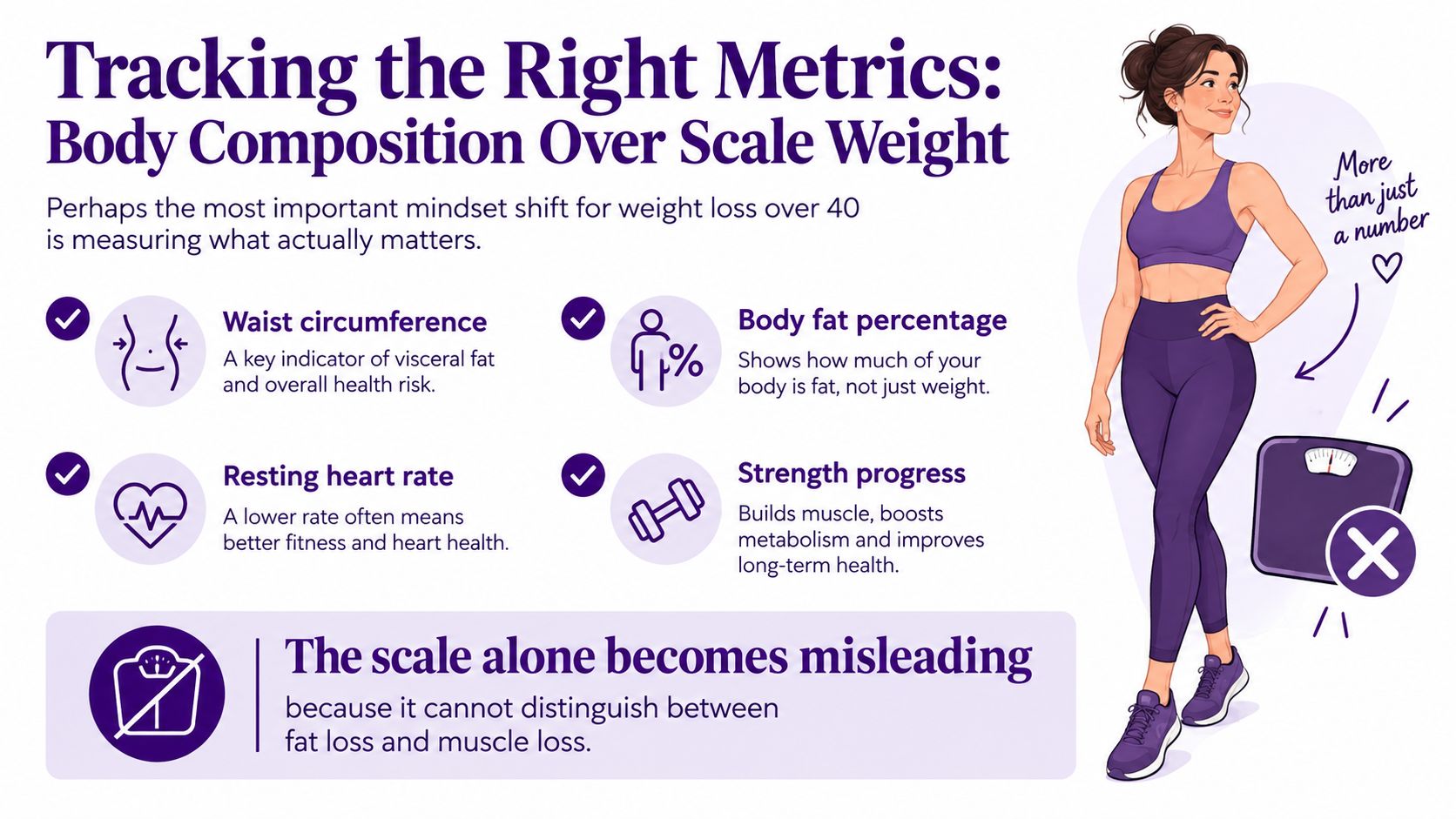
The risk of sarcopenic obesity
Sarcopenic obesity describes the combination of excess fat and reduced muscle or physical function. It explains why repeated cycles of rapid loss and regain can be concerning: body weight may return, while the balance between fat and muscle may become less favourable.
That doesn't mean you should avoid treatment or weight loss. It means the quality of the loss deserves attention. A clinician may use waist measurement, strength testing, physical-function assessment and, where appropriate, body-composition tools. Learn more about understanding fat to muscle ratio, but remember that any home estimate has limitations and shouldn't be treated as a diagnosis.
A useful success test: if your waist is reducing, your strength is stable or improving, and your daily activities feel manageable, the plan is probably targeting more than the scale.
Review progress at sensible intervals rather than judging every fluctuation. If weight is falling rapidly alongside weakness, persistent fatigue, dizziness, reduced mobility or difficulty eating enough, contact a clinician. The most valuable outcome is not the smallest possible body. It's a body with less harmful excess fat and enough muscle to support independence, confidence and health.
Trim offers UK adults a medically supervised programme that combines clinician assessment, prescription treatment where suitable, nutrition guidance, activity tracking and strength-focused support. If you want structured help with preserving muscle while managing weight, visit Trim to learn how its approach could fit your health needs.