
Orlistat Side Effects UK: A Practical Safety Guide

You've collected your orlistat prescription, and tomorrow involves a train journey, a working lunch or dinner out. You're wondering whether you'll need to stay close to a toilet, or you've already noticed oily spotting and aren't sure whether to worry. Those are reasonable concerns, and you deserve more useful advice than just being told to eat less fat.
Table of Contents
- Why Orlistat Side Effects Matter in the UK
- How Orlistat Works and Why Side Effects Happen
- Common Side Effects and What They Mean
- Managing Side Effects Day to Day
- Red Flags and When to Seek Medical Help
- Drug Interactions and Conditions to Discuss
- NHS Prescribing Rules and Practical Next Steps
Why Orlistat Side Effects Matter in the UK
Starting a weight-management medicine shouldn't mean guessing which symptoms you're expected to tolerate. Bowel urgency, leakage and changes in stool can affect your confidence at work, your willingness to travel and whether you continue treatment. Embarrassment is a legitimate treatment concern, not something you have to keep to yourself.
The NHS information on orlistat identifies digestive effects as an important part of treatment. These effects are often connected to what you've eaten, but that doesn't mean every symptom should be blamed on lunch. The practical distinction is between an expected bowel change, a persistent problem needing review and a warning sign needing urgent assessment.
Start with the question that matters today
If you haven't started treatment, ask your pharmacist what your prescribed meal pattern should look like and how to contact the prescribing service. If you're already having symptoms, describe what happened rather than saying only that the medicine disagrees with you. Oily spotting, watery diarrhoea and severe abdominal pain are different problems, even though they all involve your digestive system.
Before your next conversation, jot down:
- Your symptoms: Include urgency, leakage, pain and how they affect your daily activities.
- Your recent meals: Record sauces, cooking fats and snacks as well as the main dish.
- Your other medicines: Include prescriptions, supplements and anything bought from a pharmacy.
- Your main concern: You might be worried about commuting, blood sugar, an existing condition or continuing treatment.
Searching for orlistat side effects UK should lead to evidence-based information, not a sales pitch. UK patient leaflets and prescribing information provide a firmer basis for decisions than anecdotes, although neither can predict exactly how you'll respond.
Before you start: Make sure you know who will review your symptoms and treatment progress. A prescription should come with a follow-up plan, not just a box of capsules.
Keep the leaflet supplied with your own medicine. You don't need to memorise every listed reaction, but you should know where to find the safety advice and how to get help.
How Orlistat Works and Why Side Effects Happen
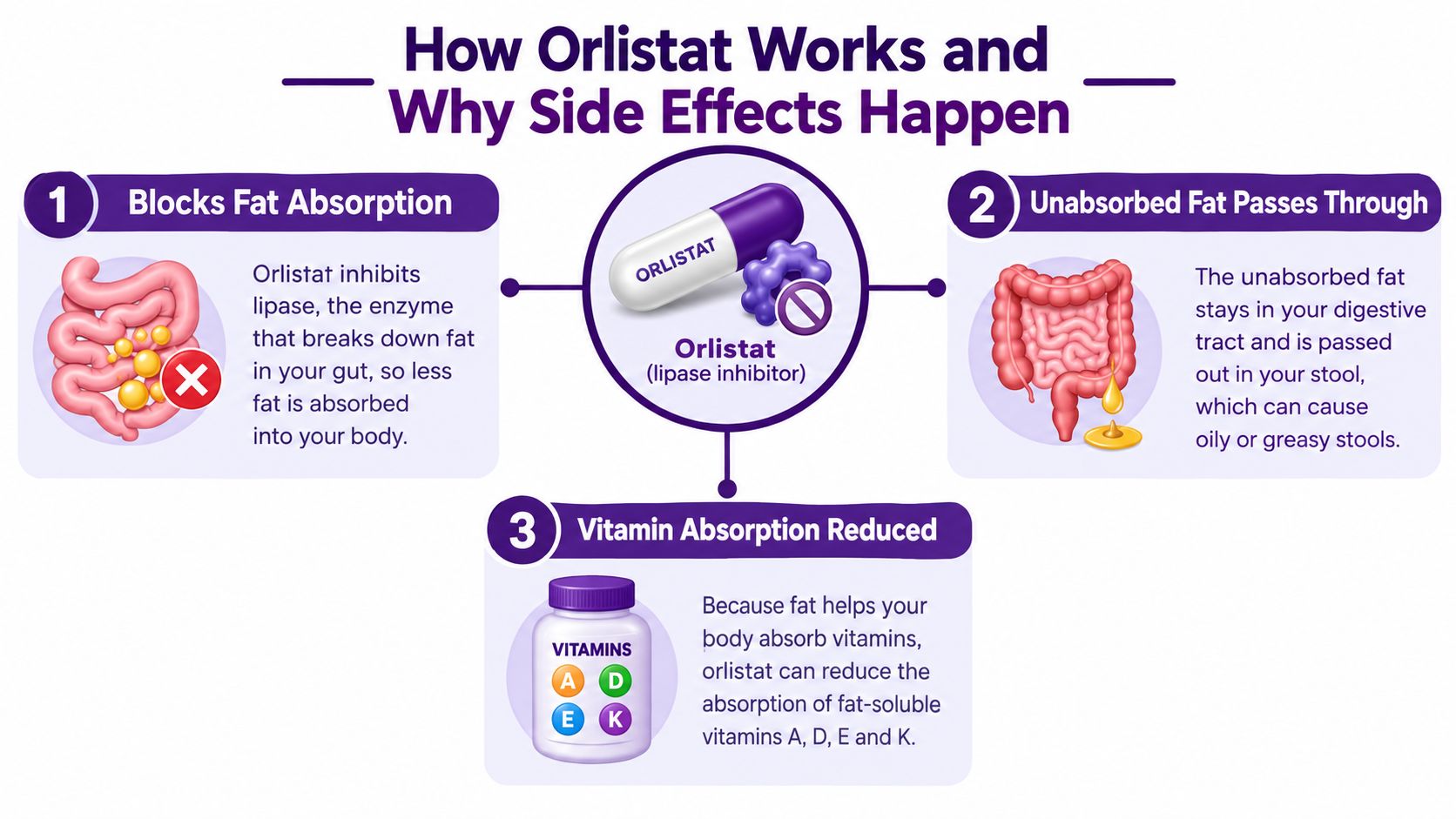
Orlistat acts on the digestion of fat. It inhibits gastric and pancreatic lipases, enzymes that normally break dietary triglycerides into forms your intestine can absorb. Some dietary fat therefore remains unabsorbed and passes out in your stool, which explains why bowel effects track with meal fat content, as described in the UK Xenical prescribing information.
Think of digestion as a preparation process rather than a blocked pipe. Before your body can absorb dietary fat, digestive enzymes need to break it down. Orlistat interrupts that preparation, leaving more fat travelling through the bowel.
The diagram brings together the digestive mechanism and related absorption concerns.
Why one meal can make a difference
A rich meal gives the medicine more dietary fat to act on. For example, adding creamy sauce, fried potatoes and a buttery side to the same meal creates a different situation from choosing a lower-fat main dish. The relevant detail isn't whether you ate something considered healthy, but the combined fat content of that sitting.
UK product information describes digestive symptoms as particularly noticeable early in treatment and after high-fat meals. Symptoms can lessen as eating habits adjust and treatment continues, although there isn't a guaranteed timetable for an individual patient.
This is why dietary feedback is a useful way to understand expected oily bowel effects. It's not a moral judgement about your food choices, and it doesn't mean you've failed at treatment.
Oily bowel symptoms can help you identify a meal pattern that needs adjusting. They aren't a target to aim for or proof of successful weight loss.
What the mechanism doesn't tell you
The medicine's action explains many digestive changes, but it doesn't establish the cause of every new symptom. Severe pain, bleeding or signs of an allergic reaction need a different response from an inconvenient oily stool.
Xenical and alli both contain orlistat, but you should follow the instructions for the product you've been supplied. Don't borrow someone else's dosing schedule or assume that changing products removes the need for dietary advice and a medication review.
Common Side Effects and What They Mean
Frequency labels answer a specific question: how often has this reaction been reported? They don't tell you how disruptive it will be for you. A common symptom can still make it difficult to leave home, while a frequently reported reaction may barely trouble another person.
The UK orlistat patient information leaflet uses the following classifications.
Frequency of Common Orlistat Side Effects in the UK
| Frequency | Approximate rate | Example symptoms |
|---|---|---|
| Very common | May affect more than 1 in 10 people | Oily or fatty stools, oily spotting, wind with or without discharge, sudden or urgent bowel movements, soft stools |
| Common | May affect up to 1 in 10 people | Abdominal pain, faecal incontinence, liquid stools, increased bowel frequency |
An NHS Tayside prescribing bulletin reports common gastrointestinal effects in approximately 10% to 25% of users, influenced by dietary compliance. That broader estimate isn't a separate probability for each symptom and shouldn't replace the classifications in your own leaflet.
Translating the medical terms
Oily or fatty stools means that your bowel movement contains noticeable unabsorbed fat. Oily spotting describes leakage that can mark underwear, sometimes without a normal bowel movement.
Wind with discharge means passing wind may also release oily material. It's understandable to find this embarrassing, but describing it directly helps your pharmacist distinguish it from ordinary flatulence.
Faecal urgency is a sudden need to open your bowels. Faecal incontinence means you can't fully control the bowel movement or leakage. Soft stools, liquid stools and increased frequency describe different changes, so note which one you're experiencing rather than using diarrhoea for everything.
Headache and hypoglycaemia are also listed as very common in UK patient information. Low blood sugar is particularly relevant to some people with type 2 diabetes and needs medication-specific advice, rather than being treated as another digestive inconvenience.
For comparison with another medicine, Empire Medical Wellness provides red-flag symptoms to watch in its tirzepatide information. That resource concerns a different treatment and shouldn't replace orlistat-specific safety guidance.
When to record symptoms and when to call
If a bowel change is manageable, record it alongside meals and discuss it during follow-up. If leakage prevents you travelling, diarrhoea persists or pain is worsening, contact your prescriber sooner.
- Record manageable changes: Note their timing and practical impact.
- Request an earlier review: Don't wait if symptoms interfere with work, sleep or eating.
- Escalate warning signs: Don't assume every abdominal symptom is an expected reaction.
You don't have to stop automatically because of an expected bowel effect. Equally, you don't have to endure persistent distress to demonstrate commitment.
Managing Side Effects Day to Day
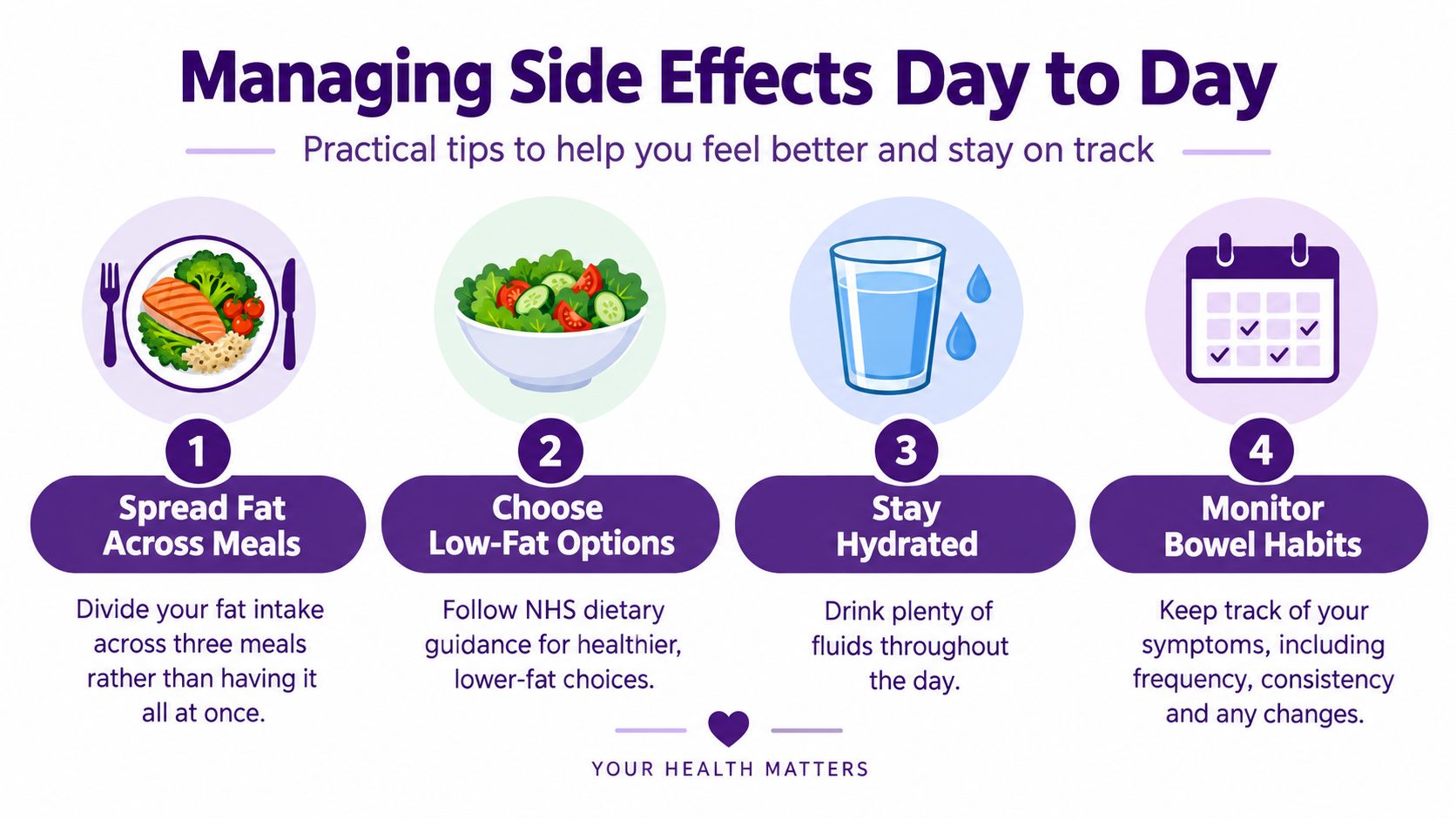
The most useful adjustment is to spread dietary fat across meals, rather than concentrating it in a rich meal. Northern Care Alliance NHS dietary guidance explains that excess fat during orlistat treatment can cause liquid or oily stools, leakage, loss of bowel control and stomachache.
Your dietitian or prescriber should help you set an appropriate meal pattern. Avoid treating a universal gram limit as suitable for everyone, and don't eliminate fat entirely.
These everyday habits turn that advice into a routine.
Make the whole meal lower in fat
Consider the toppings and preparation as well as the main ingredient. A jacket potato with a reduced-fat topping is a different choice from one loaded with butter and cheese. Tomato-based pasta, grilled chicken with salad, or a less-rich curry can be practical alternatives to creamy sauces and heavily fried dishes.
Fish and chips, takeaway pizza and restaurant curries aren't identical from one kitchen to another. Portion size, cheese, batter, oil and sauce all matter, so ask about preparation and check packaging where available. For more meal-planning ideas, use this guide to what to eat when taking orlistat.
Plan for real life
- For commuting: Identify accessible toilets and allow flexibility while you learn your bowel pattern.
- For work or travel: Carry spare underwear, pads if useful, and wipes in a discreet bag.
- For restaurant meals: Ask for sauces separately and consider grilled rather than fried options.
- After an unexpectedly fatty meal: Return to your agreed eating pattern at the next meal. Don't improvise capsule doses to compensate.
Practical rule: Treat expected oily symptoms as information about the meal, not a reason to punish yourself by skipping food.
Keep a simple meal-and-symptom record, including whether you could drink normally. If diarrhoea makes hydration difficult, or symptoms stay severe despite dietary adjustments, ask for a clinician-led review rather than repeatedly restricting food.
Don't overlook symptoms outside the bowel
Fatigue, anxiety and menstrual changes are also recognised in UK information, but they shouldn't automatically be attributed to orlistat. Record when they started, whether they're worsening and whether another medicine changed around the same time.
Persistent headache, significant fatigue or troublesome menstrual changes deserve discussion with your clinician. Meal adjustments are useful for digestive effects, but they aren't a universal answer to every symptom.
Red Flags and When to Seek Medical Help
Severe or unusual symptoms aren't dietary feedback to manage at home. Rare or less frequent complications need a different response from expected oily stools and urgency. Knowing that distinction helps you act promptly without assuming serious reactions are routine.
A UK government drug-safety update issued on 11 December 2014 highlighted possible hepatitis, gallstones and raised transaminase and alkaline-phosphatase levels. It advised patients to stop taking orlistat and contact a doctor if yellowing of the skin or eyes, itching, stomach pain or liver tenderness develops.
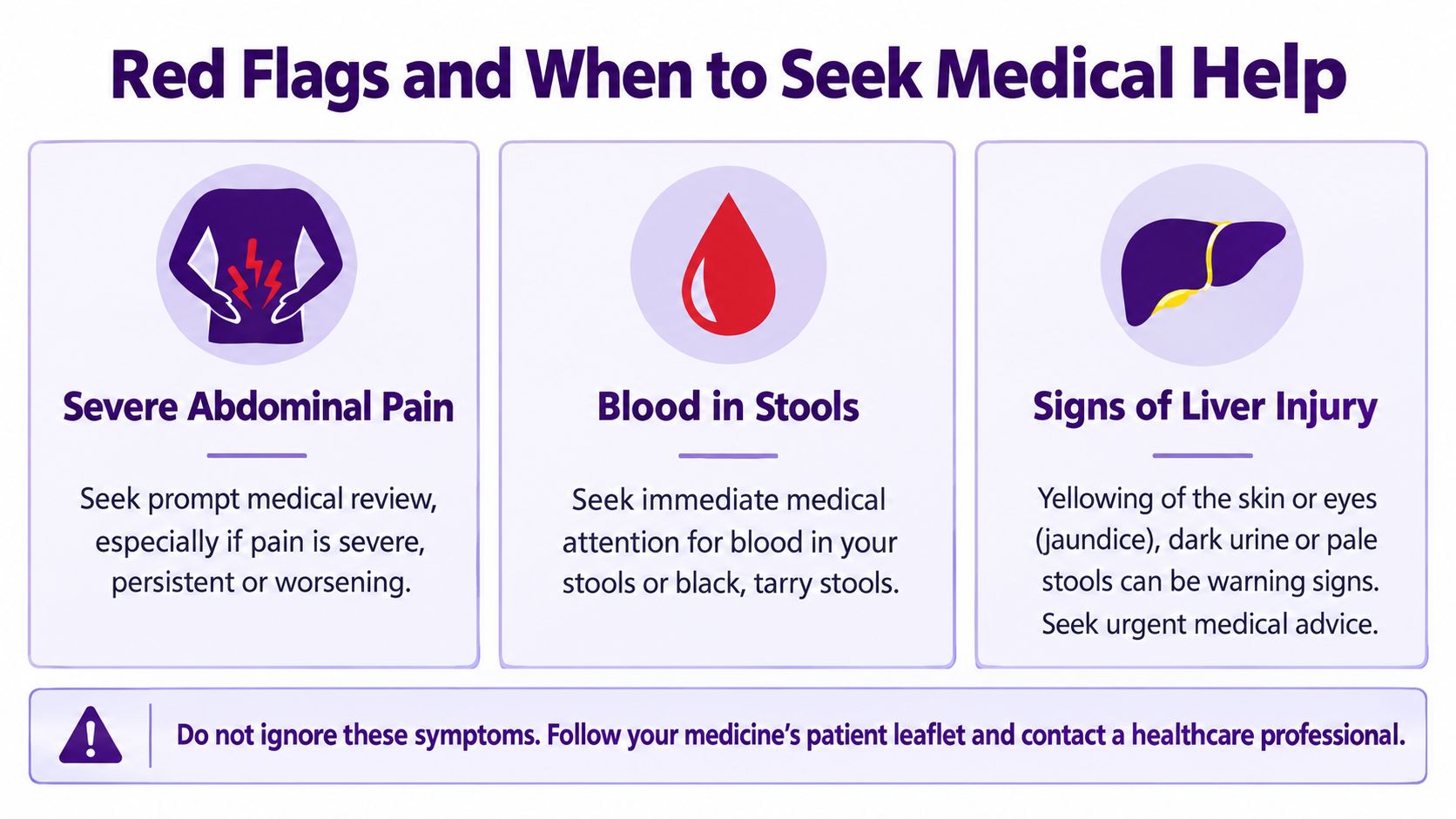
Use this checklist to recognise symptoms needing assessment.
Seek urgent assessment for these changes
- Possible liver or biliary problems: Yellow skin or eyes, dark urine, itching with other concerning symptoms, or significant upper abdominal pain.
- Possible pancreatitis: Persistent severe abdominal pain, particularly pain extending into your back.
- Bleeding: Blood in your stool or bleeding from the rectum shouldn't be dismissed as oily leakage.
- Possible kidney problems: Markedly reduced urine output warrants urgent assessment, especially if you're also dehydrated.
- Possible serious allergy: Breathing difficulty, wheezing or swelling of the lips, tongue or throat requires emergency help.
Reported complications include hepatitis, gallstones, pancreatitis and oxalate nephropathy, which can lead to kidney failure. Hypersensitivity reactions include rash, urticaria, angioedema, bronchospasm and anaphylaxis. These aren't all equally likely, and listing them doesn't mean you should expect them.
Choose the right level of help
Contact your GP urgently or use NHS 111 when a concerning symptom needs prompt assessment and your usual clinician isn't available. Severe pain, significant bleeding or feeling acutely unwell may require A&E. For breathing difficulty or suspected anaphylaxis, call emergency services immediately.
Don't wait for a routine weight-management appointment when a red flag appears. Tell the assessing clinician that you're taking orlistat and bring your medication list if possible.
People with chronic kidney disease or volume depletion need particular caution about kidney complications. Existing liver conditions and diabetes also deserve an individual monitoring plan rather than general reassurance.
Expected digestive reactions may become less frequent with continued treatment, but that isn't a reason to ignore deterioration. A symptom that becomes more intense, lasts longer or changes character needs review, even if earlier symptoms were manageable.
Drug Interactions and Conditions to Discuss
Before starting orlistat, give your pharmacist a complete medication list. Include supplements and medicines you take occasionally, not just repeat prescriptions. Several interactions affect absorption or monitoring, so don't change timing or doses without advice.
Vitamin supplements belong in that conversation too.

Which medicines need particular attention
The UK orlistat capsule patient leaflet provides medication-specific cautions.
| Medicine or supplement | What to discuss |
|---|---|
| Multivitamins | Absorption of fat-soluble vitamins A, D, E and K may be reduced. Ask whether you need a supplement and when to take it. |
| Ciclosporin | Orlistat can reduce blood levels. This combination needs specialist advice, not simply a spacing adjustment. |
| Amiodarone | Reduced absorption may require closer clinical monitoring. |
| Warfarin and related anticoagulants | Changes involving vitamin K can affect anticoagulation control and INR monitoring. |
| Insulin or sulfonylureas | Discuss blood-glucose monitoring and whether diabetes treatment needs adjustment. |
| Levothyroxine | Ask about thyroid monitoring and separation of administration times. |
Where a multivitamin is recommended, UK patient information advises taking it at least two hours after orlistat or at bedtime, as stated in the capsule leaflet linked above. Your pharmacist should confirm how that fits around other medicines.
For appointment preparation, the Life Primary Care medication review guide offers a separate resource to consider. This explanation of who can take orlistat can also help you organise suitability questions.
The video below is supplementary information, not a replacement for your own prescription instructions.
Bring your list to the review and ask for a written plan covering timing, monitoring and whom to contact if problems develop.
NHS Prescribing Rules and Practical Next Steps
Orlistat should have a defined benefit review, not continue indefinitely by default. UK primary-care prescribing guidance recommends discontinuation if the agreed weight-loss target hasn't been achieved after the first 12 weeks, or if weight is regained during treatment, alongside dietetic and lifestyle support.
The same guidance discusses weight-loss expectations commonly around 5% to 10% or more of starting body weight. That's context for a clinician-led target, not a promised outcome or a reason to tolerate severe symptoms.
Prepare for your review
- Bring your record: Include meals, symptoms and their impact on everyday life.
- Confirm your plan: Check supplement timing, other medicines and monitoring arrangements.
- Discuss benefit and burden: Ask whether continuing remains appropriate.
- Ask about alternatives: Dietetic support or another medically suitable treatment may be considered.
For a treatment discussion, this comparison of injections and orlistat offers background reading. You can also browse holistic weight loss care from Integrative Psychiatry of America, recognising that it isn't an NHS eligibility guide.
Questions patients commonly ask
Do oily stools prove it's working?
They indicate unabsorbed fat, not whether you've achieved a worthwhile treatment benefit.
How long will bowel effects last?
They often lessen with continued treatment and dietary adjustment, but there's no fixed personal timetable.
When should I call my clinician?
Call before routine follow-up if symptoms remain disruptive or worsen. Use urgent care for the warning signs described above.
Trim offers online clinical assessment, nutrition guidance and ongoing weight-management support as one option alongside your GP or local services. Visit Trim to discuss treatment suitability and how orlistat side effects would be monitored within your care plan.