
Bioxtra Dry Mouth: A Guide to Lasting Relief

Dry mouth can turn an ordinary day into a series of small obstacles. You may need water beside you to speak through a meeting, find bread difficult to swallow, or wake at night with a tongue that feels stuck to the roof of your mouth. If you're considering Bioxtra dry mouth products, the important questions are practical: what does each format do, what does the clinical evidence show, and can you obtain it through the NHS or only by buying it yourself?
This guide takes an educational, evidence-led approach. It separates symptom relief from treatment of the underlying cause, explains how the gel, mouthspray, mouthrinse and toothpaste fit into oral care, and clarifies why NHS access depends on the specific Bioxtra product rather than the brand name alone.
Table of Contents
- Living with a Dry Mouth and Why This Guide Exists
- What Xerostomia Is and How the Bioxtra Range Works
- What the Clinical Evidence Actually Shows
- How to Use Bioxtra Gel, Mouthrinse, Mouthspray and Toothpaste
- Benefits, Side Effects and Interactions to Be Aware Of
- Getting Bioxtra in the UK NHS Prescriptions and Retail Access
- Other Ways to Manage Dry Mouth Beyond Bioxtra
- Key Takeaways on Using Bioxtra for Dry Mouth
Living with a Dry Mouth and Why This Guide Exists
Xerostomia, the clinical term for dry mouth, can affect speaking, eating, swallowing, sleep and dental comfort. Some people notice a sticky mouth or cracked lips. Others mainly experience difficulty talking for long periods, altered taste, soreness, bad breath or repeated night-time waking. The problem may be obvious, or it may appear only in situations that demand sustained speech or chewing.
Saliva does more than keep the mouth wet. It lubricates food, helps protect the soft tissues, buffers acids and supports the natural defences around the teeth. When saliva is reduced, everyday activities can become uncomfortable and the mouth may need more deliberate protection. If you're beginning to investigate the issue, this guide to find dry mouth remedies can provide useful background on possible causes and practical approaches.
The term “Bioxtra dry mouth” covers a range of products, not one single treatment. The range includes oral gel, mouthspray, mouthrinse and toothpaste, and each format is used differently. A spray may be convenient during the day, while a thicker gel may feel more suitable when symptoms are troublesome at night.
Access also needs careful explanation. NHS Specialist Pharmacy Service guidance lists some Bioxtra formulations as suitable for dental prescribing on an FP10D, while another Bioxtra mouthrinse cannot be supplied on that prescription route. That means the question is not only whether Bioxtra is “on prescription”. You need to identify the exact format, the clinical context and the local supply pathway.
Practical rule: Treat the product choice and the cause of dry mouth as two separate decisions. A saliva substitute may improve comfort, but it won't explain why your saliva has changed.
What Xerostomia Is and How the Bioxtra Range Works
Xerostomia is the feeling of a dry mouth caused by reduced saliva flow or a change in saliva's normal qualities. Medicines, radiotherapy, Sjögren's syndrome, diabetes, dehydration and ageing are common contributors. Mouth breathing and changes in fluid balance can intensify the sensation, even when some saliva is still being produced.
Saliva functions as a continuously renewed moisture layer across the mouth. It helps food move, supports speech and swallowing, buffers acids and contributes to the mouth's protection against microbes. If this lubrication becomes inadequate, a saliva substitute can coat the tissues and reduce friction. It cannot reproduce every function of healthy salivary glands, however, so comfort and restoration are different goals.
Bioxtra dry mouth refers to a multi-format range, rather than one treatment. The UK product information describes the mouthrinse as free from alcohol and menthol, and lists oral gel, mouthspray, mouthrinse and toothpaste within the range. NHS-facing oral-health guidance describes dry-mouth products as providing rapid moisturisation and relief for xerostomia, while helping protect enamel and reduce caries risk. A Dorset County Hospital NHS Trust leaflet lists Bioxtra dry mouth mild toothpaste among low-foaming, sodium lauryl sulphate-free options. The Bioxtra UK mouthrinse and product information supports the product-specific description.
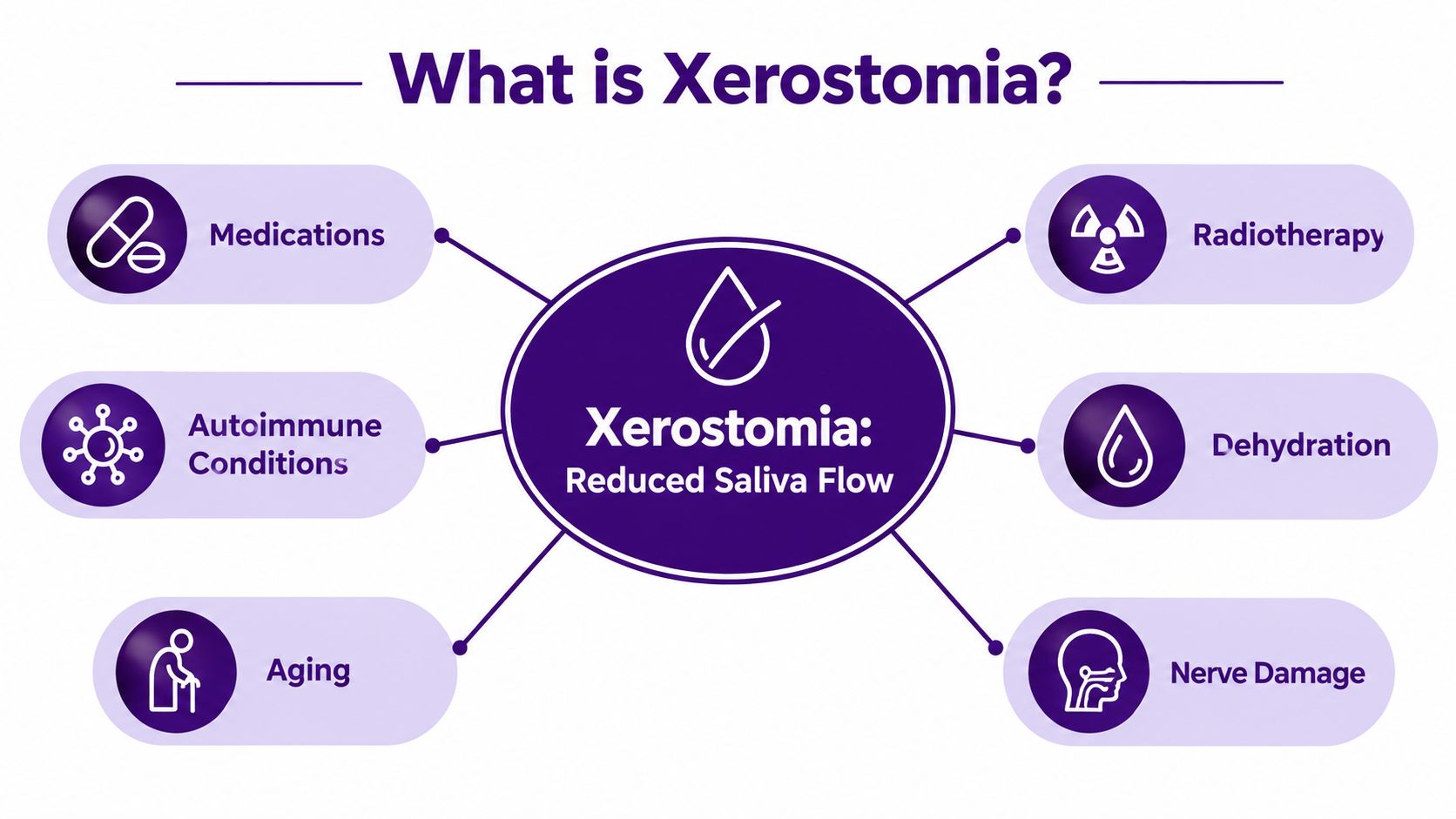
The ingredients and their purpose
The range contains ingredients intended to support moisture and oral defence, including lactoferrin, lysozyme, lactoperoxidase, mild fluoride and humectants. Lactoferrin, lysozyme and lactoperoxidase are associated with protective functions found in natural saliva. Humectants help retain moisture, while fluoride supports enamel protection.
Each format serves a different practical purpose:
- Oral gel: A thicker lubricant that can stay on the gums, tongue and palate for longer.
- Mouthspray: A portable way to moisten the mouth during speaking, travel or meals.
- Mouthrinse: A liquid for routine rinsing, particularly for someone seeking a gentle, alcohol-free option.
- Toothpaste: A low-foaming daily cleanser that supplies fluoride while avoiding ingredients some people find irritating.
The principle is straightforward. Bioxtra may improve comfort by adding moisture and reducing friction, but it cannot repair damaged salivary glands or remove a medicine that causes dryness. Persistent or worsening symptoms need clinical assessment alongside any product trial.
What the Clinical Evidence Actually Shows
The strongest reason to consider Bioxtra is not a product description. It's the existence of clinical research directly examining the range in people with xerostomia, particularly after head-and-neck radiotherapy.
A Cochrane review of topical therapies for dry mouth identifies a UK-based randomised, double-blind crossover trial titled “Comparative analysis of BioXtra on xerostomia”. Participants with post-radiotherapy xerostomia used Bioxtra spray and mouthrinse in separate treatment periods, with a washout period between them. A crossover design allows participants to receive more than one intervention, so comparisons are made within the same group rather than between entirely different populations. The relevant study record appears in the Cochrane review references for topical therapies for dry mouth.
A separate PubMed-indexed double-blind crossover study compared Bioxtra with Biotène Oralbalance in 20 patients with post-radiotherapy xerostomia. Both products reduced reported dry-mouth scores over 14 days. Bioxtra was significantly better for perceived dry mouth, speech improvement and pleasantness to use, with P < 0.05, as reported in the NICE evidence review on dry-mouth treatments.
Those findings support a measured conclusion. Bioxtra can provide subjective short-term relief for some people, and the evidence includes randomised trial methods rather than relying only on testimonials or laboratory descriptions. However, the study population was small, the treatment period was short and several outcomes depended on how participants rated their symptoms. The evidence doesn't establish that Bioxtra cures xerostomia, restores saliva production or works equally well for every cause of dry mouth.
Summary of Key Clinical Evidence on Bioxtra Dry Mouth Products
| Study | Design | Participants | Key finding |
|---|---|---|---|
| Comparative analysis of BioXtra on xerostomia, listed in the Cochrane review | Randomised, double-blind crossover trial | Patients with xerostomia after head-and-neck radiotherapy | Participants used Bioxtra spray and mouthrinse in separate treatment periods with a washout between them |
| Bioxtra compared with Biotène Oralbalance | Double-blind crossover study | 20 patients with post-radiotherapy xerostomia | Both products reduced reported dry-mouth scores over 14 days; Bioxtra was significantly better for perceived dry mouth, speech improvement and pleasantness, P < 0.05 |
The practical interpretation is modest rather than promotional. If a clinician recommends Bioxtra, it is reasonable to view it as a saliva substitute for symptom control. It should be judged by whether it improves speaking, swallowing, sleep or oral comfort for you, not by the expectation that it will treat the underlying disease.
How to Use Bioxtra Gel, Mouthrinse, Mouthspray and Toothpaste
The best format depends on where and when dryness causes trouble. Read the instructions supplied with your specific product, especially if the packaging gives a different frequency or application method.
Gel for longer-lasting coating
Apply a small amount of oral gel with a clean finger or cotton bud to the gums, tongue and palate. Many people use gel before bed or after meals because the thicker texture can provide a more persistent coating than a spray. Avoid eating or rinsing immediately afterwards, so the lubricant has time to remain against the oral tissues.
The gel may also help someone who wakes with a dry mouth, although night-time dryness can have several causes, including mouth breathing, room air and medicines. If you have difficulty swallowing safely, ask a dentist, GP, pharmacist or speech and language professional whether a gel is appropriate.
Mouthrinse for a daily routine
Use the cap or measuring method stated on the bottle, swill the mouth gently and spit it out. The product information describes the Bioxtra mouthrinse as alcohol and menthol free, which may make it more comfortable for people who find strong rinses drying or irritating. Use it after brushing if that fits the product instructions and your dental advice.
Don't swallow a mouthrinse unless a clinician has specifically told you to do so. A rinse is not a substitute for brushing, interdental cleaning or fluoride advice.
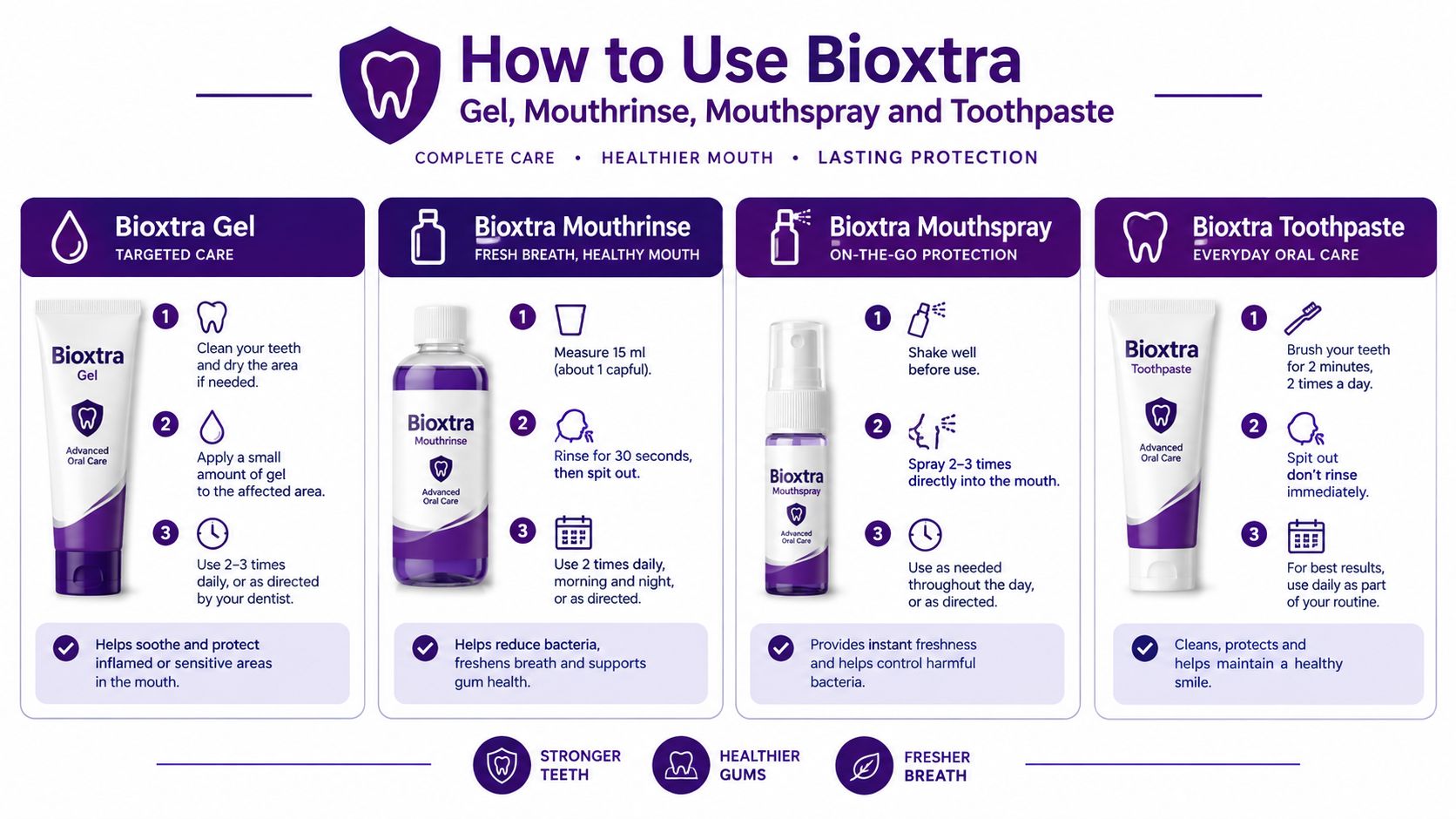
Mouthspray for convenient reapplication
Direct the spray towards the inside of the cheek or beneath the tongue, rather than spraying towards the throat. Use it when dryness interferes with speech, eating or comfort, and follow the bottle's guidance on how often to repeat it. Keep the container available when you're away from home if sudden dryness is a recurring problem.
Toothpaste for enamel protection
Brush with the Bioxtra toothpaste as directed by your dental professional and the product packaging. After brushing, spit out the excess and avoid rinsing straight away if your dental team has advised you to retain fluoride contact. Toothpaste is part of prevention, not just a moisturiser, so it deserves a consistent place in the routine even when a spray or gel provides more noticeable immediate relief.
You can combine formats, for example toothpaste during brushing, mouthrinse as advised, spray during the day and gel before sleep. Avoid eating or drinking immediately after a moisturising application. The exact interval should follow the packaging or clinician's instructions rather than an assumed universal rule.
Benefits, Side Effects and Interactions to Be Aware Of
Bioxtra's likely benefit is symptom relief, not a cure. A person may find that a lubricated mouth makes speaking, swallowing, denture wear or sleeping more comfortable. The clinical evidence discussed above supports short-term subjective improvement in some people, particularly in post-radiotherapy xerostomia, but individual responses vary.
Saliva substitutes are generally well tolerated, though any oral product can irritate sensitive tissue. Stop use and seek advice if symptoms worsen, especially if you notice swelling, breathing difficulty or a widespread allergic reaction.
| Aspect | Key points |
|---|---|
| Expected benefit | Moisturisation may ease oral dryness and make speech, swallowing, denture use or night-time comfort easier |
| Local effects | Some people may experience mild irritation or a temporary change in taste |
| Allergy concern | Bioxtra gel contains lysozyme and lactoferrin, so it isn't suitable for people with a milk protein allergy |
| Medicine interactions | No significant drug interactions are documented, but check with a pharmacist if you use several oral products |
| Product sequencing | Separate fluoride toothpaste, chlorhexidine mouthwash and saliva-stimulating lozenges rather than using them at the same moment |
| Underlying cause | Bioxtra manages the sensation of dryness; it doesn't treat the medicine, condition or gland problem causing it |
Chlorhexidine deserves particular care because it's generally used for specific dental indications and may need to be kept separate from toothpaste. Saliva-stimulating lozenges can also be useful for some people who retain salivary function, but combining several products at once makes it difficult to identify what helps or irritates.
People taking medicines that can cause dryness should ask a pharmacist or prescriber for a review rather than stopping treatment independently. You can also read about medication-related adverse effects in this guide to Mounjaro side effects, although dry mouth should be assessed in the context of the specific medicine you take.
Getting Bioxtra in the UK NHS Prescriptions and Retail Access
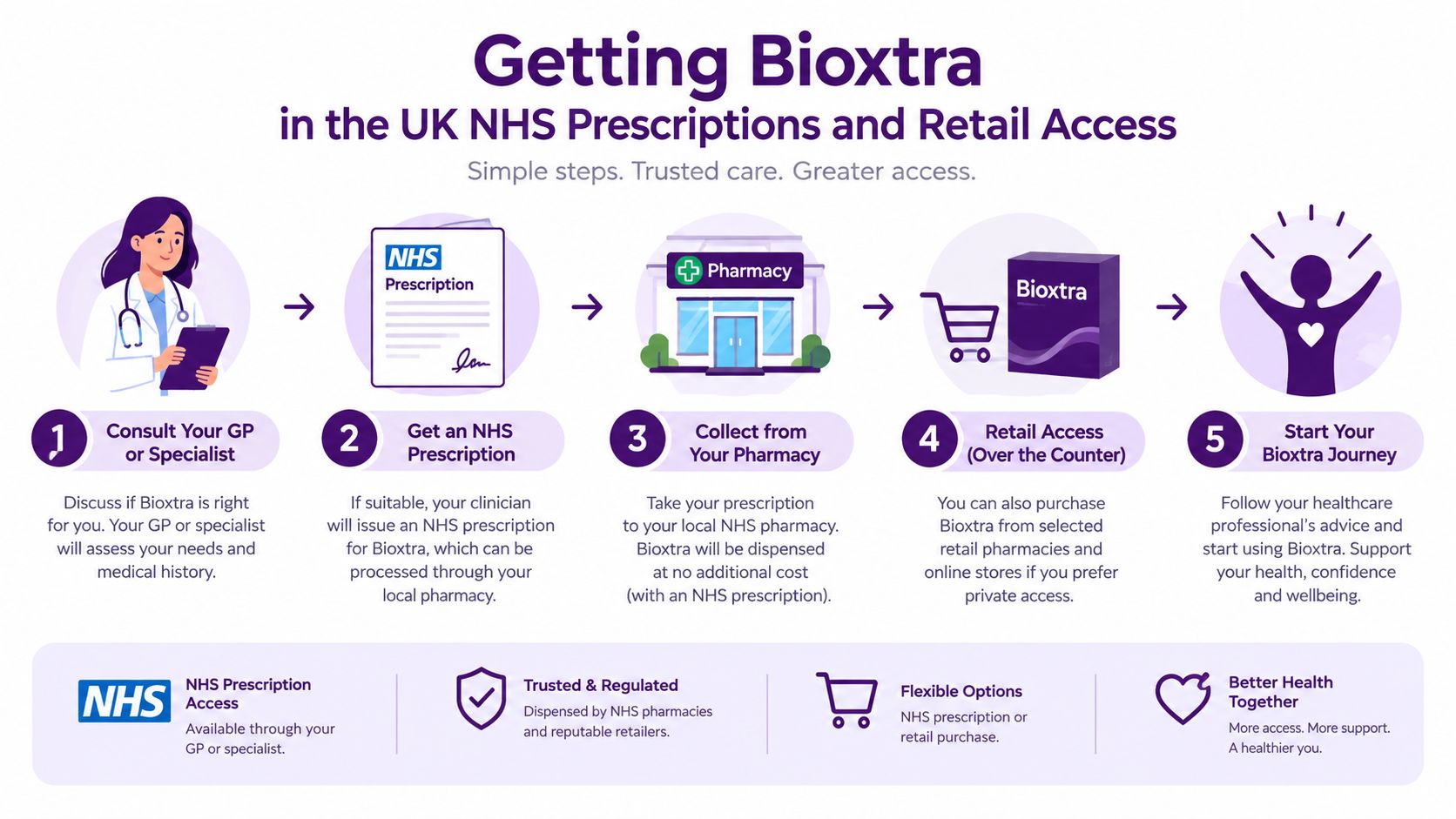
The UK access question depends on the formulation. NHS Specialist Pharmacy Service guidance states that Bioxtra dry mouth gel mouthspray can be prescribed on an FP10D as Artificial Saliva Oral Spray, DPF. The same guidance also identifies Bioxtra oral gel as a prescribable formulation, while stating that Bioxtra dry mouth ultra mild mouthrinse cannot be prescribed on an FP10D. The prescribing detail is set out in NHS guidance on specific artificial saliva products in dentistry.
A further NHS marker is the product's listing as an Actual Medicinal Product Pack in the NHS Business Services Authority dictionary of medicines and devices. The documented NHS indicative price was 478 pence from 1 February 2025, compared with 408 pence from 1 May 2024, an increase of 17.2% over that period. This shows a formal place within the UK NHS supply ecosystem, but it doesn't mean every Bioxtra format is automatically supplied to every patient.
NHS route
Start by explaining your symptoms to a dentist or GP. They may assess your mouth, review your medicines and decide whether a saliva substitute is suitable. Dental prescribing rules apply to particular formulations and clinical circumstances, so ask specifically about the Bioxtra format being considered.
An FP10D prescription is not the same as a guarantee that every pharmacy has stock. Local formularies and commissioning arrangements can affect availability, and the prescriber or pharmacist can check the practical supply position. Prescription charges and exemption rules also apply according to the normal NHS arrangements.
Retail route
Bioxtra products may also be purchased without a prescription, subject to stock and the retailer's current range. A pharmacy can help you choose between gel, spray, rinse and toothpaste, and can check ingredients if you have an allergy or use other oral treatments.
The sensible pathway is therefore:
- Identify the cause: Ask a dentist, GP or pharmacist to assess persistent dryness.
- Choose the format: Match gel, spray, rinse or toothpaste to the situation.
- Check prescribing status: Confirm whether the exact formulation can be supplied on an FP10D.
- Confirm local supply: A pharmacy can advise whether it can obtain the prescribed product.
- Consider self-purchase: Retail access may be more suitable when you want to manage mild symptoms while arranging clinical advice.
If you're using an online pharmacy for another treatment, this explanation of an online pharmacy with a prescription may help you understand the difference between a regulated consultation pathway and buying a general oral-care product online.
Other Ways to Manage Dry Mouth Beyond Bioxtra
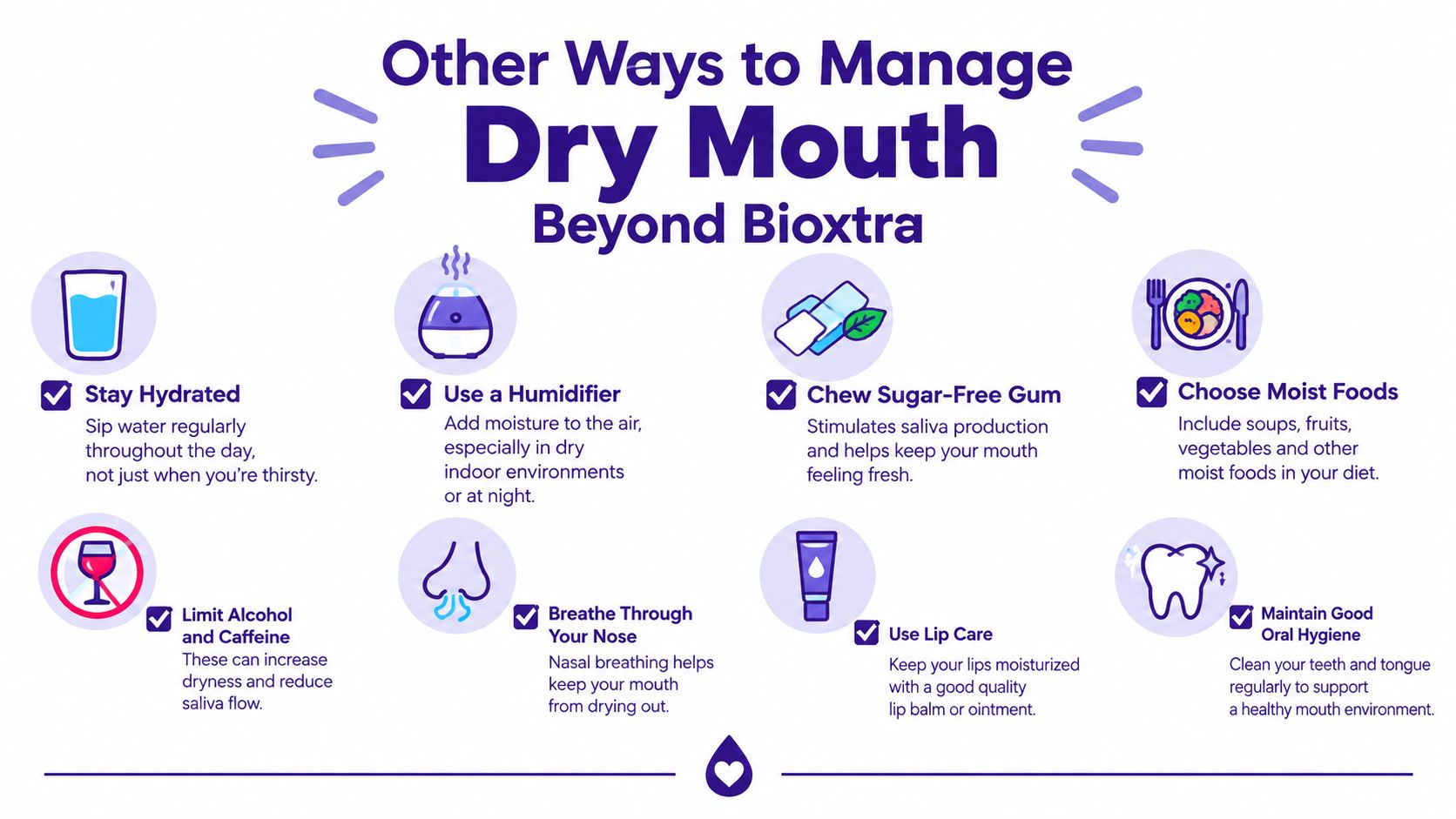
A saliva substitute works best as one part of a wider plan. Start with frequent small sips of water if you can drink safely, and consider whether bedroom air, heating or mouth breathing worsens symptoms overnight. A humidifier may help some people with environmental dryness, but it won't replace an assessment of medicines or medical conditions.
Sugar-free chewing gum or sugar-free pastilles can stimulate any remaining salivary flow. This approach differs from Bioxtra's main action, which is to lubricate the tissues directly. Don't use gum if chewing is unsafe, painful or likely to cause choking, and ask a dental professional whether a particular sweetener or product is appropriate for your teeth.
Protecting teeth when saliva is scarce
Fluoride becomes especially important when the mouth has less natural protection. Continue brushing with fluoride toothpaste and ask your dentist whether you need a higher-strength prescription toothpaste or a fluoride rinse. Chlorhexidine may have a role in short-term infection control where a clinician recommends it, but it isn't a general replacement for daily brushing and shouldn't be added casually.
Soft, moist foods may be easier to manage than dry, crumbly meals. Limiting caffeine, alcohol and foods that are acidic, salty or highly irritating can reduce discomfort for some people. Lip care, gentle brushing and a consistent bedtime routine can also prevent dryness from becoming more disruptive.
Review medicines rather than stopping them
Antihistamines, antidepressants, antihypertensives and diuretics are among the medicine groups that may contribute to dry mouth. A pharmacist or prescriber can review the timing, dose and alternatives where appropriate. Don't stop a prescribed medicine without advice, even if the dryness began soon after treatment.
You may find this practical resource on xerostomia treatment for oral health useful when considering how hydration, oral hygiene and symptom relief fit together. For people who can stimulate some saliva, lozenges may be another option, as discussed in this guide to lozenges for dry mouth.
Seek prompt dental or medical advice if you have:
- Persistent soreness: Burning, tenderness or pain that doesn't settle with gentle care.
- A lasting ulcer: An ulcer that remains for more than two weeks needs professional review.
- Swallowing difficulty: Difficulty swallowing liquids, food or medicines shouldn't be managed with moisturiser alone.
- A sudden change: New dry mouth after starting a medicine may call for a structured review.
- Signs of infection: White patches, bleeding, marked redness or worsening discomfort need assessment.
These warning signs don't mean that a serious cause is certain. They mean that self-management has reached its limit and a clinician needs to examine the mouth and the wider context.
Key Takeaways on Using Bioxtra for Dry Mouth
Bioxtra is one family of saliva substitutes among several. The available clinical evidence includes a randomised crossover trial and a double-blind comparison with Biotène Oralbalance. Those studies support modest subjective symptom relief over a short period for some people, especially those with post-radiotherapy xerostomia, but they don't show that Bioxtra cures the cause of reduced saliva.
The four formats serve different purposes:
- Gel: A thicker lubricant for areas that feel persistently dry, including before sleep.
- Mouthspray: Portable moisture for speaking, eating or reapplication during the day.
- Mouthrinse: A gentle liquid format for a daily oral-care routine, with the UK product information describing it as alcohol and menthol free.
- Toothpaste: Low-foaming cleaning with fluoride support for enamel protection.
Your choice should follow the symptom that matters most. If speaking is difficult during the day, a spray may be more practical. If the mouth feels coated with dryness overnight, gel may be easier to apply before bed. If dental risk is the main concern, toothpaste and professional fluoride advice deserve priority.
Bioxtra won't replace investigation of the underlying cause. Medicines, radiotherapy, Sjögren's syndrome, diabetes, dehydration and ageing can all form part of the clinical picture. A dentist, GP or pharmacist can help determine whether a medicines review, saliva-stimulation strategy, fluoride plan or further medical assessment is needed.
Access depends on the exact formulation. NHS guidance identifies Bioxtra gel mouthspray and oral gel as prescribable products in relevant dental prescribing pathways, while the ultra mild mouthrinse cannot be prescribed on an FP10D. Retail purchase may be suitable for self-management, but a pharmacy or clinician can clarify ingredients, eligibility and safe use.
Used this way, Bioxtra is best understood as one tool in a broader xerostomia plan. Combine symptom relief with dental prevention, medicine review, hydration where appropriate and timely clinical assessment when symptoms persist or change.
Trim provides UK adults with medically supervised weight-management support through a regulated online clinic, including clinician assessment, treatment guidance and ongoing support. If you're also exploring structured help with weight management while managing oral-health concerns or medicine-related side effects, visit Trim to learn how the service works and whether it may suit your needs.