
Best Menopause Weight Loss Diet: 7 Evidence-Based Picks

A Mediterranean-style, higher-protein eating pattern paired with resistance training is the strongest all-round starting point: among post-menopausal women, high adherence to the Eatwell Guide was associated with 45% lower odds of abdominal obesity, and high adherence to a Mediterranean diet with 40% lower odds, compared with low adherence. Neither pattern was associated with statistically significant overall weight change over four years, so the best menopause weight loss diet is the sustainable plan that fits your health needs, preferences and access to support.
There is no single “menopause diet” that reliably makes weight fall. As oestrogen declines, fat distribution can shift towards the abdomen, while changes in muscle mass, sleep, stress and activity may also affect appetite and energy use. That helps explain why a plan can improve waist measurements and health without producing rapid scale loss.
The ranking below weighs evidence in menopausal women separately from findings extrapolated from broader populations. It also considers how well each approach can support visceral-fat reduction, lean-muscle preservation, cardiovascular and bone health, nutritional adequacy, adherence and medical supervision. The evidence is strongest for sustainable changes to eating and activity, not a special food or restrictive diet that promises to reverse menopause-related changes.
Table of Contents
- 1. Mediterranean-Style Eating Pattern
- 2. Higher-Protein, Muscle-Preserving Diet
- 3. DASH Eating Pattern
- 4. Low-Glycaemic, Lower Refined-Carbohydrate Approach
- 5. High-Fibre, Plant-Forward Eating
- 6. Time-Restricted Eating
- 7. Structured Calorie-Controlled Plan with Behavioural Support
- 7 Best Menopause Weight Loss Diets Compared
- Choose the Plan You Can Sustain, and Know When to Escalate
1. Mediterranean-Style Eating Pattern
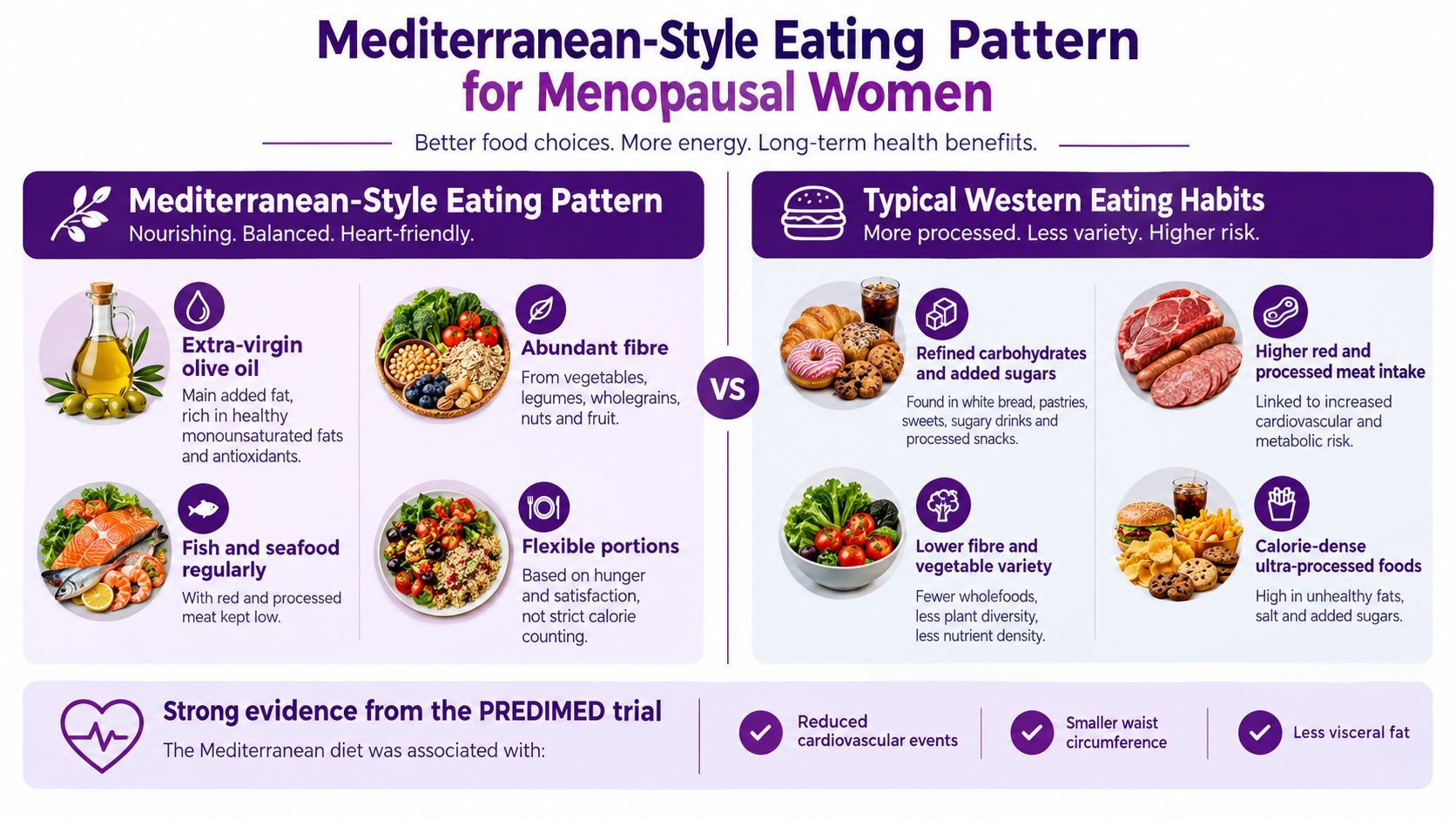
Best all-round fit for abdominal-fat and cardiometabolic priorities. This pattern centres vegetables, fruit, pulses, wholegrains, nuts, olive oil and fish, with moderate amounts of dairy and poultry and less red and processed meat and refined sugar. Its advantage is nutritional breadth: it can support cardiovascular health while providing foods that help with fullness, without requiring the removal of a whole food group.
There is direct evidence in post-menopausal women, but it doesn't show that the pattern guarantees weight loss. A UK Women's Cohort Study analysis linked greater adherence to both a Mediterranean-style pattern and the Eatwell Guide with lower odds of abdominal obesity. Neither pattern was associated with a statistically significant change in overall weight over the study period, a useful distinction when scale weight doesn't reflect changes in waist or body composition (UK cohort analysis of diet patterns after menopause).
A practical UK version doesn't require speciality ingredients. Lentils, tinned fish, frozen vegetables and wholemeal bread can form the basis of affordable meals; salmon, mackerel or sardines provide an option when choosing oily fish. Use olive oil and nuts thoughtfully, since energy-dense foods can still make a calorie deficit harder to maintain.
Practical rule: Build most meals around plants, add a satisfying protein source, and measure rather than freely pouring oils or sprinkling generous handfuls of nuts.
The pattern ranks first because it balances waist-related evidence with cardiovascular relevance and flexibility. It won't automatically preserve muscle during weight loss, though. Pair it with resistance exercise and include protein at meals rather than relying on vegetables and grains alone.
2. Higher-Protein, Muscle-Preserving Diet
Best for making muscle preservation a central goal. This isn't a separate named diet so much as a way to organise meals: include protein regularly, create any calorie deficit without stripping meals of nourishing foods, and use resistance training to give muscles a reason to stay strong. It can be combined with a Mediterranean-style or plant-forward pattern.
Menopause weight management should account for changes in body composition, not just the number on the scales. Clinical guidance notes that visceral fat may make up a larger proportion of body weight as oestrogen declines. That makes waist measurement, strength and body weight useful complementary indicators rather than treating scale change as the only sign of progress (British Menopause Society clinical nutrition and weight guidance).
A UK guide gives a practical protein range of about 1–1.2 g per kg of body weight daily. For a 60 kg woman, that works out to roughly 60–72 g per day. Those figures are guidance, not a universal prescription, so kidney disease, other medical conditions and personal circumstances matter. The same guide includes calcium guidance of 700–1,200 mg daily, relevant when smaller meals make nutritional density important (St George's NHS menopause nutrition guide).
For example, Greek yoghurt with seeds at breakfast, tuna with beans at lunch, and chicken or tofu with vegetables at dinner can spread protein across familiar meals. Pulses, eggs, fish and lower-fat dairy offer alternatives to meat. Resistance exercise is the other half of the approach: protein alone doesn't replace muscle-stimulating activity.
A meal-prep photo can help make the idea concrete.
Try a short strength session with exercises you can repeat safely and progress gradually. For individual guidance, particularly if you have a health condition or haven't exercised for some time, discuss a suitable routine with a clinician or qualified professional.
3. DASH Eating Pattern
DASH was designed for blood pressure, and that origin defines both its strength and its limits here. In the original controlled-feeding trial, the full DASH pattern lowered systolic blood pressure by about 5.5 mmHg more than a typical American diet, and by 11.4 mmHg in participants with hypertension (the original DASH trial, Appel et al., New England Journal of Medicine, 1997). Those figures come from a general adult population. No DASH trial has tested visceral-fat change in menopausal women specifically, so its cardiovascular evidence is direct while its fat-loss case is extrapolated.
That places DASH third on this ranking. It addresses one of the three priorities, cardiovascular health, with real trial data, but offers weaker backing for muscle preservation and menopause-specific waist change than the two patterns above it. Weight loss on DASH still depends on an energy deficit. High food quality alone does not guarantee one.
The pattern itself centres on vegetables, fruit, wholegrains, pulses, nuts, lean protein and lower-fat dairy, with less salt, saturated fat and sugary food. A UK kitchen can adapt it with lower-salt tinned beans, frozen berries, plain yoghurt and unsalted nuts, using herbs, garlic and citrus for flavour instead of salt. Label comparisons matter, since salt content varies widely between brands of the same product.
DASH suits someone for whom blood pressure is already a live concern, for example a person monitoring readings at home on a GP's advice, who should share those readings with their care team. It pairs well with higher-protein choices and resistance training, which can cover its muscle-preservation gap. Bone health still needs separate attention through calcium-rich foods and individual advice where bone density is low.
4. Low-Glycaemic, Lower Refined-Carbohydrate Approach
This approach changes the type of carbohydrate rather than cutting out carbohydrates altogether. It replaces foods such as sugary drinks, pastries and refined bread with options such as oats, wholegrain bread, pulses and vegetables. That can make meals more filling and easier to balance, but claims that it specifically targets menopausal abdominal fat go beyond the evidence supplied here.
For a straightforward UK swap, use wholemeal bread instead of white bread, or serve barley or lentils in place of some refined grains. Pair carbohydrate foods with protein or vegetables, and check for added sugar in cereals, sauces and flavoured yoghurts. A person who finds these changes satisfying may find the pattern easier to sustain than a strict low-carbohydrate rule.
The link with blood-sugar management may make this approach worth discussing with a clinician if you have insulin-related concerns. It shouldn't be framed as proof that carbohydrate itself causes menopause-related weight gain. In practice, food quality, overall intake, activity and the ability to stick with a plan all matter.
People looking to understand why highly processed foods can be easy to overconsume can read this overview of processed foods and their potential drawbacks. Use it as a prompt to look at your own choices, not as a reason to ban convenient foods or judge yourself for eating them.
A useful test is whether the change improves your meals without creating a cycle of restriction and rebound eating. If it leaves you hungry or makes family meals difficult, a less restrictive pattern may be a better fit. Keep the focus on sustainable substitutions and adequate protein, rather than treating a particular carbohydrate threshold as a menopause treatment.
5. High-Fibre, Plant-Forward Eating
Plant-forward eating makes vegetables, fruit, pulses and wholegrains the main parts of meals, while leaving room for fish, dairy, eggs or meat if they suit your preferences. It can be vegetarian or vegan, but doesn't have to be. Its strongest practical case is that fibre-rich foods support fullness and make it easier to build meals around minimally processed ingredients.
UK recommendations call for 30 g of fibre daily, while the cited analysis reports an average intake of about 17 g among women and says only about 4% meet the target (UK menopause nutrition review). Treat that target as something to work towards, not a reason to abruptly change every meal. Gradual increases, enough fluid and attention to personal tolerance can make the shift more comfortable.
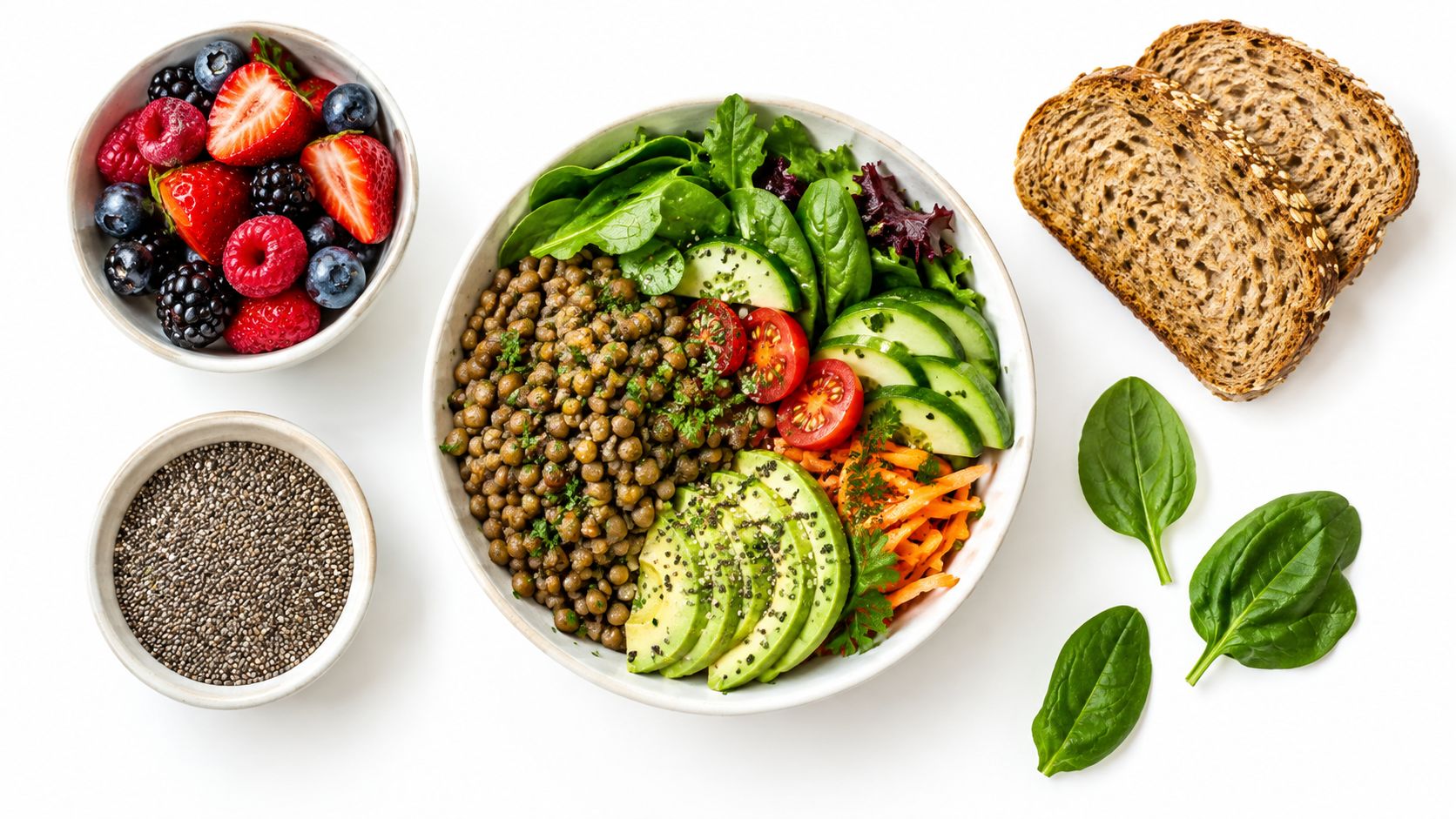
A UK household might add lentils to bolognese, replace some of the meat with mushrooms, and choose wholegrain pasta. Oats, beans, berries, vegetables and seeds are other accessible ways to add fibre. The pattern can also support calorie control through satisfying meals, but fibre doesn't guarantee weight loss if overall energy intake remains high.
For people comparing fibre sources or considering a supplement, this guide to psyllium and its uses may help inform questions for a clinician. It shouldn't replace a varied diet or individual advice. A separate fibre guide for busy people offers further ideas for fitting fibre-rich foods into everyday routines.
6. Time-Restricted Eating
Meal timing may help some people reduce evening snacking, but it has no established advantage over other eating patterns for weight loss. In trials of time-restricted eating among midlife women, weight outcomes over six to twelve months have been mixed, and results have not been separated by menopausal status. The British Menopause Society also notes that high-quality, long-term evidence for fasting approaches in peri-menopausal and menopausal groups is limited (British Menopause Society guidance).
For menopause-specific priorities, timing alone does little to protect muscle, bone or cardiovascular health. Those depend more on what the eating window contains, including adequate protein and nutrient-dense foods. A shorter window can also make it harder to meet nutritional needs if it leads to skipped meals or insufficient intake.
A modest overnight gap between the evening meal and breakfast may suit someone who prefers a regular routine. If fasting increases hunger, disrupts sleep or makes eating feel restrictive, it is unlikely to be a sustainable choice.
Choose timing for convenience, not as a test of willpower.
People using glucose-lowering medication, with a history of disordered eating, or with a condition affected by meal timing should consult a GP or registered dietitian before trying fasting. Overall, time-restricted eating ranks below approaches that directly support nutrient quality and muscle preservation. It is most useful when the schedule makes a balanced eating pattern easier to maintain.
7. Structured Calorie-Controlled Plan with Behavioural Support
A planned energy deficit gives weight loss a measurable structure, while behavioural support can make that structure easier to follow. British Menopause Society guidance suggests an approximate 500 kcal daily deficit as a starting point, adapted to a person's usual eating pattern rather than imposed as a fixed menu. Individual needs vary, so the figure is a guide, not a target everyone should follow (British Menopause Society clinical guidance).
Support may include meal planning, reviewing portion habits and adjusting routines when adherence becomes difficult. If tracking suits you, follow trends in weight, waist measurement or strength rather than interpreting a single day's change as progress or failure.
Energy reduction still needs to preserve nutritional adequacy. Build meals around vegetables, wholegrains or pulses, include adequate protein, and choose calcium-rich foods that fit your needs. A dietitian can help tailor the plan if you have a medical condition, use medication affecting appetite or blood glucose, or are unsure how to meet nutrient needs while reducing energy intake.
Behavioural support is most useful when it addresses a specific obstacle. For example, someone who often snacks while watching television might plan a filling evening meal and decide beforehand whether to have a snack. Someone who gets home very hungry may find a regular lunch more helpful. Behaviour-change techniques for weight management can help turn those choices into repeatable routines.

A calorie-controlled plan is a clear option when measurable weight loss is the priority. It ranks below Mediterranean-style eating as an all-round approach because weight reduction alone does not ensure protection of muscle, cardiovascular health or bone health.
7 Best Menopause Weight Loss Diets Compared
| Approach | 🔄 Implementation and resources | 📊 Expected outcomes | ⭐ Key advantages | 💡 Ideal use cases |
|---|---|---|---|---|
| Mediterranean-style eating | Flexible food choices; prioritise vegetables, pulses, wholegrains, fish and olive oil. Watch portions of energy-dense foods. | Modest weight loss alone; may reduce waist circumference and improve blood lipids and insulin sensitivity. | Strong cardiovascular evidence; adaptable and often sustainable. | Those seeking a flexible pattern to support heart and metabolic health. |
| Higher-protein, muscle-preserving diet | Include protein at meals and pair with resistance training; individual needs may require clinical advice. | May support fullness and preserve lean mass during weight loss. | Helps protect muscle while losing weight; works with varied food preferences. | Those aiming to maintain muscle during midlife weight loss, especially alongside strength training. |
| DASH eating pattern | Emphasise fruit, vegetables, wholegrains, low-fat dairy, pulses and lean protein; reduce sodium. | Strong evidence for lowering blood pressure; weight loss may occur with portion control. | Supports blood pressure and cardiovascular health without requiring branded foods. | Those with raised blood pressure or seeking a heart-healthy eating pattern. |
| Low-glycaemic, lower refined carbohydrate approach | Replace refined carbohydrates with higher-fibre options; pair carbohydrates with protein or vegetables. | May reduce glucose spikes and cravings; weight loss depends on overall intake. | Focuses on carbohydrate quality rather than eliminating carbohydrates. | Those seeking a flexible approach to improve food quality and manage cravings. |
| High-fibre, plant-forward eating | Gradually increase vegetables, fruit, pulses, wholegrains, nuts and seeds; drink enough fluids. | May improve fullness and digestion and support modest calorie reduction. | Flexible across vegetarian and omnivorous diets; aligns with UK fibre guidance. | Those wanting to increase fibre and make plant foods a larger part of meals. |
| Time-restricted eating | Set a consistent daily eating window; no special foods required. Check suitability with a clinician when relevant. | Some studies report modest weight loss, but findings are mixed and menopause-specific evidence is limited. | ⚡ Simple, low-cost structure that may reduce unplanned snacking for some people. | Those who prefer set eating times and have no relevant medical contraindications. |
| Structured calorie-controlled plan with behavioural support | Create a moderate energy deficit with portion guidance, self-monitoring and ongoing support. | Strong evidence for weight loss; progress and maintenance vary by person. | Adaptable to food preferences; support can improve adherence. | Those seeking a structured weight-loss plan with regular accountability. |
Choose the Plan You Can Sustain, and Know When to Escalate
Use the ranking as a guide to priorities, not a contest that everyone has to enter. Choose Mediterranean-style eating for broad cardiometabolic protection and the strongest direct evidence here for abdominal-obesity associations after menopause. Choose higher protein plus resistance training when preserving muscle is central, DASH when blood pressure is a key concern, and a lower refined-carbohydrate approach if it makes meals and blood-glucose management easier. A plant-forward pattern is a practical way to build fibre and variety; use time-restricted eating only if it improves adherence. When measurable, supported weight loss is the main objective, start with a personalised calorie-controlled plan.
Seek advice from a GP or registered dietitian if you have symptoms that need assessment, kidney disease, diabetes or medication that affects blood glucose, low bone density, or a history of disordered eating. Get professional guidance before attempting a very low-calorie diet. Persistent weight changes and difficult menopause symptoms deserve individual assessment, not blame or a promise that one food will fix them.
Medication can be an educational option to discuss with a clinician, not a product-led shortcut. Treatments such as semaglutide, tirzepatide and orlistat require individual clinical assessment, aren't suitable for everyone, and should be considered alongside nutrition and activity. A clinician can explain potential side effects, monitoring and what long-term maintenance may involve. HRT questions also deserve a balanced discussion: the British Dietetic Association describes HRT-related weight gain as a myth, while some people may notice temporary fluid retention after starting HRT. Diet changes may affect symptoms such as hot flushes independently of weight loss, so symptom improvement doesn't necessarily require weight loss (British Dietetic Association menopause guidance.
For support with eating and activity, NHS guidance describes a Mediterranean-style pattern and regular exercise as part of healthy menopause care (NHS Lothian menopause diet and exercise guidance). Trim is one UK option for people seeking remote clinical assessment and ongoing weight-management support; it isn't a substitute for individual medical advice.
Use the next 14 days to test a manageable routine rather than overhaul your life. Pick one measurable food change, such as adding a fibre-rich food to lunch, and one strength-training routine you can repeat safely. Set weekly check-ins for waist measurement, weight and how the routine feels, then aim for consistent habits rather than a guaranteed scale result.
If menopause-related weight changes have made it difficult to know where to start, Trim offers remote clinical assessment and ongoing weight-management support, including nutrition and strength-focused guidance. Visit Trim to explore whether its support may suit your needs, and discuss personal medical questions with a qualified clinician.